Slicing vegetables evenly can feel impossible with just a knife. If you’ve ever wanted thin, perfect slices for salads, chips, or garnishes, the mandoline slicer is your secret kitchen tool. This device lets you cut fruits and vegetables quickly and precisely, making your dishes look professional and cook evenly. But mandolines can be tricky—and even dangerous—if you don’t know how to use them.
In this guide, you’ll learn everything you need to master your mandoline slicer, from setup to cleaning, plus practical tips that help you get results safely and efficiently.
What Is A Mandoline Slicer?
A mandoline slicer is a kitchen tool that slices food into uniform pieces. It’s made of a flat surface with a sharp blade. You slide the food across the blade, and it cuts each slice to the same thickness. Mandolines usually come with adjustable settings or extra blades for different cuts like julienne or waffle.
Mandolines are popular in restaurants because they save time and create perfect slices. At home, they help you make professional-looking meals—think thin potato chips, cucumber ribbons, or shredded carrots for salads.
Types Of Mandoline Slicers
There are several kinds of mandoline slicers:
| Type | Features | Common Use |
|---|---|---|
| French Mandoline | Heavy, stainless steel, multi-blade | Professional, versatile slicing |
| Japanese Mandoline | Lightweight, plastic, fixed blade | Home use, quick slicing |
| Adjustable Mandoline | Blade height can change | Custom thickness, different cuts |
| Electric Mandoline | Motorized, hands-free | Large batches, less manual effort |
If you’re just starting, a simple Japanese mandoline is easy to use and clean. Professional chefs often prefer the heavier French style for more control.
Setting Up Your Mandoline Slicer
Before slicing anything, you need to set up your mandoline safely. Here’s how:
- Clean and inspect: Make sure your mandoline is clean and free of rust. Check that the blades are sharp and secure.
- Choose your blade: Pick the right blade for your cut (straight, julienne, wavy). Attach it firmly.
- Adjust thickness: Set the thickness using the dial or lever. Start with a medium setting until you get comfortable.
- Stabilize the slicer: Place it on a cutting board or stable surface. Some models have rubber feet for grip.
- Prepare the food: Wash and peel vegetables. Cut large items in half so they fit easily on the mandoline.
A non-obvious tip: Always check the blade before each use. Dull or loose blades can slip, increasing the risk of injury and making uneven cuts.
How To Use A Mandoline Slicer Safely
Safety is the most important part of using a mandoline. The blade is extremely sharp and can cause serious cuts. Follow these steps:
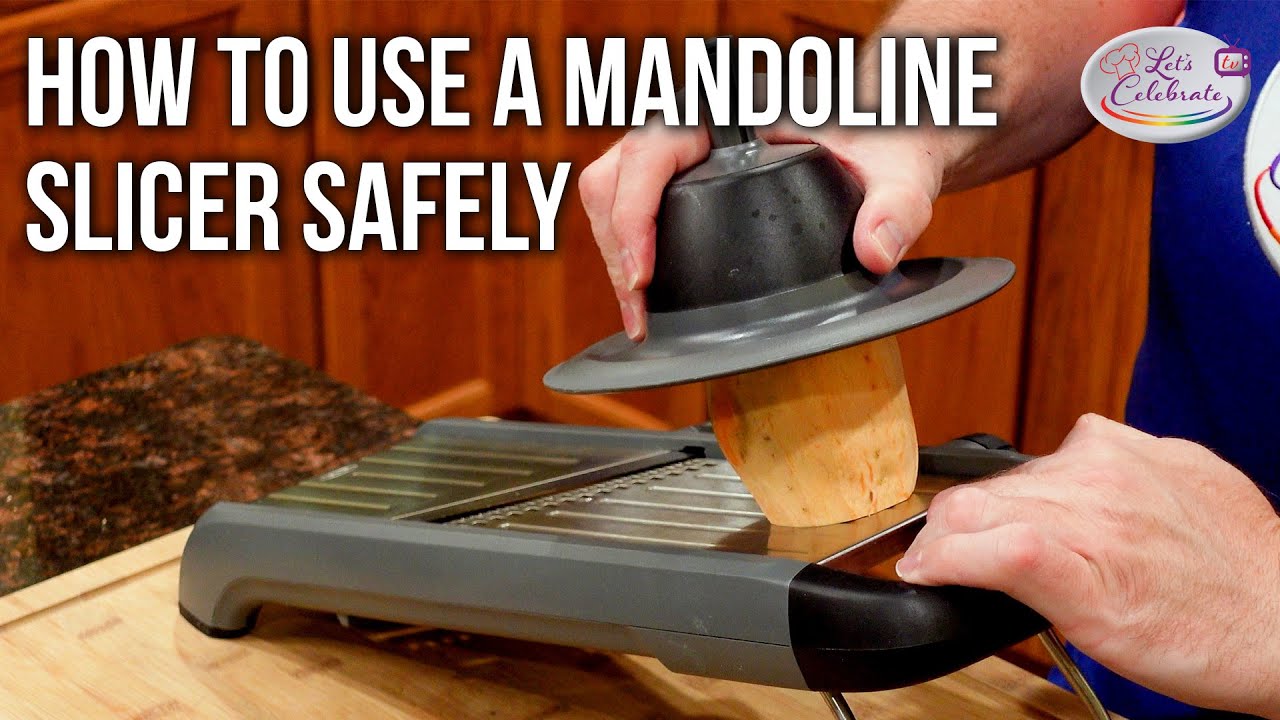
- Use the hand guard: Always use the food holder or hand guard that comes with your mandoline. It protects your fingers as you push the food across the blade.
- Keep your hand flat: Hold the food holder flat, not tilted. This gives you better control and prevents slipping.
- Apply steady pressure: Move the food back and forth smoothly. Don’t force it—let the blade do the work.
- Stop before the end: Don’t try to slice every last bit. When your food is almost finished, stop to avoid cutting your fingers.
- Wear cut-resistant gloves: For extra safety, use cut-resistant kitchen gloves. These are especially helpful if you don’t trust the hand guard.
Many beginners ignore the hand guard, thinking it’s awkward. This is a mistake. Over 70% of mandoline injuries happen when people use their bare hands. Always use the safety tools.
You might find this helpful: Best Mandoline Slicer for Eggplant
Slicing Techniques And Cuts
Mandolines are great for different types of cuts. Here are some popular slicing styles:
Straight Slice
This is the basic cut. You get even, flat slices—perfect for potatoes, cucumbers, or apples.
- Set the blade to your desired thickness.
- Use the hand guard to slide the food across the blade.
Julienne
Julienne cuts are thin strips, like matchsticks. Great for carrots or zucchini salads.
- Attach the julienne blade.
- Slice as normal; the blade will cut the strips for you.
Waffle Or Crinkle Cut
Waffle cuts are popular for chips. You need a special wavy blade.
- Place the food, slice, then rotate it 90 degrees and slice again.
- Repeat for each slice.
Shredding
Some mandolines can shred cabbage or cheese.
- Use the shredding blade.
- Slide the food over the blade to create fine shreds.
Here’s a quick comparison of common cuts:
| Cut Type | Best For | Example Dish |
|---|---|---|
| Straight Slice | Potatoes, apples, cucumbers | Potato gratin, apple tart |
| Julienne | Carrots, zucchini | Salads, stir-fries |
| Waffle | Potatoes | Waffle fries |
| Shredding | Cabbage, cheese | Coleslaw, tacos |

Credit: www.youtube.com
Practical Examples For Mandoline Slicer Use
Here are ways to use a mandoline slicer in everyday cooking:
- Potato Chips: Slice potatoes thinly, season, and bake or fry for crispy chips.
- Cucumber Salad: Create even slices for refreshing salads.
- Carrot Julienne: Make thin strips for stir-fries or garnishes.
- Apple Slices: Perfect for tarts or snacks.
- Onion Rings: Get uniform slices for frying.
For potato chips, slice at 1/16 inch for best crispiness. For cucumber salad, try 1/8 inch for a crunchier texture.
Cleaning And Maintenance
Mandoline slicers are easy to clean if you follow these steps:
- Rinse immediately: After use, rinse the slicer under warm water. This prevents food from drying and sticking.
- Remove blades carefully: Take out blades with caution. Hold the non-sharp edge and avoid touching the blade.
- Use a brush: Clean tight spaces with a brush, not your fingers.
- Dry thoroughly: Make sure all parts are dry before storing to prevent rust.
Some mandolines are dishwasher-safe, but hand-washing extends their life. Always check your model’s manual.
A non-obvious insight: Vegetable residue can dull the blade over time. Wipe with a damp cloth after each use, and sharpen the blade every few months for best performance.
Mandoline Slicer Vs. Other Slicing Tools
You might wonder why you shouldn’t just use a knife or food processor. Here’s a comparison:
| Tool | Precision | Speed | Safety | Best Use |
|---|---|---|---|---|
| Mandoline | Very high | Fast | Moderate (with guard) | Uniform slices, chips |
| Chef’s Knife | Medium | Slow | High (skilled users) | Versatile, all cuts |
| Food Processor | Medium | Very fast | High | Large batches |
Mandolines excel at thin, even slices. Knives are more flexible but require skill for consistent results. Food processors are fast but don’t give as much control over thickness.
Tips For Better Results
To get the most from your mandoline:
- Choose fresh produce: Softer, older vegetables can break or mash.
- Work slowly at first: Speed increases as you gain confidence.
- Try different thicknesses: Experiment to see what works best for your recipe.
- Store blades safely: Keep extra blades in a box or sheath to avoid accidents.
- Use a bowl under the slicer: Some mandolines fit over bowls, making cleanup easier.
If you’re slicing sticky foods like potatoes, rinse them in cold water before slicing. This reduces sticking and keeps slices separate.
Common Mistakes And How To Avoid Them
Beginners often make these mistakes:
- Ignoring the hand guard: Always use it, even if it feels awkward.
- Trying to slice small pieces: Stop before the end to avoid injury.
- Setting the wrong thickness: Start with a medium setting and adjust as needed.
- Not checking the blade: Dull blades can slip and cause uneven cuts.
- Using wet or slippery surfaces: Mandolines can move during use; always stabilize.
If your slices look uneven, check the food’s shape and your pressure. Flat surfaces slice best. For round items, cut a flat side to stabilize.
Choosing The Right Mandoline Slicer
If you’re buying your first mandoline, consider:
- Blade quality: Stainless steel blades stay sharper longer.
- Ease of cleaning: Removable blades and dishwasher-safe parts help.
- Safety features: Hand guards and non-slip feet are essential.
- Adjustability: Look for easy thickness adjustments.
- Price: Good mandolines range from $25 to $100. Cheaper models may lack durability.
Some brands, like Benriner or OXO, are highly rated for home use. Professional models, like De Buyer, offer more options but are pricier.
For more detailed info on mandoline slicers and safety, visit Wikipedia.
Credit: www.youtube.com
Frequently Asked Questions
How Do I Clean A Mandoline Slicer Safely?
Always remove blades before cleaning. Use a brush, not your fingers, to avoid cuts. Rinse under warm water and dry fully before storing.
Can I Slice Meat Or Cheese With A Mandoline?
Most mandolines are designed for vegetables and fruits. Hard cheese can be sliced, but meat is generally too soft and may clog the blade.
What’s The Best Thickness For Potato Chips?
For crispy chips, set your mandoline to about 1/16 inch. This creates thin, even slices that cook quickly and evenly.
Do I Need To Sharpen The Mandoline Blade?
Yes, blades can dull over time. Sharpen every few months or when slicing feels harder. Some models allow blade replacement instead.
What Should I Do If My Mandoline Doesn’t Have A Hand Guard?
Use cut-resistant gloves as an extra safety measure. Never use bare hands, even for large pieces.
Using a mandoline slicer makes slicing quick, easy, and professional. If you follow these tips and safety steps, you’ll get perfect results every time—without risking your fingers. With practice, your salads, chips, and garnishes will look and taste better than ever.
Take your time to learn, and soon you’ll wonder how you ever cooked without this tool.