Lots of people love rice, but sometimes cooking it just right can be tricky. You might wonder, how to use a rice cooker to cook rice without it turning out mushy or dry? It’s a super common question for folks just starting out.
Don’t worry! Making perfect rice in your rice cooker is simple once you know the steps. This guide will show you exactly what to do, so you can enjoy fluffy rice every time.
We’ll cover everything you need to get started.
Key Takeaways
- You will learn the basic steps for using a rice cooker.
- Discover the importance of the rice to water ratio.
- Understand how to prepare rice before cooking.
- Learn how to operate your rice cooker for perfect results.
- Find out what to do after the rice is cooked.
- Get tips for common rice cooker scenarios.
Understanding Your Rice Cooker
What Is A Rice Cooker?
A rice cooker is a kitchen appliance designed to cook rice. It automates the cooking process, making it much easier and more consistent than cooking rice on a stovetop. Most rice cookers have a non-stick inner pot, a heating element, and a lid.
They work by heating water to boiling point, then maintaining a steady temperature until the rice is cooked and the water is absorbed. Many models also have a “keep warm” function to keep cooked rice at the perfect temperature.
Types Of Rice Cookers
There are a few main types of rice cookers you might see. Basic models are very simple and usually have just one or two buttons. They cook rice and then switch to a warming mode.
More advanced models are called fuzzy logic rice cookers. These use microcomputers to adjust cooking time and temperature based on the type of rice and the amount being cooked. Induction heating (IH) rice cookers use electromagnetic coils to heat the inner pot directly, which can lead to more even cooking and better texture.
Whichever type you have, the core principles of how to use a rice cooker to cook rice remain similar.
Preparing To Cook Rice
Choosing The Right Rice
Different types of rice may require slight adjustments to the water ratio or cooking time, but most standard white rice, like jasmine or basmati, works well in a rice cooker. Brown rice often needs more water and a longer cooking time because it has an extra bran layer. Quinoa and other grains can also be cooked in a rice cooker, but it’s good to check the specific instructions for those grains.
Measuring Your Rice
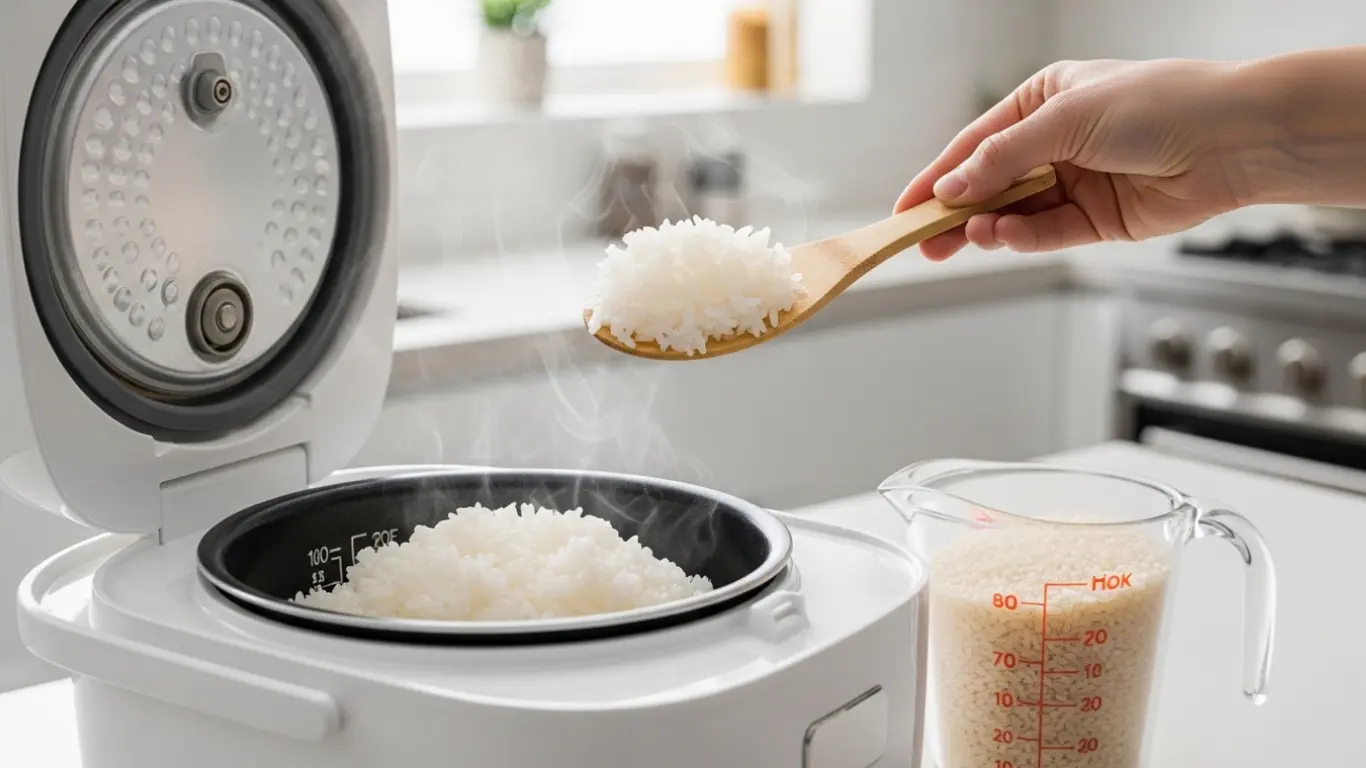
Accuracy is key when you learn how to use a rice cooker to cook rice. Most rice cookers come with a measuring cup. It’s important to use this specific cup, as it’s usually smaller than a standard US cup.
This ensures the correct rice-to-water ratio. Always measure dry rice. Don’t guess; use the provided cup for the best results.
Rinsing Your Rice
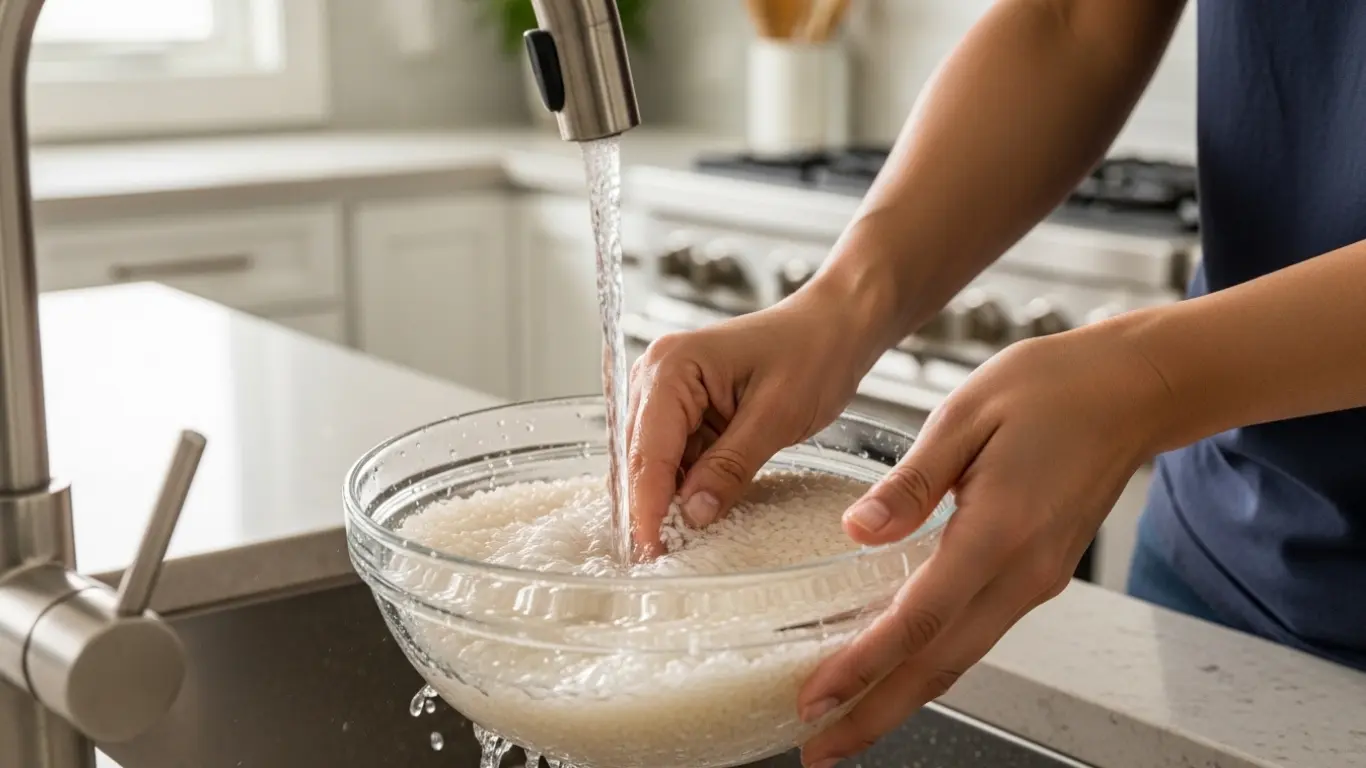
Rinsing rice is an important step for many types of rice, especially white rice. It helps remove excess starch from the surface of the grains. This excess starch can make the rice sticky or gummy.
To rinse, place the measured rice in a bowl or the rice cooker pot. Add cool water, swirl the rice with your hand, and then carefully pour out the cloudy water. Repeat this process 2-3 times, or until the water runs mostly clear.
After rinsing, drain the rice thoroughly.
The Rice To Water Ratio
Why Ratio Matters
Getting the right rice to water ratio is probably the most critical step in how to use a rice cooker to cook rice. Too much water, and your rice will be mushy. Too little water, and it will be dry and undercooked.
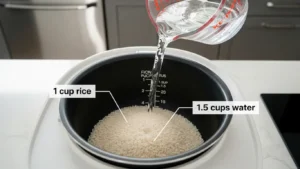
The general rule of thumb for most white rice is a 1:1 or 1:1.5 ratio of rice to water. For example, if you use one cup of rice, you’ll use one to one-and-a-half cups of water.
Adjusting For Rice Type
Brown rice usually needs more water. A good starting point for brown rice is a 1:2 or even 1:2.5 ratio of rice to water. Some specialty rice like sushi rice might need slightly less water for that characteristic sticky texture.
Always check the packaging of your rice for specific recommendations. If you’re unsure, it’s often better to start with a slightly lower water ratio and add a little more if needed later, though it’s harder to fix overcooked rice.
Using The Inner Pot Markings
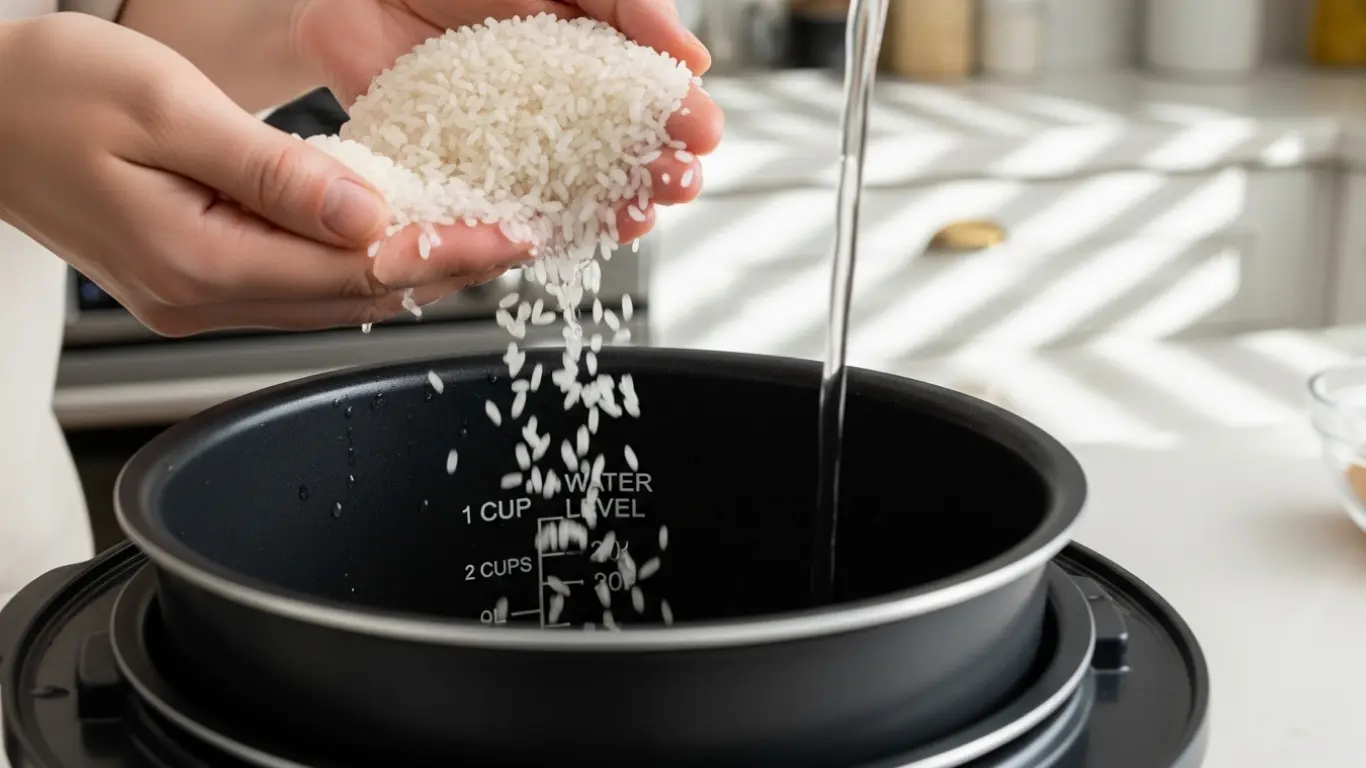
Many rice cooker inner pots have water level markings. These markings are usually designed to correspond with the number of rice cups you are cooking. For instance, you might see lines labeled “2 CUP,” “3 CUP,” and so on.
After rinsing and draining your rice, you can add water up to the line that matches the number of rice cups you measured. This is a very user-friendly way to ensure the correct ratio and is a helpful guide for how to use a rice cooker to cook rice.
Operating Your Rice Cooker
Adding Rice And Water
Once your rice is rinsed and drained, put it into the rice cooker’s inner pot. Then, add the measured amount of water according to your chosen ratio or the inner pot markings. Make sure to wipe the outside of the inner pot dry before placing it into the rice cooker body.
This prevents issues with the heating element.
Closing The Lid
Place the inner pot into the rice cooker. Close the lid securely. Most rice cookers have a lid that locks or clicks into place.
Ensure it is properly sealed, as this helps to trap steam and cook the rice evenly.
Selecting The Setting
Plug in your rice cooker. For most basic models, there will be a simple switch or button. You usually just press it down to start the cooking cycle.
If your rice cooker has different settings for white rice, brown rice, or quick cook, select the appropriate one. Advanced models may have more buttons or a digital display where you choose your rice type and desired cooking settings.
Starting The Cook Cycle
Once the settings are selected, the rice cooker will begin heating. The indicator light will usually show that it is in “Cook” mode. The cooker will automatically adjust the temperature and cooking time as needed.
You don’t need to stir the rice or monitor it closely. This is the beauty of learning how to use a rice cooker to cook rice.
After Cooking
Allowing It To Steam
When the rice is finished cooking, the rice cooker will typically switch to a “Keep Warm” mode. You’ll often hear a click sound or see an indicator light change. It’s very important to resist the urge to open the lid immediately.
Let the rice steam in the cooker for at least 10-15 minutes after it finishes cooking. This resting period allows the moisture to distribute evenly throughout the rice, ensuring a fluffy texture.
Fluffing The Rice
After the steaming period, open the lid. Use a rice paddle or a large spoon to gently fluff the rice. Start from the bottom and fold the rice upwards.
This releases any trapped steam and separates the grains, preventing them from clumping together. This step is essential for achieving perfectly cooked rice.
Serving The Rice
Your delicious, perfectly cooked rice is now ready to be served! The “Keep Warm” function will keep the rice at an ideal eating temperature for an extended period, usually a few hours. This is perfect if you’re not serving the rice right away or if you need to keep it warm while preparing other dishes.
Tips For Perfect Rice Every Time
- Always use the measuring cup that came with your rice cooker.
- Rinse your rice thoroughly to remove excess starch, especially for white rice.
- When in doubt, start with less water; you can always add a bit more later if needed.
- Let the rice rest and steam for 10-15 minutes after cooking before fluffing.
- Fluff the rice gently with a paddle or spoon to separate the grains.
- Clean your rice cooker’s inner pot and lid after each use to maintain its performance.
Troubleshooting Common Issues
Rice Is Too Wet Or Mushy
If your rice consistently comes out too wet or mushy, you are likely using too much water. Try reducing the amount of water the next time you cook. For every cup of rice, try using 1/4 cup less water.
Also, ensure you are draining the rice well after rinsing.
Rice Is Too Dry Or Undercooked
If your rice is dry or hard, it means it didn’t absorb enough water. Increase the amount of water you use. For every cup of rice, try adding 1/4 cup more water.
You can also try letting the rice steam for a little longer after the cooking cycle is complete.
Rice Is Sticking To The Bottom
A little bit of sticking can be normal, especially with certain types of rice or if the rice cooker is older. However, excessive sticking can be caused by not enough water or cooking the rice for too long on a high heat. Ensure you are using the correct rice-to-water ratio.
If sticking is a persistent problem, check if the non-stick coating on your inner pot is damaged.
Rice Cooker Won’t Turn On
First, make sure the rice cooker is plugged into a working electrical outlet. Check if the power cord is securely attached to both the cooker and the outlet. If it still doesn’t turn on, there might be an issue with the appliance itself, and you may need to consult the user manual or contact the manufacturer.
“Keep Warm” Function Not Working
The “Keep Warm” function usually activates automatically after the cooking cycle is finished. If it’s not engaging, it might be a setting issue or a problem with the heating element dedicated to warming. Refer to your rice cooker’s manual to ensure you’re using the settings correctly.
If the problem persists, it could indicate a malfunction.
Frequently Asked Questions
Question: How much water do I use for one cup of rice?
Answer: For most white rice, use one to one-and-a-half cups of water for every cup of rice. Brown rice usually requires more water, around two cups of water per cup of rice.
Question: Do I have to rinse the rice?
Answer: Rinsing rice removes excess starch, which helps prevent it from becoming gummy. It’s highly recommended for white rice, but some people prefer not to rinse rice like Arborio for risotto.
Question: Can I use any pot in my rice cooker?
Answer: No, always use the inner pot that came with your rice cooker. Other pots may not heat evenly or could damage the cooker.
Question: How long does it take to cook rice?
Answer: Cooking times vary depending on the type of rice and your rice cooker, but typically range from 20 to 45 minutes for white rice. Brown rice takes longer.
Question: Can I add oil or butter to the rice while cooking?
Answer: Some people add a little oil or butter for flavor, but it’s not necessary for the cooking process. If you do add it, a teaspoon is usually enough for one cup of rice.
Final Thoughts
Mastering how to use a rice cooker to cook rice is simple with these steps. You’ve learned about measuring, rinsing, ratios, and the cooking process. Remember to let the rice steam and then fluff it gently.
Your rice cooker makes delicious rice easy. Now you can enjoy perfect rice without the fuss. Happy cooking!

I’m Loretta Evans, and I lead the Rice Cooker and Kitchen Tools section. I test every product in real home kitchens to see how it truly performs in everyday use.
My goal is simple: to give you clear, honest advice so you can choose reliable tools that make cooking easier.