When you reach for a cold drink and your ice maker is not freezing ice cubes, frustration can follow. You expect a modern appliance to just work, but sometimes, ice makers stop producing ice or only make slushy, half-frozen cubes. This problem can happen in both standalone ice machines and refrigerators with built-in ice makers. While the reasons may seem mysterious, most causes are actually simple and fixable with the right approach. Understanding why your ice maker is failing, and how to address it, can save you money, time, and many warm drinks.
How An Ice Maker Works
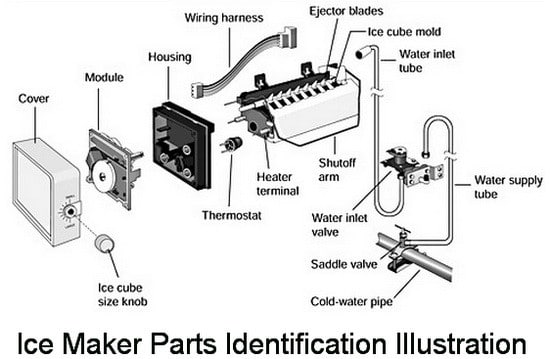
To fix a problem, it helps to understand how things should work. Most home ice makers follow a basic process:
- Water supply feeds into the ice maker tray.
- A thermostat or sensor checks the temperature.
- When the tray is cold enough, water freezes into cubes.
- A heater briefly warms the tray’s bottom so cubes release.
- Cubes move to the storage bin, and the cycle repeats.
If any step fails, ice cubes may not form, or you get incomplete cubes. Knowing these steps helps you spot where the problem might be.
Common Reasons An Ice Maker Is Not Freezing Ice Cubes
There are many reasons your ice maker might not freeze cubes properly. Some are easy to fix; others may need professional help. Below, you’ll find the most common causes and what you can do about each one.
1. Temperature Is Too High
The freezer or ice maker compartment must be 0°F (-18°C) or lower for ice to form. If your freezer is warmer, ice will not freeze.
- Check freezer temperature with a thermometer, not just the control dial.
- Overfilling the freezer can block cold air.
- Old or faulty door seals allow warm air in.
2. Faulty Thermostat Or Temperature Sensor
If the thermostat is broken, the ice maker may not know when to start or stop freezing.
- Ice makers use a thermostat to sense when cubes are frozen.
- If the sensor is off, water may never freeze or freeze too slowly.
- Replacing a faulty thermostat often solves the issue.
3. Water Supply Problems
Ice makers need a steady flow of water. If water is blocked or limited, ice cubes may not form.
- Kinked or frozen water lines stop water from reaching the tray.
- Clogged water filters slow flow.
- Low home water pressure affects performance.
4. Dirty Or Clogged Water Filter
A clogged filter can cut water flow to a trickle, so trays don’t fill completely.
- Replace filters every 6 months or as your manual suggests.
- Some ice makers stop working if the filter needs changing.
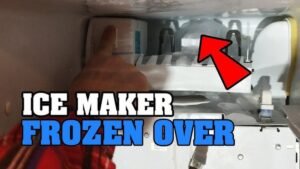
5. Frozen Water Line
If the water line to the ice maker freezes, no water enters the tray.
- This can happen in very cold freezers or if airflow is blocked.
- Gently thaw the line with a hairdryer (on low heat), or unplug the fridge and let it sit with the door open.
6. Broken Ice Maker Components
Certain parts can fail:
- Ice tray heater: If this breaks, cubes stick and don’t release.
- Ejector arm: Moves cubes to the bin. If stuck, the next batch won’t start.
- Fill valve: If faulty, no water enters the ice tray.
If parts are broken, replacement is often needed. Check your warranty before buying parts.
7. Faulty Door Seal
A damaged door seal lets warm air into the freezer.
- Even a small gap can raise temperature.
- Check seals for cracks or dirt. Clean or replace them as needed.
8. Incorrect Freezer Settings
Some people set their freezer just cold enough for food, but not cold enough for ice.
- Adjust the dial to a colder setting.
- Wait 24 hours and check if ice forms.
9. Power Supply Problems
If the ice maker is not getting power, it cannot freeze water.
- Check that the ice maker’s power switch is ON.
- Inspect power cords and connections.
- For built-in units, check the household circuit breaker.
10. Control Arm Is Off
Most ice makers have a metal or plastic arm that pauses operation when the bin is full.
- Make sure the control arm is down (ON position), not up (OFF).
- Sometimes, the arm gets stuck or knocked out of place.
11. Defrost Cycle Issues
Modern fridges defrost automatically. If the defrost timer is broken, it may run too long, warming the freezer.
- Listen for a ticking sound or check if the freezer gets unusually warm during defrost.
- Defrost timers can be replaced if faulty.
12. Dirty Condenser Coils
When coils behind or under the fridge get dusty, cooling efficiency drops.
- Clean coils every 6-12 months with a vacuum or soft brush.
- Improved airflow helps keep the freezer cold enough for ice.
13. Overloaded Freezer
Too much food blocks air vents and reduces cold air circulation.
- Rearrange items so vents are clear.
- Don’t stack food too tightly around the ice maker.
14. Poor Ventilation Around The Fridge
If your fridge is too close to the wall or surrounded by cabinets, heat can’t escape.
- Leave at least 2 inches (5 cm) of space behind and above.
- Good ventilation helps the unit cool properly.
15. High Room Temperature
If your kitchen is hot, the fridge works harder to stay cold.
- In summer or if near an oven, ice making may slow down.
- Try to keep the fridge away from direct sunlight or heat sources.

Credit: protocall.co
Signs That Point To The Real Problem
Sometimes, the symptoms can help you narrow down the issue:
- No ice at all: Water supply, power, or major component failure.
- Small or hollow cubes: Water flow or filter issues.
- Wet cubes: Freezer temperature too high.
- Cubes stuck in tray: Ejector or heater problem.
Carefully observing what your ice maker does (or doesn’t do) will help you focus your troubleshooting.
Troubleshooting Steps: Fixing An Ice Maker That Won’t Freeze Ice
Solving ice maker problems can be straightforward if you follow a systematic approach. Here’s a step-by-step guide:
Step 1: Check Freezer Temperature
- Use a thermometer, not just the fridge’s display.
- Adjust settings so the freezer is at or below 0°F (-18°C).
Step 2: Inspect Water Supply
- Make sure the main water line is open.
- Look for kinks or blockages in the line.
- Change the water filter if it’s older than 6 months.
Step 3: Look At The Control Arm
- Ensure it’s in the ON position.
- Move it up and down to see if it’s stuck.
Step 4: Clear The Ice Maker And Bin
- Empty any old, clumped ice.
- Look for cubes stuck in the ejector.
Step 5: Check For Frozen Water Line
- Feel the water supply tube. If it’s hard or frosty, it might be frozen.
- Unplug the fridge and let it thaw, or use a hairdryer (on low) to gently warm the line.
Step 6: Listen For Running Sounds
- The ice maker should make humming or clicking noises during operation.
- Silence may indicate a power or component issue.
Step 7: Clean Condenser Coils
- Pull the fridge away from the wall.
- Use a coil brush or vacuum to remove dust.
Step 8: Test With A Manual Ice Cycle
- Some ice makers have a test button.
- Pressing it should start a cycle; if not, there may be an electrical or mechanical failure.
Step 9: Check Door Seals
- Close the door on a piece of paper. If the paper pulls out easily, the seal is weak.
- Replace bad seals.
Step 10: Call For Professional Help
- If all else fails, it’s time for a technician.
- Electrical or sealed system repairs should only be done by a pro.

Credit: www.maytag.com
Comparing Common Ice Maker Problems
Understanding how symptoms match up with causes can help you fix the issue faster. Here’s a helpful comparison:
| Symptom | Likely Cause | Recommended Action |
|---|---|---|
| No ice produced | No water supply, power issue, or faulty thermostat | Check water line, power, thermostat |
| Small/hollow cubes | Clogged filter, low water pressure | Replace filter, check water pressure |
| Slushy/wet cubes | Freezer not cold enough | Lower freezer temperature |
| Cubes stuck in tray | Broken ejector or tray heater | Repair or replace components |
How Long Should It Take For Ice Cubes To Freeze?
Most ice makers need 90–120 minutes to freeze a batch of cubes. If it’s taking much longer, that’s a sign of trouble. Here’s how different types of ice makers compare:
| Type | Average Freezing Time | Typical Batch Size |
|---|---|---|
| Built-in refrigerator | 90–120 min | 8–12 cubes |
| Portable countertop | 10–20 min | 9–12 cubes |
| Commercial undercounter | 45–60 min | 20–40 cubes |
If your ice maker is much slower than these averages, check for temperature or water supply problems.
Credit: removeandreplace.com
When To Repair And When To Replace
Ice makers can last 5–10 years with proper care. Still, repairs may not always be worth it. If your ice maker is:
- Over 8 years old
- Needs multiple expensive parts
- Has repeated problems after repair
…it may be time for a replacement. Newer models are often more energy efficient and reliable.
Maintenance Tips To Keep Your Ice Maker Freezing Properly
A bit of regular care can prevent most issues. Here’s what to do:
- Replace water filters twice a year, or as recommended.
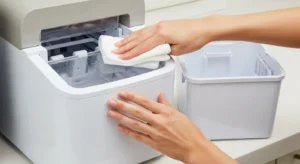
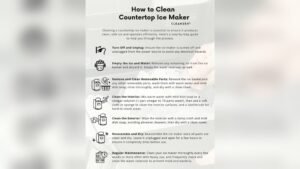
- Clean the ice bin and maker every few months to avoid mold and odors.
- Keep freezer vents clear and don’t overload with food.
- Vacuum condenser coils at least once a year.
- If you’re away for a long time, turn off the ice maker and empty the bin to avoid stale ice and leaks.
Two Insights Many People Miss
- Water quality matters: Hard water or high mineral content can build up inside ice makers, blocking water flow or damaging parts. Using filtered or softened water can extend your ice maker’s life.
- Humidity affects freezing: In very humid environments, freezers may struggle more to keep things cold, slowing ice production. Keeping the area dry and well-ventilated helps.
When Professional Help Is Essential
Some issues are best left to experts:
- Electrical faults or wiring problems
- Refrigerant leaks or sealed system repairs
- Recurring breakdowns after DIY fixes
Most appliance repair services offer free estimates. For more details on appliance maintenance, you can visit Consumer Reports.
Frequently Asked Questions
Why Does My Ice Maker Make Ice Sometimes, But Not Always?
This often points to fluctuating freezer temperatures or a water supply that is sometimes blocked. Check for overfilled freezers or a water filter that’s almost clogged.
How Do I Know If My Water Line Is Frozen?
Signs include no water filling the tray and the supply tube feeling hard or frosty. You may also hear the ice maker running, but no ice forms.
Can A Bad Water Filter Stop Ice Production Completely?
Yes, a completely clogged filter can cut off water flow. Always replace filters on schedule, and use the correct type for your appliance.
Is It Safe To Use A Hairdryer To Thaw A Frozen Water Line?
Yes, but use it on low heat and keep it moving. Never use open flames or high heat, as this can damage plastic parts.
Why Are My Ice Cubes Cloudy Or Taste Bad?
Cloudy cubes are usually caused by air or minerals in the water. Bad taste can come from old filters, dirty trays, or food odors in the freezer.
A well-working ice maker is a small luxury that adds comfort to daily life. With a basic understanding of how they work and some regular maintenance, you can enjoy cold drinks whenever you like, without hassle. If your ice maker is still not freezing ice cubes after these steps, don’t hesitate to get professional help—sometimes, a quick fix by an expert saves you time and money in the long run.