Is Glass Electric Kettle Safe For Health?
Electric kettles have become a regular part of many kitchens. They offer a fast, easy way to boil water for tea, coffee, or cooking. But as more people care about health and safety, a common question appears: Is glass electric kettle safe for health? If you have ever wondered if choosing glass over plastic or metal makes a difference, you’re in the right place.
Let’s dig into the facts, compare materials, and find out what’s really safe.
Why Material Matters In Electric Kettles
When you use a kettle, water gets very hot—sometimes even boiling. At these high temperatures, the material of the kettle can interact with your water. Some materials can release chemicals, while others stay stable. This is why the choice between glass, plastic, and stainless steel matters for your health.
How Glass Electric Kettles Are Made
Glass electric kettles are usually made from borosilicate glass or high-strength tempered glass. These types of glass are designed to resist heat and sudden temperature changes. The kettle may also have parts made of plastic (handle, base) or stainless steel (heating element, lid rim), but the main body is glass.
Borosilicate glass is special because it doesn’t react much to heat or chemicals. This makes it common in lab equipment and cookware. Its non-porous surface doesn’t absorb tastes or odors, keeping your water pure.
Comparing Glass, Stainless Steel, And Plastic Kettles
To see how glass kettles stack up for health, let’s compare them to the two other common choices.
| Material | Health Risk | Durability | Flavor Preservation |
|---|---|---|---|
| Glass | Low | Moderate (can break if dropped) | Excellent |
| Stainless Steel | Low (if good quality) | High | Very Good |
| Plastic | Varies (may release chemicals) | High | Can affect taste |
Glass kettles stand out for their purity and safety. They do not leach chemicals even when the water is boiling. The main downside is that glass can crack or shatter if dropped.
Chemical Safety: Does Glass Leach Anything Into Water?
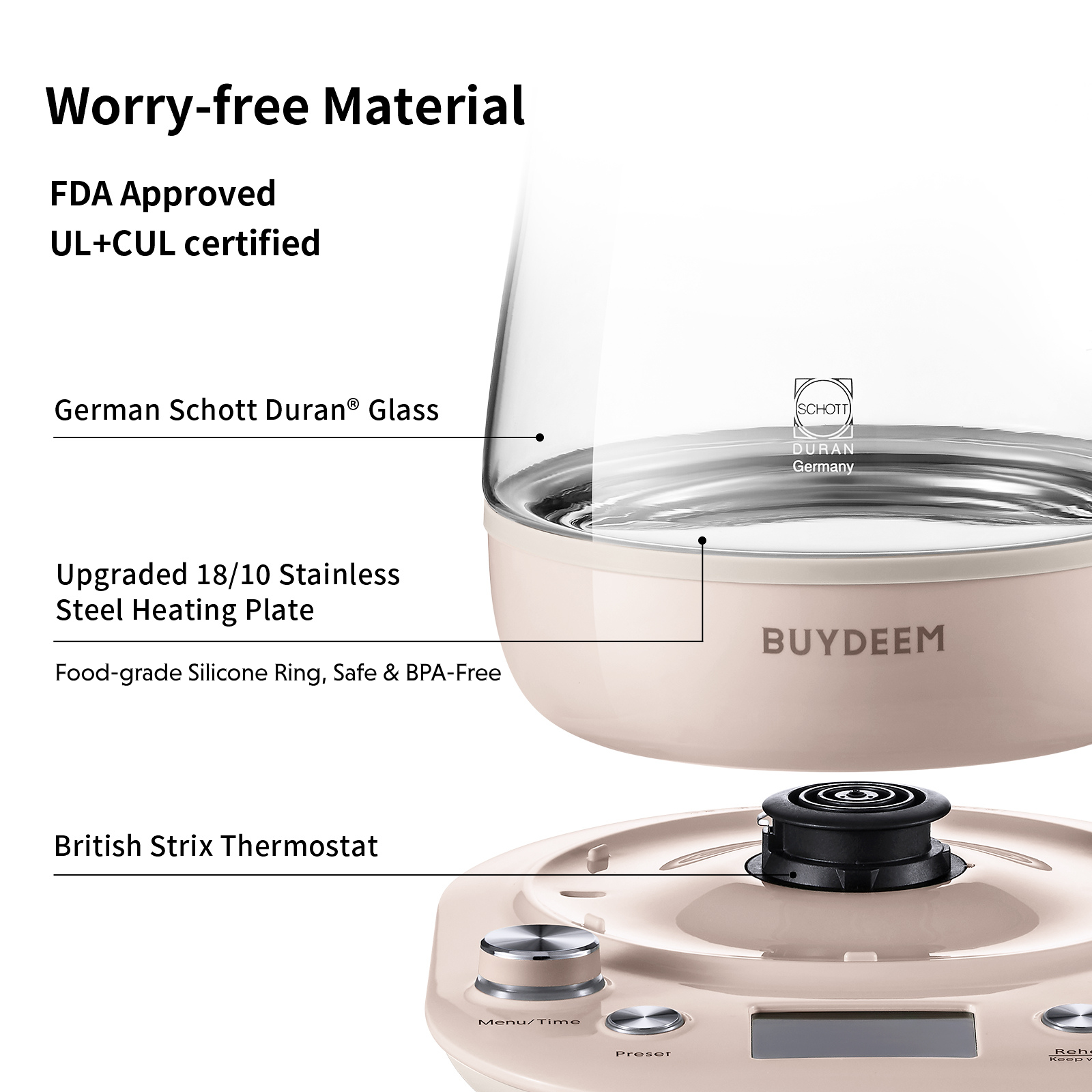
One big reason people choose glass kettles is to avoid chemical leaching. Unlike some plastics, glass does not contain BPA, phthalates, or other risky chemicals. Even at high temperatures, borosilicate glass remains stable. That’s why it’s used in laboratory flasks and beakers.
Some people worry about the glue or silicone used to attach handles or seals. But in well-made kettles, these parts rarely touch the water. If you want to be extra careful, choose a model where only glass and stainless steel contact your water.
Credit: us.buydeem.com
Are There Hidden Risks With Glass Kettles?
Even though glass is very safe, there are a few things to keep in mind:
- Cracking and Shattering: Glass kettles can break if dropped or if exposed to sudden temperature changes (like pouring cold water into a hot kettle). Broken glass can cause injury.
- Metal Parts: The heating element is often stainless steel. Cheap or poorly made steel could leach trace metals, but this is rare with reputable brands.
- Plastic Components: Some lids or spouts are plastic. If these parts touch hot water or steam, they could leach chemicals. Look for “BPA-free” labels or all-glass interiors.
Is Glass Kettle Scale Harmful?
Mineral scale can build up on the bottom and sides of any kettle, including glass. Scale is made of calcium carbonate—the same substance found in tap water and teeth. While it isn’t harmful in small amounts, too much scale can affect taste and kettle performance. Regular cleaning keeps your kettle safe and working well.

Credit: www.walmart.com
Real-world Example: Taste And Smell
Many users choose glass kettles because water tastes cleaner compared to plastic kettles. This is especially true for tea and coffee lovers who notice even small changes in flavor. Glass does not absorb odors, so yesterday’s herbal tea will not affect today’s oatmeal.
Practical Safety Tips For Using A Glass Electric Kettle
For best results, follow these tips:
- Never fill above the max line to avoid spills or splashes.
- Let the kettle cool before refilling with cold water.
- Use filtered water to reduce scale buildup.
- Handle with care to avoid dropping or knocking the kettle.
- Inspect regularly for cracks or chips.
These habits keep your glass kettle safe and lasting longer.
Glass Vs. Plastic: Chemical Release At High Temperatures
Let’s look closer at how each material reacts when heated.
| Material | What Can Leach? | At What Temp? | Health Impact |
|---|---|---|---|
| Glass (Borosilicate) | Nothing | Up to 450°F (232°C) | None |
| Plastic | BPA, phthalates (if present) | Above 158°F (70°C) | Hormone disruption, cancer risk (long-term) |
| Stainless Steel | Nickel, chromium (rarely) | Above 392°F (200°C) | Usually safe, minor risk for allergies |
Glass remains the safest, especially for boiling water daily.
Important Insights Most People Miss
- Not all glass is equal. Only borosilicate or heat-tempered glass is safe for boiling water. Cheap glass may crack or leach small minerals if not properly treated.
- Pay attention to the lid and spout. Many kettles use plastic here, and steam can carry chemicals into your water. Search for models with all-glass or stainless steel where the steam passes.
Do Glass Kettles Kill Bacteria?
Boiling water in any kettle—including glass—kills most bacteria and viruses. The kettle itself does not add germs if you clean it regularly. In fact, the non-porous glass is easier to clean than plastic, where bacteria can hide in tiny scratches.
Are Glass Electric Kettles Safe For Children And Elderly?
Glass kettles are safe for all ages when used with care. The main risk is breaking the kettle, which can cause cuts. Most models come with auto shut-off and cool-touch handles, reducing burn risk. Teach children and seniors to use both hands and avoid touching the hot glass.

Credit: www.amazon.com
Cleaning Glass Kettles: Simple And Safe
One of the best things about glass kettles is that you can see inside. If there’s any buildup or residue, you’ll notice it right away. Here’s a simple cleaning method:
- Fill the kettle with equal parts water and white vinegar.
- Boil the mixture and let it sit for 15–20 minutes.
- Pour it out and rinse with fresh water.
This removes mineral scale and keeps water pure. For regular cleaning, just rinse and wipe the glass with a soft cloth.
Longevity: How Long Does A Glass Kettle Last?
A quality glass electric kettle can last 3–5 years or more with careful use. Dropping or knocking the kettle is the main cause of breakage. Some brands offer replacement glass bodies, so check before buying. The heating element often lasts longer than the glass itself.
Environmental Impact: Is Glass Better?
Glass kettles are often seen as eco-friendly compared to plastic. Glass is made from natural materials and can be recycled. It does not release microplastics into water or the environment. However, making glass uses more energy than making plastic. Stainless steel is also recyclable and durable. Each material has trade-offs, but glass avoids chemical pollution.
What To Look For When Buying A Glass Electric Kettle
Here are a few things that matter most:
- All-glass interior: Makes sure water only touches glass or stainless steel.
- BPA-free certification: For any plastic parts.
- Auto shut-off and boil-dry protection: For safety.
- Easy-to-clean design: Wide lid and visible interior.
- Strong handle and stable base: Prevents accidents.
Avoid models with unclear material information or weak glass.
You might find this helpful: Best Non Toxic Electric Tea Kettles
Comparing Popular Glass Electric Kettle Brands
Here’s how three top brands compare on safety and features:
| Brand | Glass Type | Plastic-Free Water Path | Safety Features |
|---|---|---|---|
| Breville Crystal Clear | Borosilicate | Yes | Auto shut-off, dry-boil protection |
| Mueller Ultra Kettle | Borosilicate | No (plastic lid) | Auto shut-off, LED indicator |
| Hamilton Beach Glass Kettle | Tempered Glass | No (plastic spout filter) | Auto shut-off |
Notice that even top models sometimes use plastic for lids or filters. If this matters to you, check product details carefully.
Scientific View: What Do Studies Say?
Research shows that glass is chemically inert and does not leach harmful substances into boiling water. According to the World Health Organization, glass containers are considered safe for food and drink at all temperatures. This makes glass a trusted choice for health-focused consumers. For more details on material safety, see the Wikipedia article on borosilicate glass.
Final Thoughts: Is Glass Electric Kettle Safe For Health?
For most people, a glass electric kettle is a healthy and safe choice. Glass does not add chemicals or flavors to your water. It is easy to clean, lets you see inside, and keeps your drinks pure. The main risks are breakage and possible plastic in some parts, but these are easy to avoid with careful selection and handling.
If you want the cleanest, safest water for your tea or coffee, a glass electric kettle is one of the best options available today.
Frequently Asked Questions
Can A Glass Electric Kettle Break Easily?
Glass kettles can break if dropped or hit against a hard surface. However, most are made from tough borosilicate or tempered glass designed to handle boiling water and daily use. Handle with care, and avoid sudden temperature changes to reduce breakage risk.
Is Boiling Water In A Glass Kettle Better Than In A Metal Or Plastic Kettle?
Boiling water in a glass kettle avoids the risk of chemicals leaching from plastic. Compared to metal, glass does not add any taste or odor. Both glass and stainless steel are good choices, but glass gives a pure taste and lets you see the water.
Are There Any Chemicals In Glass Kettles?
High-quality glass kettles (especially borosilicate) do not leach chemicals into your water. Always check if any plastic parts touch the water or steam. Choose BPA-free or all-glass models for best safety.
How Do I Clean A Glass Electric Kettle?
Fill the kettle with equal parts white vinegar and water, boil, let sit for 15–20 minutes, then rinse. This removes scale and keeps the kettle clean. For daily cleaning, just rinse and wipe the inside with a soft cloth.
Is It Safe To Use A Glass Kettle For Baby Formula?
Yes, as long as the kettle is clean and only glass or stainless steel touches the water. Avoid kettles with plastic water paths. Always let boiled water cool to the right temperature before preparing formula.