Is Pressure Cooker Same As Slow Cooker?
Many people ask, “Is a pressure cooker the same as a slow cooker?” The short answer is no, but there’s much more to understand. Both are popular kitchen tools that promise to make cooking easier, but they work in very different ways. Knowing how each one functions can help you cook smarter, save time, and create better meals.
Let’s explore what makes these appliances unique, their advantages, and how to choose the right one for your kitchen.
What Is A Pressure Cooker?
A pressure cooker is a sealed pot that uses steam pressure to cook food quickly. When water inside the pot heats up, it turns into steam. The trapped steam increases the pressure, which raises the boiling point of water and speeds up the cooking process.
Modern electric pressure cookers, like the Instant Pot, come with digital controls, timers, and safety features. Traditional stovetop models are still used, but electric versions are becoming more common.
How Pressure Cookers Work:
- The pot is sealed tightly.
- Water or liquid heats up, creating steam.
- Steam builds up pressure, raising the boiling point of water.
- Food cooks much faster than normal.
Typical Cooking Times:
- Beans: 20–30 minutes (compared to 2–3 hours on stovetop)
- Rice: 6–10 minutes
- Chicken: 15–20 minutes
- Beef stew: 30–40 minutes
Key Benefits:
- Saves time (up to 70% faster)
- Keeps nutrients locked in
- Useful for tough meats and beans
Common Mistakes:
- Overfilling the pot (can cause leaks)
- Not adding enough liquid (leads to burning)
What Is A Slow Cooker?
A slow cooker, often called a Crock-Pot, cooks food at low temperatures over several hours. It’s designed for “set it and forget it” cooking. You add ingredients, set the timer, and let the cooker do the work while you go about your day.
How Slow Cookers Work:
- Food is placed in a ceramic or metal pot inside a heating base.
- Low, steady heat cooks food slowly.
- Cooking usually takes between 4–10 hours.
Typical Cooking Times:
- Chili: 6–8 hours
- Pulled pork: 8–10 hours
- Soups and stews: 6–8 hours
- Vegetables: 4–6 hours
Key Benefits:
- Easy for busy schedules
- Great for deep flavors and tender meat
- Uses less energy than ovens
Common Mistakes:
- Opening the lid too often (slows cooking)
- Using too little liquid (food can dry out)
Credit: www.youtube.com
Pressure Cooker Vs Slow Cooker: Key Differences
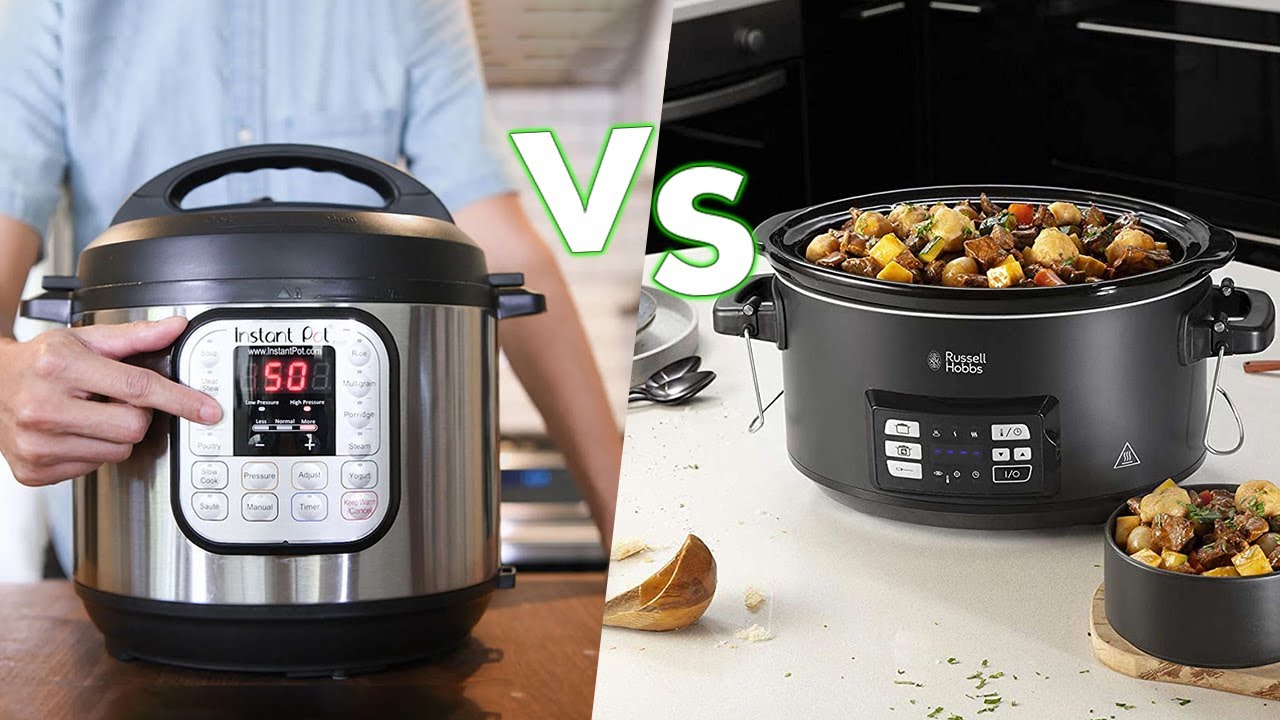
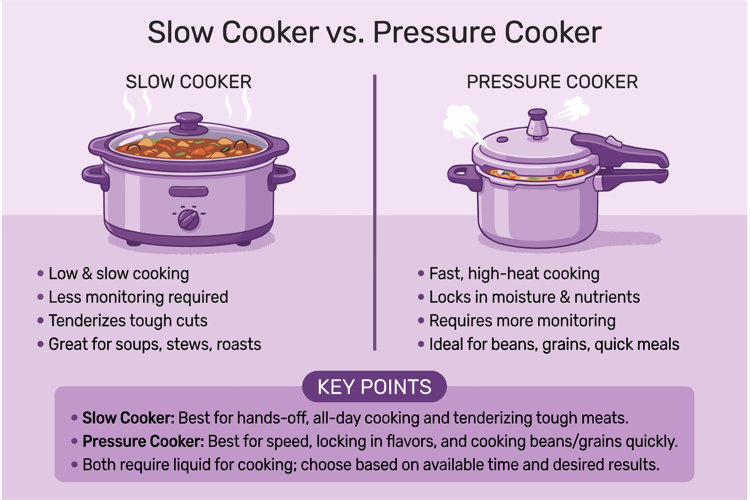
These appliances look similar, but their differences are important. Here’s a side-by-side comparison:
| Feature | Pressure Cooker | Slow Cooker |
|---|---|---|
| Cooking Time | Fast (minutes) | Slow (hours) |
| Method | High pressure steam | Low heat |
| Food Texture | Soft, sometimes less flavor | Rich, deep flavor |
| Safety | Needs careful handling | Very safe |
| Energy Use | Higher (short bursts) | Lower (long duration) |
| Best For | Tough meats, beans, quick meals | Soups, stews, tender cuts |
Notable Insights:
- Pressure cookers are better for last-minute meals.
- Slow cookers are ideal for planning ahead.
Cooking Techniques: How They Affect Food
Pressure Cooking
Pressure cooking works by forcing steam into the food. This softens fibers quickly and breaks down tough cuts. It’s perfect for dishes like beef stew or dried beans, which would take hours otherwise.
One thing beginners miss: The high pressure can sometimes cause delicate foods (like fish or vegetables) to break apart. For best results, use pressure cookers for hearty meals.
Tip: Always release pressure carefully. Many electric models have a quick-release button, but manual release needs caution.
Slow Cooking
Slow cooking relies on gentle heat. Over hours, flavors blend and meat becomes tender. This technique is ideal for recipes that need time to develop taste, like chili or pulled pork.
A non-obvious insight: Slow cookers can turn inexpensive cuts of meat into delicious meals. The long cooking time breaks down collagen, creating a juicy texture.
Tip: Layer ingredients wisely. Put root vegetables at the bottom and meat on top for even cooking.
Credit: www.wayfair.com
Which Appliance Is Right For You?
Choosing between a pressure cooker and a slow cooker depends on your needs.
Consider these factors:
- Time: If you want quick meals, a pressure cooker is best. If you like preparing food in advance, choose a slow cooker.
- Flavor: Slow cookers often create richer, deeper flavors.
- Meal Types: For beans, stews, or tough meats, both work well. For soups and casseroles, slow cookers shine.
- Kitchen Space: Many modern cookers combine both functions. If you have limited space, consider a multi-use appliance.
Common Buyer Mistakes:
- Assuming one device does everything
- Ignoring safety features (especially for pressure cookers)
- Buying the wrong size (2–6 quarts is most common for families)
Data: According to a 2026 survey, 60% of US households own at least one slow cooker, while 45% own a pressure cooker. Multi-cookers (with both functions) are growing fast.
You might find this helpful: Best Pressure Cookers for Home Use
Safety: What You Need To Know
Pressure cookers used to have a reputation for being dangerous. Today’s models are much safer, but you still need to follow instructions.
Pressure Cooker Safety Tips:
- Never force open the lid while under pressure.
- Use enough liquid to prevent burning.
- Check seals and valves before each use.
Slow Cooker Safety Tips:
- Don’t leave on unstable surfaces.
- Keep lid closed during cooking.
- Don’t overfill—leave space for expansion.
Data: Modern electric pressure cookers report less than 0.1% user injury rate, thanks to safety locks and sensors (Consumer Reports).
Recipes: What Can You Cook?
Both appliances offer many recipe options, but the style and results differ.
| Recipe | Pressure Cooker | Slow Cooker |
|---|---|---|
| Beef Stew | 30–40 min | 6–8 hrs |
| Chicken Curry | 15–20 min | 4–6 hrs |
| Vegetable Soup | 10–15 min | 6 hrs |
| Pulled Pork | 60 min | 8–10 hrs |
| Rice | 6–10 min | 2–3 hrs |
Example: If you want to make chili, a pressure cooker can finish the dish in 30 minutes. A slow cooker will take 6–8 hours, but the flavors will be deeper.
Cost And Energy Use
Both types come in a range of prices, but slow cookers are usually cheaper.
| Appliance | Typical Price Range | Energy Use (per hour) |
|---|---|---|
| Pressure Cooker | $60–$200 | 1–2 kWh |
| Slow Cooker | $30–$100 | 0.15–0.25 kWh |
Insight: While pressure cookers use more energy per hour, their shorter cook times often make them more efficient overall.
Credit: www.thekitchn.com
Cleaning And Maintenance
Cleaning is important for both appliances.
Pressure Cooker Cleaning:
- Remove and wash the gasket regularly.
- Clean the lid and valves after each use.
- Most pots are dishwasher safe.
Slow Cooker Cleaning:
- Remove the inner pot for washing.
- Wipe the heating base.
- Avoid soaking electrical parts.
Tip: Check seals and safety valves on pressure cookers often. Slow cookers need less maintenance, but food can stick if not cleaned soon after cooking.
Myths And Misunderstandings
Some people think pressure cookers and slow cookers are interchangeable. In reality, they produce different results. Pressure cookers are not always best for flavor, and slow cookers are not always best for speed.
Two non-obvious facts:
- Multi-cookers offer both functions, but each mode works differently.
- Foods like yogurt can only be made in slow cookers or special pressure cooker modes.
Frequently Asked Questions
Are Pressure Cookers And Slow Cookers Interchangeable?
No. They use different methods and give different results. Pressure cookers are for fast cooking, while slow cookers are for slow, gentle cooking.
Can I Cook All Recipes In Both Cookers?
Not always. Some recipes need slow cooking for flavor. Others need fast cooking for texture. Always check the recipe instructions.
Is It Safe To Leave A Slow Cooker On All Day?
Yes, as long as you follow instructions and keep it on a flat surface. Slow cookers are designed for all-day cooking.
Do Multi-cookers Replace Both Devices?
Multi-cookers offer both functions, but each mode acts like its original device. You may need to adjust recipes for best results.
Which Is More Energy Efficient?
Pressure cookers usually finish cooking faster, but slow cookers use less power per hour. Efficiency depends on the recipe and cooking time.
Choosing between a pressure cooker and a slow cooker depends on your lifestyle, taste preferences, and kitchen space. Both are valuable tools, but they are not the same. Understanding their differences helps you make delicious meals—and saves time and effort in the kitchen.