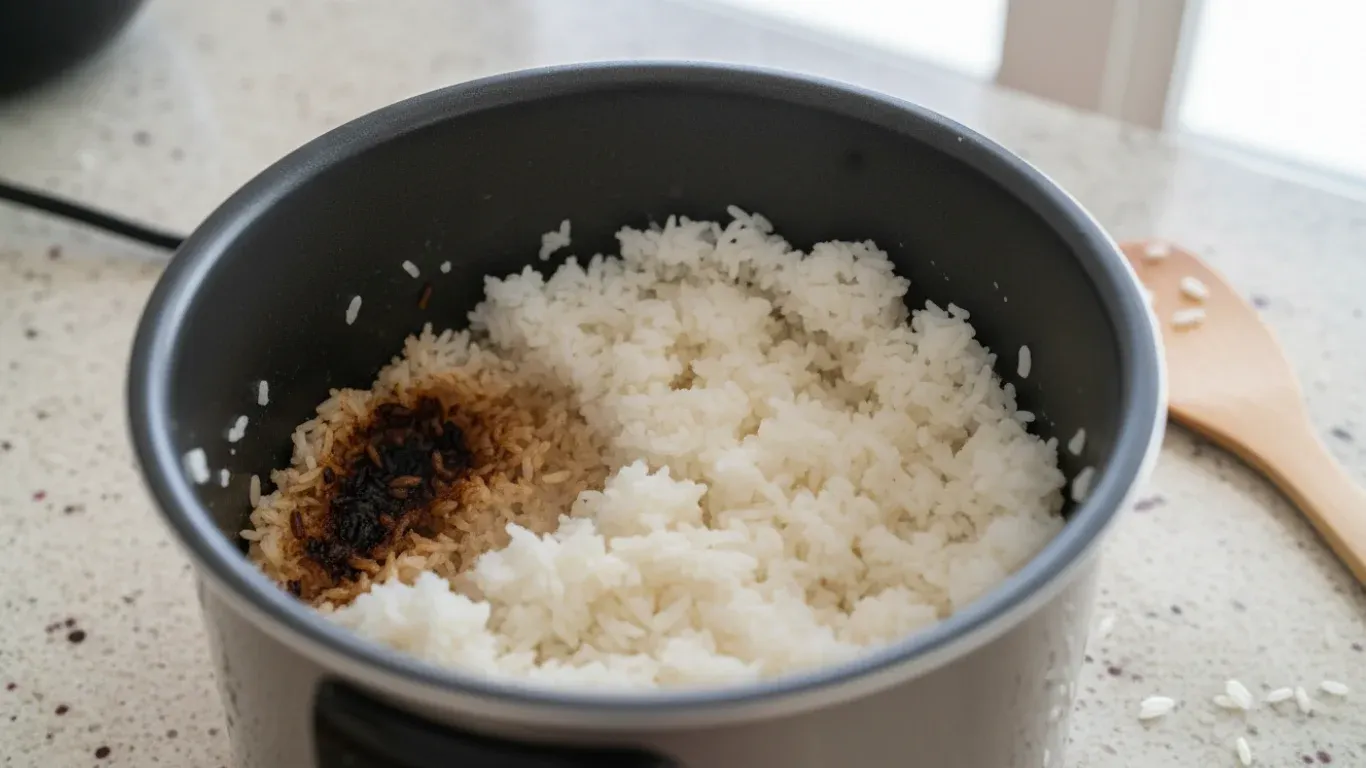
Many people find that their rice cooker burns rice on the bottom sometimes. It can be frustrating, especially when you are new to using one. You might wonder why this keeps happening.
But do not worry. We will show you simple ways to stop your rice cooker burning rice on bottom. Get ready to cook perfect rice every time.
Key Takeaways
- Learn why rice sticks to the bottom of the cooker.
- Discover the right amount of water for perfect rice.
- Understand the role of rice cooker settings.
- Find out how to clean your rice cooker effectively.
- Get tips for preventing rice from burning again.
Why Rice Cooker Burning Rice On Bottom Happens
It is quite common for a rice cooker to burn rice on the bottom. This happens for a few main reasons. Often, it is about how much water you use compared to the rice.
Too little water means the rice gets too hot and burns. Too much water can also cause problems, though usually not burning directly, but it might affect the cooking process. Another reason is the type of rice.
Some rice types need different amounts of water or cooking times. The heating element in the rice cooker also plays a big part. If it is too hot or stays on too long, it can scorch the rice at the bottom.
For beginners, getting these amounts just right can feel tricky. But with a little knowledge, it is easy to fix.
Water Amount is Key
The amount of water you add is the most important factor in preventing burnt rice. Rice cooker manufacturers usually provide a guide or markings inside the pot. These markings are specifically for the types of rice they expect you to cook.
Following these lines is crucial. For instance, if you are cooking one cup of white rice, you might need about 1.5 to 2 cups of water. Brown rice often needs more water and a longer cooking time.
If you use too little water, the rice cooks too fast and dries out, causing it to stick and burn. If you use too much water, the rice might become mushy, but it is less likely to burn severely.
A good rule of thumb for white rice is a 1:1.5 ratio of rice to water. So, for one cup of uncooked rice, use one and a half cups of water. For brown rice, you might need a 1:2 or even a 1:2.5 ratio.
Always check your rice cooker’s manual for specific recommendations. If you do not have a manual, start with the 1:1.5 ratio for white rice and adjust from there. Pay attention to the texture of your cooked rice.
If it is slightly firm or dry, add a little more water next time. If it is too wet, use a little less.
Different Rice Types Need Different Care
Not all rice is the same. Different types of rice have different starch content and require varying amounts of water and cooking times. For example, sushi rice or short-grain rice has a high starch content, making it sticky and needing a precise water ratio.
Long-grain white rice is less starchy and more forgiving. Brown rice, on the other hand, has its bran and germ layers intact, making it tougher and requiring more water and a longer cooking period. Basmati and jasmine rice, while both long-grain, can have subtle differences in their ideal water absorption.
When you are cooking a new type of rice for the first time, it is best to do a little research or follow the package directions closely. Many people simply use the same water amount for all types of rice, which is a common mistake. This leads to either undercooked, hard rice or overcooked, mushy rice, and yes, sometimes burnt rice.
Being mindful of the rice variety helps you adjust the water accordingly. For example, if you notice your brown rice is consistently burning, try adding an extra quarter cup of water. If your white rice is too soft, reduce the water by a tablespoon or two.
Consider also the age of the rice. Older rice might absorb water differently than fresh rice. Stale rice can sometimes be drier and may require a bit more liquid to cook properly.
This is a less common cause of burning but can contribute to issues. Always try to use rice that has been stored correctly in an airtight container.
The Role of Your Rice Cooker’s Settings
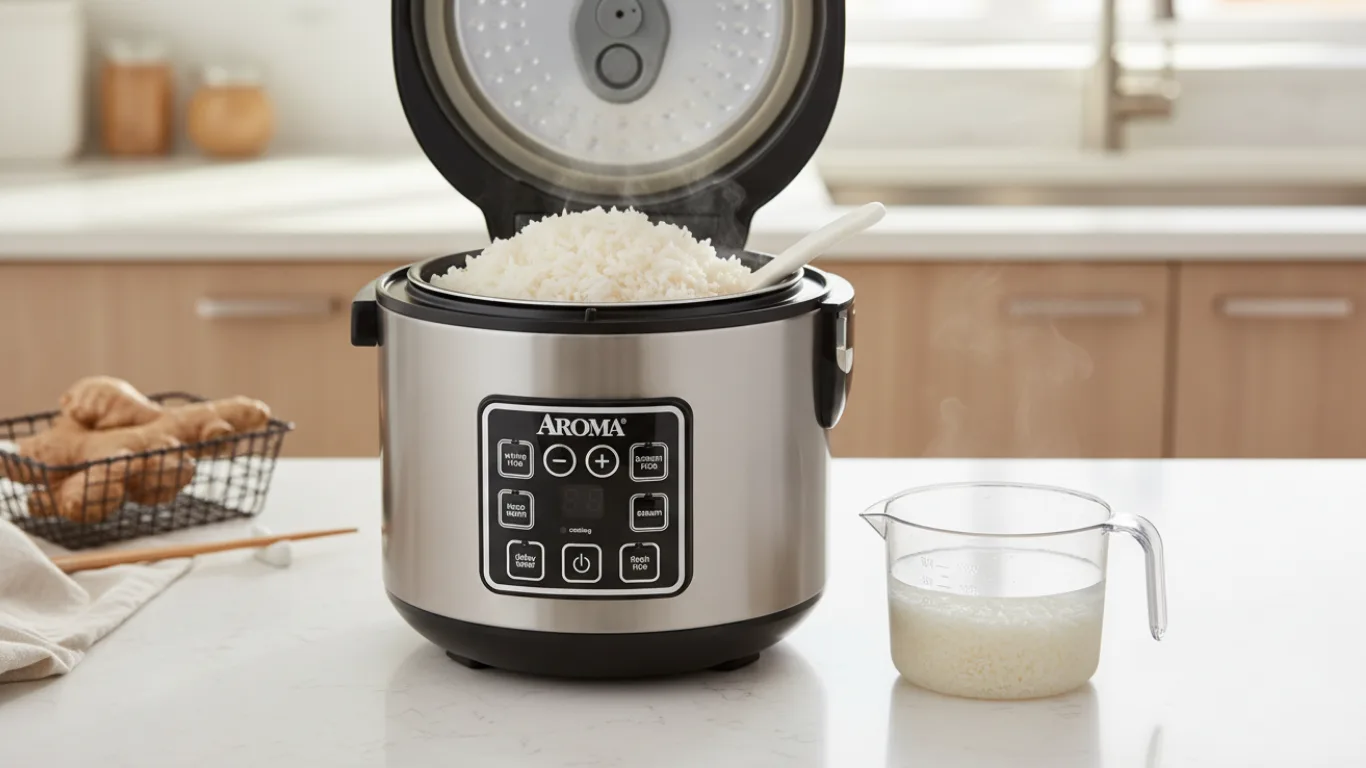
Modern rice cookers come with various settings that can help prevent burning. Basic models usually have a “Cook” and “Warm” setting. The “Cook” setting heats the rice until it is done, and then it automatically switches to “Warm” to keep it hot.
The problem here is that the heating element can stay on too long on the “Cook” setting, especially if the water level is too low or the cooking time is longer than usual for a particular rice type. This extended heat causes the bottom layer of rice to scorch.
More advanced rice cookers have specialized settings for different types of rice, like “White Rice,” “Brown Rice,” “Quick Cook,” or “Sushi Rice.” These settings are programmed to adjust the heating time and temperature precisely for each type. For example, the “Brown Rice” setting typically uses a longer cooking time with a soaking period and a gentler, more consistent heat to ensure it cooks thoroughly without burning. Using the correct setting for the rice you are cooking is as important as getting the water ratio right.
If your rice cooker only has a basic “Cook” setting, you may need to pay closer attention to when it switches to “Warm.” Some cookers have a sensor that detects when the water has been absorbed. However, if the heat is too high for too long, the sensor might not prevent burning. In such cases, you might manually switch the cooker to “Warm” a few minutes before you think it is done, or slightly adjust the water amount.
Always refer to your rice cooker’s manual for how to best use its features.
Heating Element Issues and Cooker Design
The heating element at the bottom of most rice cookers is what cooks the rice. Its design and intensity can affect how evenly the heat is distributed. In simpler models, a single heating element might be directly underneath the inner pot.
This can create hot spots, especially if the pot is not perfectly flat or if there is a buildup of residue from previous cooking. Over time, these hot spots can lead to rice sticking and burning.
More advanced rice cookers use technologies like induction heating (IH). IH cookers heat the entire inner pot evenly from all sides, which significantly reduces the chance of burning. They also have more sophisticated temperature control systems.
If you consistently experience burnt rice with a basic model, it might be the design of the heating element or its intensity. Unfortunately, this is harder to fix with user adjustments alone.
The inner pot’s material and coating also play a role. Non-stick coatings are designed to prevent food from sticking. If this coating is scratched or worn out, rice can stick directly to the metal or ceramic underneath, leading to burning.
Always use the utensils recommended by the manufacturer, usually plastic or wooden spoons, to avoid damaging the non-stick surface. If your pot’s coating is damaged, it might be time to replace it.
Preventing the Burn Steps
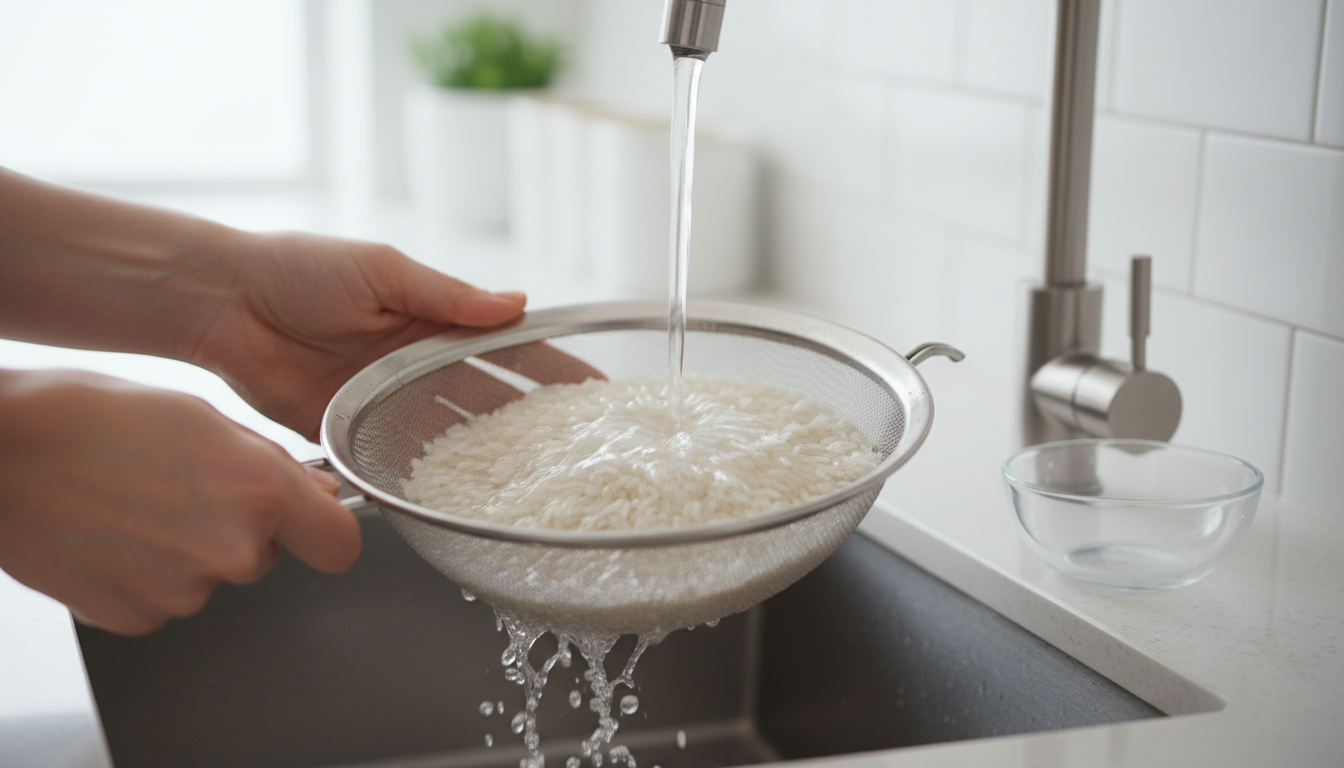
To prevent your rice cooker from burning rice on the bottom, follow these steps consistently. First, always rinse your rice. Rinsing removes excess starch, which helps prevent stickiness and clumping.
Use cool water and gently swirl the rice in a sieve or bowl until the water runs mostly clear. This also helps remove any dust or debris.
Next, measure your rice and water accurately. Use a standard measuring cup. For white rice, start with a 1:1.5 ratio of rice to water.
For brown rice, use 1:2 or 1:2.5. Always refer to your cooker’s markings or manual if available. Do not guess.
After adding the rice and water, give it a quick stir. This ensures the rice is evenly submerged and helps distribute the water. Then, close the lid securely and select the appropriate setting on your rice cooker.
Avoid opening the lid during the cooking cycle, as this releases steam and can disrupt the cooking process.
Understanding Rice Cooker Technology
Rice cookers have evolved significantly from simple stovetop pots to sophisticated kitchen appliances. The core function remains the same: to cook rice using steam and controlled heat. However, the way they achieve this has become much more advanced.
Understanding these technologies can help you appreciate why some rice cookers perform better than others and how to avoid common issues like burning.
Basic Electric Rice Cookers
The simplest electric rice cookers, often called “stovetop imitators” or basic models, function much like a saucepan on a heating element. They have a heating coil at the base of the unit. When you press the “Cook” button, electricity flows to this coil, generating heat.
A bimetallic strip is often used as a thermostat. As the water boils and the rice cooks, the temperature inside the pot rises. When the temperature reaches a certain point (around 212°F or 100°C), the bimetallic strip bends and switches the cooker to the “Warm” setting.
The “Warm” setting typically uses much lower power to maintain a serving temperature.
The main drawback of this simple design is its reliance on the water being fully absorbed to trigger the switch. If the water-to-rice ratio is off, or if the rice type requires a longer cooking time, the heating element might continue to be on too long at high heat. This is where the rice cooker burning rice on bottom issue frequently arises.
The direct contact with the intense heat source at the bottom can easily scorch the grains of rice that are closest to it, especially if the water has already evaporated or been absorbed. There is less precise temperature control compared to more advanced models.
For these basic cookers, user input and attention are key. Pre-rinsing rice, using the correct water ratio, and sometimes even manually switching to “Warm” if you suspect it is cooking too fast are important strategies. The inner pot is usually made of aluminum with a non-stick coating.
The effectiveness of this coating is vital for preventing sticking and burning in these models.
Microcomputer and Fuzzy Logic Rice Cookers
Microcomputer-controlled (micro computerized) and fuzzy logic rice cookers represent a significant leap in technology. Instead of a simple bimetallic strip, these cookers use microprocessors to control the cooking process. A microcomputer rice cooker has sensors that monitor temperature and humidity inside the pot.
It uses pre-programmed algorithms to adjust the cooking time and temperature based on the type of rice selected and the amount of water detected.
Fuzzy logic is a type of artificial intelligence that allows the cooker to make more nuanced decisions. Traditional computers use binary logic (yes/no, 0/1). Fuzzy logic can handle degrees of truth, meaning it can understand concepts like “slightly too much water” or “almost done.” This allows the cooker to Fnot h
For example, it might start with a high heat to bring the water to a boil, then reduce the heat to a simmer to allow the rice to absorb the water gently, and finally increase the heat slightly towards the end to toast the bottom of the rice for better texture, but without burning it.
These cookers significantly reduce the likelihood of rice cooker burning rice on bottom. They are much better at adapting to different rice types and quantities. For instance, if you select “Brown Rice,” the fuzzy logic system knows it needs a longer cooking time and more consistent, lower heat.
If you choose “Quick Cook,” it will use a faster heating cycle. The inner pots in these models are often thicker and made of higher-quality materials, like stainless steel or ceramic, with advanced non-stick coatings, further enhancing even heating and reducing sticking.
Induction Heating (IH) Technology
Induction heating (IH) rice cookers are considered the top tier in rice cooking technology. Unlike conventional rice cookers that heat the pot from the bottom, IH cookers use electromagnetic fields to heat the entire inner pot directly and uniformly. This is the same technology used in IH stoves.
The cooker itself generates an alternating electric current that passes through a coil located beneath the inner pot. This current induces a magnetic field that causes the metallic inner pot to heat up rapidly and evenly from all sides.
The primary benefit of IH technology is incredibly precise temperature control. The cooker can change the heat intensity very quickly and maintain exact temperatures for extended periods. This even heating means there are no hot spots.
The rice cooks uniformly, and the risk of burning is drastically reduced, even with simpler rice types or slight inaccuracies in water measurement. The even heat distribution ensures that every grain of rice is cooked to perfection, from the bottom to the top of the pot.
IH rice cookers often incorporate advanced microcomputer and fuzzy logic systems to further refine the cooking process. They can achieve nuanced cooking phases, like a “sushi rice” setting that results in slightly firmer rice or a “congee” setting for slow, gentle cooking. The inner pots used in IH cookers are typically made of thick, multi-layered materials, often including copper or other conductive metals, which enhance the effectiveness of the induction heating and further promote even cooking.
While more expensive, IH rice cookers offer the most consistent and highest quality rice cooking experience, effectively eliminating the problem of rice cooker burning rice on bottom.
Troubleshooting Common Burning Issues
Even with the best rice cooker, occasional burning can happen. It is often a sign that something in the process needs a slight adjustment. The good news is that most issues are easily fixable.
By understanding the common culprits, you can quickly get back to enjoying perfectly cooked rice.
The Water-Rice Ratio Dilemma
This is the most frequent cause of burnt rice. If you use too little water, the rice cooks too fast, dries out, and the bottom layer scorches before the rest of the rice is fully cooked. If you use too much water, the rice can become gummy, and while less likely to burn severely, it can still stick to the bottom if the cooker overheats or the “warm” setting is too intense.
The ideal ratio depends on the type of rice. For standard white rice, a 1:1.5 or 1:1.75 ratio (rice to water) is a good starting point. Brown rice typically needs more water, around 1:2 or 1:2.5.
Real-life example: Sarah was making basmati rice for the first time. She used the same amount of water she usually used for her jasmine rice. The result was a hard, undercooked layer at the bottom that was slightly burnt.
She realized basmati might need more water. The next time, she added an extra quarter cup of water for every cup of basmati rice and followed her cooker’s recommendations. The rice came out perfectly fluffy and did not burn.
Scenario: You’ve just made a batch of rice, and the bottom is a bit dry and sticking. What should you do next time?
- Increase the water slightly for the same amount of rice.
- Consider using a different setting if your cooker has one.
- Rinse the rice thoroughly before cooking.
These small adjustments can make a big difference in preventing the rice cooker burning rice on bottom problem.
Understanding Cooking Time and Settings
Another common issue is using the wrong setting or not accounting for the correct cooking time. If you are using a basic rice cooker with only a “Cook” and “Warm” setting, it relies on the water to signal when cooking is done. If the cooking time is too short for the amount of rice, or if the heating element is too powerful, the rice can burn before it is ready.
Advanced cookers with specific settings for “White,” “Brown,” or “Sushi” rice are programmed to cook each type optimally. Using the “Quick Cook” setting for a large amount of brown rice, for example, would be a mistake and could lead to burning.
Statistic: Studies show that up to 40% of rice cooker users admit to using the wrong setting for their rice type at least once a month, leading to suboptimal results or burnt rice.
Sample Scenario: Your rice cooker seems to finish cooking too quickly, and the rice at the bottom is firm and slightly burnt.
- Check your rice cooker’s manual for the recommended settings for the type of rice you are using.
- If you have a basic cooker, try letting it sit on “Warm” for an extra 5-10 minutes after it switches over, rather than relying solely on the initial cook cycle.
- If you notice the cooker switching to “Warm” very rapidly, it might indicate the water level is too low for the amount of rice.
These steps help ensure the rice cooks thoroughly and prevents that frustrating rice cooker burning rice on bottom.
When the Inner Pot is the Culprit
The inner pot of your rice cooker is crucial for preventing sticking and burning. Most modern rice cookers have non-stick coatings. If this coating is damaged – scratched, chipped, or worn out – rice can stick directly to the metal or ceramic beneath.
This direct contact with the heating element will cause the rice to burn. Using metal utensils, abrasive scrubbers, or even just age and wear can degrade the non-stick surface over time.
Real-life example: Mark had a rice cooker he had used for years. He noticed that recently, rice started sticking to the bottom more and more, leading to burnt patches. Upon closer inspection, he saw several scratches on the non-stick coating of the inner pot.
He replaced the inner pot, and the burning issue was resolved. A new pot made a huge difference.
Scenario: You’ve tried adjusting water and settings, but rice still sticks and burns to the bottom.
- Carefully inspect the inner pot for any signs of damage to the non-stick coating.
- If the coating is compromised, it is likely time to purchase a replacement inner pot or a new rice cooker.
- When cleaning, always use a soft sponge or cloth and mild dish soap, avoiding abrasive materials that can damage the coating.
Taking care of your inner pot is vital for preventing the rice cooker burning rice on bottom.
The “Soaking” Factor
Some types of rice, especially brown rice and some specialty grains, benefit greatly from soaking before cooking. Soaking helps the rice absorb water more evenly and thoroughly, leading to a softer texture and reducing the risk of burning. If you are cooking rice that typically requires soaking and you skip this step, the rice may not absorb enough water during the cooking cycle, leading to it drying out and burning at the bottom.
Many advanced rice cookers have a “soak” function built into their cooking cycles, particularly for brown rice or grains. If your cooker does not have this feature, you can soak the rice manually. For brown rice, soaking for 30 minutes to a couple of hours in cool water before cooking is often recommended.
For some grains, like wild rice, soaking overnight might be necessary. Always check the specific recommendations for the type of rice you are using.
Statistic: Approximately 60% of rice cooker users who have experienced burnt rice report that their issue was resolved by implementing a pre-soaking step for certain types of grains.
Scenario: You are cooking a grain that seems to take a very long time and often results in a burnt bottom layer.
- Research if this particular grain benefits from soaking.
- If it does, soak the grains for the recommended time before adding them to the rice cooker.
- When cooking soaked grains, you might need to adjust the water slightly, as the grains have already absorbed some liquid.
This simple step can be the key to avoiding the frustration of rice cooker burning rice on bottom.
Maintaining Your Rice Cooker for Best Results
Proper maintenance of your rice cooker is essential not only for longevity but also for ensuring it performs optimally and prevents common issues like burning rice. Regular cleaning and care will help your rice cooker cook perfectly every time.
Daily Cleaning After Each Use
The most important cleaning happens right after you use your rice cooker. Once the cooker has cooled down, remove the inner pot and wash it immediately. Use a soft sponge or cloth with mild dish soap.
Avoid abrasive scrubbers, steel wool, or harsh chemicals, as these can damage the non-stick coating. If rice is stuck, soak the pot in warm, soapy water for a while before attempting to clean it. This makes it much easier to remove residue without scrubbing.
Also, clean the steam vent cap and the lid’s inner surface. Food particles or residue can accumulate here and affect the steam release, which is crucial for proper cooking. Some parts, like the steam vent cap, can often be removed for easier cleaning.
Always make sure all parts are completely dry before reassembling or storing the rice cooker.
Real-life example: When Jane started cleaning her rice cooker pot right after serving, she noticed a significant reduction in rice sticking to the bottom. Before, she would sometimes let the pot sit, and dried rice would become very difficult to remove, often requiring forceful scrubbing that eventually damaged the coating. Immediate cleaning made her non-stick pot last much longer.
Deep Cleaning and Descaling
Periodically, your rice cooker might need a deeper clean, especially if you notice mineral buildup (scaling), which can happen if you use hard water. Many rice cooker manufacturers recommend a descaling process. This usually involves filling the inner pot with a mixture of water and vinegar (often a 1:1 ratio) and running a cooking cycle.
The vinegar helps to break down mineral deposits and any lingering odors.
After the cycle, discard the vinegar-water mixture, wash the pot thoroughly with mild soap and water to remove any vinegar residue, and rinse well. This process is not just for cleanliness; scale buildup can affect the heating efficiency of the cooker, potentially leading to uneven cooking and even burning. It’s also a good idea to check the outer casing of the rice cooker and wipe it down with a damp cloth, ensuring no water gets into the electrical components.
Statistic: Using a vinegar-water descaling solution once every 1-3 months can improve a rice cooker’s energy efficiency by up to 15% and extend its lifespan.
Storing Your Rice Cooker
Proper storage helps protect your rice cooker from dust and damage. Ensure the cooker is completely clean and dry before storing. Store the inner pot inside the rice cooker with the lid closed, but do not leave the power cord plugged in.
Some rice cookers come with a small compartment for storing the power cord. If possible, store the cooker in its original box or in a place where it won’t be easily knocked over.
Avoid storing anything heavy on top of the rice cooker, as this could damage the lid or the casing. Keeping the cooker in a dry environment is also important to prevent any potential electrical issues or mold growth. A clean, well-maintained, and properly stored rice cooker is much less likely to develop problems, including the dreaded rice cooker burning rice on bottom.
The Benefits of Using a Good Quality Rice Cooker
Investing in a quality rice cooker can significantly improve your cooking experience. Beyond just avoiding burnt rice, these appliances offer convenience, consistency, and better results. Understanding these benefits can help you appreciate why a good rice cooker is a worthwhile addition to any kitchen.
Consistency in Every Batch
One of the biggest advantages of a good rice cooker, especially micro computerized or IH models, is the remarkable consistency they provide. You can expect perfectly cooked rice every single time, regardless of the type of rice or the user’s skill level. The advanced sensors and programmed settings take the guesswork out of cooking rice.
This consistency means you no longer have to worry about undercooked grains or mushy, overcooked rice. It’s a significant relief for busy individuals and families who rely on quick, dependable meals.
For example, a student who needs to prepare meals quickly and efficiently can rely on their rice cooker to produce perfect rice without constant supervision. This frees them up to focus on other tasks, like studying or preparing side dishes. This reliability translates to less stress and more enjoyment in the kitchen.
The absence of the rice cooker burning rice on bottom problem is a major contributor to this overall consistency.
Convenience and Time-Saving Features
Rice cookers are designed for ultimate convenience. You simply add the rice and water, press a button, and walk away. Most models automatically switch to a “Keep Warm” function, which keeps the rice at an ideal serving temperature for hours without overcooking or drying it out.
This is a lifesaver for those with unpredictable schedules or when entertaining guests. You can prepare the rice well in advance of serving and know it will still be delicious when ready.
Many rice cookers also come with features like delay timers, allowing you to set the cooker to start cooking at a specific time. Imagine waking up to the smell of perfectly cooked rice ready for breakfast, or coming home from work to find a warm pot of rice waiting for you. These features save valuable time and effort, making meal preparation much simpler and more enjoyable.
This convenience is a key reason why so many households have adopted rice cookers.
Versatility Beyond White Rice
Modern rice cookers are incredibly versatile. They are not just for cooking plain white rice anymore. Many can cook a variety of grains, including brown rice, quinoa, barley, wild rice, and even oats.
Some have specific settings for making sushi rice, congee (rice porridge), or even cakes. This versatility means one appliance can replace several others, saving counter space and simplifying cooking.
For instance, a family looking to eat healthier can easily incorporate brown rice into their diet thanks to the dedicated setting on their rice cooker. The longer cooking time and extra water needed for brown rice are handled automatically, ensuring it turns out tender and delicious. This adaptability makes a good rice cooker a central piece of equipment for a varied and healthy diet.
It helps in avoiding issues like rice cooker burning rice on bottom for these more challenging grains.
Healthier Cooking Methods
Cooking rice in a rice cooker can be a healthier option compared to some other methods. By using precise amounts of water and controlled steaming, the rice retains more of its nutrients. Unlike boiling where some nutrients might be lost in the water, steaming in a rice cooker helps preserve them.
Furthermore, the “Keep Warm” function allows you to cook the rice and keep it warm for extended periods without re-heating, which can sometimes degrade nutrients and texture.
The ability to cook various grains and legumes also opens up healthier eating options. For example, cooking steel-cut oats or quinoa in a rice cooker is a healthy breakfast or side dish. The precise temperature control in advanced models also means that delicate ingredients, if used in dishes cooked with rice, are less likely to be overcooked or burnt, preserving their nutritional value.
This focus on gentle, controlled cooking contributes to a healthier lifestyle.
Frequently Asked Questions
Question: Why does my rice cooker sometimes burn rice only on one side
Answer: This often happens if the heating element is uneven or if the inner pot is not perfectly flat. It can also occur if there are residue buildups that create hot spots. Try cleaning the heating element and the bottom of the pot thoroughly.
Ensure you are not using too little water or the wrong setting.
Question: Can I use any pot in my rice cooker if the original is damaged
Answer: It is best to use only the original inner pot that came with your rice cooker or an exact replacement. Other pots may have different thicknesses, materials, or heating properties that can affect cooking performance and potentially cause burning or other issues. Using a non-compatible pot can also be a safety hazard.
Question: How do I get burnt rice off the bottom of my rice cooker pot
Answer: To remove burnt rice, fill the pot with warm water and a bit of dish soap or white vinegar. Let it soak for a few hours or overnight. Then, use a soft sponge or cloth to gently scrape away the softened rice.
Avoid using harsh scrubbers that can damage the non-stick coating.
Question: Is it normal for a new rice cooker to smell a little when first used
Answer: Yes, it is quite normal for a new rice cooker to have a slight plastic or metallic smell during the first few uses. This is usually due to manufacturing residues or protective coatings burning off. Running a few cycles with just water can help dissipate this smell.
If the smell persists after several uses or is very strong, contact the manufacturer.
Question: How much water should I use if I don’t have a measuring cup
Answer: If you don’t have a measuring cup, you can use the lines inside your rice cooker’s inner pot as a guide. If your cooker doesn’t have lines, a common ratio for white rice is 1 part rice to 1.5 parts water. You can use a common household item like a small glass or mug as a rough measure, ensuring you use the same one for both rice and water.
Final Thoughts
Fixing a rice cooker burning rice on the bottom is simple. It mostly comes down to water, settings, and cleaning. Always measure your water and rice carefully.
Use the right setting for your rice. Clean your cooker well after every use. With these tips, you will enjoy perfectly cooked rice every time.
You’ve got this!