Picking out a rice cooker can feel a bit tricky when you’re just starting. There are so many options out there, and it’s easy to get confused by all the different features and brands. But don’t worry!
We’re here to make it super simple. We’ll walk through the different types of rice cookers step-by-step so you can easily find the perfect one for your kitchen and your cooking needs. Get ready to make perfect rice every time!
Key Takeaways
- You will learn about the basic types of rice cookers available.
- You will understand the main differences between simple and advanced rice cookers.
- You will discover how different heating methods affect rice cooking.
- You will get tips on how to choose the best rice cooker for your needs.
- You will feel confident in your decision when buying a rice cooker.
Understanding Rice Cooker Types
Choosing a rice cooker might seem like a big decision, but it’s actually quite straightforward once you know the main categories. The market offers a range of options, from very basic models to high-tech ones. Each type has its own way of cooking rice and different features that might appeal to you. Let’s break down the most common types of rice cookers you’ll find.
Basic Electric Stoves
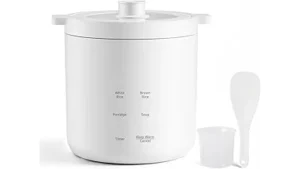
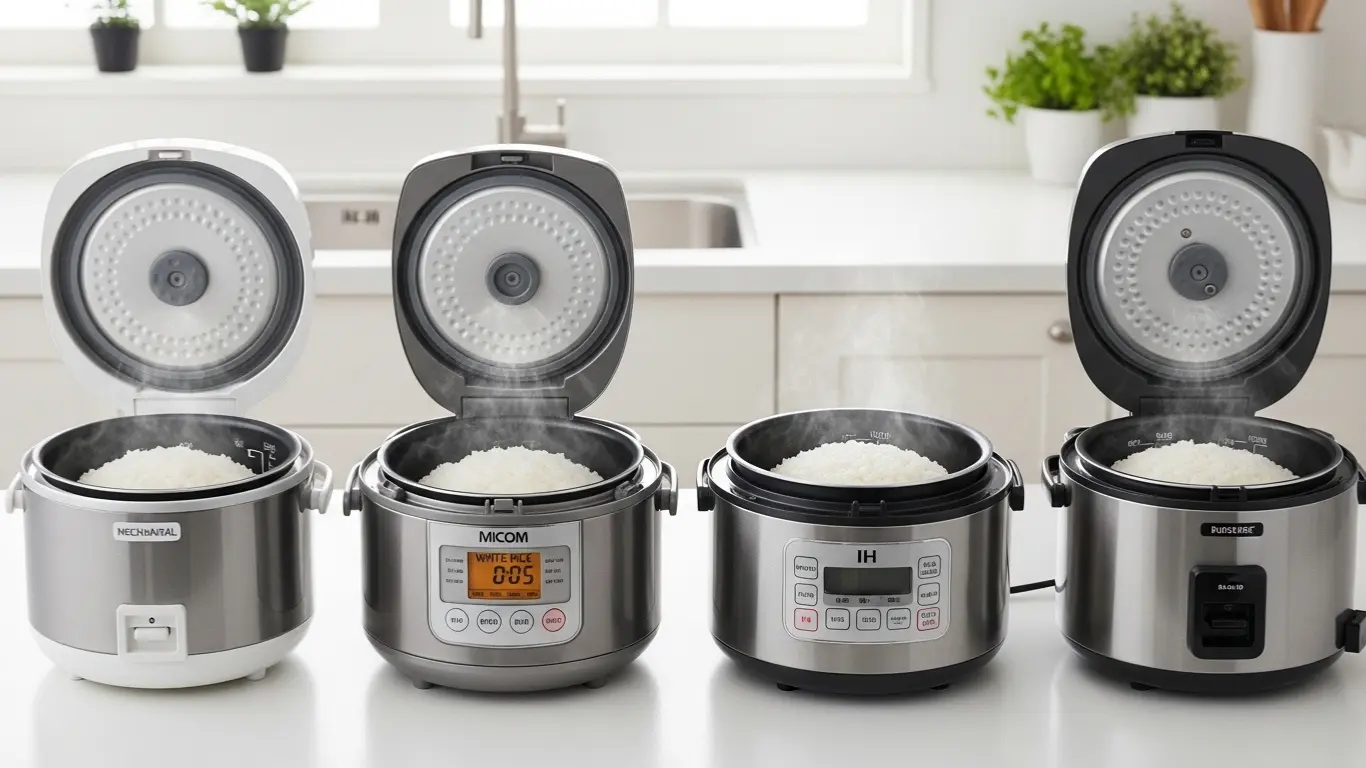
These are the simplest rice cookers you can get. They are often called “simmering stoves” or just basic electric rice cookers. They have a single button, usually for “cook” or “warm.” When you add water and rice and press the button, it heats up until the water is gone and the rice is cooked. Then, it automatically switches to a “warm” setting.
How They Work
These cookers use a simple heating element at the bottom. They sense when the water has been absorbed by the rice and the temperature rises. At that point, a thermostat triggers a switch to turn off the main heating element and engage the warming element. This is a very direct way to cook rice.
Pros
- Very affordable.
- Easy to use, with minimal buttons.
- Great for simple, everyday rice.
- Compact size, doesn’t take up much space.
Cons
- Limited settings, cannot cook other grains or make porridge.
- Can sometimes overcook or undercook rice if the water ratio is off.
- No advanced features like timers or fuzzy logic.
- The inner pot might be made of less durable materials.
Microcomputer (Micom) Rice Cookers
These are a step up from basic models. Microcomputer rice cookers have a small computer chip inside that allows for more precise temperature control and a wider range of cooking programs. They can often cook different types of rice and other dishes.
How They Work
Instead of just a simple thermostat, Micom cookers use sensors and a microchip to manage the cooking process. This means they can adjust the cooking time and temperature throughout the cycle. They can also be programmed for specific types of rice, like brown rice, sushi rice, or quick cook options.
Pros
- More consistent results.
- Can cook various types of rice and grains.
- Often have preset cooking functions for different dishes (e.g., porridge, cake).
- May include delay timers for added convenience.
- Better heat distribution for more even cooking.
Cons
- More expensive than basic models.
- More complex to use with multiple buttons and settings.
- Still rely on bottom heating elements, though more advanced than basic ones.
Induction Heating (IH) Rice Cookers
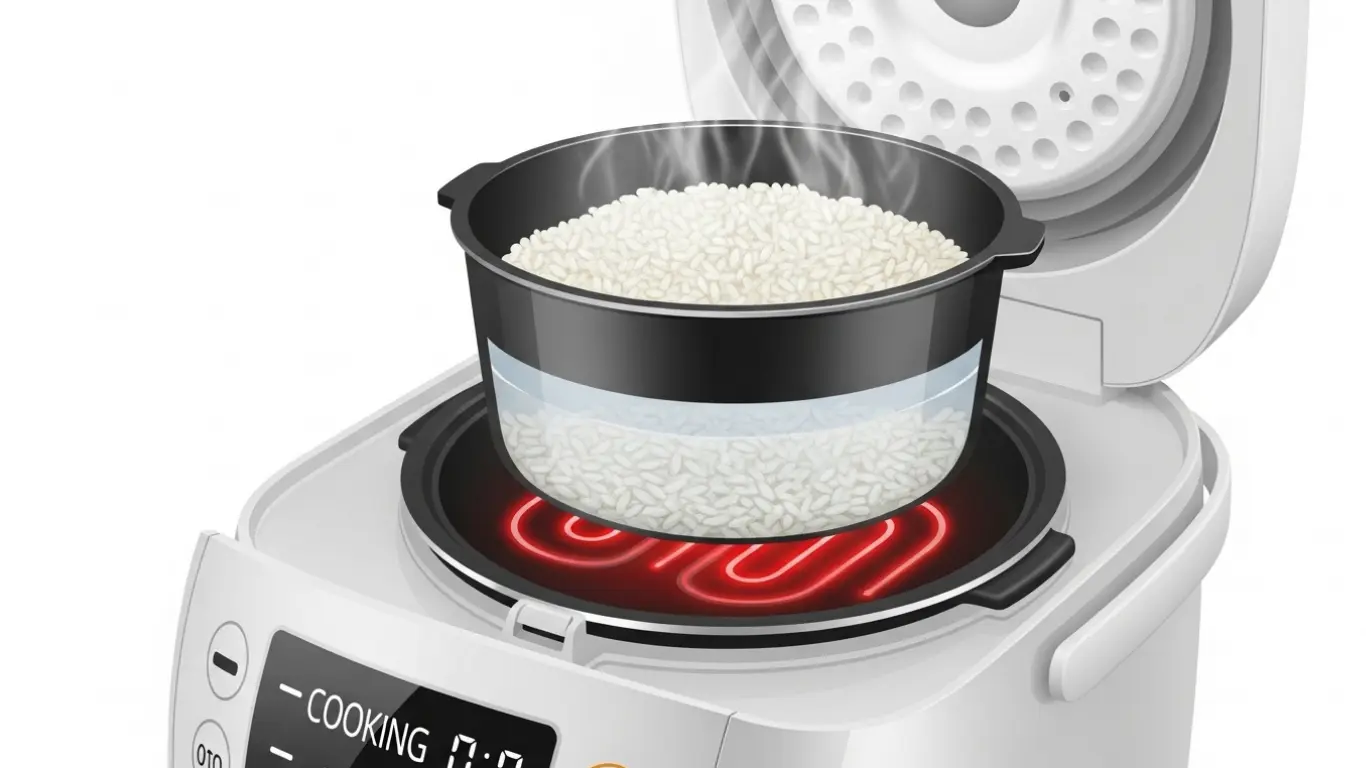
Induction heating rice cookers are considered among the best. They use electromagnetic coils to heat the entire inner pot directly and evenly. This method provides superior temperature control and cooking results.
How They Work
IH technology works by creating a magnetic field around the inner pot. This field causes the pot itself to heat up very rapidly and uniformly from all sides. This allows for much finer control over the cooking temperature, mimicking traditional stovetop cooking but with more precision and less risk of error.
Pros
- Extremely even cooking and perfect texture.
- Fast cooking times.
- Excellent temperature control for all types of rice and dishes.
- Durable inner pots, often with non-stick coatings.
- Advanced features like AI and different cooking modes are common.
Cons
- Significantly more expensive than other types.
- Require compatible inner pots (magnetic material).
- Can be heavier and larger.
Induction Heating (IH) vs. Microcomputer (Micom)
The main difference lies in the heating method. Micom cookers heat from the bottom, while IH cookers heat the entire pot. IH offers more precise temperature management, leading to better rice texture and flavor. Many IH models also incorporate microcomputer technology for advanced programming.
Pressure Induction Heating (PHIH) Rice Cookers
These are the top-tier rice cookers, combining the benefits of induction heating with pressure cooking. By cooking under pressure, the boiling point of water increases, allowing rice to cook at a higher temperature. This further enhances texture and flavor.
How They Work
PHIH cookers use IH technology to heat the pot, and then they seal the pot to build up pressure. This pressure raises the cooking temperature significantly. This higher temperature helps to break down starches more effectively, resulting in softer, fluffier, and more flavorful rice.
Pros
- The most advanced cooking technology for rice.
- Produces the best possible texture and taste for rice.
- Very fast cooking times due to higher temperatures.
- Excellent for cooking difficult grains or making special dishes.
- Often come with a wide array of smart features and customization.
Cons
- The most expensive type of rice cooker.
- Can be complex with many settings.
- Requires careful maintenance and cleaning.
- Larger and heavier than other models.
Key Features To Consider
When looking at types of rice cookers, certain features can make a big difference in your cooking experience. Beyond the basic heating technology, consider these aspects:
Inner Pot Material
The inner pot is where your rice cooks, so its material matters.
- Non-stick Coatings: Most modern rice cookers have non-stick coatings. This makes cleanup much easier. Look for durable, PFOA-free coatings.
- Stainless Steel: Some high-end models might use stainless steel, which is durable but can be prone to sticking if not managed well.
- Ceramic: Ceramic coatings offer a good balance of durability and non-stick properties.
- Multi-layer Pots: Many premium models feature pots with multiple layers (e.g., copper, aluminum, stainless steel) for better heat distribution and retention.
Capacity
Rice cooker capacities are usually measured in “cups.” This refers to the amount of uncooked rice it can hold.
- Small (1-3 cups): Ideal for individuals or couples.
- Medium (4-6 cups): Good for small families (2-4 people).
- Large (8-10+ cups): Suitable for larger families or for meal prepping.
Remember that one “cup” in rice cooker terms is usually 180ml, not a standard US measuring cup (240ml). Always check the manufacturer’s guidelines.
Cooking Presets and Functions
Modern rice cookers offer more than just cooking white rice.
- White Rice: Standard setting.
- Brown Rice: Cooks brown rice, which requires longer cooking times and more moisture.
- Sushi Rice: Aims for a slightly stickier texture.
- Porridge/Congee: A slow-cook setting for rice porridge.
- Soup: A gentle simmer for making broth or soup.
- Cake: Some models can even bake cakes.
- Steaming: Many come with a steaming basket to cook vegetables or fish above the rice.
Timer and Delay Start
This feature lets you set the cooker to start cooking at a later time. This is very convenient if you want rice ready when you get home from work.
Keep Warm Function
Almost all rice cookers have this. It keeps the rice at a safe, warm temperature after cooking is finished, so your rice stays fresh and ready to eat for hours.
Smart Features
Some high-end rice cookers can connect to Wi-Fi and be controlled via a smartphone app. This allows for remote starting, monitoring, and access to even more recipes and cooking modes.
Comparing Different Types Table
Here’s a quick look at how the main types of rice cookers stack up:
| Type | Heating Method | Price Range | Ease of Use | Rice Quality | Versatility |
|---|---|---|---|---|---|
| Basic Electric | Bottom Heating Element | $ (Low) | Very Easy | Good | Low |
| Microcomputer (Micom) | Bottom Heating Element (Advanced Control) | $$ (Medium) | Easy to Moderate | Very Good | Moderate |
| Induction Heating (IH) | Induction Coils (Full Pot Heating) | $$$ (High) | Moderate | Excellent | High |
| Pressure Induction Heating (PHIH) | Induction Coils + Pressure | $$$$ (Very High) | Moderate to Complex | Exceptional | Very High |
How To Choose The Best Rice Cooker For You
Deciding which of the types of rice cookers is best depends on your personal needs and budget.
Consider Your Budget
Basic electric rice cookers are very affordable, usually under $50. Micom models range from $50 to $200. IH and PHIH cookers can cost anywhere from $200 to $600 or more. Set a budget first.
Think About How Much Rice You Cook
If you cook rice only for yourself or your partner, a small 1-3 cup capacity cooker is fine. For a family of four, aim for 4-6 cups. If you entertain often or like to have leftovers for meal prep, an 8-cup or larger model is a good choice.
What Types of Rice Do You Eat?
If you mainly eat white rice, a basic model might suffice. If you enjoy brown rice, quinoa, or other grains, a Micom or IH cooker with specific settings will give you better results. For the absolute best texture for all kinds of grains, consider IH or PHIH.
Do You Need Extra Features?
If you want to cook porridge, steam vegetables, or bake a cake, look for models with those specific presets. A delay timer can be a lifesaver for busy schedules.
Space and Aesthetics
Rice cookers come in various sizes and designs. Measure your counter space and choose a model that fits both physically and visually. Some high-end models are quite stylish.
Frequently Asked Questions
Question: What is the difference between a basic rice cooker and a microcomputer rice cooker?
Answer: A basic rice cooker uses a simple thermostat to turn off when the water is absorbed. A microcomputer rice cooker uses a chip to control temperature and time more precisely, allowing for various settings and better texture control.
Question: Are induction heating rice cookers worth the extra cost?
Answer: If you prioritize perfect rice texture and flavor, and cook rice frequently, IH cookers can be worth it. They offer superior and more even heating compared to bottom-heating models.
Question: Can I cook brown rice in a basic rice cooker?
Answer: You can, but it’s often not ideal. Basic cookers may not provide the consistent heat and extended cooking time needed for brown rice, leading to unevenly cooked results. Dedicated settings on Micom or IH models are better.
Question: How many cups does a rice cooker typically hold?
Answer: Rice cooker capacity is usually stated in “cups,” which typically refers to the amount of uncooked rice. A 5-cup cooker can usually cook about 10-12 servings of cooked rice.
Question: Are all inner pots dishwasher safe?
Answer: Not all. While many non-stick coatings are designed for easy cleaning, it’s best to check the manufacturer’s instructions. Hand washing is often recommended to preserve the coating’s integrity.
Final Thoughts
Choosing the right rice cooker means matching its technology and features to your cooking habits and budget. From simple, affordable basic models perfect for white rice, to advanced IH and PHIH cookers that produce exceptional texture for all grains, there’s a type for everyone. Consider how often you cook, what kinds of rice you enjoy, and what extra functions would make your life easier. You’ll find a cooker that makes delicious rice consistently.

I’m Loretta Evans, and I lead the Rice Cooker and Kitchen Tools section. I test every product in real home kitchens to see how it truly performs in everyday use.
My goal is simple: to give you clear, honest advice so you can choose reliable tools that make cooking easier.