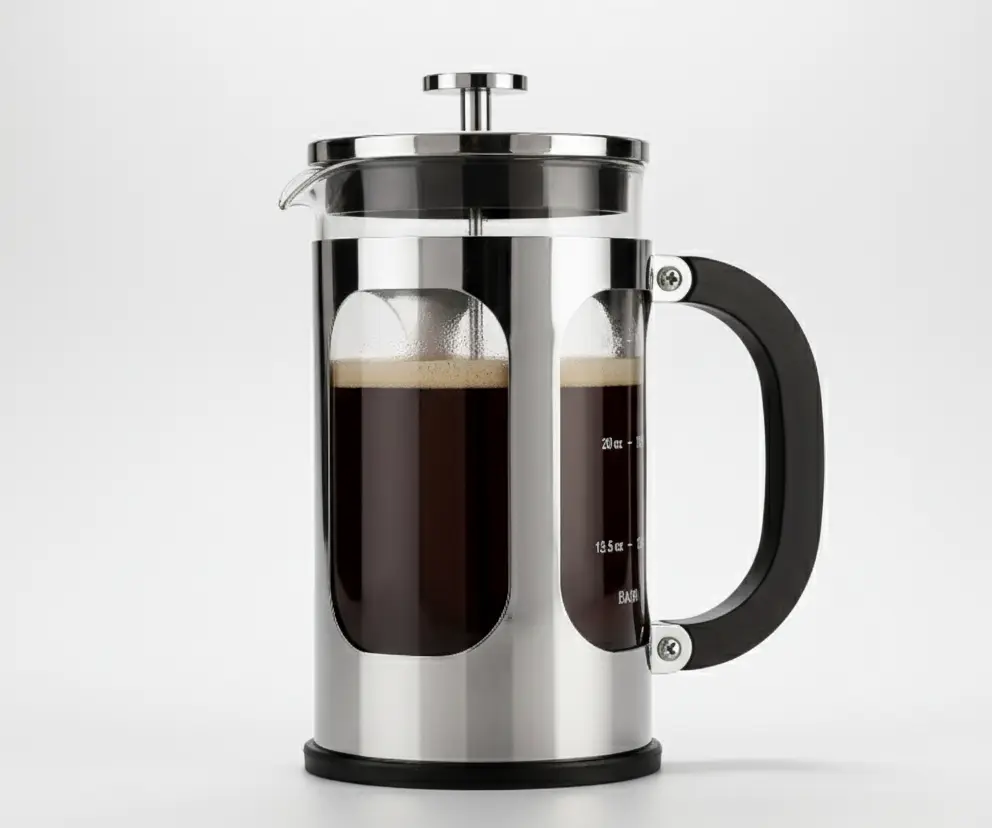
A French press is not the newest coffee gadget on the shelf, and that is exactly why it has stayed relevant for so long. It is a simple carafe with a plunger and a metal mesh filter. You add coarse coffee grounds, pour in hot water, wait a few minutes, press, and pour. That short process delivers a full-bodied cup that many people find richer and more satisfying than drip coffee.
The French press also does something few coffee machines can do: it slows you down. The four-minute steep is a built-in pause in a busy morning. In this guide, we will look at the real benefits of a French press coffee maker, from flavor and cost to health trade-offs and the calm ritual that keeps people coming back. You can also read our guide on clean coffee maker with vinegar.
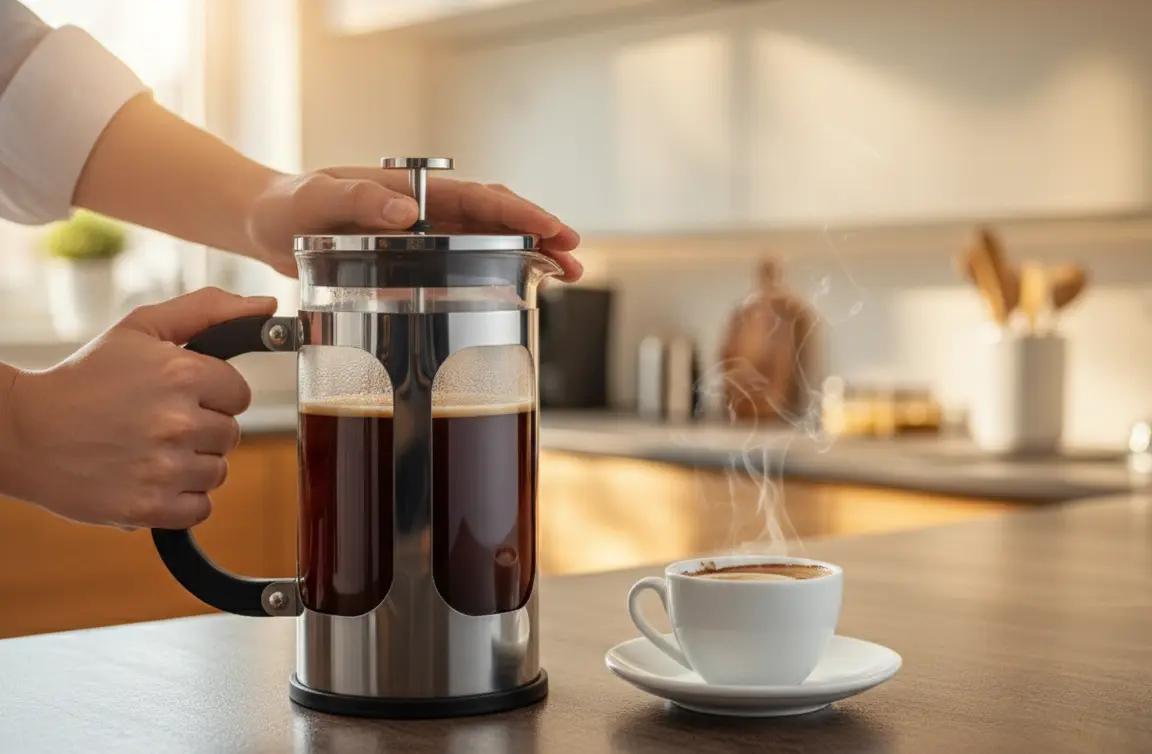
Full immersion is what gives French press coffee its heavy, aromatic body.
What Makes a French Press Different From Other Brewers
The French press uses a method called full immersion. The coffee grounds sit completely submerged in hot water for the entire extraction. Drip machines spray hot water over grounds and let it pass through; pour-over does the same in one pass. Full immersion lets the water pull flavor from every part of the grounds, which is why the result tastes fuller than most filtered methods.
The metal mesh is another important difference. Paper filters trap natural coffee oils and very fine particles. The mesh on a French press plunger lets both pass into the cup. That simple design choice changes everything: more body, more aroma, and a mouthfeel that feels thicker on the tongue. For more on this, see our guide on best french press coffee maker.
Because the French press has no motor, no heating plate, and no single-use pods, it also gives you complete control. You choose the coffee, the grind size, the water temperature, and the steep time. That hands-on control is part of the appeal.
Why French Press Coffee Tastes So Rich
When coffee is brewed through a paper filter, the cup tends to be cleaner, lighter, and brighter. When the same beans are brewed in a French press, the natural oils stay in the liquid. Those oils carry flavor and aroma, and they give the coffee a velvety, coating texture that many people describe as bold or full-bodied. For more on this, see our guide on what are the benefits of a coffee maker.
The fine sediment, sometimes called "fines," also plays a role. It adds a slight earthy depth. Some people notice it at the bottom of the mug; others barely register it. In practice, the first cup from a French press often tastes more intense than the same beans brewed in a drip machine.
A common mistake is assuming that "stronger" automatically means more caffeine. The French press can taste stronger because of the dissolved solids and oils, but caffeine content depends mostly on the coffee-to-water ratio and the beans you choose. If you want a gentle but flavorful cup, you can adjust the ratio without losing the richness. For more on this, see our guide on best coffee grinders for french press.
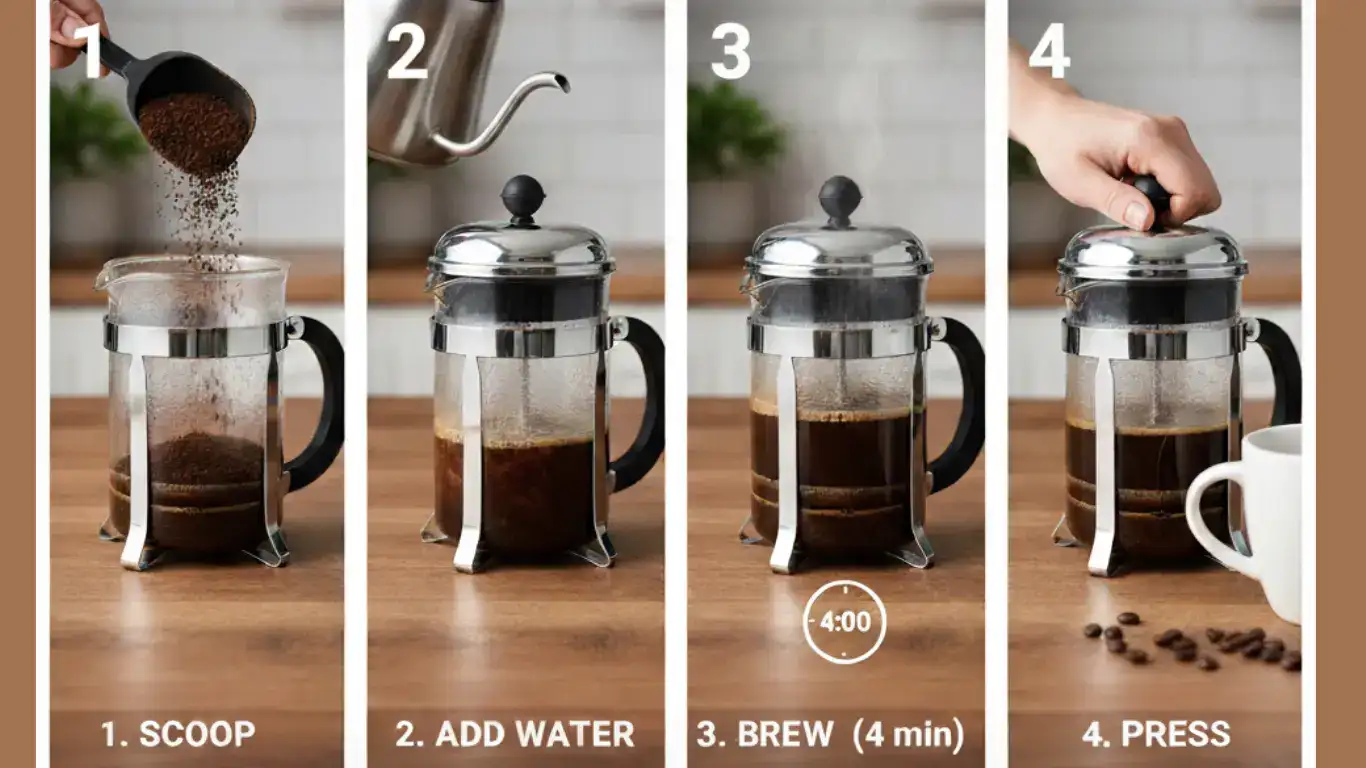
The mesh filter separates the brewed coffee from the spent grounds while letting natural oils pass through.
The Ritual: Why Slower Coffee Feels Calmer
The "calm ritual" part of the French press is not marketing talk. It comes from the steps themselves.
You switch off the machine, measure the beans, grind them, smell the grounds, pour hot water, stir, and then wait. For four minutes, there is nothing to do. You can walk away, look out the window, or simply let the morning start more gently. That enforced wait is a small act of mindfulness with a rewarding finish.
This may explain why the French press is loved on both sides of the Atlantic. In the United States, it attracts people who enjoy a hands-on brewing style and having control over strength and flavor. In the United Kingdom, it fits naturally into the kettle-first kitchen culture, where simple, comforting rituals already play a large role. The same qualities — patience, simplicity, and no plastic pods — make it popular anywhere people want to slow down. For more on this, see our guide on how to reset keurig coffee maker.
If you like the idea of a slower morning coffee but want to keep the rest of your kitchen routine streamlined, our kitchen guides are full of simple, practical ideas for daily routines.
Health Benefits of French Press Coffee
Coffee is one of the largest sources of antioxidants in many people's diets. Those antioxidants, including polyphenols, can help neutralize harmful free radicals in the body. Because French press coffee is unfiltered, it retains more of the oil-soluble compounds that a paper filter would catch.
At the same time, it is important to be accurate: a French press is not a health supplement. The Harvard nutrition research into coffee generally places moderate coffee consumption as part of a normal, balanced diet for most healthy adults, rather than as a cure-all. If you enjoy the taste and drink it without too much added sugar or cream, it can fit easily into a healthy routine.
The Trade-Off: Diterpenes and Cholesterol
The same natural oils that make French press coffee taste so good contain compounds called diterpenes, specifically cafestol and kahweol. These compounds can raise LDL cholesterol, the "bad" cholesterol, when consumed in large amounts.
Paper filters absorb most of these diterpenes. The metal mesh filter in a French press does not. That means unfiltered coffee, including French press coffee, carries a higher amount of these compounds than filtered coffee.
For most healthy people, moderate coffee consumption is not a concern. But if you have high cholesterol, a family history of heart disease, or a doctor who has advised you to watch your cholesterol, you may want to limit unfiltered coffee or choose a paper-filtered method most days.
Caffeine and Personal Sensitivity
French press coffee is still regular coffee. It contains caffeine, and the unfiltered oils do not change that. If you are sensitive to caffeine, you should treat it the same way you would treat any other coffee. Keep your usual limits in mind, especially later in the day.
Eco-Friendly and Cost-Saving Benefits
Few coffee brewing methods are as low-waste as the French press.
There are no paper filters to throw away, no plastic pods to recycle, and no electricity needed for brewing. You only need hot water and coffee grounds. The used grounds can also go straight into a compost bin, which reduces kitchen waste even further.
A French press is also gentle on your wallet over time. The upfront cost is modest, and there are no ongoing consumables besides coffee beans. If you currently use single-serve pods, switching to a French press can reduce both waste and the daily cost of your habit significantly, even before you add up the environmental benefits.
With basic care, a quality French press can last for years. The carafe might be glass or steel, and replacement parts are often available if the mesh or plunger wears out. Durable, simple, and repairable is a hard combination to beat.
French press brewing creates almost no disposable waste, only spent coffee grounds.
French Press vs. Drip vs. Espresso
The best coffee maker depends on what you want from your morning cup. A French press gives you a bold, heavy coffee with minimal equipment. A drip machine gives you convenience and a clean, lighter cup. An espresso machine gives you concentrated, syrupy shots, but with more setup and cleanup.
| Feature | French Press | Drip Coffee Maker | Espresso Machine |
|---|---|---|---|
| Brewing method | Full-immersion steeping | Spray-and-drain filtration | Pressurized hot water through a compact puck |
| Filter type | Metal mesh, no paper | Paper or metal basket | Metal basket, sometimes paper |
| Flavor | Bold, full-bodied, earthy | Clean, bright, lighter | Concentrated, rich, caramelized |
| Body | Heavy, with fine sediment | Thin to medium | Thick, with crema |
| Diterpene content | Retained in the cup | Largely removed by paper filters | Mostly filtered by the puck and basket |
| Daily effort | About 5 minutes, hands-on | Set-and-forget | Several steps plus cleanup |
| Waste | Coffee grounds only | Grounds plus paper filter | Grounds plus pucks or pods |
If you love the ritual of making coffee as much as the coffee itself, the French press is hard to beat. If you want espresso-based drinks at home, you are looking at a different kind of machine; a pump-driven upgrade is the route to explore.
How to Brew the Perfect French Press
The French press is forgiving, but small mistakes can make the difference between a brilliant cup and a bitter one. Here is a simple, repeatable method.
- Use fresh, coarse coffee grounds. They should look like sea salt, not like table salt or powder.
- Use about 15 grams of coffee for every 250 milliliters of water. Adjust to taste from there.
- Boil water and let it sit for about 30 seconds, until it drops to around 195–205°F (90–96°C).
- Add the coffee, pour in the hot water, and stir once to make sure all grounds are saturated.
- Let it steep for four minutes. Five minutes gives a stronger cup, but going much longer can turn bitter.
- Press the plunger down slowly and steadily. Fast pressing churns the grounds and creates more sediment.
- Pour immediately into a mug or thermos. If the coffee sits on the spent grounds, it keeps extracting and becomes harsh.
Common Mistakes to Avoid
- Grinding too fine. Fine grounds slip through the mesh and make the cup muddy and bitter.
- Using boiling water. Water that is too hot scorches the coffee and flattens its flavor.
- Pressing too fast. A quick, forceful press creates turbulence and extra sediment.
- Leaving coffee in the carafe after pressing. It continues to extract and turns bitter.
- Using old, pre-ground beans. Coffee loses aroma quickly after grinding, so grind just before brewing when possible.
Choosing a French Press That Fits Your Routine
French presses come in glass, stainless steel, and ceramic versions. Glass is the classic choice and easy to clean, but it can break. Double-walled stainless steel holds heat well and survives travel better. Ceramic retains heat nicely but is heavier.
Smaller presses around 350 milliliters are good for one or two cups. Larger models around one liter work well for sharing. Think about how many cups you brew and whether you want a carafe that keeps coffee warm at the table.
If you often travel or brew outside the kitchen, a French press pairs well with a compact electric kettle to heat water quickly. That setup lets you keep the ritual alive almost anywhere, without relying on a built-in coffee machine.
Cleaning and Maintenance
Cleaning a French press is simple if you do it right after brewing.
Take the plunger apart, rinse the mesh, and wash the carafe with warm soapy water. Coffee oils build up over time and can turn stale, so a quick rinse after each use is worth the ten seconds. For a deeper clean, a simple cleanup routine will remove old residue without damaging the carafe.
Pair the Ritual With a Fresher Kitchen
Coffee aroma is delicate. If your kitchen smells like grease or last night's cooking, that can compete with the fresh smell of your brew. A well-ventilated kitchen makes the whole ritual more enjoyable.
Take a few minutes now and then to keep your kitchen vent fresh. In kitchens without outside ducting, ventilation without ductwork can still pull odors out of the room and keep the air cleaner. A tidy, fresh-smelling kitchen is part of a calm coffee routine, not a separate chore.
Who Should Use a French Press — and Who Might Pass
The French press is a great fit if any of these sound like you:
- You enjoy rich, full-bodied coffee with visible oils and texture.
- You like being in control of strength, water temperature, and steep time.
- You want a simple, low-waste brewing method with no pods and no filters.
- You travel or camp and want good coffee without electricity.
- You appreciate a morning ritual that does not rush you.
On the other hand, you might prefer something else if you want a fully hands-off coffee maker that brews a pot while you get ready. People with high cholesterol may also decide to drink filtered coffee more often. The French press is not the only good choice, but for many coffee lovers, it is the most satisfying one.
Frequently Asked Questions
Is French press coffee better for you than filtered coffee?
It depends on what "better" means. French press coffee has more of the natural oils and oil-soluble antioxidants. It also contains more diterpenes, which can raise LDL cholesterol. For most healthy adults, moderate French press coffee is fine. For people with high cholesterol, filtered coffee may be the safer everyday choice.
Does French press coffee have more caffeine?
Not necessarily. The bigger body and bolder taste can make it feel stronger, but caffeine depends mainly on the coffee-to-water ratio and the type of beans. You can brew a French press that is mild or strong simply by changing that ratio.
What grind size should I use in a French press?
Use a coarse grind, similar to sea salt. Fine grind can pass through the mesh, create too much sediment, and lead to bitter over-extraction.
Can you use a French press on the stove?
Only if the manufacturer explicitly says it is stovetop-safe. Most glass French press carafes are not designed for direct heat. If you want to heat water, do it in a kettle first.
Why does my French press coffee taste bitter?
Bitterness usually comes from over-extraction. Common causes are water that is too hot, steeping too long, or grinding the beans too fine. Start with a coarse grind, water just off the boil, and a four-minute steep.
The Bottom Line
The benefits of a French press coffee maker go far beyond the taste of a single cup. It gives you a richer, fuller coffee, keeps your routine low-waste, saves money over time, and forces you to spend a few quiet minutes with your hands doing something simple. The only real drawback is the cholesterol trade-off fromthe unfiltered oils — which you can manage by alternating brewing methods or choosing filtered coffee on heavier drinking days.
For most coffee lovers, the French press is not about chasing the strongest brew or the fastest caffeine hit. It is about a cup that tastes like the beans themselves, with depth and body that filters strip away. It is about having fewer gadgets on the counter, less waste in the bin, and more control in your hands. And it is about four minutes of stillness before the day takes over.
If you have never brewed with one, start simple. Buy a basic glass model, a bag of whole beans, and ask for a coarse grind. Brew your first cup with a four-minute steep, pour it into your favorite mug, and notice the difference. You will likely find that the ritual is as valuable as the coffee itself — and that is precisely the point.