If you’ve ever stood over a pot of boiled potatoes wondering what a potato ricer is used for, you’ve likely been chasing one thing: impossibly smooth, cloud-like mash that a standard masher can’t deliver. The tool looks like a giant garlic press, but its singular job reshapes texture without ruining potato structure.
Most home ricers push cooked spud through a perforated plate with holes between 2 mm and 4 mm across. That gentle squeeze, rather than a violent bash or a blade’s spin, turns dense chunks into separate, airy strands that stay fluffy when butter hits them. And that’s the whole reason the ricer earns a spot in a serious kitchen drawer.
Quick Answer
A potato ricer presses cooked potato through small holes. It creates light, rice-like strands without crushing starch granules. This gives you smooth, lump-free mashed potatoes.
You can also use it for gnocchi, baby food, or spaetzle. It prevents the gluey texture that mashing or blending causes.
The Texture Problem That Mashers Can’t Fix
Mashing is a brute-force operation. You plunge a grid or a wire tool down, crush cells, and drag the tool through a heap of hot starch. That shearing motion rips open potato cells and releases gelatinized starch into a sticky matrix.
What you get is paste, not fluff. The more you work it, the gummier it becomes.
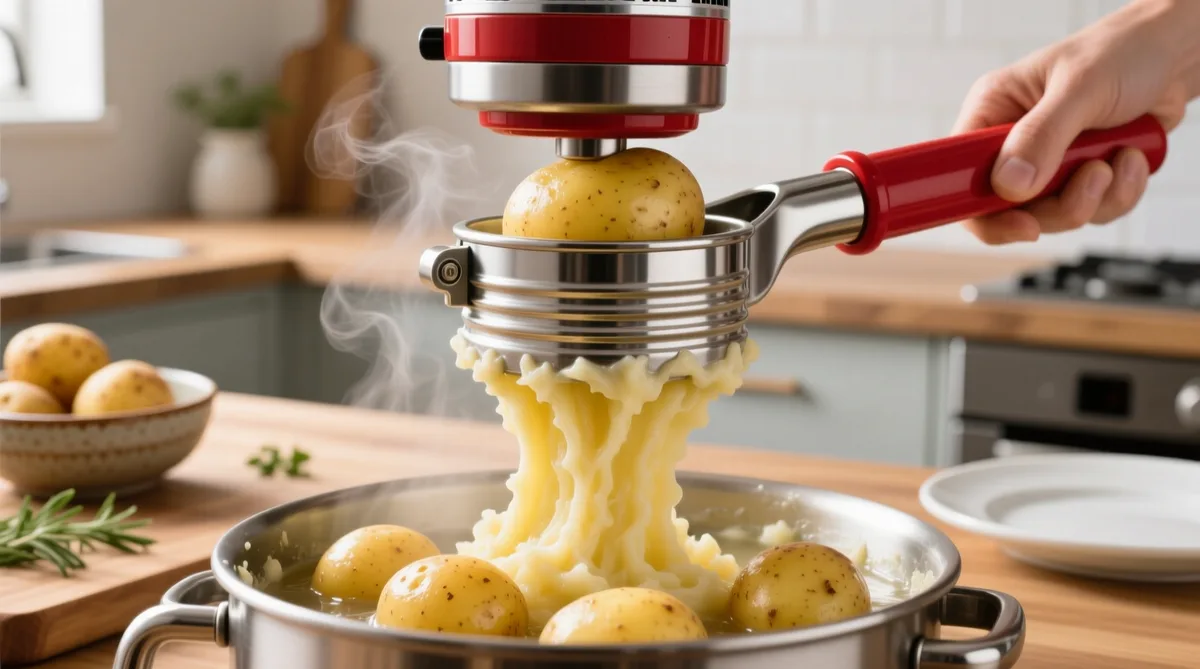
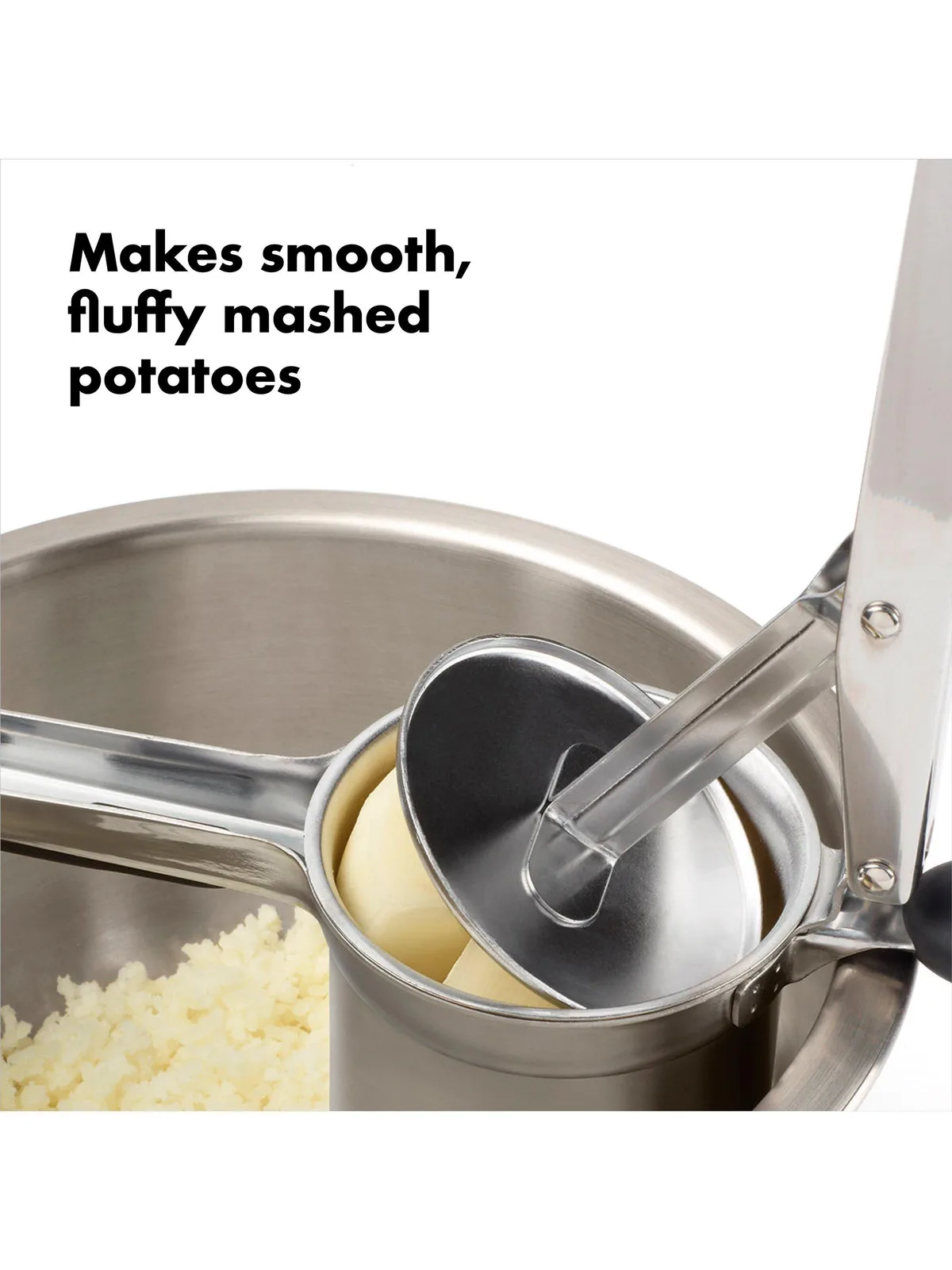
A ricer doesn’t smash. It separates. Every chunk enters the hopper and gets extruded through a fixed disc in a single pass.
The starch granules stay largely intact because there’s no rubbing or whipping. The potato falls into the bowl looking like tender, sandy rice. From there, you fold in melted butter and warm cream.
The fat coats individual particles instead of drowning a gluey mass.
That one-pass extrusion is the difference between a side dish people tolerate and one they fight over. Once you see riced potato absorb liquid without turning slick, you’ll never look at a masher the same way.
What a Potato Ricer Actually Does (And Why It Matters)
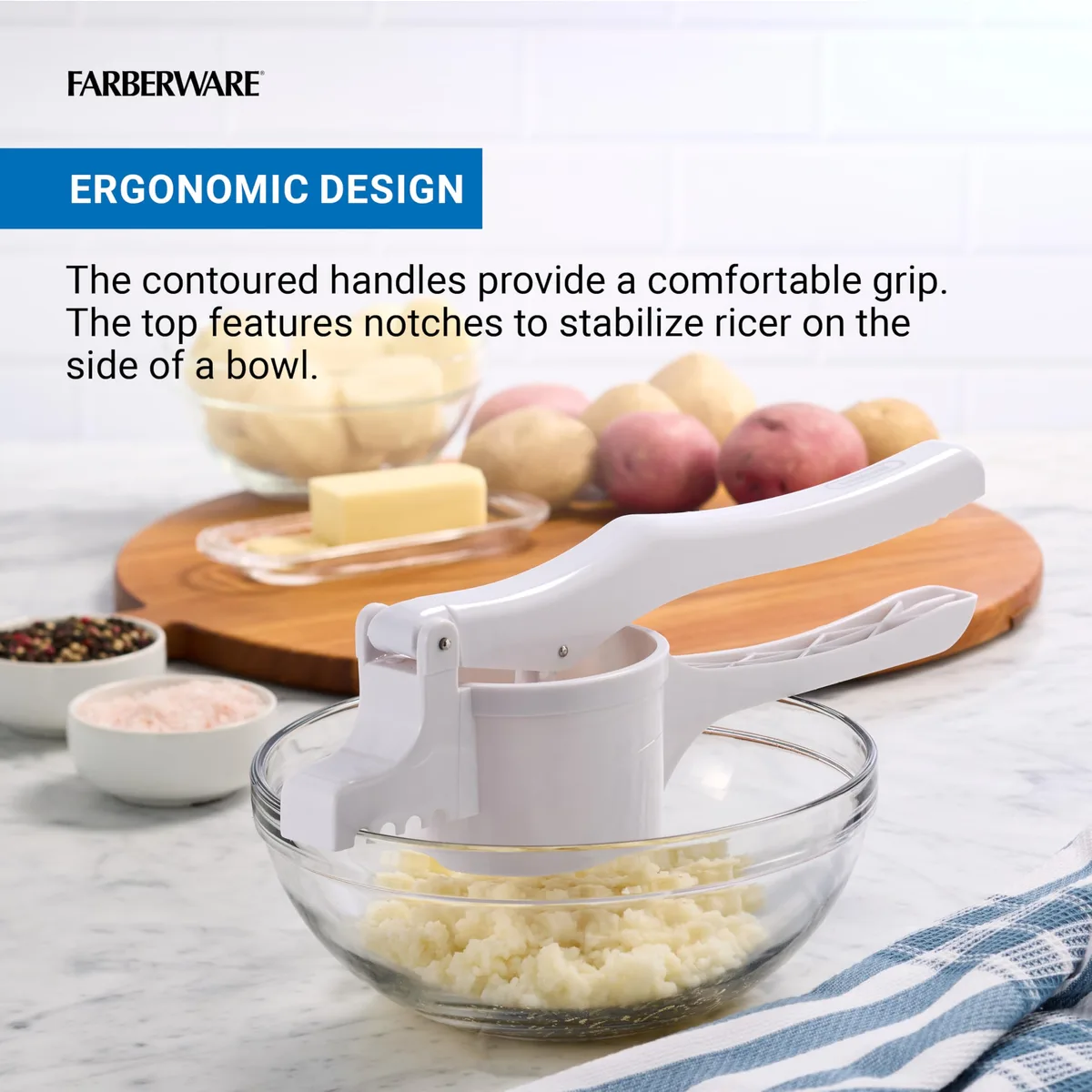
At its heart, a potato ricer is a press with a perforated base. You load boiled, drained potato into the chamber, squeeze the handles together, and a plunger forces the flesh down and out through tiny holes. The result looks like short, delicate grains of rice, hence the name.
This shape matters because it creates massive surface area for fat to cling to. A ricer doesn’t just break potato apart. It gives you a texture that holds butter and cream in suspension, turning each mouthful velvety rather than heavy.
Think of it as aerating the potato without whipping air into it. The strands are so light they practically float.
The tool also acts as a built-in strainer. Many models let you rice unpeeled potatoes right into the bowl. The skins stay in the hopper while the flesh passes through.
That saves time peeling and reduces waste. It’s a simple, elegant workaround for the one job that can turn a strained wrist into a ruined dinner.
How to Use a Potato Ricer
Using a potato ricer is simple, but timing matters. Start with potatoes that are completely tender. Drain them well, then return them to the hot pot for about a minute so surface moisture can evaporate.
Place a manageable amount of hot potato into the ricer. You can leave the skins on if your model allows it; the flesh will pass through the holes while the skins remain in the hopper. Squeeze the handles steadily and let the riced potato fall directly into a warm bowl or pot. Avoid overfilling, since dense loads require more force and can strain the tool.
Once all the potatoes are riced, gently fold in warm milk or cream and butter. Don’t beat or vigorously stir the mixture. The less you work the potato after ricing, the lighter and fluffier the finished mash will be.
You might find this helpful: Best Potato Ricer for Mashed Potatoes
Rice, Don’t Whip: How the Mechanism Protects Potato Starch
Potatoes become soft and starchy as they cook. Aggressive mixing with a hand mixer or food processor can break down the potato cells and release excess starch, creating the gluey, pasty texture nobody wants in mashed potatoes. The more you work the cooked potato, the denser it can become.
A ricer takes a gentler approach. Its plunger presses the cooked potato through small holes instead of whipping or aggressively cutting it. This creates separate, delicate strands that stay light rather than turning into a sticky mass. That texture also gives butter, milk, or cream plenty of surface area to blend in evenly.
The result is smooth, fluffy mashed potatoes with less risk of overworking them. For an especially fine purée, you can pass the potatoes through a fine disc twice, then gently fold in the butter and warm cream while the potato is still hot.
Potato Ricer vs. Masher: When Smooth Alone Isn’t Enough
A wire masher can give you a rustic, chunky mash that plenty of people love. That’s fine for a quick weeknight pile next to sausages. But as soon as you demand absolute silkiness, the masher hits a ceiling.
It leaves tiny lumps no amount of arm work eliminates without overworking the starch. You end up with a half-smooth, half-gummy compromise.
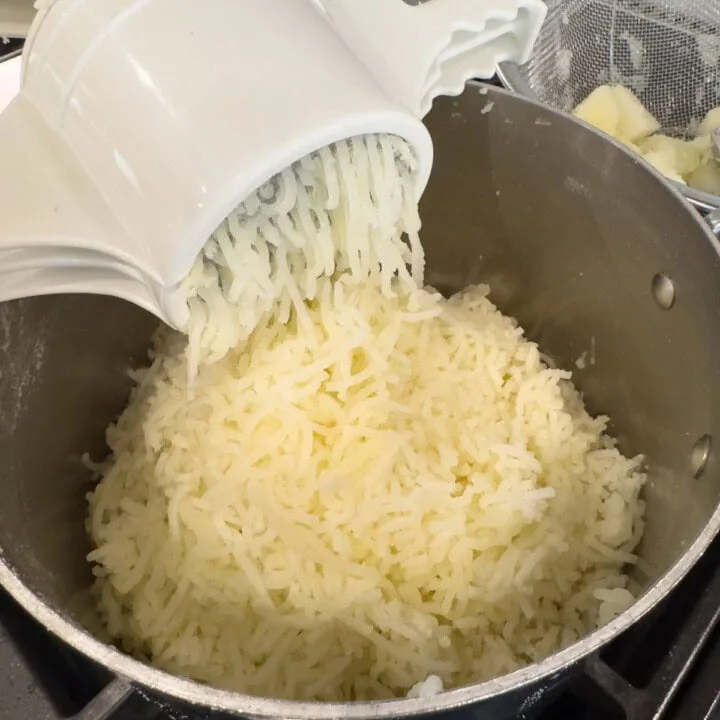
A ricer gives you both smoothness and lightness. There’s no mashing, no twisting, no second pass with the tool just to catch stubborn lumps. Everything that exits the disc is the same tiny size.
That uniform texture means butter and cream distribute evenly. The mouthfeel is consistent from first bite to last.
The masher still wins if you want a coarse, skin-on smash with visible pieces of red potato. It’s also faster to clean, one piece, rinse, done. But if you’re making duchess potatoes that need to pipe through a star tip without clogging, the ricer is non-negotiable.
You pipe a smooth, stiff purée that bakes into golden rosettes with crisp edges.
Potato Ricer vs. Food Mill: The Fine-Dining Face-Off
A food mill and potato ricer both process cooked foods, but they work differently. A ricer presses food straight through a perforated disc, producing a light, fluffy texture that works especially well for mashed potatoes, gnocchi, and smooth vegetable purées. A food mill uses a rotating mechanism and is better suited to larger batches and wetter foods such as tomatoes and applesauce.
For small batches of potatoes where texture matters most, a ricer is the better choice. A food mill makes more sense when you want to process larger quantities or handle a wider range of wet foods. They overlap in some uses, but a potato ricer is particularly useful when your goal is smooth, light potato without overworking it.
Where a Ricer Outshines Everything Else in Your Kitchen
Silky Pommes Purée and Restaurant-Style Mashed Potatoes
Classic French pommes purée demands potatoes passed through a fine disc, sometimes twice, then enriched with an almost shocking amount of cold butter. That high fat ratio only works when the potato texture is bone-dry, airy, and perfectly separated. A ricer delivers exactly that.
You fold butter in off the heat with a spatula and watch each grain absorb the fat without clumping. The final purée is glossy, smooth, and holds its shape on a plate.
Regular home-style mashed potatoes benefit too. Even with simple additions like warm milk and melted butter, the ricer’s fluff allows you to stir less. Less stirring means less gum.
You get a light, spoonable mash that tastes intensely of potato instead of starch paste.
Light-as-Air Gnocchi That Won’t Fall Apart
Gnocchi dough is a delicate ratio of cooked potato, flour, and egg. Overwork the potato component and you activate gluten from the flour too early, creating dense, chewy pillows that sink like stones. A ricer breaks the potato into uniform, fluffy crumbs that accept flour with minimal mixing.
You bring the dough together gently, roll it out, and cut.
The resulting gnocchi float after cooking and stay tender. If your kitchen scale’s readings are off, you’ll throw the potato-to-flour ratio out of whack and end up with heavy dough. Getting the weight right matters, and an accurate set of scales makes that step repeatable every time.
Vegetable Purées for Fine-Dining Plating (Celeriac, Parsnip, Cauliflower)
Root vegetables and cruciferous staples like celeriac, parsnip, and cauliflower hold a lot of water. Blitz them in a food processor and you get a thin, soupy purée that separates on the plate. A ricer presses them into dry, granular mounds that you can then enrich with cream or brown butter without losing body.
The purée stays tight enough to quenelle.
Cauliflower benefits especially. Its high moisture content makes blender purées weepy. Ricing removes the excess liquid trapped in the florets.
You get a dense, velvety base that tastes roasted and nutty rather than boiled and watery. Spoon it under seared scallops or a piece of white fish for a restaurant-level presentation.
Baby Food and One-Ingredient Purées
Parents making first foods need a consistent texture free of lumps and skins. A ricer handles steamed sweet potato, carrot, butternut squash, and pear with zero fuss. You cook the vegetable until tender, drop it in the hopper, and press.
The result is a fine, even purée with no need for a blender, no extra water to thin it out, and no risk of hidden fibrous strings.
Because you control the disc size, you can start with a coarse plate for early eaters adjusting to texture and move to a fine disc as they progress. Clean-up is a quick rinse rather than a blender disassembly. And you can make small, fresh portions on demand instead of freezing ice cube trays of bulk purée.
Making Spaetzle with a Ricer—the Bonus Most People Miss
Some ricer models include a dedicated spaetzle plate or the standard coarse disc doubles well enough. You rest a simple batter of flour, eggs, milk, and salt, then press it directly into simmering water. The tiny, irregular dumplings cook in under a minute and bob to the surface.
You skim them out, pan-fry in butter, and serve with hunter’s sauce or a sprinkle of herbs.
A spaetzle press is a uni-tasker that takes up drawer space. If your ricer ships with the right disc, you’ve just reclaimed that room without buying another gadget. The batter has to be loose enough to drip through the holes but firm enough to hold its shape.
A test batch sorts that out in thirty seconds.
Surprising Ricer Jobs: Draining Greens, Thickening Soups, and More
Cooked spinach and thawed frozen greens hold a surprising amount of water. Pressing them through a ricer with a medium or coarse disc squeezes out every last bit of liquid in seconds. You skip the messy towel-wringing routine and get dry, concentrated greens ready for a quiche or a creamy dip.
A ricer works as a quick soup thickener too. Press a small, boiled russet right into the pot of simmering broth and stir. The potato disperses instantly, adding body without a floury taste or the need for a roux.
It’s a clean, gluten-free trick that mimics the texture of a cream soup with nothing but potato and hot stock.
You can also rice roasted tomatoes directly into a pan, skins and all, for a fresh, quick sauce. The hopper catches tough skins and seeds while the pulp drops through. It’s not as thorough as a food mill for huge volumes, but for a single skillet meal, it’s faster and easier to clean.
Common Ricer Mistakes That Ruin Your Texture (and Your Wrist)
Undercooking the potato is the most frequent error. The flesh must be uniformly tender, offering zero resistance to a fork. A dense, half-cooked chunk puts enormous strain on the plunger and your grip.
It also leaves hard, unriced bits that clog the disc. Boil until the moment a knife tip slides out with no drag, then drain immediately.
Skipping the steam-dry step is next. Wet potatoes make a watery, sodden purée no matter how much butter you add. After draining, return the potatoes to the hot pot off the burner for a minute.
Let the surface moisture evaporate. A dry potato absorbs fat better.
Overfilling the hopper is a recipe for arm fatigue. Most home ricers handle about one large potato’s worth at a time. Packing the chamber forces you to press harder and can bend a plastic frame.
Work in small loads. The process takes ninety seconds longer but saves your joints and your tool.
Using a plastic ricer on cold, waxy varieties like red potatoes will eventually crack it. The resistance spikes and the plastic flexes beyond its limit. Stainless steel models handle the pressure, but they still work best with starchy, floury potatoes meant for mashing.
Choose the right spud for the job: russet, Yukon Gold, or King Edward. Waxy potatoes turn gluey regardless of the tool.
Fine, Medium, Coarse: Picking the Right Disc Size for the Job
The interchangeable disc set that comes with many ricers isn’t a gimmick. Hole diameter directly controls the final texture and the dish you can create. Leaving the wrong disc in means fighting the tool for the wrong result.
| Disc Size | Hole Diameter | Best For |
|---|---|---|
| Fine | ~2–2.5 mm | Pommes purée, ultra-smooth mash, baby food, fine-dining purées |
| Medium | ~3 mm | Everyday mashed potatoes, cauliflower purée, gnocchi |
| Coarse | ~3.5–4 mm | Rustic mash, spaetzle, draining greens, soup thickener |
A fine disc turns potatoes into something close to damp sand. That’s what you want when each grain of potato will get coated in cold butter and barely held together. The middle setting is the workhorse.
It gives enough loft for a family mashed potato without making you press like you’re lifting a car. Coarse is for when you want texture, like a chunky base for shepherd’s pie or a quick spaetzle. If your ricer only has one fixed disc, manufacturers typically ship a 3 mm plate on the assumption you’ll use it for mash most often.
You can run potatoes through a fine disc twice for an even silkier mouthfeel. Just be careful, the second pass adds no heat, so you need to work fast and have warm milk ready. Fat won’t blend into cooling, drying potato grains as well.
Timing counts here more than technique.
The Verdict: When a Ricer Belongs in Your Drawer (and When to Skip It)
A potato ricer is worth having if you regularly make smooth, fluffy mashed potatoes or dishes like gnocchi, duchess potatoes, and vegetable purées. It gives you better control over texture than a standard masher, especially when you want a light, lump-free result.
You may not need one if you prefer rustic, chunky mashed potatoes or already own a food mill that handles your puréeing needs. For occasional cooks, a masher or fork may be enough.
Overall, a ricer is a specialized tool that earns its place in the kitchen when smooth texture and consistent results matter to you.
Frequently Asked Questions
Can you put unpeeled potatoes in a ricer?
Yes. Most ricers let you press cooked, unpeeled potatoes straight into the bowl. The skins catch in the hopper while the flesh extrudes through the disc.
This saves peeling time and retains nutrients just under the skin. Russets work best for this. Thin-skinned red potatoes can sometimes pass through holes on coarse discs.
How do you clean a potato ricer?
Rinse the disc immediately after use, before starch dries and hardens in the holes. Most models disassemble, allowing you to pop out the disc plate and wash both pieces with warm soapy water. A small brush clears stubborn holes.
Check manufacturer specs. Many stainless models are dishwasher-safe on the top rack. Plastic parts should air dry fully to prevent mildew in hinge joints.
What else can you use a potato ricer for besides potatoes?
Ricer uses extend well beyond spuds. Press cooked cauliflower, celeriac, parsnip, or sweet potato for smooth vegetable purées. Squeeze thawed spinach or cooked greens to remove excess water.
Rice roasted tomatoes into a quick sauce, leaving skins behind. Some models double as a spaetzle maker with the right disc attached.
Can you use a potato ricer as a garlic press?
Yes, in a pinch. Place unpeeled cloves in the hopper and press. The skins stay behind while minced garlic drops through.
A dedicated garlic press is faster to load and clean. But if you’re already using the ricer for potatoes, it saves dirtying a second tool for a few cloves.
What’s the difference between a ricer and a food mill?
A ricer uses a plunger to push food straight down through a disc without shear. A food mill uses a rotating blade that scrapes food across a bottom screen. The ricer gives a lighter, fluffier texture.
The mill handles larger volumes and wetter foods like tomatoes or applesauce. For dry, starchy vegetables, the ricer wins. For canning and bulk processing, the mill takes over.
Can you rice potatoes ahead of time?
You can rice potatoes up to thirty minutes before serving if you keep them warm. Spread the riced potato in a heatproof bowl over a pot of barely simmering water. Cover loosely with foil.
Fold in hot butter and warm cream just before serving. Cold riced potato clumps and resists absorbing fat. Reheating already-mixed mash rarely recaptures the original fluff.