Many folks wonder about what is the standard size of a double bowl kitchen sink. It sounds simple, but when you are looking to buy one, all the numbers can get confusing fast. You might feel a little lost trying to figure out what will fit your space best.
But do not worry! We will break down this question into easy steps. We will show you exactly what you need to know so you can pick the perfect sink for your kitchen.
Understanding Double Bowl Kitchen Sink Dimensions
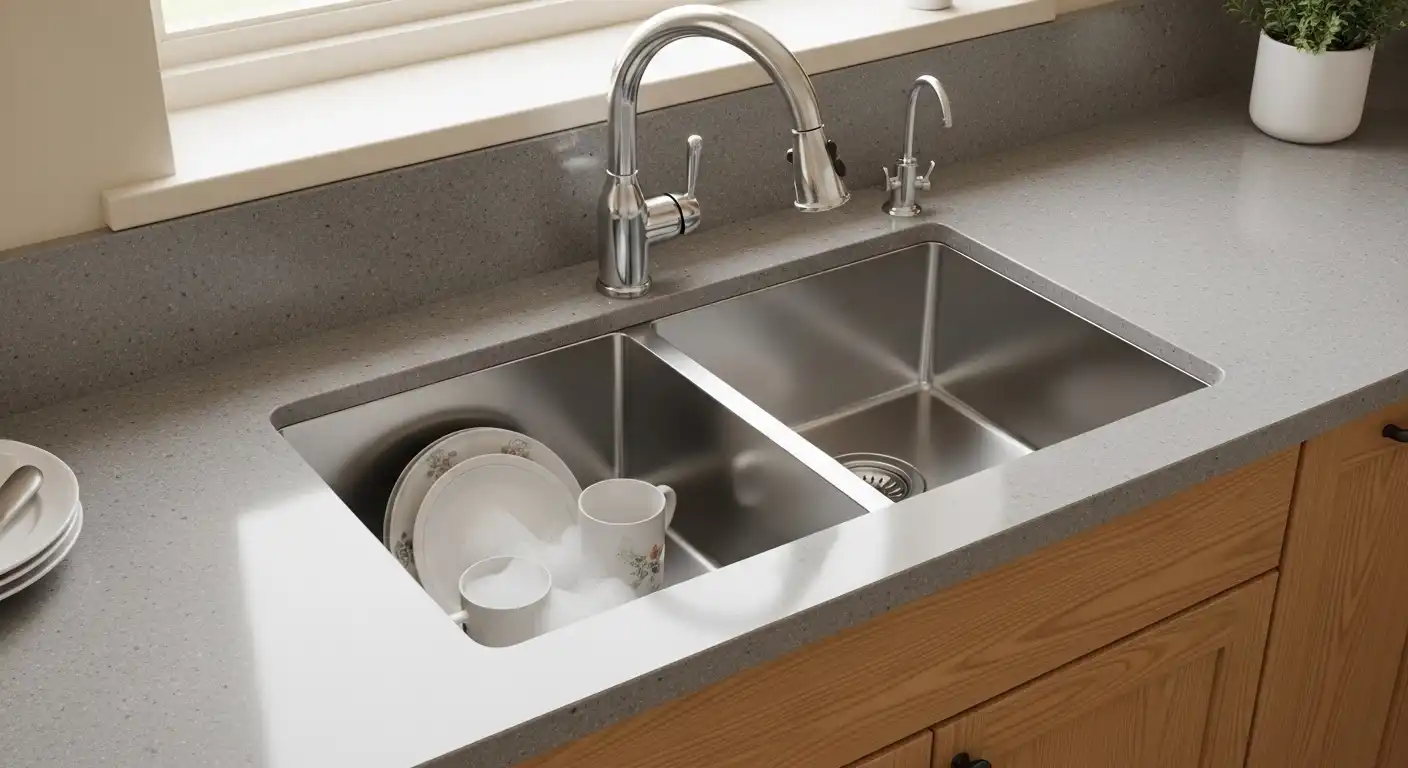
When you are planning a kitchen renovation or just replacing an old sink, size is a big deal. You want something that looks good and works well for your daily tasks. A double bowl sink offers flexibility, letting you wash dishes in one side and rinse or prep food in the other.
Knowing the standard sizes helps you avoid mistakes when buying. It also helps you make sure your new sink will fit the existing countertop opening. This guide will help you find clarity on what is the standard size of a double bowl kitchen sink.
Why Standard Sizes Matter
Kitchen sinks come in many shapes and sizes. However, there are common dimensions that manufacturers stick to. These standard sizes make installation easier for plumbers and contractors.
They also mean that accessories like sink grids and strainers are often made to fit these common dimensions. If you pick a very unusual size, you might have trouble finding these extras later.
For beginners, the challenge lies in the sheer variety. You see different widths, depths, and bowl configurations. Trying to compare them all can feel overwhelming.
But once you learn the typical ranges and what to look for, it becomes much simpler.
Common Overall Widths for Double Bowl Sinks
The overall width is one of the most important measurements. This is the total measurement from one outer edge of the sink to the other. For double bowl sinks, you will find most options fall into a few common width categories.
These are designed to fit standard cabinet sizes.
The most common overall widths for double bowl kitchen sinks are:
- 30 inches
- 33 inches
- 36 inches
A 30-inch sink is a good choice for smaller kitchens or if you have limited counter space. A 33-inch sink is a very popular, medium-sized option that fits most standard cabinets. The 36-inch sink is larger, offering more space for both bowls and is great for bigger kitchens or for people who do a lot of cooking and entertaining.
Understanding Cabinet Size Requirements
It is crucial to know that the sink size you choose needs to fit inside your kitchen cabinet. Kitchen cabinets are typically made in standard widths. The sink should be slightly smaller than the cabinet it sits in to allow for mounting clips and a proper seal.
The cabinet size is usually measured from wall to wall for the cabinet box.
Here is a general guide:
- For a 30-inch sink, you will typically need at least a 30-inch wide cabinet. However, a 33-inch cabinet often provides a better fit, allowing for easier installation and a more secure mounting.
- For a 33-inch sink, a 36-inch cabinet is usually recommended.
- For a 36-inch sink, you will likely need a 36-inch cabinet or even larger, perhaps 39 inches or more, depending on the specific sink’s mounting system. Always check the manufacturer’s specifications for the exact cabinet base size needed.
Always double-check the sink’s product details for the minimum cabinet base size required. This is a critical step to avoid costly installation problems.
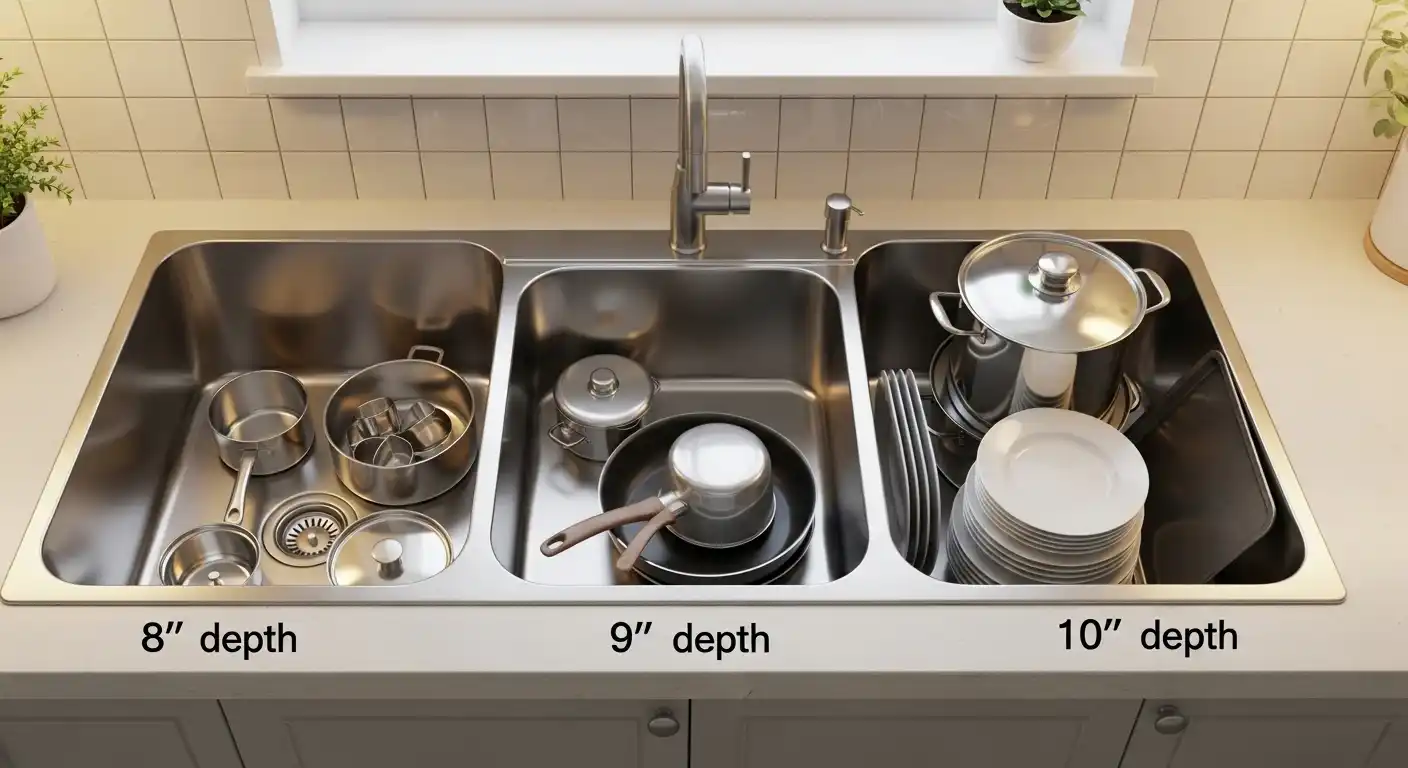
Depth of Double Bowl Kitchen Sinks
The depth of a sink refers to how far down it goes from the countertop. Sink depth affects how much water it can hold and how comfortable it is to use. Deep sinks are great for washing large pots and pans, while shallower sinks can be easier to clean.
For double bowl kitchen sinks, the typical depths range from:
- 8 inches
- 9 inches
- 10 inches
An 8-inch deep sink is fairly standard and offers good functionality for everyday tasks. A 9-inch deep sink provides a bit more capacity, making it easier to wash bulkier items. A 10-inch deep sink is considered very deep and is ideal for those who need maximum space for washing or soaking large dishes.
It is important to consider your own height and how you use your sink. A very deep sink might require you to bend down more, which could be uncomfortable for some people. Also, ensure that your plumbing and drain pipes have enough clearance below the sink, especially if you are choosing a very deep model.
Bowl Configuration and Sizes
Double bowl sinks are not just one big sink split in two. They come with different configurations for the two bowls. The most common types are equal bowls and offset bowls.
Equal Bowl Configuration
In an equal bowl configuration, both bowls are the same size. They often share the same depth as well. This type is great if you want two functional sinks for different tasks, like washing and rinsing, without one bowl feeling too small.
For example, a common equal bowl setup in a 33-inch sink might have two bowls that are roughly 15 inches wide and 17 inches long.
Offset Bowl Configuration
Offset bowls mean one bowl is larger than the other. Often, there is a larger main bowl for washing dishes and a smaller secondary bowl for rinsing, food prep, or holding dirty dishes. This setup is very popular because it offers versatility.
A typical offset configuration might have a main bowl around 18 inches wide by 17 inches long, and a smaller bowl around 14 inches wide by 17 inches long. The depths can also vary slightly between the bowls.
When looking at sinks, pay attention to the dimensions of each individual bowl. This will give you a better idea of how much space you will have for specific tasks.
Material and Its Impact on Size
The material of your kitchen sink can also play a role, though less so in standard sizing and more in how it looks and feels. Common materials include stainless steel, granite composite, fireclay, and cast iron.
Stainless Steel: This is the most popular choice. It is durable, affordable, and comes in many sizes. The thickness of the stainless steel can slightly affect the overall outer dimensions, but manufacturers usually keep these within standard ranges.
Granite Composite: These sinks are made from granite dust and resin. They are very durable and often have a matte finish. They can be a bit heavier, which might influence installation considerations, but their standard sizes are usually comparable to stainless steel options.
Fireclay: Made from clay fired at very high temperatures, fireclay sinks are strong and have a smooth, glossy finish. They are often used in farmhouse or apron-front styles, and their standard dimensions are also quite predictable.
Cast Iron: These sinks are known for their classic look and extreme durability. They are very heavy and typically have a porcelain enamel coating. Cast iron sinks often come in standard sizes that fit common cabinet bases.
Regardless of the material, the external dimensions of the sink are what primarily determine if it fits your countertop and cabinet space. Internal bowl dimensions and depth are more about usability.
Installation Types and Sizing
The way a sink is installed also affects how you choose its size and how it integrates with your countertop.
Top-Mount (Drop-In) Sinks
Top-mount sinks are the easiest to install. They have a rim that rests on top of the countertop. The installer cuts a hole in the countertop, and the sink is lowered into it, with the rim covering the edges of the hole.
The overall sink dimensions are important here, as the rim needs to cover the cut-out.
The standard sizes mentioned earlier (30, 33, 36 inches) generally refer to the outer dimensions of these sinks. You will need to ensure the countertop opening is slightly smaller than the sink’s overall size.
Undermount Sinks
Undermount sinks are mounted from underneath the countertop. This creates a seamless look, as there is no rim visible. With undermount sinks, the countertop material extends all the way to the edge of the sink opening.
This means the size of the cutout in your countertop is exactly the size of the sink’s main body.
For undermount sinks, you will need to consider the sink’s dimensions and the desired overhang of the countertop material. Manufacturers will specify the exact countertop cutout size required for their undermount models. The overall external dimensions are less critical for fitting the hole, but the sink’s width and length will still dictate the cabinet space needed.
Farmhouse (Apron-Front) Sinks
Farmhouse sinks are known for their distinctive exposed front, or “apron.” They are typically deeper and often wider than standard sinks. While they have standard sizes, they can sometimes be larger.
Common widths for farmhouse sinks include 30, 33, and 36 inches. However, their depth and the way they project out from the cabinet can be different. Special base cabinets are often required for farmhouse sinks to support their weight and design.
Always check the specific requirements for these sinks.
Measuring Your Existing Space
Before you start shopping, it is vital to measure your current sink and the cabinet it sits in. This will give you a clear idea of the maximum size you can accommodate.
Here’s how to measure:
- Measure the countertop opening: Measure the length and width of the hole in your countertop where the sink sits. For top-mount sinks, measure the visible opening. For undermount sinks, measure the actual cutout.
- Measure the cabinet base: Measure the width of the cabinet box that the sink fits into. This is the most important measurement for ensuring your new sink will fit.
- Measure the depth of your current sink: If possible, measure the depth of your current sink bowls. This will give you a reference point for what feels comfortable.
When looking at new sinks, compare your measurements to the product specifications. Remember that a new sink often needs to be the same size or slightly smaller than the existing one, especially for top-mount installations. If you are doing a full kitchen remodel, you have more flexibility, but still need to ensure the cabinet can support the sink’s size and weight.
What is the Standard Size of a Double Bowl Kitchen Sink
To recap, when people ask what is the standard size of a double bowl kitchen sink, they are usually referring to the overall exterior width. The most common widths you will encounter are 30 inches, 33 inches, and 36 inches. These sizes are designed to fit into standard kitchen cabinets.
A 30-inch sink fits well in smaller kitchens and tight spaces. A 33-inch sink is a versatile choice for most homes. A 36-inch sink offers ample space for larger kitchens and busy cooks.
The depth of these sinks typically ranges from 8 to 10 inches, with 9 inches being a popular middle ground. Bowl configurations vary, with equal-sized bowls or offset bowls (one larger, one smaller) being common.
Always verify the specific dimensions, especially the required cabinet base size, for any sink you are considering. This ensures a smooth installation and a perfectly fitting new sink.
- You can also read: How to Unclog a Double Kitchen Sink
Frequently Asked Questions
Question: What is the most common width for a double bowl kitchen sink?
Answer: The most common width for a double bowl kitchen sink is 33 inches. This size fits well in many standard kitchen cabinets and offers a good balance of sink space for various tasks.
Question: Can I fit a 36-inch sink into a 33-inch cabinet?
Answer: No, typically you cannot fit a 36-inch sink into a 33-inch cabinet. The sink’s overall width must be less than or equal to the cabinet’s interior width to allow for proper mounting and installation. Always check the manufacturer’s recommended cabinet base size.
Question: Are all double bowl sinks the same depth?
Answer: No, double bowl sinks come in various depths. Common depths range from 8 inches to 10 inches. The depth affects how much water the sink can hold and how comfortable it is to use.
Question: Does the material of the sink affect its standard size?
Answer: The material of the sink (like stainless steel, granite composite, or fireclay) does not typically change the standard external dimensions. Manufacturers produce sinks in these materials within the common width and length ranges to fit standard cabinets.
Question: What is the difference between equal and offset bowls in a double sink?
Answer: Equal bowls have two bowls of the same size, offering symmetrical space. Offset bowls have one larger bowl and one smaller bowl, providing more space for washing large items in the main bowl and a secondary space for rinsing or food prep.
Final Thoughts
Finding the right size for your double bowl kitchen sink is simpler than it seems. Focus on the overall width, which is most often 30, 33, or 36 inches. These are made to fit standard cabinets.
Also, check the sink’s depth, usually between 8 and 10 inches. Measure your cabinet space carefully before you buy. This makes sure your new sink will fit perfectly, giving you a functional and stylish kitchen.

I’m Loretta Evans, and I lead the Rice Cooker and Kitchen Tools section. I test every product in real home kitchens to see how it truly performs in everyday use.
My goal is simple: to give you clear, honest advice so you can choose reliable tools that make cooking easier.