Cooking bacon on a griddle can turn a simple breakfast into a delicious treat. But one common question pops up for many home cooks: What temp do I cook bacon on a griddle? If the temperature is too low, your bacon can end up soggy and greasy. Too high, and you risk burning it before the fat renders fully. The right temperature isn’t just about taste; it also affects texture, safety, and the cleanup process. Let’s dive deep into how to get bacon just right on your griddle, with practical tips, temperature charts, and expert insights you won’t find in most guides.
The Ideal Temperature For Cooking Bacon On A Griddle
For the best results, set your griddle to medium heat—specifically, between 350°F to 375°F (175°C to 190°C). This temperature allows the bacon fat to slowly render, giving you crispy edges and a tender bite. Cooking at this range avoids burning the meat or leaving it undercooked and rubbery.
Why 350°f To 375°f Is Perfect
- Fat renders gently: The bacon cooks in its own fat, making it crispy without drying out.
- Even browning: Medium heat helps cook the bacon evenly, so you don’t get burnt spots.
- Less smoke: High heat can make the fat burn and create smoke, which is unpleasant in any kitchen.
- Safe cooking: Bacon is cured, but it still needs to reach a safe temperature to kill bacteria.
Many griddles have a temperature dial, but if yours does not, you can use an infrared thermometer or a simple water drop test (a drop should sizzle but not jump aggressively).
Preparing Your Griddle For Bacon
Before you start, make sure your griddle is clean and preheated to the target temperature. This small step helps prevent sticking and ensures even cooking.
- Clean surface: Any leftover food or grease can cause uneven cooking or burning.
- Preheat fully: Give your griddle 5–10 minutes to come up to temperature.
If you want to make cleanup easier, lightly oil the griddle with a paper towel. However, bacon releases enough fat on its own, so extra oil isn’t necessary for non-stick griddles.

Credit: www.reddit.com
Step-by-step: Cooking Bacon On A Griddle
Cooking bacon is simple, but a few details make a big difference. Here’s how to do it right:
- Lay bacon strips flat: Do not overlap. Overlapping leads to uneven cooking.
- Start cold or hot? : For most griddles, add bacon after preheating. But if using a cast iron griddle, you can start with a cold griddle for extra-crispy bacon.
- Cook 3–5 minutes: After placing the bacon, let it cook undisturbed.
- Flip with tongs: Once the first side is browned, flip each strip. Don’t use a fork—it can tear the meat.
- Cook another 2–4 minutes: The second side usually takes less time.
- Drain on paper towels: This removes extra grease, making the bacon crispier.
Bacon thickness and griddle material may change the cook time slightly. Thicker cuts take longer; thinner ones can burn fast.
How Griddle Type Affects Cooking
Not all griddles are the same. The type of griddle you use changes how quickly your bacon cooks and how easy it is to control the temperature.
| Griddle Type | Heat Response | Best Temp for Bacon | Notes |
|---|---|---|---|
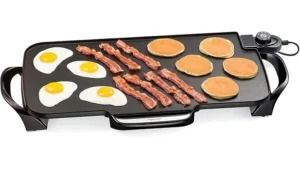
| Electric Griddle | Consistent | 350°F – 375°F | Easy to control; good for beginners |
| Cast Iron Griddle | Slow, holds heat | 350°F | Preheat well; retains heat longer |
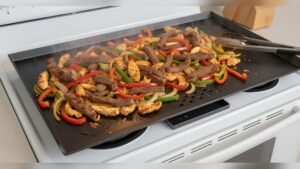
| Stovetop Griddle | Varies by burner | Medium setting | Monitor closely for hot spots |
If you use a cast iron griddle, remember it holds heat longer. Lower the heat once bacon fat starts rendering, or you risk burning.
How Thickness And Bacon Type Change Temperature Needs
Different types of bacon need small adjustments for the best result.
Regular Sliced Bacon
Most store-bought bacon is regular sliced. Stick to the 350°F–375°F range, with a cook time of 6–8 minutes total.
Thick-cut Bacon
Thick-cut bacon needs more time. Lower the heat to 325°F–350°F so the fat renders before the outside burns. Expect 10–15 minutes total cooking time.
Turkey Bacon
Turkey bacon is lean and can dry out. Use 325°F and watch closely. It usually needs less time than pork bacon—about 4–6 minutes total.
Center-cut Bacon
This bacon has less fat, so it cooks quicker. Use the same temperature as regular bacon, but check for doneness after 5 minutes.
Common Mistakes When Cooking Bacon On A Griddle
Even experienced cooks make errors. Here are some things to watch out for:
- Using high heat: This burns the outside and leaves the inside chewy.
- Overcrowding the griddle: Bacon needs space to crisp. Cook in batches if needed.
- Not draining grease: Too much fat around the bacon makes it soggy, not crispy.
- Flipping too often: Let bacon cook on one side before flipping for better texture.
- Cooking from cold: For electric griddles, always preheat. For cast iron, starting cold can work for a crispier result.
- Ignoring griddle hotspots: Some griddles have hotter zones. Move bacon around if some strips cook faster than others.
One non-obvious tip: use a splatter guard if your griddle design allows. This keeps your stovetop clean and prevents minor burns from popping grease.
Credit: theflattopking.com
How To Tell When Bacon Is Done
Color and texture are better guides than time alone. Bacon is ready when:
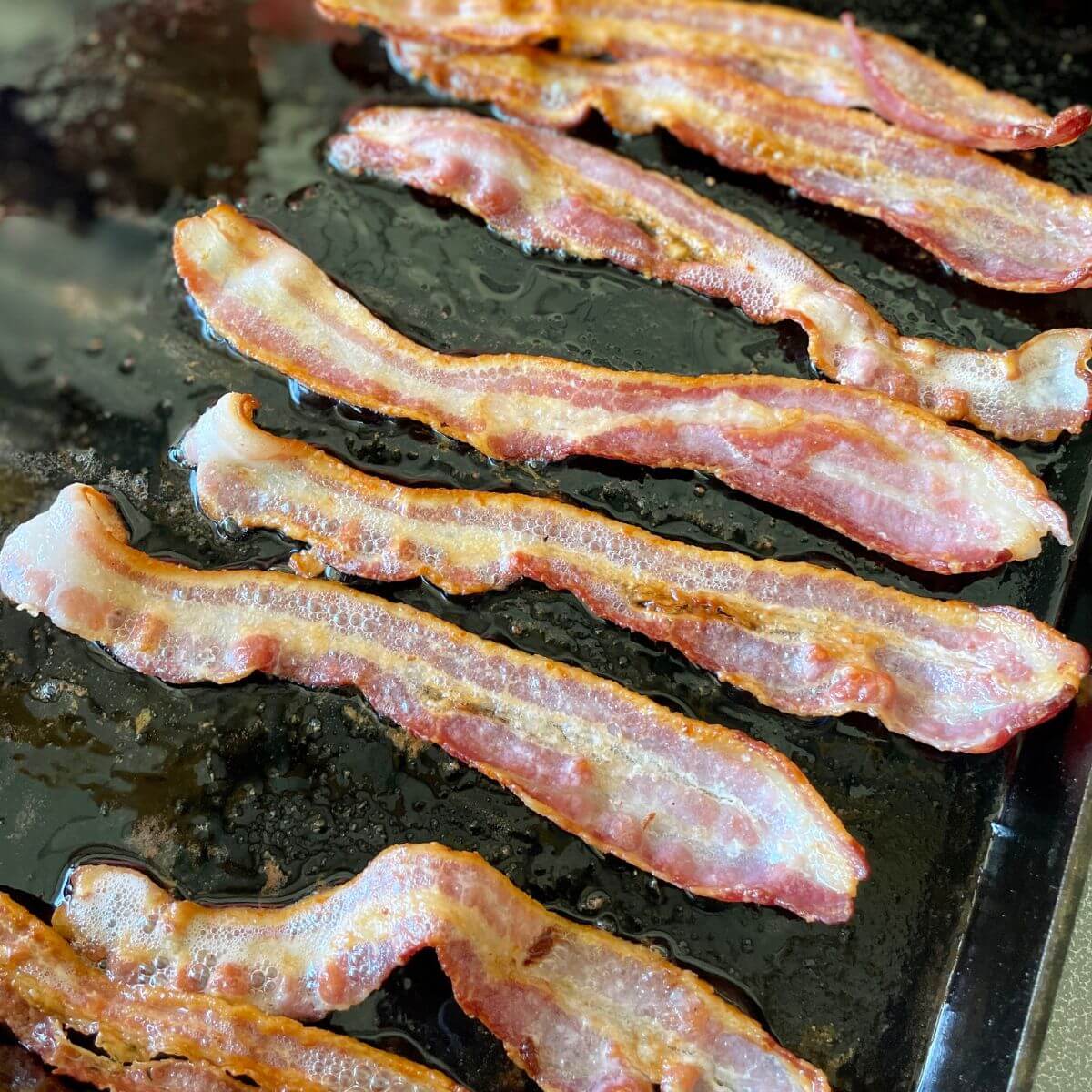
- Edges are deep golden brown
- Fat is mostly rendered (translucent, not white)
- Strips look slightly wavy
If you want extra-crispy bacon, cook a bit longer, but watch closely as it can burn fast in the last minute.
Comparing Doneness Levels
| Doneness | Texture | Cook Time (Regular Slices) | Visual Cue |
|---|---|---|---|
| Chewy | Flexible, some white fat left | 4–5 minutes | Pale golden, not crisp |
| Crispy | Snaps when bent | 7–8 minutes | Deep golden, little white fat |
| Very Crispy | Brittle, shatters easily | 9–10 minutes | Dark brown edges |
Remember, bacon continues to crisp a little after you remove it from the griddle as it cools.
Tips For Perfect Bacon Every Time
- Room temperature bacon cooks more evenly than straight-from-the-fridge strips.
- Wipe excess grease from the griddle between batches to prevent burning.
- Use tongs for flipping; forks can tear strips.
- Save bacon fat for future recipes—strain and store it in a jar.
- Test one strip first if you’re cooking a new bacon brand or type.
A little patience goes a long way. If you rush the process, you might get burnt or rubbery results. Instead, let the bacon cook at medium heat, and enjoy the aroma as it crisps up.
Credit: www.traeger.com
Bacon Cooking Times Chart
For a quick reference, here’s how long to cook different bacon types at the right temperature:
| Bacon Type | Griddle Temp | Cook Time (Per Side) | Total Time |
|---|---|---|---|
| Regular sliced | 350°F–375°F | 3–4 min | 6–8 min |
| Thick-cut | 325°F–350°F | 5–7 min | 10–15 min |
| Turkey | 325°F | 2–3 min | 4–6 min |
| Center-cut | 350°F–375°F | 2–3 min | 4–6 min |
Cleaning Up After Cooking Bacon
Bacon grease can be messy, but proper cleaning keeps your griddle in top shape.
- Let grease cool: Never pour hot grease down the drain. It can clog pipes.
- Wipe with paper towels: Soak up excess grease before washing.
- Wash with warm, soapy water: For non-stick and electric griddles, never submerge the heating element.
- Re-season cast iron: If using cast iron, add a thin layer of oil after cleaning to prevent rust.
A non-obvious tip: If you plan to cook eggs or pancakes after bacon, use a small amount of the reserved bacon fat for extra flavor.
Advanced Tips: Getting Creative With Bacon
Once you master the basics, try these:
- Season bacon: Sprinkle black pepper, brown sugar, or chili flakes before cooking for different flavors.
- Weave bacon: Try a simple lattice pattern for sandwich toppings.
- Bacon for meal prep: Cook several strips, drain and cool, then refrigerate for up to a week for quick breakfasts.
For more information on bacon varieties and cooking techniques, check out the Wikipedia Bacon Page.
Frequently Asked Questions
What Happens If I Cook Bacon At Too High A Temperature?
Cooking bacon at high heat (over 400°F/205°C) can burn the meat before the fat has a chance to render. This leads to burnt edges, uneven cooking, and a bitter taste. Stick to medium heat for best results.
Do I Need To Add Oil To The Griddle?
No. Bacon has enough fat to prevent sticking, especially on non-stick or seasoned griddles. If your griddle is brand new or you’re cooking very lean bacon, wipe on a thin layer of oil with a paper towel before starting.
Can I Cook Frozen Bacon On The Griddle?
It’s possible, but not ideal. Thaw bacon first for even cooking. If you must cook from frozen, lower the griddle temp and separate strips as soon as possible. Cook longer and watch for uneven spots.
How Do I Reduce Bacon Splatter On A Griddle?
To reduce splatter, cook at the lower end of the recommended temperature range, and use a splatter guard if your griddle design allows. Keeping the bacon dry (pat with paper towels before cooking) also helps.
Is Griddle-cooked Bacon Healthier Than Pan-fried Bacon?
Griddle cooking lets more fat drain away from the bacon, especially on sloped griddles. You can blot extra grease with a paper towel for even less fat. The difference is small, but every bit helps if you’re watching calories.
Cooking bacon on a griddle is a simple skill that brings out the best flavor and texture. With the right temperature, a little patience, and these tips, you’ll enjoy perfect bacon every time—whether for breakfast, sandwiches, or any dish that needs a savory, crispy bite.