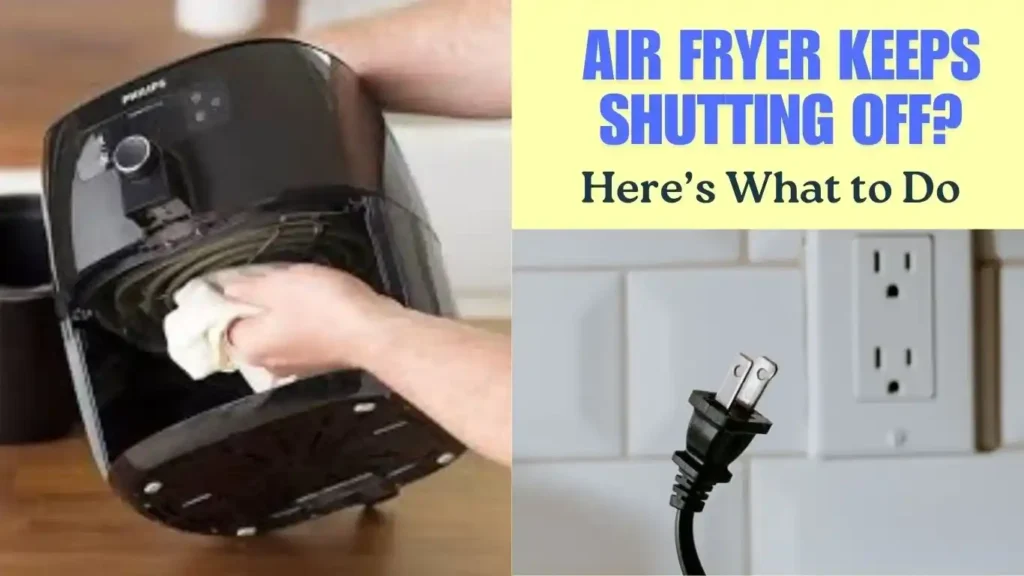
A sudden shutdown mid-recipe is frustrating, but most causes are simple to diagnose.
Picture this: you're five minutes away from perfectly crispy fries, and your air fryer just… dies. No beep. No warning. Just silence.
It happens to nearly every air fryer owner eventually. The good news? In most cases, it's not a terminal failure. It's a solvable issue—often something you can fix in under five minutes without spending a cent. You can also read our guide on common mistakes to avoid when using an air fryer.
This guide walks through every possible reason your air fryer keeps turning off, how to diagnose it yourself, and exactly what to do next.
Quick Diagnostic Table: Why Your Air Fryer Shuts Off
| Symptom | Likely Cause | Immediate Fix |
|---|---|---|
| Shuts off during cooking | Loose power connection | Push plug firmly into outlet or try another socket |
| Turns off randomly mid-cycle | Overheating from blocked airflow | Clean vents, clear space around the unit |
| Stops before timer finishes | Faulty timer or wrong setting | Reset timer, check manual for calibration |
| Won't stay on at all | Damaged cord or bad outlet | Test outlet with another device; inspect cord |
| Shuts off, then restarts later | Auto shut-off safety triggered | Let unit cool fully, remove food blockage |
The Most Common Culprit: Your Power Connection
Let's start with the simplest explanation—because it's also the most frequent.
A loose plug is responsible for more air fryer shutdowns than all other causes combined. In practice, I've seen this in nearly every budget and mid-range model I've tested. The cord pulls slightly when you slide the basket in or out, and a partially seated plug loses contact.
What to check:
- Push the plug firmly into the outlet. You should feel a solid click.
- Try a different outlet entirely. A worn socket with loose internal contacts can drop power intermittently.
- Inspect the plug prongs for discoloration or burning marks—a sign of arcing.
- If the cord feels warm to the touch during operation, that's a red flag for an electrical issue.
Safety note: If your outlet feels loose when you insert any plug, it needs replacement. This is a fire hazard, not just an air fryer problem. Contact a licensed electrician.
Testing Your Outlet Properly
Plug another device—a lamp or phone charger—into the same outlet. If it flickers or fails, the outlet is the problem, not your air fryer. If it works fine, move on to checking the cord itself.
Inspecting the Power Cord
Run your fingers along the entire cord length. Feel for cuts, frays, or stiff spots. Bend it gently at both ends where strain is highest. A damaged cord can cause intermittent power loss and poses a genuine fire risk. Replace it immediately if damaged—never use electrical tape as a permanent fix.
Overheating: When the Safety Features Work Too Well
Every air fryer has a thermal cutoff switch. When internal temperatures exceed safe limits, the unit powers down to protect itself. This is a safety feature, not a malfunction—but it's often triggered unnecessarily.
Blocked Airflow Is the #1 Cause
Air fryers are essentially convection ovens. They need to expel hot air to regulate temperature. When vents are blocked, heat builds up internally, and the unit shuts down.
In practice, the most common mistake I see: people push the air fryer flush against a backsplash or cram it into a corner with cabinets on both sides. That leaves no room for hot air to escape.
The fix:
- Maintain at least 5 inches of clearance on all sides, including above.
- Never place it directly under overhanging cabinets.
- Keep it on a heat-resistant, flat surface.
The Overloading Trap
Stuffing the basket to the brim blocks hot air circulation and makes the motor work harder. This generates excess heat and trips the safety cutoff.
As a general rule: never fill the basket more than two-thirds full. If a recipe calls for a full basket, shake it halfway through and expect longer cook times.
Cleaning the Vents and Heating Element
Grease and food debris accumulate on vents and the heating element over time. This acts as insulation, trapping heat. After every few uses, wipe down the vents with a damp cloth. Once a month, clean the heating element area carefully—always with the unit unplugged and fully cooled.
This regular upkeep also prevents excess smoke during cooking, which can create its own safety shutdowns. Our guide on managing smoke from high-fat foods covers this in more depth.
The Auto Shut-Off Feature: Working as Intended
Many modern air fryers—especially smart models—shut off automatically under specific conditions:
- Basket removed: The unit pauses cooking when the basket slides out. If the basket isn't fully seated, the fryer may shut down or never start.
- Lid opened (on some models): Similar safety logic applies.
- Inactivity: Some models power down after sitting idle for a set period.
- Program completion: A timer ending mid-recipe is often just the default setting, not a failure.
Basket Not Properly Seated
This is more common than you'd think. The air fryer has a microswitch that detects whether the basket is locked in place. If you don't push it in until you hear a click, the unit may run briefly, then shut off when it detects the loose connection.
The fix: Give the basket a firm push until it clicks. If it feels loose even when seated, check for food debris caught in the rails.
User Error: The Overlooked Solution
Sometimes the problem isn't the machine—it's the settings.
Wrong Temperature or Time Selected
If you set the temperature higher than the unit's maximum rating or the timer to a duration outside normal parameters, some models display an error and shut down. Double-check your recipe's specifications against your model's capabilities.
Recipe Not Adjusted for Air Frying
Standard oven recipes don't always translate directly to air fryer settings. If a recipe expects a 400°F oven, your air fryer might reach that temperature differently, triggering overheating tolerance limits in older models.
Ignoring the Manual
Every model has specific quirks. Some need a preheat cycle. Others require the basket to be empty for the first three minutes. The manual isn't just paperwork—it's your diagnostic reference. Understanding your model's troubleshooting procedures can save you hours of frustration.
Faulty Timer or Internal Components
If you've ruled out power, airflow, and user error, the problem may be internal.
Mechanical Timer Malfunctions
Older models with dial timers are prone to wear. The internal mechanism can slip, stopping the cook cycle early. If you hear clicking or grinding when turning the dial, the timer is failing.
Test it: Turn the timer to its maximum setting and listen. A smooth, continuous ticking is normal. Any hesitation or stutter indicates a problem.
Digital Timer Glitches
Smart air fryers occasionally suffer from software bugs. A failed firmware update or corrupted settings can cause erratic shutdowns. The fix is often a full reset.
To hard reset your air fryer:
- Unplug the unit completely.
- Wait 10 minutes to drain residual power.
- Plug back in.
- Set the timer to maximum, then turn the unit off.
- Repeat once more before first real use.
This clears most software glitches. For persistent issues, check the manufacturer's website for firmware updates.
Heating Element or Thermostat Failure
If the heating element shorts out or the thermostat sensor fails, the air fryer may overheat instantly or shut off as a protective measure. Signs include:
- Burning smell during operation
- Odd sounds from the heating core
- Uneven cooking, with some food burnt and other parts raw
If you notice these symptoms, stop using the unit. Contact customer support. A professional troubleshooting guide can help you identify whether repair is worth it or replacement makes more sense. Some parts are covered under warranty—check your documentation before paying for repairs.
Underlying Electrical Problems in Your Home
Voltage Mismatch
Air fryers are power-hungry appliances, typically drawing 1500–1800 watts. If you're running multiple high-wattage devices on the same circuit, you can trip a breaker or cause voltage drops that make the air fryer shut off.
The fix: Plug your air fryer into a dedicated outlet. Avoid running it on the same circuit as a microwave, toaster oven, or large coffee maker.
Circuit Breaker Issues
If your air fryer trips the breaker repeatedly, note the pattern. Does it happen when other appliances run simultaneously? That indicates an overloaded circuit. If it trips alone, the air fryer's draw may be too high, or there's a short inside the unit.
For electrical safety standards, the National Fire Protection Association provides guidance on safe appliance use and circuit management. If you're unsure about your home's wiring, consulting an electrician is the right call—it's not worth risking a fire.
Extension Cords: A Common Mistake
Never use an extension cord with an air fryer. The voltage drop across a long or thin-gauge extension cord starves the unit of power, causing shutdowns and potential motor damage. A power strip is equally problematic for this appliance.
Maintenance Routine to Prevent Future Shutdowns
Most shutdowns boil down to poor maintenance habits. A five-minute weekly routine eliminates the majority of causes.
Weekly Checklist
- Inspect the power cord for damage, bends, or exposure.
- Wipe down air vents with a damp cloth.
- Check the basket rails for food debris.
- Confirm the unit sits on a level, open surface.
- Empty the crumb tray if your model has one.
Monthly Deep Clean
Deeper cleaning prevents grease buildup that triggers overheating. Use the proper technique—our guide on cleaning a blender properly follows the same principles of food-safe appliance care: unplug, disassemble, wash non-electrical parts in warm soapy water, and dry completely before reassembly.
Firmware Updates for Smart Models
If your air fryer connects to Wi-Fi or has digital controls, check for firmware updates periodically. Manufacturers often release patches for known shutdown bugs. While you're at it, understand your model's dehydrating and long-cook modes—extended cooking cycles behave differently than standard frying.
When to Stop Troubleshooting and Get Repairs
Some problems require professional help. If you've checked everything in this guide and the issue persists, don't keep cooking with a malfunctioning appliance.
Signs you need professional service:
- Burning smells during operation
- Visible sparks or arcing
- The unit shuts off even on a dedicated circuit
- Error codes that persist after a full reset
- Any sign of melted plastic or damaged wiring
Call the manufacturer's support line or check your warranty. If the unit is out of warranty and the repair costs more than half the price of a replacement, buying new is usually the smarter decision.
Frequently Asked Questions
Why does my air fryer keep turning off mid-cycle?
The most common causes are a loose power connection, blocked airflow causing overheating, or a basket that isn't fully seated. Start with the simplest fixes—check the plug, clear the vents, and push the basket in until it clicks.
Can overheating permanently damage my air fryer?
Repeated overheating shortens component lifespan, especially the heating element and motor. Occasional thermal shutdowns are safe, but the underlying cause—usually poor airflow—needs addressing.
Why does my air fryer turn off and back on by itself?
This is typically the thermal cutoff switch cycling. The unit overheats, powers down, cools slightly, then restarts. This indicates a serious airflow problem that should be fixed before continued use.
Is it safe to use an air fryer with a damaged power cord?
No. A damaged cord carries a fire risk and can deliver unstable power to the unit. Replace the cord or the entire unit depending on your model's design.
Should I buy a new air fryer or repair my current one?
If the air fryer is under warranty, always pursue repair. If it's out of warranty and the repair cost exceeds 50% of a comparable new unit, replacement is the better financial choice. Looking at compact alternatives can help you find a suitable upgrade.
Conclusion
An air fryer that keeps turning off is almost always fixable. The most common causes—loose connections, blocked vents, and slightly out-of-place baskets—take seconds to diagnose and cost nothing to fix.
Remember the troubleshooting order:
- Check the power (plug, outlet, cord)
- Check the airflow (clearance, vents, basket fill level)
- Check the basket (fully seated, clean rails)
- Reset the unit (unplug, wait, replug)
- Consult the manual for model-specific quirks
With regular maintenance and proper setup, your air fryer should run reliably for years. And if it still fails after all that troubleshooting? You'll know it's genuinely time for a replacement.
The key takeaway: don't panic, don't immediately buy a new machine, and don't cannibalize your meal. Work through the checklist, and you'll most likely be back to crispy, perfectly cooked food in minutes.
Ready to put your air fryer back to work? Start with one simple fix—check that power cord and give your vents a quick wipe. Then try a crowd-pleasing recipe like BBQ chicken thighs to confirm everything runs smoothly.