When you’re hungry and ready to cook breakfast, few things are more frustrating than an electric griddle not getting hot. You plug it in, set the temperature, but nothing happens—or it barely warms up. This problem is surprisingly common, and it can be caused by several factors. Knowing what’s wrong can save you time, money, and a lot of stress. Let’s explore the main reasons your electric griddle isn’t heating up, how to fix it, and how to keep it working well for years.
How Does An Electric Griddle Work?
Before troubleshooting, it helps to understand the basics. An electric griddle uses a heating element—usually a metal coil—placed under a flat cooking surface. When you turn the dial, electricity flows to the element, which heats up and cooks your food. The thermostat controls the temperature, keeping the surface even.
If any part of this simple system fails, the griddle may not heat at all or may heat unevenly. Problems can be electrical, mechanical, or related to how you use and care for the device.
Common Reasons Your Electric Griddle Is Not Getting Hot
Let’s break down the most frequent causes, with practical tips and warnings.
1. Faulty Power Connection
Sometimes the power cord is not plugged in fully, or the outlet isn’t working. Try these steps:
- Plug another device into the same outlet to check if it has power.
- Inspect the cord for damage, cuts, or loose connections.
- Make sure the plug fits tightly.
A surprising number of griddles get tossed out when the real problem is a tripped breaker or faulty socket. Always start here before moving to complex solutions.
2. Burned-out Heating Element
The heating element can wear out or break, especially with older griddles. Signs include:
- No heat at all, even when the light is on.
- The griddle heats unevenly (hot spots and cold spots).
You can check the element by feeling for warmth after five minutes on high. If it’s still cold, the element may need replacement—a job often best left to a professional.
3. Broken Thermostat
The thermostat controls the temperature. If it fails, your griddle may not heat up or may overheat. Symptoms:
- The ready light never comes on, or stays on but there’s no heat.
- The griddle stays cold even at the highest setting.
A bad thermostat can sometimes be replaced, but parts are not always available. If your griddle is new, check the warranty.
4. Internal Wiring Problems
Inside the griddle, wires connect the power to the element and controls. With time or rough handling, these wires can loosen or break. Warning signs:
- Sudden loss of power when moving the griddle.
- Visible sparks or burning smell.
This is a safety risk. If you suspect internal wiring problems, unplug the griddle and seek repair or replacement.
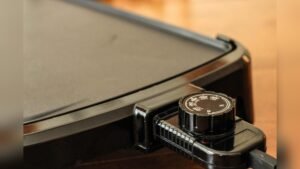
5. Defective Temperature Control Knob
Some griddles use a removable temperature probe with a dial. If this probe is defective or not seated fully, the griddle won’t heat. Steps to check:
- Remove and reinsert the probe, making sure it clicks into place.
- Inspect for bent pins or corrosion.
If you have a spare probe, try swapping it.
6. Blown Fuse Or Tripped Breaker
Griddles draw a lot of power. If your kitchen circuit is overloaded, a fuse or breaker may blow. This will cut power completely.
- Check your home’s fuse box or breaker panel.
- Try using the griddle in another outlet or room.
If the breaker trips every time, there may be a short circuit in the griddle.
7. Residue Or Grease Buildup
Sometimes, heavy grease or food residue can block the heating surface or insulate the element, making it seem like the griddle isn’t getting hot. This is common if the griddle hasn’t been cleaned in a while.
- Clean your griddle thoroughly with warm, soapy water (when unplugged and cooled).
- Avoid submerging electrical parts.
A well-cleaned griddle heats faster and more evenly.
8. Manufacturing Defect
If your griddle has never worked well, it may be due to a factory defect. This is rare but happens, especially with cheaper brands.
- Check the warranty and return policy.
- Contact the manufacturer for support.
9. Incorrect Assembly After Cleaning
Some griddles have removable plates or drip trays. If these are not put back correctly, the device may not function. Double-check all parts after cleaning.
10. Old Age Or Wear And Tear
Most electric griddles last 3–7 years with regular use. Over time, all parts can wear out. If your griddle is older, it may simply be at the end of its life.
Credit: www.vevor.ca
Troubleshooting Steps For A Cold Electric Griddle
If your electric griddle isn’t heating, try this approach:
- Test the outlet – Plug in a lamp or phone charger.
- Examine the power cord – Look for frays, loose ends, or burn marks.
- Check the temperature dial or probe – Remove and reinsert.
- Inspect the surface – Clean off any buildup.
- Listen and look – Any buzzing, sparks, or smells? Unplug immediately.
- Try another outlet – Preferably in a different room.
- Look for warranty – If the griddle is new, don’t open it; contact support.
If none of these work, it’s probably an internal problem. For most people, it’s safer and more cost-effective to replace the griddle than to repair it.
Comparing Electric Griddle Problems And Solutions
Here’s a quick reference for the most common problems and how to address them:
| Problem | Possible Cause | What to Do |
|---|---|---|
| Not heating at all | Power cord, outlet, heating element, fuse | Test outlet, check cord, inspect element, reset breaker |
| Heating unevenly | Element damage, residue, old age | Clean griddle, check for hot/cold spots, consider replacement |
| Ready light on, but cold | Thermostat or probe issue | Check probe, try another, contact support |
| Sudden power loss | Loose internal wires, tripped breaker | Unplug, check home wiring, seek repair |

Credit: www.grillcleaninglosangeles.com
How To Prevent Electric Griddle Problems
A few simple habits can keep your griddle running for years:
- Unplug after use to avoid surges.
- Clean after every use; grease builds up fast.
- Store carefully; don’t yank or twist the cord.
- Avoid using metal tools on the surface to prevent scratches that can damage heating.
- Don’t immerse in water unless the manual says it’s safe.
Most griddle failures come from small mistakes or neglect. A little care goes a long way.
When To Repair Vs. Replace
Sometimes, fixing your griddle is easy and cheap. Other times, replacement is smarter. Here’s how to decide:
| Situation | Repair? | Replace? |
|---|---|---|
| Loose power cord | Yes (if simple to fix) | No |
| Burned-out heating element | Maybe (if under warranty or parts are available) | Often best |
| Internal wiring issue | Not recommended for non-experts | Yes |
| Thermostat failure | Possible if model allows part replacement | Likely if old or out of warranty |
Non-obvious tip: Many griddles use universal power cords or probes. If you lose or damage yours, you may be able to buy a replacement online instead of a whole new griddle.
The Hidden Cost Of Using A Faulty Griddle
Using a griddle that doesn’t heat properly can waste time and energy, but there’s a bigger risk: electrical fires or shocks. Never keep using a griddle that smells like burning plastic, sparks, or trips your breaker. Safety should always come first.
How To Choose A Reliable Electric Griddle
If you need a new griddle, keep these factors in mind:
- Wattage: Higher wattage (1200–1800W) means faster heating.
- Removable plates: Easier to clean and check for problems.
- Warranty: A good warranty can save you if there’s a defect.
- Replacement parts: Some brands sell spare probes and cords.
Read reviews and check for certifications (like UL or ETL) for safety. Buying from a trusted brand reduces the chance of defects.
For more details on how electric griddles work and safety standards, see this Wikipedia article on griddles.

Credit: www.amazon.com
Frequently Asked Questions
Why Does My Electric Griddle Turn Off While Cooking?
This often means the thermostat is shutting off to keep the set temperature, which is normal. If it turns off and doesn’t come back on, the thermostat or wiring may be faulty.
Can I Repair The Heating Element Myself?
In most cases, it’s not safe for non-experts to replace a heating element. The risk of electric shock is high. If your griddle is under warranty, contact the manufacturer.
Why Does My Griddle Heat Unevenly?
Uneven heating can be caused by grease buildup, a worn-out element, or old age. Try cleaning the surface first. If that doesn’t help, it may be time for a new griddle.
Is It Safe To Use My Griddle With An Extension Cord?
It’s best to avoid extension cords for high-wattage appliances like griddles. If you must use one, make sure it’s heavy-duty and rated for at least 15 amps.
My Griddle’s Light Turns On, But It Doesn’t Get Hot. What’s Wrong?
This points to a thermostat or heating element problem. Check the probe and cord first. If those are fine, the internal parts may have failed.
When your electric griddle isn’t heating, it can feel like a major hassle. But with a systematic approach, you can often find the cause and fix it quickly—or decide when it’s time for a new one. With the right care, your next griddle can serve up hot, delicious meals for years to come.