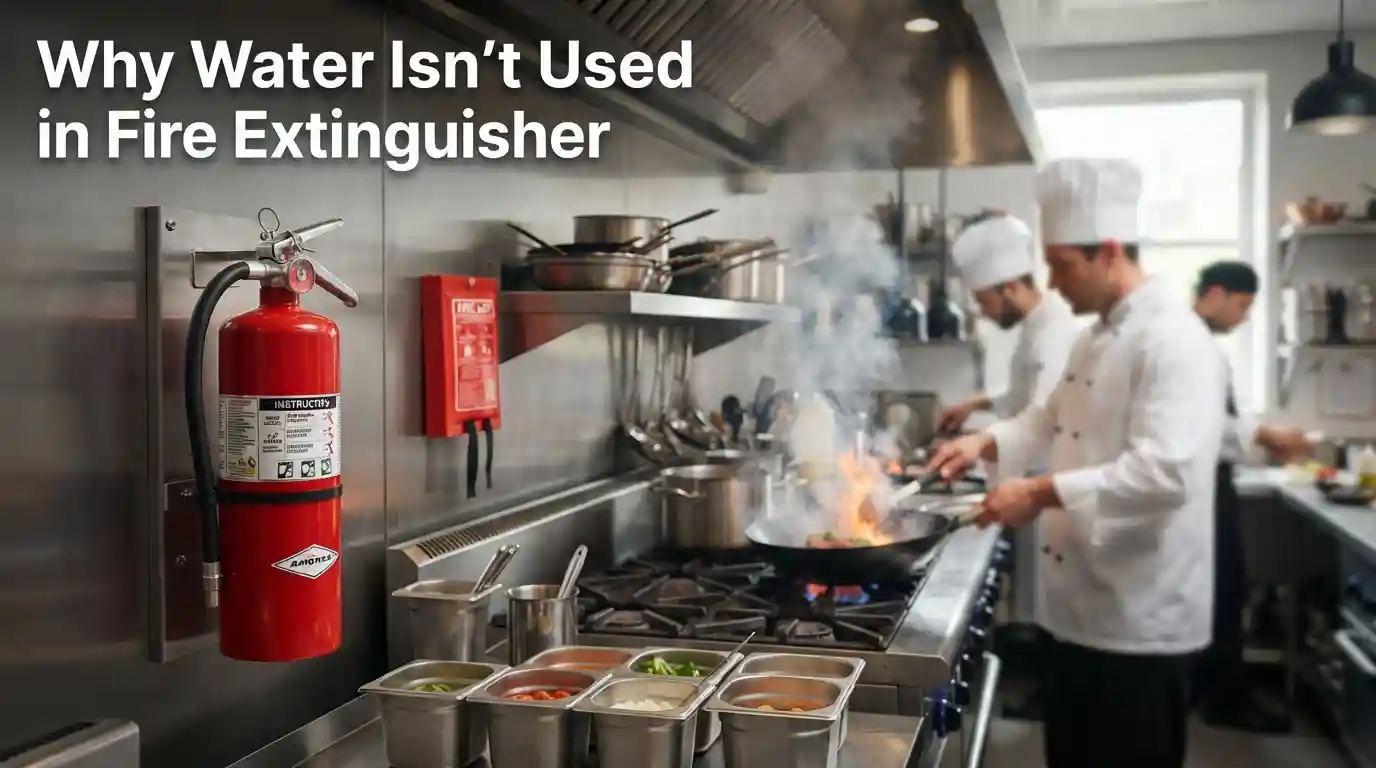
When you see a fire extinguisher, you might wonder why it’s not just filled with water. After all, water is cheap, easy to find, and we use it every day to put out small fires. But in the world of fire safety, water isn’t always the best—or even a safe—choice. The reasons go beyond simple convenience. Water can actually make some fires worse, and it can be dangerous in many situations.
Understanding why water isn’t used in fire extinguishers can help you make better decisions during emergencies, and it can also help you choose the right fire safety equipment for your home or workplace.
How Fire Extinguishers Work
Fire extinguishers are designed to fight fires quickly and safely. They do this by removing one or more of the fire triangle elements: heat, fuel, or oxygen. There are several types of fire extinguishers, each with its own method. Some use chemicals, some use gases, and a few use powder or foam. The goal is to stop the fire without putting people at risk or causing extra damage.
Water seems like a simple solution, but it has limits. Water is only good for certain types of fires (like wood or paper), and it can be dangerous with others. That’s why modern fire extinguishers usually avoid water, especially in places where multiple kinds of fires can start.
Types Of Fires And Their Challenges
Not all fires are the same. Experts divide fires into classes based on what’s burning:
| Class | Fuel Type | Example |
|---|---|---|
| A | Ordinary combustibles | Wood, paper, cloth |
| B | Flammable liquids | Gasoline, oil, paint |
| C | Electrical equipment | Computers, wiring |
| D | Combustible metals | Magnesium, titanium |
| K | Cooking oils and fats | Vegetable oil, lard |
Each fire type needs a different approach. Using the wrong method can make things worse. For example, pouring water on burning oil can cause the fire to spread. Water on electrical fires can cause shocks. This is why fire extinguishers are specialized—one size does not fit all.
You might find this helpful: Best Fire Extinguisher for Kitchen
Why Water Isn’t Used In Most Fire Extinguishers
There are several reasons why water is rarely used in fire extinguishers. Let’s look at the main ones:
Water Conducts Electricity
Water is a good conductor of electricity. If you spray water on a Class C fire (electrical), you risk electrocution. Water can carry current through your body, which is especially dangerous in places with live wires, such as offices, factories, or kitchens. That’s why electrical fires require extinguishers with non-conductive agents like carbon dioxide or dry powder.
Water Spreads Flammable Liquids
When water hits a Class B fire (flammable liquids), it doesn’t put out the flames. Instead, water can push the burning liquid around, spreading the fire further. For example, if gasoline is burning and you pour water, the fuel floats on water and spreads across the floor, creating a larger fire zone.
Water Reacts With Some Metals
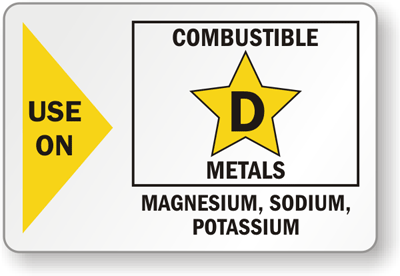
Class D fires involve metals like magnesium or sodium. These metals can react violently with water, sometimes causing explosions or releasing dangerous gases. In fact, adding water to burning magnesium can cause it to burn hotter and even explode. Specialized extinguishers with dry powder are used for these fires, as they smother the flames without reacting.
Water Is Dangerous For Cooking Fires
Kitchen fires, known as Class K fires, often involve hot oil or grease. Water and hot oil don’t mix well. If you pour water on burning oil, it sinks below the oil, quickly boils, and turns into steam. This action throws burning oil everywhere, which can lead to serious injuries and a much larger fire.
Water Doesn’t Work For All Materials
Some materials don’t respond well to water. For example, plastics, rubber, and certain synthetics can burn hotter when water is added. Water can also damage expensive electronics and documents, making the situation worse even if the fire goes out.
Specialized Fire Extinguisher Types
To fight different kinds of fires, manufacturers developed several types of fire extinguishers. Each uses a special agent suited for certain fire classes.
| Extinguisher Type | Main Agent | Best For | Not Safe For |
|---|---|---|---|
| Water | Water | Class A (wood, paper) | Class B, C, D, K |
| CO2 | Carbon dioxide | Class B, C | Class A, D, K |
| Dry Chemical | Monoammonium phosphate | Class A, B, C | Class D, K |
| Foam | Aqueous film-forming foam | Class A, B | Class C, D, K |
| Wet Chemical | Potassium acetate | Class K | Class A, B, C, D |
| Dry Powder | Special powders | Class D | All other classes |
This table shows how water is only suitable for Class A fires. For all other classes, water is not safe and can make the fire worse.
Credit: hgi-fire.com
Real-life Examples And Statistics
Let’s look at some real-world data. The US National Fire Protection Association (NFPA) reports that over 30% of home fires start in the kitchen, mostly from cooking oil and grease. If water were used to fight these fires, injuries and property damage would likely be much higher. Electrical fires make up another 10% of home fires. Using water in these cases can cause shock, injury, and even death.
A famous example happened in London in 2017. A major fire started with cooking oil. When water was accidentally added, the fire spread rapidly, causing extensive damage. Firefighters now warn against using water for kitchen fires.
Another insight: In factories where metals are processed, safety teams never use water-based extinguishers. Instead, they use special powders to avoid dangerous reactions. This practice is based on decades of experience and strict safety rules.
Fire Extinguisher Design And Technology
Modern fire extinguishers are built to be effective and safe. The design depends on the agent inside. Water-based extinguishers use a simple pump and nozzle. Others, like CO2 or dry powder types, use pressurized gas and special valves. The goal is to deliver the agent quickly, cover the fire, and avoid risks.
Some advanced extinguishers use dual agents. For example, in commercial kitchens, you might find wet chemical units that spray a fine mist, cooling the oil and stopping the fire without splashing. In labs, CO2 extinguishers remove oxygen, smothering the flames without damaging equipment.
The technology keeps improving. Newer extinguishers are lighter, easier to use, and more reliable. But the basic rule remains: water is only for very specific fires.
Water’s Limited Role In Fire Safety
While water isn’t used in most fire extinguishers, it still plays a role in fire safety. Firefighters often use water hoses to fight large outdoor fires, such as building or forest fires. But even here, they’re careful. Water hoses are never used for electrical fires, kitchen fires, or fires involving hazardous chemicals.
In the home, water can help with small fires involving paper or wood. But for anything else—especially oil, electrical, or metal fires—water is not recommended.
Common Myths About Water And Fire Extinguishers
Many people believe that water is the best way to fight any fire. This myth can be dangerous. Here are a few common misunderstandings:
- Water puts out all fires. In fact, it only works for some types.
- All fire extinguishers contain water. Most use chemicals, foam, or gases.
- Using water is always safe. It can cause electric shock or explosions.
- Water is effective for kitchen fires. It often makes grease fires much worse.
If you’re unsure, always check the label on your fire extinguisher. It tells you which classes of fire it’s safe for.
Non-obvious Insights For Beginners
Many new homeowners and office managers overlook two important facts:
- Fire extinguisher placement matters. If you have only water extinguishers, you’re not prepared for electrical or oil fires. It’s best to have multi-purpose extinguishers in kitchens, garages, and office areas.
- Training is crucial. Knowing which extinguisher to use—and how to use it—can save lives. Many accidents happen because people grab the wrong unit or don’t know how to operate it.
Another insight: Maintenance is vital. Extinguishers must be checked regularly. A water extinguisher that’s not pressurized won’t work, and other types can lose effectiveness over time.
What To Do Instead Of Using Water
When you face a fire, first identify the type. If it’s a small paper or wood fire, water is fine. For anything else:
- For electrical fires, use a dry chemical or CO2 extinguisher.
- For oil or grease fires, use a wet chemical extinguisher or cover the fire with a lid.
- For metal fires, use dry powder designed for metals.
- For flammable liquid fires, use foam or dry chemical.
If you don’t know the fire type, evacuate and call emergency services. Never risk your safety.
Credit: elementfire.com
Fire Extinguisher Selection Guide
Choosing the right extinguisher is important. Here’s a quick comparison:
| Location | Recommended Extinguisher | Fire Types Covered |
|---|---|---|
| Kitchen | Wet chemical | Class K |
| Garage | Dry chemical | Class A, B, C |
| Office | CO2 | Class B, C |
| Workshop | Dry powder | Class D |
| Living room | Water or foam | Class A |
When buying, check the label and make sure it matches your risks. Avoid water-only extinguishers unless you’re sure you only have Class A hazards.
A Look At Alternatives: Modern Fire Suppression
New methods are being developed to fight fires. Some buildings use sprinkler systems with water, but these are controlled and only activate for certain fires. Others use gas systems that fill a room and remove oxygen. The future may see more automatic systems that sense fire type and deploy the right agent.
For more technical insight, the NFPA has detailed guidelines on fire suppression, available at NFPA.
Frequently Asked Questions
Why Is Water Dangerous For Electrical Fires?
Water conducts electricity, so spraying it on live wires can cause shock or even electrocution. It’s safer to use non-conductive extinguishers like CO2 or dry chemical.
Can I Use Water For Grease Fires In The Kitchen?
No. Water makes grease fires worse. It causes hot oil to splatter and spread, which can lead to burns and a larger fire. Use a wet chemical extinguisher or cover the fire with a metal lid.
What Should I Do If I Only Have A Water Extinguisher?
Use it only for fires involving paper, wood, or cloth. For any other fire, evacuate and call emergency services. Avoid using water on electrical, oil, or metal fires.
Are Water Extinguishers Ever Used In Public Places?
Sometimes, especially where the risk is only from Class A fires (like schools with paper and wood). But most public places have multi-purpose extinguishers for safety.
How Can I Tell Which Extinguisher To Use?
Check the label. It lists the fire classes it’s safe for. When in doubt, use a dry chemical extinguisher, as it covers most fire types except metals.
Water is simple, but fire safety is complex. The right equipment and knowledge can protect lives and property. Next time you see a fire extinguisher, remember that water isn’t always the answer—know your risks, and choose wisely.