If you’ve ever wondered can you put napkins in the air fryer, you’re not alone. The idea of lining your basket for easy cleanup sounds brilliant. Paper products seem harmless.
They’re everywhere in cooking. The problem is that air fryers turn harmless paper into a potential fire hazard.
According to the National Fire Protection Association, cooking fires are the leading cause of home fires. Paper ignites at roughly 450°F. Most air fryers max out at 400°F.
But grease and oil change the equation completely. They lower the ignition point dramatically, and oil-soaked paper becomes a wick. Ready to learn the safe way?
Let’s start with the short answer.
Quick Answer
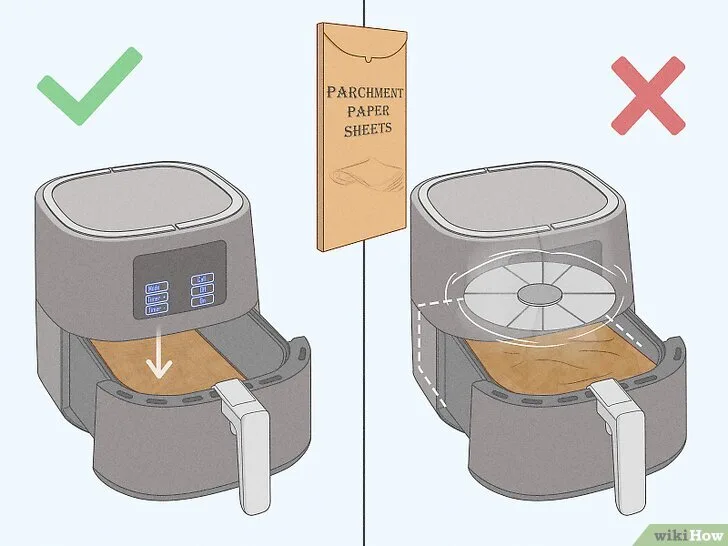
No, you should not put napkins in an air fryer. The fan can throw them onto the heating element. Hot grease makes them ignite faster.
Parchment paper is the safe alternative. Use that instead.
Why This Matters More Than You Think
The stakes go beyond a ruined dinner. A napkin can catch fire in under thirty seconds. The smoke alarms you ignore?
They exist because of this.
Inside the basket, the fan whips air around at high speed. Your napkin isn’t lying still. It’s being lifted and tossed.
The heating element can become extremely hot while the air fryer is running. That’s a recipe for flashover.
Even without a full fire, the napkin burns and releases toxic fumes. Printed inks and dyes turn into volatile organic compounds. You don’t want those in your food.
You don’t want them in your lungs either.
Then there’s the damage to your appliance. Soot coats the interior. The non-stick coating gets scratched.
And the smell? Let’s just say it doesn’t come out easily.
If you’re curious about the internal layout, we have a visual guide to the components inside. It shows exactly why paper gets so close to the heat.
What’s Inside an Air Fryer That Makes Paper Risky
An air fryer is a small convection oven. But it’s not like a big oven. The heating element is exposed, right at the top.
The fan sits behind it, forcing air down and around.
Everything happens in a space that’s barely two feet wide. The basket sits inches from the element. That’s the setup you’re dealing with.
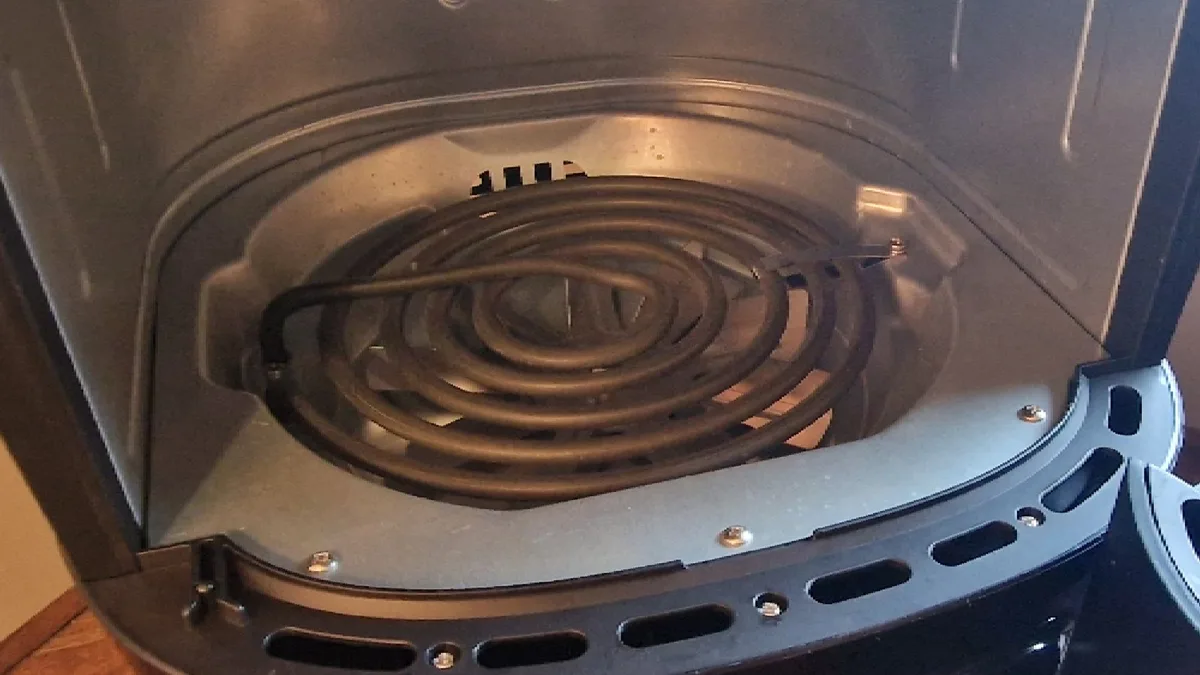
The heating element gets red-hot. We’re talking 500-600°F, even if your dial says 350. The fan moves air at high velocity.
It’s strong enough to lift a napkin. It’s strong enough to keep it airborne.
When that napkin touches the element, it doesn’t smoke slowly. It ignites. The airflow feeds the flames.
Compare that to a conventional oven. The element is at the top, but the food is far below. The air moves slowly, and nothing flutters around.
In an air fryer, everything is compressed.
If your napkin is too light, it becomes a projectile. This is also why you should never put a paper towel in there. The behavior is identical.
If you’re planning to cook something with high moisture, like vegetables, the risk changes. But the physics remain the same. A fast fan and a hot coil are a dangerous combination.
You can see why manufacturers warn against it. That’s why our guide on trimming overall cook times explains the intense airflow in the first place.
The Science of Paper and Heat
Let’s talk numbers, because this matters. Paper auto-ignites at around 450°F. That means it catches fire on its own, without a spark.
Most air fryer dials go to 400°F. So you’re already within 50 degrees of the danger zone.
But that 450°F assumes dry paper. Grease changes everything.
Cooking oil has a smoke point, which is the temperature where it starts breaking down. Canola oil smokes at 400°F. Olive oil around 375°F.
When you cook greasy foods, the oil vaporizes into fine droplets.
Those droplets settle on your napkin. Now your napkin is a soaked rag. The oil lowers the ignition temperature significantly.
It can drop to 350°F or lower. And when oil-soaked paper burns, it burns fast.
Even clean parchment paper isn’t safe unless it’s explicitly rated for air fryers. That’s why manufacturers sell perforated liners. The perforations let air move through.
They also prevent the paper from floating.
| Material | Approx. Ignition Temp | Risk Level |
|---|---|---|
| Dry paper napkin | 450°F | Moderate |
| Oil-soaked napkin | 350°F or lower | High |
| Cloth napkin | 400-500°F (scorches) | High |
| Perforated parchment liner | Up to 425°F (safe) | Low (if weighed down) |
I also want to talk about printed napkins. Those inks aren’t made for high heat. When they hit 300°F, they start releasing fumes.
The FDA has guidelines for paper that contacts food, but those are for cold and warm conditions, not direct heat exposure. So that pink napkin with the floral pattern? Not a good idea.
Let’s tie this back to oily foods. If you’re air frying wings, taquitos, or anything coated in oil, the splatter is unavoidable. That’s why you should use a liner and avoid napkins altogether.
We have guides for reheating crispy wings and making taquitos that cover this problem in detail.
Napkin Types: Which Are Safer (If Any)?
I’ll cut straight to it: none of them are truly safe. But some are worse than others. Let’s break down the common kinds you find in a kitchen.
Cloth napkins. These are the most dangerous. Linen and cotton have fibers that can ignite and smolder. They also stain badly and are hard to clean after a scorch.
Put them in the air fryer and you’re asking for trouble.
Paper napkins. Plain, unbleached ones are your best case. They’re thin and tear easily. They might not stay in one piece, which is a problem on its own, but they’re not coated in anything extra.
Bleached napkins are treated with chlorine. Not great, but the heat can bring out residue. Printed napkins have ink that burns.
Scented napkins have chemicals that release fumes. Each of these makes the risk worse.
Dyed napkins are a whole other category. The dye can bleed into your food when it gets hot. Also, the chemicals are never meant to reach high temperatures.
Now, for those who still want to try? I’d say if you must use paper, go for unbleached, no print, no fragrance. And keep the temperature under 325°F.
But even then, the fan might still pick it up. You need to weigh it down completely with food. And stay in the room.
Don’t walk away.
| Napkin Type | Best Use | Risk Assessment |
|---|---|---|
| Cloth | Not suitable | High |
| Bleached paper | Avoid | Moderate-high |
| Unbleached plain | Minor use, weighed down | Moderate |
| Printed | Avoid | High (fumes) |
| Perforated parchment liner | Recommended | Low |
The intelligent choice is parchment paper, specifically the perforated kind. We’ll cover that next.
Frequently Asked Questions
Can you put paper napkins in an air fryer?
No. Paper napkins can move around in the circulating air and may contact the heating element.
Can you put paper towels in an air fryer?
No. Paper towels can also become loose and potentially scorch or ignite.
Can you put parchment paper in an air fryer?
Yes, when it is designed/rated for cooking at the temperature you’re using and is used according to the air-fryer manufacturer’s instructions.
Can you put wax paper in an air fryer?
No. Wax paper is not the same as parchment paper and isn’t intended for the same high-heat cooking applications.
What can I use instead of a napkin in an air fryer?
Use air-fryer-safe parchment paper, a suitable silicone liner, or the basket without a liner.
Conclusion
So, can you put napkins in the air fryer? No. Napkins can move around in the strong airflow and reach the hot heating element. Grease can make the risk even worse.
The same applies to paper towels, printed napkins, and cloth napkins. They are not made for the heat and airflow inside an air fryer.
If you need easier cleanup, use air-fryer-safe parchment paper or a suitable silicone liner instead. Keep loose napkins and other paper products out of the air fryer, and you can cook with less worry.