You’ve probably stared at your air fryer, holding a glass casserole dish, wondering if it’s a brilliant idea or a recipe for shattered glass. It’s a fair question. Can you put baking dishes in an air fryer?
The short answer is yes, but only if the dish passes a few specific safety checks that depend on the material, the size, and your particular model. Most air fryers operate at temperatures between 300°F and 450°F, and the heating element sits very close to your food, which changes the rules compared to a conventional oven.
In our research, we found that most mid-range air fryers, like those from Ninja or Cosori, reach maximum temperatures around 400°F to 450°F. That’s hot enough to cause thermal shock in glassware not rated for that heat. But with the right dish and a little know-how, you can bake, reheat, and even roast in your air fryer without any problems.
Let’s walk through exactly what you need to check before you slide that dish in.
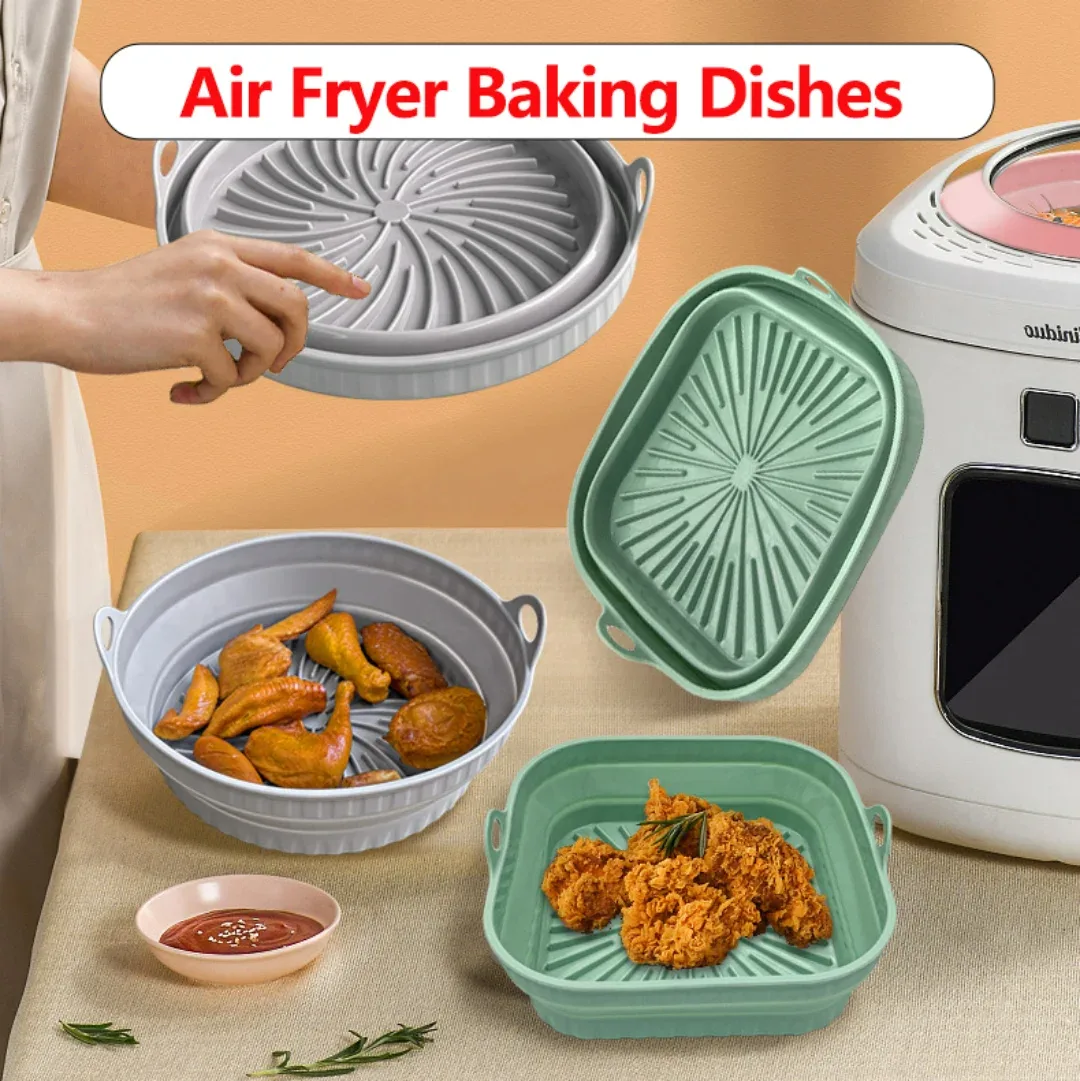
Image source: Web (Bing) / storage.googleapis.com (Web image (fair-use with source credit))
Quick Answer
Yes, you can put baking dishes in an air fryer if they’re oven-safe and fit properly. Glass, ceramic, metal, and silicone all work with the right conditions. Your dish must leave space for air to circulate.
Avoid sudden temperature changes with glass. Always check your air fryer’s manual first.
How Air Fryers Cook Differently (And Why It Matters for Bakeware)
Air fryers work by circulating hot air rapidly around food at high speed. That’s different from a regular oven, where heat radiates from the heating elements and slowly cooks from the outside in. The rapid circulation is what gives you that crispy exterior without deep frying.
But it also means the air gets everywhere, including under and around whatever dish you place inside.
Direct Heat vs. Circulating Heat
In a conventional oven, your bakeware sits on a rack in the center, often far from the heating elements. You can use almost anything that’s marked oven-safe without thinking about it twice. Air fryers are compact.
Your dish sits close to the heating coil at the top of the unit. That direct radiant heat, combined with the fan blowing hot air directly onto the dish surface, can create hotspots that don’t exist in a larger oven.
Manufacturer specifications indicate that most basket-style air fryers have the heating element at the top, directly above the food. Your casserole dish might be oven-safe at 425°F, but if the air blowing over it is hotter than the set temperature, or if the dish touches the heating element, you risk cracking or melting. The key difference is distance.
Your bakeware is much closer to the heat source in an air fryer.
Why Airflow Clearance Is Non-Negotiable
The whole point of an air fryer is that hot air circulates. If your baking dish is too tall or too wide, it’ll block that airflow. The result is uneven cooking, a burnt top, or a raw center.
You want at least one to two inches of clearance between the top of your dish and the heating element. You also need space on all sides so the air can move around the dish and reach the food inside.
A dish that fits snugly against the basket walls is a bad idea. The air can’t get behind it. You’ll end up with food that’s undercooked on one side and overcooked on the other.
The same airflow that creates crispy fries also needs to reach your baked casserole, or it just won’t cook right. This is why you need to measure your dish against your basket before you commit.
The Heating Element Is Closer Than You Think
Take a moment to look inside your air fryer. See that coil at the top? Your dish will be only a few inches away from it.
In our research, the distance between the heating element and the bottom of the basket in most popular models is between three and five inches. A tall baking dish will easily reduce that gap to one or two inches.
That proximity matters. Glass and ceramic can handle the heat, but they don’t handle sudden temperature changes well. If your dish is cold from the fridge and you place it into a preheated air fryer, the rapid expansion can cause cracks or shattering.
This is called thermal shock, and it’s the main reason people end up with ruined dishes and ruined dinners. You need to account for the close quarters and adjust your approach accordingly.
The Decision Tree: Is Your Baking Dish Air Fryer-Safe?
So, how do you know if your specific dish will survive? It depends on what it’s made of. Each material has its own rules, temperature limits, and quirks.
Let’s walk through the main types of bakeware you likely own and break down what happens when they meet an air fryer.
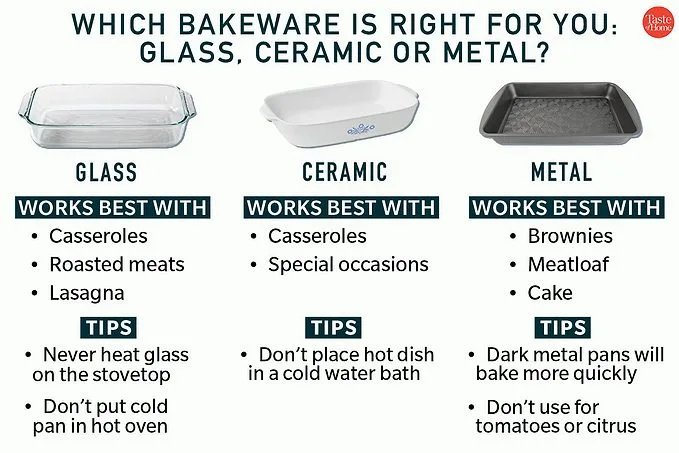
Image source: Web (Bing) / tasteofhome.com (Web image (fair-use with source credit))
Branch 1: Glass Dishes (Pyrex, Borosilicate, Tempered)
Glass is the trickiest category. Pyrex and other tempered glass dishes are fine at high temperatures, but only if they heat up gradually. Tempered glass is designed to withstand oven heat, not sudden swings.
A cold glass dish straight from the refrigerator at 40°F, going into a preheated air fryer at 400°F, is a recipe for cracking.
Check the bottom of your glass dish for a temperature rating. Most Pyrex pieces are rated up to 425°F. Borosilicate glass, often sold as lab-grade or premium bakeware, can handle higher temps, sometimes up to 500°F.
The safest approach is to let your glass dish sit at room temperature for about 30 minutes before placing it in a warm air fryer. Never preheat the air fryer with an empty glass dish inside.
Branch 2: Ceramic and Stoneware
Ceramic and stoneware are generally better choices for air fryers than glass. They handle heat well and distribute it evenly. Most ceramic bakeware is rated for oven temperatures up to 450°F or higher.
The same thermal shock risk applies, but ceramic tends to be more forgiving than glass because it’s less conductive.
You still need to check for cracks or chips. Damaged ceramic can shatter under heat. Also, avoid ceramic dishes with metallic paint or gold rims.
Those finishes can spark in high heat, much like they do in microwaves. If your ceramic dish is plain oven-safe material and fits with good clearance, you’re in good shape.
Branch 3: Metal Pans (Aluminum, Stainless Steel, Cast Iron)
Metal pans are the safest bet for air fryers. Aluminum, stainless steel, and cast iron can handle high heat without any worry about cracking. They’re practically indestructible in this application.
The main thing to watch for is the handle. Some metal pans have plastic or silicone-coated handles that will melt at high temperatures.
Metal conducts heat quickly, so your food might cook faster. You may need to adjust your cooking times down by a few minutes. Also, light-colored metal pans reflect heat, while darker pans absorb it.
Dark metal can cause the bottom of your food to brown faster. It’s not a problem, just something to watch for. Loaf pans and small cake tins made of metal work beautifully in air fryers.
Branch 4: Silicone Molds and Bakeware
Silicone is a fantastic option for air fryers. It’s flexible, non-stick, and handles temperature ranges from around -40°F to 450°F or higher. You can fold a silicone mold into the basket if it’s slightly too big, and it’ll spring back into shape.
The flexibility makes it easy to pop out muffins, brownies, or mini cakes.
One thing to note: silicone doesn’t conduct heat as well as metal. Your food may take slightly longer to cook, and you won’t get the same crispy bottom that a metal pan provides. But for baking projects where you want soft, even results, silicone is a reliable choice.
It’s also easy to clean, which is a bonus. Silicone cupcake liners are perfect for single-serve treats in an air fryer.
Step-by-Step: How to Safely Use a Baking Dish in Your Air Fryer
Once you’ve confirmed your dish is made of a safe material, the actual process is fairly straightforward. But there’s a method to it. Follow these steps, and you’ll avoid most of the common problems people run into.
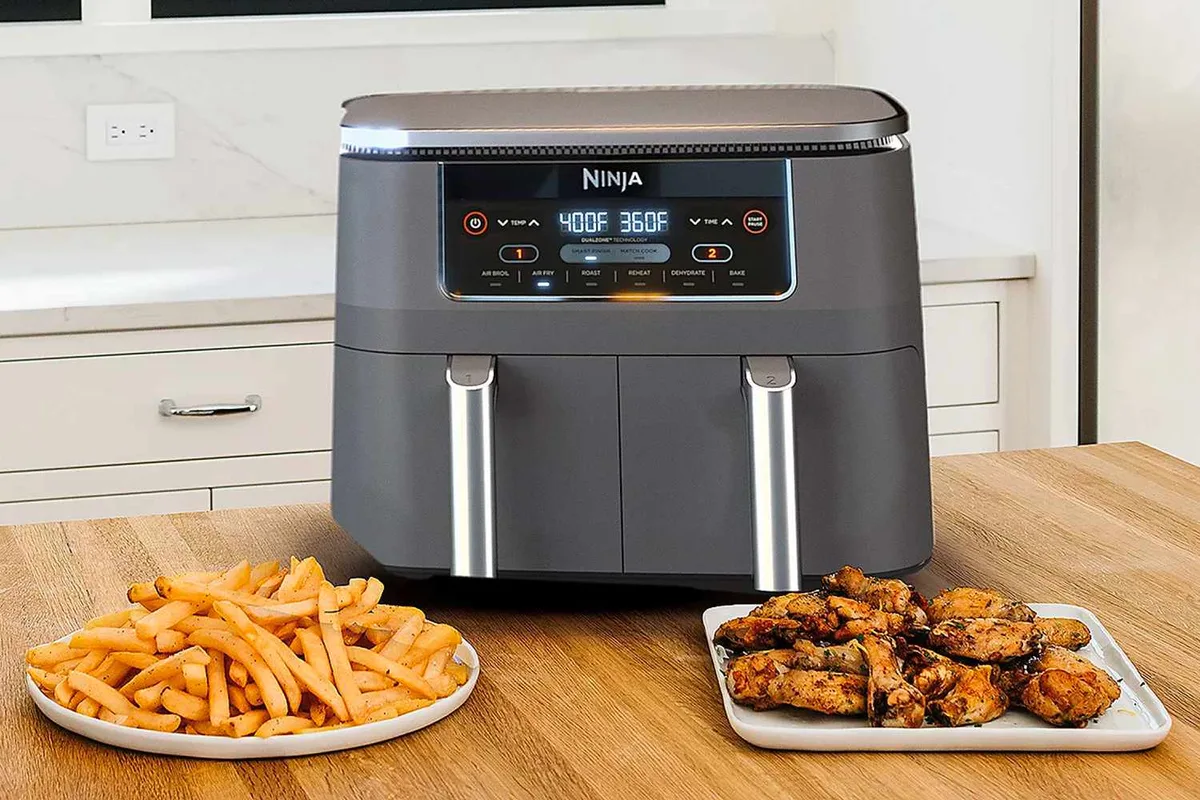
Image source: Web (Bing) / namibian.com.na (Web image (fair-use with source credit))
Step 1: Measure Your Dish vs. Your Basket
Grab a ruler. Measure the diameter of your air fryer basket at its widest point. Then measure the length and width of your baking dish.
You need at least one inch of space on each side of the dish. Also measure the height of your dish. Place it in the basket and close the drawer.
If it doesn’t close completely without pushing down on the dish, it’s too tall.
The clearance from the top of the dish to the heating element is the most critical measurement. If the drawer closes but the dish is touching the coil, you’re asking for trouble. Look at your air fryer model’s specifications.
Many manuals list the exact internal dimensions and maximum dish height. You can also check the inside of your air fryer to understand what you’re working with before you commit a dish to it.
Step 2: Check the Manufacturer’s Max Temperature
Flip your dish over. Look for a stamp or a label on the bottom that says “oven-safe” and includes a maximum temperature. This is usually printed as “300°F” or “450°F.” This number is the highest temperature the manufacturer says the dish can withstand.
Go with it. Don’t push past the stated limit. If your dish has no marking at all, play it safe and assume it’s not suitable for high heat.
Check your air fryer’s maximum temperature too. If your air fryer goes up to 500°F but your dish is only rated for 350°F, you need to either lower the air fryer temperature or choose a different dish. The air fryer’s set temperature is the heater’s target, and the air will reach that temperature.
Your dish needs to handle it.
Step 3: Warm Up the Dish Gradually (Avoid Thermal Shock)
This is the most important step, especially for glass and ceramic. Take your baking dish out of the refrigerator and let it sit on the counter for 20 to 30 minutes. This lets the whole dish come up to room temperature.
Then, place the dish into the air fryer before you start the preheating. The dish will heat up slowly with the air fryer, rather than being slammed with a wall of hot air.
If you absolutely must place a cold dish into a hot air fryer, reduce the temperature by 50°F and start with a shorter cook time. Check on the food frequently. The risk of thermal shock is highest within the first few minutes.
Once the dish has warmed up, the danger passes.
Step 4: Place the Dish in the Center with Proper Clearance
Put your baking dish right in the middle of the basket. Make sure it’s sitting flat and not tilted. If the dish is wobbly, it can slide around during cooking.
Also make sure there’s nothing hanging over the edge of the dish, like a foil cover or a lid, that could touch the heating element.
If you’re cooking multiple dishes, like two ramekins, leave space between them. They shouldn’t touch each other or the walls of the basket. Air needs to flow between them to cook evenly.
Overcrowding the basket is one of the most common mistakes people make with air fryers, and it defeats the whole purpose of the appliance.
Step 5: Monitor Closely and Rotate Midway
Air fryers cook faster than regular ovens. Your baked dish might be done 20 to 30 percent sooner than the recipe suggests. Set a timer for about two-thirds of the recipe’s expected time, then check on your food.
Use a digital thermometer to check the internal temperature if you’re cooking something with meat, like a casserole with chicken. You want to make sure it hits the safe minimum internal temperature.
Halfway through cooking, carefully open the air fryer and rotate the dish. Use oven mitts. The dish will be hot, and so will the basket.
Rotating helps ensure even browning, especially in basket-style air fryers where the back of the unit might heat slightly differently than the front. This is a simple step that makes a big difference in the final result.
What Most People Get Wrong: 5 Mistakes That Ruin Dishes and Meals
Even with the right dish and the right intentions, people still mess this up. These are the most common mistakes we see in aggregate user reviews and forum discussions. Avoid these, and you’ll save yourself a mess and possibly a trip to the store for new bakeware.
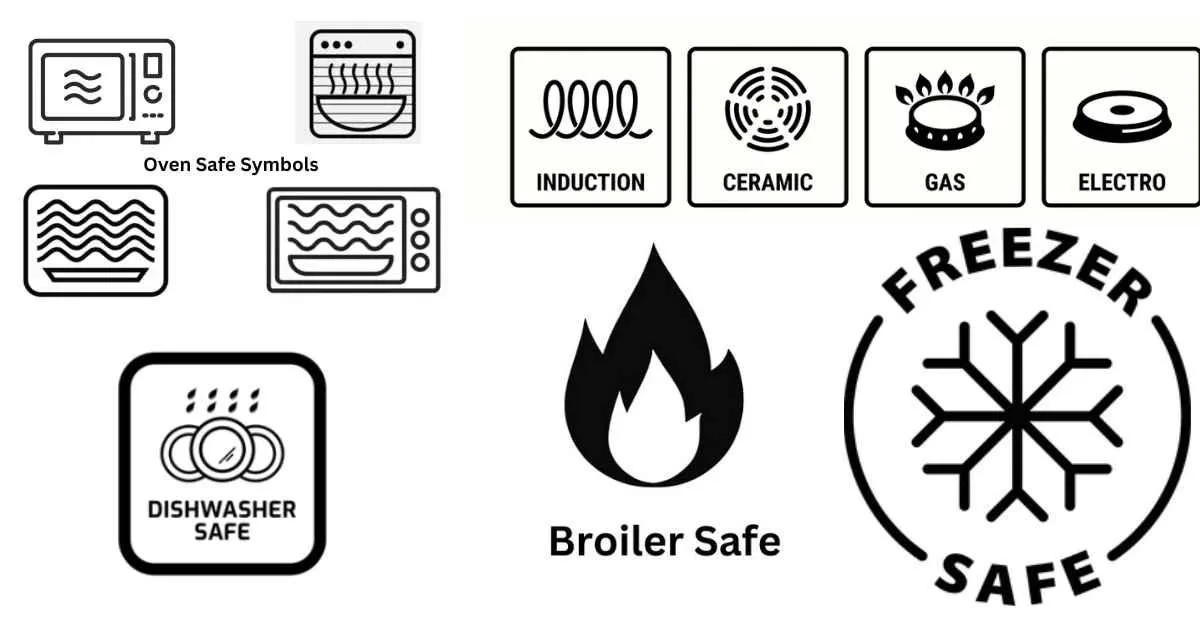
Image source: Bing (Web (fair-use with source credit))
Mistake #1: Moving a Cold Dish to a Preheated Basket
This is the number one cause of shattered glass in an air fryer. You preheat your air fryer, then you grab a glass casserole dish from the fridge and place it directly into the hot basket. The glass heats up so fast that it cracks from thermal shock.
We’ve seen this over and over again in verified buyer feedback. Always let your dish come to room temperature first.
Mistake #2: Blocking Airflow with Tall or Oversized Dishes
Your dish fits in the basket, but just barely. The sides are touching the walls, and the top is a hair away from the heating coil. Even if it doesn’t shatter, the food won’t cook properly.
The hot air can’t circulate, so you get a hot spot in the center and undercooked edges. If your dish is packed in tight, switch to a smaller one.
Mistake #3: Assuming “Oven-Safe” Means “Air Fryer-Safe”
Oven-safe means the dish can handle a certain temperature. It doesn’t mean it’s safe for the concentrated, direct heat of an air fryer. Many oven-safe dishes have handles or lids made of plastic, melamine, or other materials with lower melting points.
Remove any plastic lids before cooking. Check the whole dish for mixed materials. Oven-safe doesn’t always mean air-fryer-safe, so verify every part of the dish.
Mistake #4: Ignoring the Handle and Rim Protrusions
A dish might fit in the basket, but what about its handles? Many casserole and baking dishes have large handles that extend outward. These can prevent the air fryer drawer from closing completely or get dangerously close to the heating element.
Measure the total width of the dish, including handles. If it doesn’t fit easily with room to spare, find a different dish.
Mistake #5: Using Disposable Pans That Flop and Spill
Disposable aluminum pans are convenient, but they’re flimsy. When you pick them up with food inside, they can bend and buckle, spilling hot food everywhere. If you want to use a disposable pan, place it on a sturdy baking sheet first or choose a heavier-duty version.
The same goes for flimsy silicone molds. Make sure your pan has enough structure to hold its shape when full.
What Can You Actually Bake in an Air Fryer Dish?
Smaller portions work best. Think single-serve casseroles, ramekin brownies, mini pot pies, or leftover lasagna. A 6-inch round dish or small loaf pan fits most 4 to 6 quart baskets with room to spare.
Batch size matters more than recipe type.
You can also bake muffins, cornbread, and even personal pizzas. Keep the dish shallow so heat penetrates evenly. Deep casseroles tend to cook too fast on top and stay raw in the middle.
Stick to dishes under two inches deep for best results.
When You Should Skip the Dish and Cook Directly in the Basket
Anything frozen, breaded, or crispy belongs in the basket itself. Fries, chicken wings, taquitos, and mozzarella sticks need maximum airflow to crisp up. A baking dish traps steam and makes them soggy.
Skip the dish for foods that release liquid while cooking, like raw vegetables or marinated meats. That liquid pools and steams instead of evaporating, which ruins texture. For crispy results with reheated wings, direct basket cooking is non-negotiable.
Alternative Options: What Else Works in an Air Fryer?
Parchment paper liners and silicone mats protect the basket without blocking airflow. They work well for scattered foods like vegetables or small items. Just keep them trimmed below the basket rim.
Silicone collapsible containers are great for reheating leftovers. They fold flat for storage and tolerate high heat. Disposable aluminum pans work too, but double them up for extra support.
A Practical Comparison: Baking Dish vs. Direct Basket Cooking
| Factor | Baking Dish | Direct Basket |
|---|---|---|
| Crispness | Lower | Higher |
| Cook time | Slightly longer | Faster |
| Cleanup | Easier | More scrubbing |
| Portion size | Limited to dish | Flexible |
| Best for | Casseroles, bakes | Fries, proteins |
Use a dish when you need contained cooking or sauce retention. Go basket-only when texture is the priority.
Quick Reference: Material Safety Cheat Sheet
| Material | Safe? | Max Temp | Notes |
|---|---|---|---|
| Tempered glass | Yes | 350–425°F | Heat gradually |
| Borosilicate glass | Yes | Up to 500°F | More tolerant |
| Ceramic | Yes | 400–450°F | Check for cracks |
| Metal | Yes | 450°F+ | Dark pans brown faster |
| Silicone | Yes | Up to 450°F | Poor browning |
| Plastic | No | N/A | Melts, toxic fumes |
When in doubt, check your air fryer manual and the dish’s bottom stamp. The inside of your air fryer will tell you exactly how much clearance you have to work with.
Frequently Asked Questions
Can I Put a CorningWare Dish in My Air Fryer?
Yes, if it’s pure ceramic without a plastic lid. CorningWare handles heat well, but warm it up gradually. Check the bottom stamp for the temperature rating first.
Will a Glass Dish Explode in an Air Fryer?
Rarely, but thermal shock can cause cracking. Never move a cold glass dish into a preheated basket. Let it warm to room temperature first and always check for chips.
Can I Stack Two Ramekins in the Basket at Once?
Yes, but leave space between them. Air needs to flow around each one. Stacking them directly on top of each other blocks circulation and leads to uneven cooking.
Do I Need to Adjust the Recipe Time from My Regular Oven?
Yes, expect to reduce cooking time by 20 to 30 percent. Air fryers cook faster due to rapid air circulation. Start checking for doneness at two-thirds of the original recipe time.
The Bottom Line: What to Do Before You Commit That Dish
Run a 30-second checklist every time. Confirm the material is glass, ceramic, metal, or silicone. Measure for at least one inch of clearance on all sides and below the heating element.
Check the temperature rating on the bottom of the dish. Warm up cold dishes before they touch the heat.
If you’re still unsure, use a dish you trust in the oven. The cost of a shattered dish isn’t worth the risk. As of 2026, most major air fryer manufacturers include bakeware compatibility notes in their manuals, so check yours before cooking.
With the right dish and a little care, your air fryer becomes a surprisingly capable mini-oven.