You’ve got a shiny stainless steel pan, and someone told you to never touch it with a metal spatula. Another person says it’s fine. Who’s right?
Can you use metal utensils on stainless steel pans without totally trashing them? Yes, you can, and for most home cooks, it’s actually the smart move.
Most quality stainless cookware is made from 18/10 or 304 stainless steel, which contains roughly 18% chromium and 10% nickel. As of 2026, that’s still the industry standard because chromium creates a self-healing oxide layer on the surface, so superficial scratches don’t penetrate the metal. In our research, that oxide layer is the key to why metal utensils aren’t the enemy people make them out to be.
The real question is whether you care about a few cosmetic marks or you want your pan to stay factory-fresh forever.
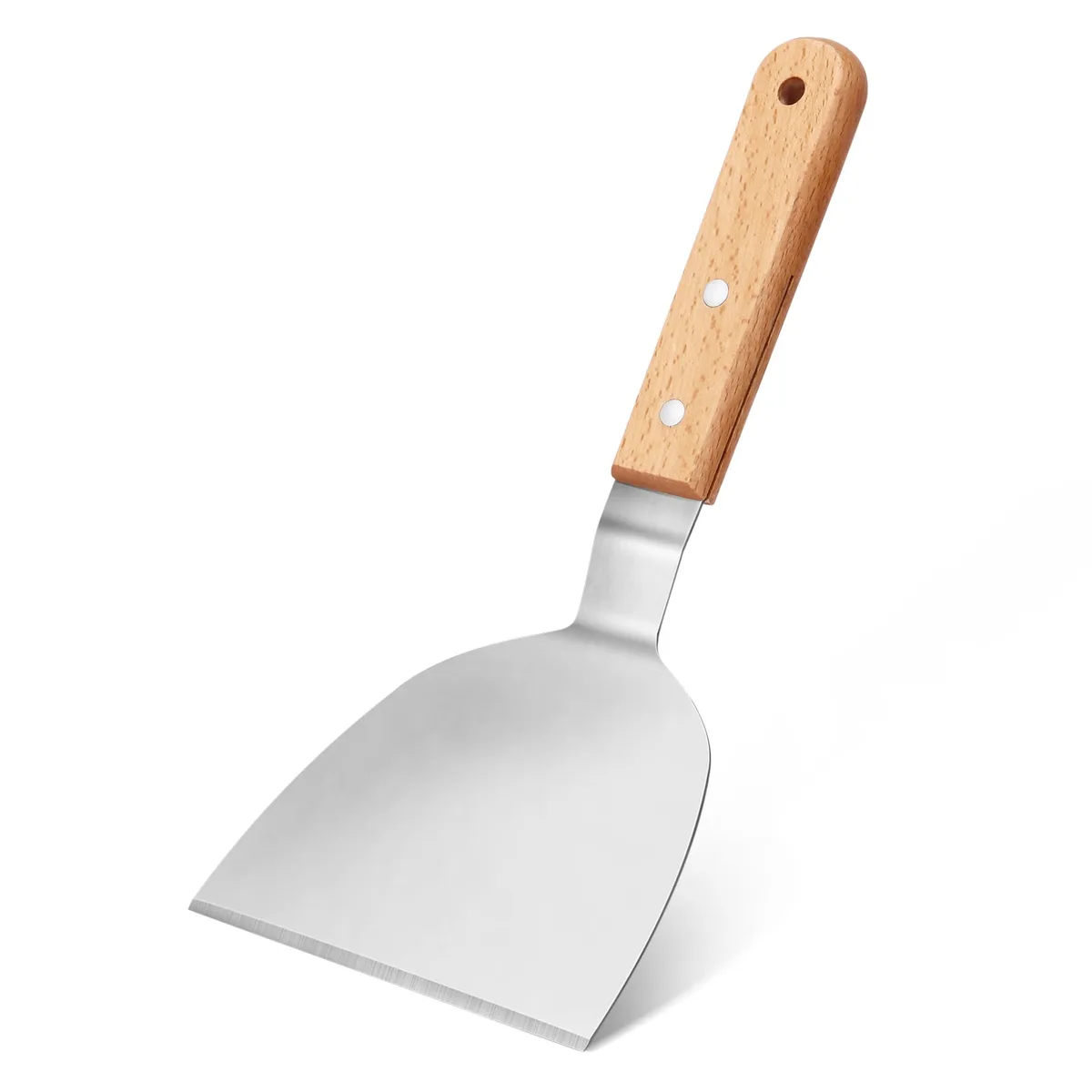
Image source: Bing (Web (fair-use with source credit))
Why This Question Actually Matters
Stainless steel pans aren’t cheap. A decent tri-ply skillet can cost anywhere from $50 to $200 or more, so it makes sense that you’d want to protect that investment. But the advice floating around online is often mixed.
Some manufacturers say metal utensils are fine. Other home cooks swear they’ll ruin your pan within weeks. That’s a big difference of opinion.
The stakes go beyond scratches. Your choice of utensils affects how you cook, how you clean up, and whether you need to buy a whole new set of tools. Metal utensils feel natural in your hand.
They flip, scrape, and slice with real precision. If you’ve ever had a silicone spatula fold over while trying to lift a seared piece of chicken, you know the frustration.
Understanding the real answer also helps you avoid costly mistakes. For example, using metal utensils on a nonstick pan is genuinely risky, because the coating is soft. But stainless steel is a different animal.
The more you know about the material, the easier it is to relax and cook the way you naturally do.
Quick Answer: Yes, But It Depends on Your Pan and Your Tool
Yes, you can use metal utensils on stainless steel pans. Stainless steel resists scratching from metal. Most marks are only cosmetic.
They won’t harm cooking performance. Just avoid especially sharp or serrated tools.
That’s the short version. Here’s the slightly longer one. The stainless steel surface is much harder than the soft nonstick coating you’re probably used to.
A standard stainless steel spatula or spoon won’t cause meaningful damage. What creates visible marks are thin, sharp edges, like the ones on cheap scrapers or knives used for cutting directly in the pan. So the answer changes depending on exactly what you’re using.
How Stainless Steel Survives Metal Utensils (The Science, Made Simple)
Stainless steel gets its name from its ability to resist rust and staining. That resistance comes from chromium. When the metal is exposed to oxygen, the chromium reacts and forms an ultra-thin, invisible layer of chromium oxide.
As the Specialty Steel Industry of North America explains, that oxide layer is self-repairing. If you scratch it with a metal spatula, the bare steel underneath quickly re-oxides and forms a new protective layer. That’s why a scratch doesn’t automatically lead to rust or corrosion.
The hardness of stainless steel matters too. Most kitchen stainless steel is much harder than the metal utensils you’d typically use. That means a regular fork or spatula will often leave behind a tiny streak of its own metal, rather than actually cutting into the pan.
Those grey marks look alarming, but they’re usually just a transfer of metal from the utensil. A good scrub with a gentle abrasive cleaner usually removes them.
Another thing to understand: stainless steel is not nonstick. That’s actually why people worry about scraping. If you use a metal spatula to force a stuck piece of food off the surface, it can leave a mark.
But the mark is cosmetic. The pan will still heat evenly, still release food when you preheat it properly, and still last for decades. It’s just a workhorse, not a piece of art.
Metal Utensils on Stainless Steel: The Pros and Cons
Let’s break this down clearly. There are real advantages to using metal utensils on stainless steel, and a few honest downsides.
The Pros
- Metal utensils handle high heat. Silicone is usually rated to about 450°F to 600°F. Nylon starts melting around 350°F to 400°F. Metal can handle whatever your pan throws at it. No warping, no melting, no weird smell.
- Thin edges get under food. A metal spatula can slide under a seared fish fillet or a stuck pancake without just pushing it around. That’s a huge advantage over bulky silicone or rubber.
- Better control during cooking. Metal tongs and spatulas are more precise. You can lift, flip, and plate with confidence.
- Dishwasher safe and basically indestructible. Metal tools don’t absorb grease, don’t stain, and don’t harbor bacteria like wood sometimes does.
- No extra cost. You probably already own metal utensils. No need to buy a separate set just for your stainless pans.
The Cons
- Cosmetic scratches are real. Even with good technique, you may eventually see fine lines on a polished stainless surface. The scratches don’t affect how the pan cooks, but they can make a mirror-finish pan look tired.
- Squeaking and scraping sounds. That high-pitched screech of metal scraping metal is annoying. Some people genuinely can’t stand it.
- You can actually do damage with the wrong tools. A serrated knife used to chop inside the pan, or a heavy metal cleaver, can leave deeper grooves that are much harder to ignore.
- It marks other pans if you’re careless. If you use the same metal utensils on a nonstick pan, you’ll scratch that coating quickly. So you need to be mindful of which tool goes in which pan.
So the real balance isn’t about avoiding metal entirely. It’s about using the right metal tool in the right way.
Metal vs. Silicone vs. Wood vs. Plastic: The Real Comparison
To really answer the question, let’s put the options side by side. Each material has its strengths, and the best choice depends on what you’re cooking.
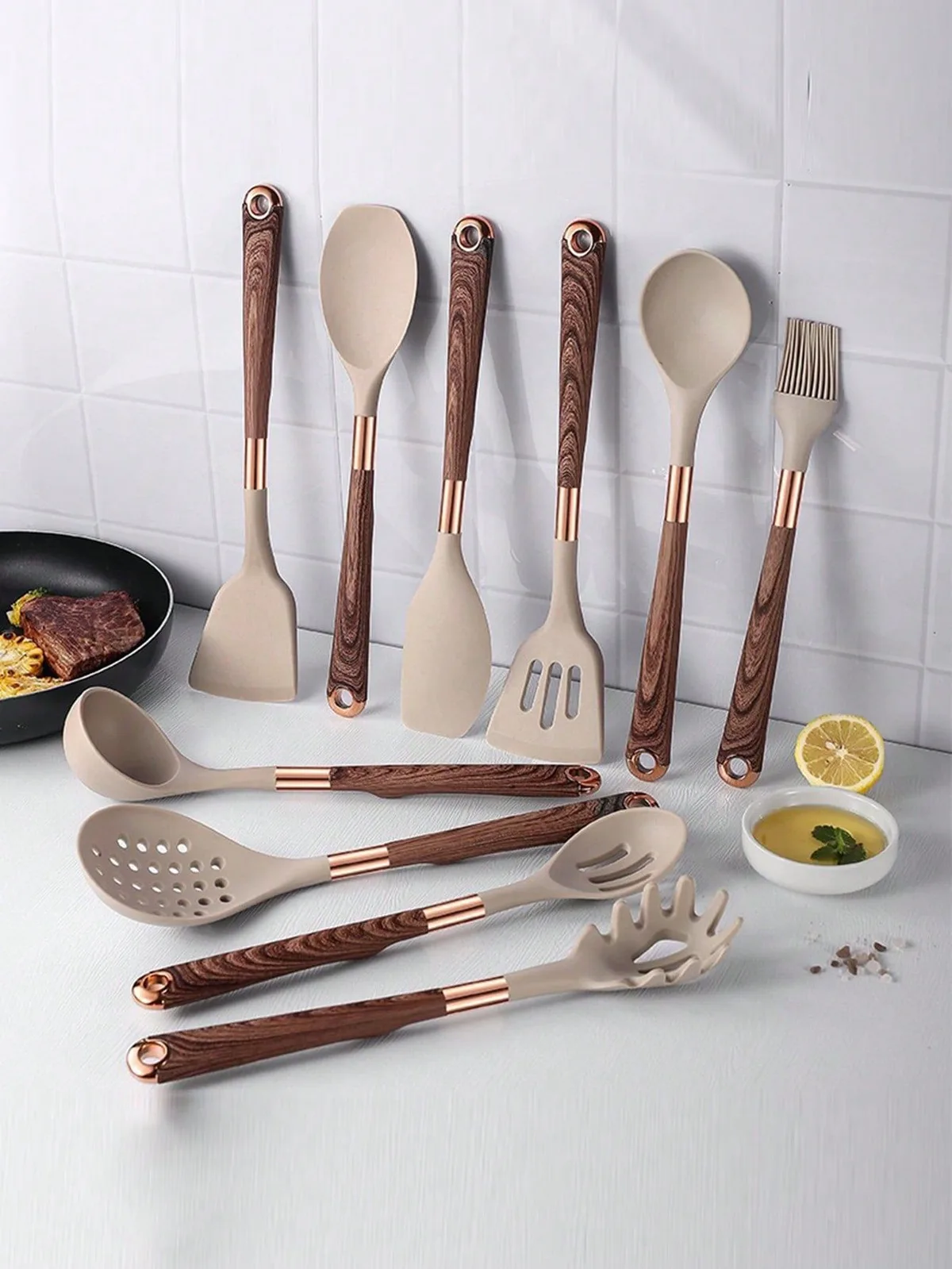
Image source: Bing (Web (fair-use with source credit))
| Material | Heat Resistance | Scratch Risk on Stainless | Best For | Watch Out For |
|---|---|---|---|---|
| Metal | Very high (over 500°F) | Very low to moderate | Searing, deglazing, lifting crusty food | Can leave cosmetic marks on polished pans |
| Silicone | 450°F to 600°F | None | Sauteing, folding, nonstick pans | Can be floppy, less precise on stuck food |
| Wood | Moderate (can burn) | Very low | Stirring, serving, light pan sauces | Soaks up grease, needs hand washing |
| Bamboo | Moderate (can burn) | Very low | Stir-frying, tossing | Same as wood, may split over time |
| Plastic/Nylon | Low (melts around 350°F) | None | Scraping bowls, low-heat cooking | Melts if left in a hot pan |
The big takeaway: metal is the most versatile and heat-tolerant option for stainless steel cookware. Silicone is gentler and totally skip-proof, but it lacks the edge that helps you dislodge stuck food. Wood and bamboo are fine for gentle cooking, but they’re not ideal for high-heat searing.
If you’re only going to own one set of utensils, metal is the strongest all-rounder for stainless steel. If you’re looking to keep a mirror-polish pan looking pristine, silicone or wood will prevent those faint swirl marks. But you’ll lose some of that professional feel.
At the end of the day, the pan can handle metal. That’s what it was designed for. In the next sections, we’ll cover when metal is the right call, how to use it without cringing, and what to do about the scratches that eventually show up.
When Metal Utensils Are the Right Call (And When They’re Not)
If you’re searing, frying, or deglazing at high heat, metal utensils are the right call. They handle temperatures that would melt nylon and warp silicone. Use them when you need to scrape up browned bits for a pan sauce or flip a piece of meat that’s stuck to the surface.
Metal makes sense in a few other situations too. If you’re using cast iron or carbon steel, metal utensils are basically required. If you’re cooking for a crowd and need durable, dishwasher-safe tools, metal wins.
If you’re a professional cook or someone who learned in a commercial kitchen, metal just feels correct.
Avoid metal when your pan has a nonstick coating. The coating is soft and scratches easily. Also avoid it on enameled cast iron, since a sharp metal edge can chip the enamel.
On plain stainless steel, though, metal utensils are completely safe to use daily.
How to Use Metal Utensils on Stainless Steel Without Cringing
Preheat your pan correctly before adding food. A properly heated stainless pan lets food release on its own, so your spatula only has to guide, not pry. That one habit reduces most of the scraping that causes cosmetic marks.
When you do scrape, use the flat edge of your spatula, not the corner. Tilt the tool slightly and push it under the food with a confident, shallow motion. Avoid stabbing at stuck bits with the tip.
That concentrated pressure is what creates visible gouges.
Match the utensil edge to the task. A thin fish turner works great for delicate items. A wide metal spatula handles burgers and pancakes.
A wooden spoon is still fine for stirring a simmering pot, so you don’t need to go full metal all the time.
Mistakes That Actually Damage Your Pan
Most metal utensils won’t hurt your stainless steel pan. But a few bad habits genuinely can. The biggest culprit is cutting directly inside the pan with a knife.
A sharp blade can leave real grooves in the steel, especially if you rock the knife back and forth.
Other mistakes include using serrated knives to saw at food in the pan, since the teeth dig in hard. Dragging a heavy cast iron tool across the surface with force is another one. Gripping the pan too hard while scraping can also create deeper marks.
Finally, don’t let the pan overheat while you’re aggressively scraping. Extreme heat softens the metal slightly and makes it more vulnerable. Use medium or medium-high heat for most stainless steel cooking, wait for the pan to preheat properly, and let the food release naturally.
What About Scratches? When Do They Matter and When Don’t They?
Most scratches on stainless steel are purely cosmetic. They sit in the surface layer of the metal and don’t affect heating, cooking, or food release. Aggregate review reports confirm that many cookware owners use metal utensils for years without any performance issues.
A shallow scratch is like a scuff on a pair of leather boots. It looks worn, but the structure is fine. The chromium oxide layer re-forms over the scratch within minutes, so rust isn’t an issue in day-to-day use.
You can check a scratch by running your fingernail across it. If your nail catches, it’s deeper than a surface mark.
Deep grooves are rarer. They happen with a knife, a cleaver, or a heavy metal edge pressed very hard. These can trap food particles and make cleaning slightly harder.
But even deep scratches won’t ruin the pan. The surface is still stainless steel, just with a few lines in it.
Expert Tips for Keeping Your Stainless Steel Pans Looking Great
Use utensils with smooth, rounded edges. Avoid tools with sharp corners or serrated teeth. A standard metal spatula from a restaurant supply store works beautifully, with smooth edges and a firm feel.
Clean with a gentle non-scratch pad or a stainless steel cleaner. Bar Keepers Friend is a popular option that removes metal transfer marks and evens out some surface scratching. Always scrub in the direction of the grain or in slow circular motions, then rinse thoroughly.
Store your pans properly. Stacking them without protection lets metal handles and bases scratch faces. Slip a paper towel or cloth liner between pans when you stack them.
That simple step keeps your stainless cookware looking acceptable for years, even with metal tools in your drawer.
Cleaning, Care, and Long-Term Maintenance After Using Metal Utensils
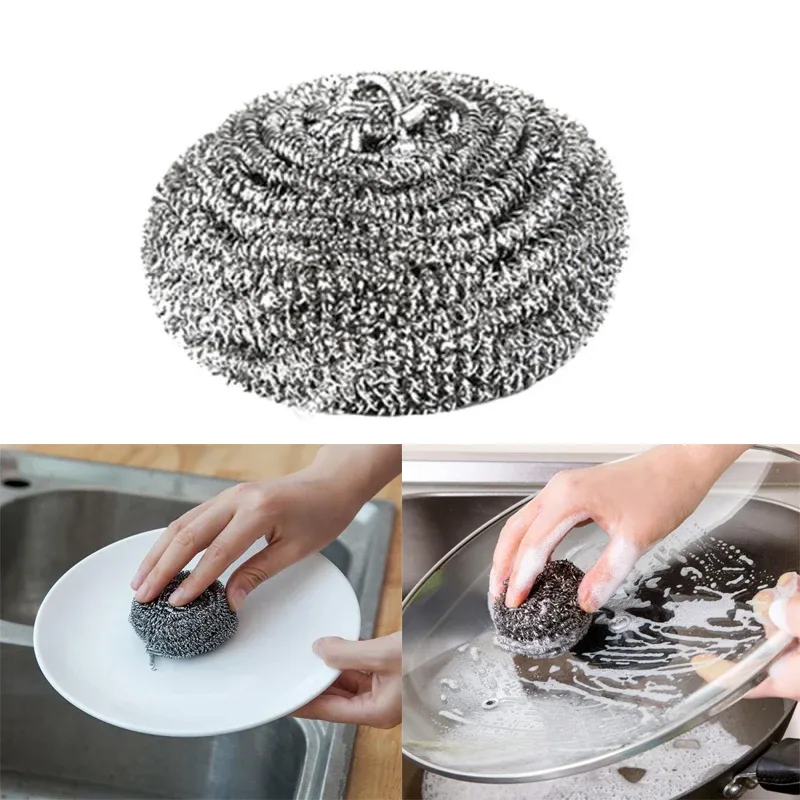
Image source: Web (Bing) / storage.googleapis.com (Web image (fair-use with source credit))
Clean your stainless steel pan right after use, once it’s cool enough to touch. Warm water and mild dish soap handle most jobs. A soft sponge or non-scratch pad removes food residue without adding more marks to the surface.
For gray streaks from metal utensils, use a stainless steel cleaner like Bar Keepers Friend. It lifts transferred metal particles gently. Apply it with a damp cloth, scrub in small circles, then rinse very well.
Per manufacturer guidance, avoid harsh chlorine-based cleaners, which can stain stainless steel.
Dry the pan immediately after washing. Water spots and mineral deposits look worse than light scratches. A quick towel dry keeps the finish consistent.
Then store pans with a cloth liner between them so handles and bases don’t rub against each other. With this routine, even daily metal utensils won’t shorten your pan’s lifespan.
Frequently Asked Questions
Do metal utensils scratch stainless steel pans?
Light marks from metal utensils are possible, but they’re usually cosmetic. Real scratches that affect performance are rare. Regular spatulas with smooth edges leave only faint swirls that don’t change how the pan cooks.
Why does stainless steel get gray marks from metal utensils?
That gray streak is often metal transferred from the utensil itself, not damage to the pan. Softer metal tools deposit tiny fragments onto the harder stainless surface. A mild abrasive cleaner removes it easily.
Can you use metal spatulas on stainless steel pans?
Yes, a standard metal spatula is safe. The key is to use the flat edge and avoid cutting inside the pan. If you do that, you get the control of metal without any meaningful damage.
Is it better to use silicone or metal on stainless steel?
Metal handles heat better and lifts stuck food more effectively. Silicone never scratches, but it flexes under pressure. For most stainless steel cooking, metal wins.
Silicone still works well if you want zero marks.
Why does food stick to stainless steel when using metal utensils?
Sticking happens before you even use the utensil. Stainless steel is not nonstick. Preheat the pan until water beads, then add oil.
That creates a barrier that helps food release on its own.
Should I use metal utensils on expensive stainless steel pans?
Yes, if you prefer how metal feels. High-end stainless pans are built for daily use. Cosmetic marks don’t affect performance, and proper care keeps them looking good for years.
Final Verdict: Should You Switch to Metal Utensils?
Metal utensils are safe on stainless steel pans. That’s the simple answer, and it’s backed by how stainless steel behaves. The material is hard, self-healing, and built for intense cooking.
Surface marks don’t ruin the pan or affect your food.
Switch to metal if you want better control, high-heat tolerance, and tools that last forever. Keep silicone or wood around only if you value a polished, mark-free look. Or just mix them based on what you’re cooking.
Use metal for searing and deglazing, silicone for folding, and wood for stirring a simmering pot.
In our research, the real damage comes from knives and poor preheating, not your trusty spatula. So cook with confidence, scrape with purpose, and clean up when you’re done. Your stainless steel pan can handle it.