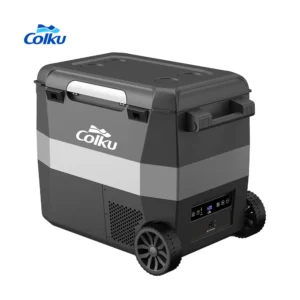
How cold does a portable camping fridge get? The honest answer depends on what you’ve plugged into your 12V socket. A compressor fridge can hold anywhere from about 0°F to 50°F (−18°C to +10°C).
A thermoelectric cooler struggles to beat roughly 40°F below the air around it.
Manufacturer specifications for most compressor units cap ambient operation near 109°F (43°C), and performance drifts above that. The USDA, meanwhile, sets 40°F (4°C) as the line where perishables start to turn. Hitting that line inside a 100°F trunk is where fridge type stops being trivia and starts mattering.
Let’s start with the number itself.
How Cold Does a Portable Camping Fridge Get
A compressor camping fridge typically reaches 0°F to 50°F (−18°C to +10°C). Premium models push down to about −8°F. Thermoelectric coolers only drop 36°F to 40°F below ambient.
On a 95°F day, that means 55°F to 60°F inside. Absorption fridges land somewhere between the two.
Why There’s No Single Temperature Number for a Camping Fridge
Every rating you see quoted comes from a test bench, not a tailgate. Manufacturers measure the coldest achievable temperature at a controlled ambient, often around 77°F (25°C). Change the room and the number moves with it.
The physics are simple enough. A fridge doesn’t create cold. It moves heat from inside the box to the air outside it.
The wider that gap, the harder the compressor has to work to hold it.
Engineers call the gap delta-T, and it explains almost every disappointing field report you’ll read. A unit rated to 0°F in a mild workshop may only manage 20°F on a 105°F afternoon. Same fridge, same setting, different day.
There’s a second layer too. Most portable fridges quote their range in fridge mode, where the thermostat targets something close to the ideal setpoint for fresh food. Switch the same box into freezer mode and you get a different ceiling entirely.
Volume matters as well. A 20-quart box pulls down faster than a 75-quart dual-zone. Less air to chill, less wall area leaking heat inward.
Two fridges running identical compressors can post very different numbers.
So treat any single figure as a best case. It’s the ceiling, not the promise. The rest of this guide is about working out where your setup actually lands underneath it.
Compressor, Thermoelectric, or 3-Way: Your Fridge Type Sets the Ceiling
Nearly every temperature claim you’ll read traces back to one of three cooling methods. They behave nothing alike, and the gap between them is wider than the gap between any two brands.
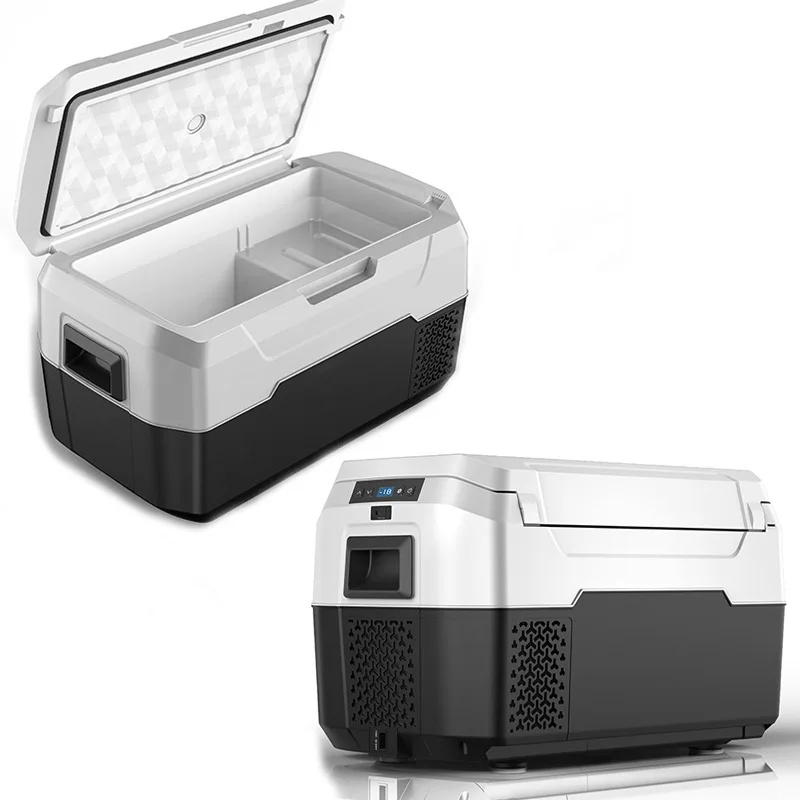
Image source: Web (Bing) / htpolarbox.en.made-in-china.com
Compressor fridges: the only ones that truly freeze
A compressor fridge works like the appliance in your kitchen, scaled down and running on 12V DC. A Secop (Danfoss) BD35F or BD50F piston compressor pushes refrigerant (usually R134a or R600a) through an evaporator plate. If you want the mechanics behind that cold plate, the cycle is identical to a full-size unit.
In practice these units hold a setpoint anywhere from roughly 50°F (10°C) down to 0°F (−18°C). A few premium models go lower, to about −8°F (−22°C). That’s genuine ice cream territory.
Thermoelectric coolers: degrees below ambient, not degrees absolute
A thermoelectric cooler runs current through a Peltier module, which creates a cold side and a hot side. There’s no compressor and no refrigerant. Just a semiconductor plate doing its best.
And its best has a hard limit. Expect 36°F to 40°F (20°C to 22°C) below ambient, and nothing more. On a 95°F day in a hot car, the interior sits at 55°F to 60°F.
That’s already past the food-safety line.
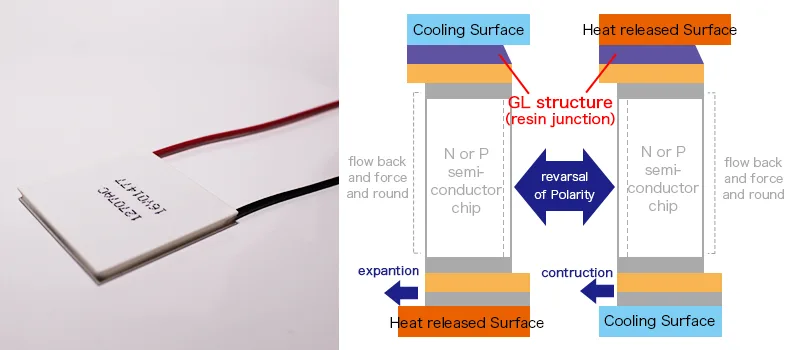
Image source: Web (Bing) / thermoelectric-coolers.com
Many of these models also warm, which is handy for keeping a takeaway hot. Just don’t buy one expecting frozen food.
Absorption (3-way) fridges: the RV exception
Absorption fridges use an ammonia-hydrogen cycle and run on 12V, mains power, or propane. They’re the old faithful of the motorhome world. They also need level ground to work properly, lose efficiency in high heat, and demand proper ventilation when running on gas.
The carbon monoxide risk from a badly installed propane line is real, so leave that side to a qualified fitter.
| Type | Coldest realistic | Freezes food? |
|---|---|---|
| Compressor | 0°F to 50°F | Yes |
| Thermoelectric | 36°F to 40°F below ambient | No |
| Absorption (3-way) | 40°F to 50°F, heat-sensitive | Marginally |
The Four Variables That Decide Your Real Temperature
Type sets the ceiling. These four things decide how close you get to it.
Ambient heat and where the fridge sits
Heat is the single biggest variable, and it’s the one campers control least. A fridge in a shaded camper aisle behaves very differently from the same fridge in a black pickup bed at noon. Air temperature inside a closed vehicle can run 20°F to 30°F above outside air.
Ventilation and compressor clearance
Compressors dump heat. If that heat can’t escape, the unit fights itself. Leave a few inches of clearance around vents and never bury the fridge under sleeping bags or bags of gear.
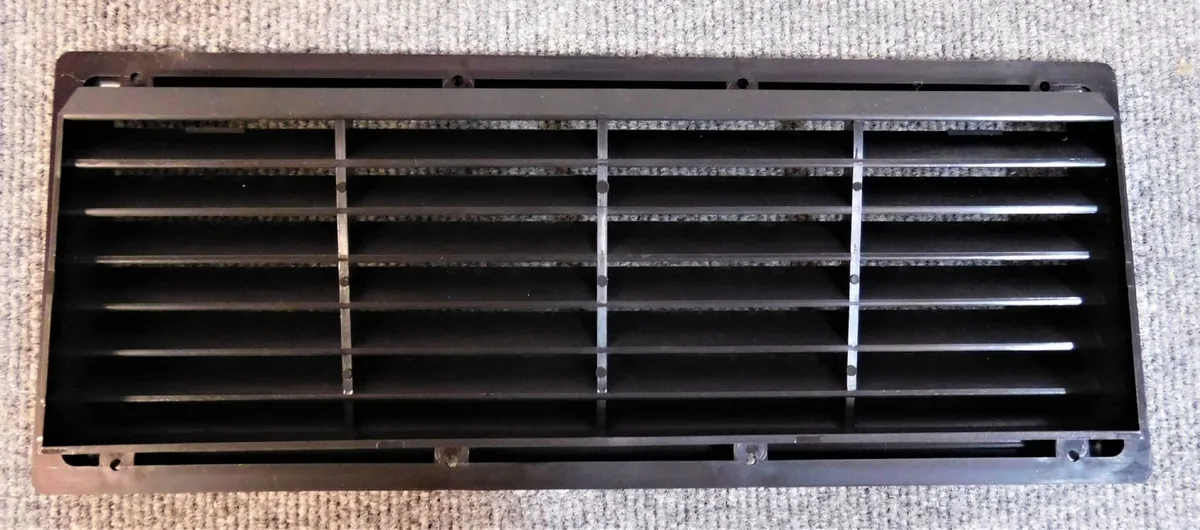
Image source: Web (Bing) / redil.to.it
Voltage drop, wiring, and low-voltage cutoff
A compressor needs clean, stable voltage to start. Long thin runs from a cigarette socket cause voltage sag, and the fridge’s protection circuit reads that sag as a flat battery. It shuts down to save your vehicle.
A short 10 or 12 AWG run straight to the battery with an inline fuse fixes most of these mystery stoppages.
Load, thermal mass, and how often the lid opens
An empty fridge is a box full of air that spills out every time you open it. A full fridge holds cold in the food and the liquid inside it. Pre-chilled drinks and frozen packs act as thermal mass, and that mass buys you hours when the holdover time drops off or the lid stays open at camp.
The Decision Tree: Match Your Setup to a Realistic Cold Range
Start with your fridge type, then work down through the conditions. The answer changes at each branch.
If you own a compressor fridge and camp below 85°F: expect to hit your setpoint within 2°F to 5°F. Pre-chill on mains power at home, then switch to 12V on the road.
If you own a compressor fridge and camp above 95°F: expect 5°F to 12°F of drift. Run Max mode until you’re at temperature, shade the unit, and add clearance around the vents.
If you’re running on a starter battery alone: use the Medium or High low-voltage cutoff, and accept that the fridge will switch off before your battery dies. That’s the point of the setting.
If you own a thermoelectric cooler: work out the ambient first. Subtract 36°F to 40°F and that’s your floor. Anything below 40°F is off the table on a summer day, so plan ice and shelf-stable food accordingly.
If you need frozen food for more than three days: a compressor unit is the only realistic path. Pair it with a properly sized battery bank and check the average running draw before you commit to a solar panel.
If you’re in an RV and want propane flexibility: an absorption fridge works, provided it’s level, vented, and out of direct sun. Don’t expect freezer-grade cold in a heatwave.
| Ambient | Compressor holds | Thermoelectric holds |
|---|---|---|
| 70°F | Setpoint plus 2°F to 5°F | 30°F to 34°F |
| 85°F | Setpoint plus 3°F to 8°F | 45°F to 49°F |
| 95°F | Setpoint plus 5°F to 12°F | 55°F to 59°F |
| 105°F | Setpoint plus 8°F to 15°F | 65°F to 69°F |
Those thermoelectric figures are why so many buyers end up disappointed. A cooler that “cools 40 degrees” sounds impressive until you realize 40 degrees below a 105°F day is still warm milk.
Fridge Mode vs. Freezer Mode on the Same Box
One compressor, two very different jobs. In fridge mode the thermostat targets 34°F to 40°F (1°C to 4°C). In freezer mode it targets 0°F (−18°C).
That gap sounds small on paper. It isn’t small in practice.
Ask a compressor to hold 0°F in a hot vehicle and it runs almost continuously. Duty cycle climbs, amp draw climbs with it, and your battery pays for the difference. Fridge mode is the efficient setting.
Freezer mode is the expensive one.
So match the mode to the trip.
- Weekend trip, drinks and fresh food: fridge mode, 38°F, ECO once chilled.
- Five days of raw meat: pre-freeze at home, run freezer mode, and keep the lid shut.
- Mixed load: use a dual-zone unit with independent setpoints, and verify the second compartment has its own thermostat. Some budget models share one.
- Cold drinks plus frozen steaks: freeze water bottles in the freezer zone and move them to the fridge zone as they melt.
One warning worth repeating. Freezer mode only helps if the food went in cold. Loading 70°F meat into a 0°F box means the compressor spends hours pulling heat out of it, and everything nearby warms up in the meantime.
The temperature you set is also not the temperature your food sees. Air near the lid runs warmer than the base, and the evaporator plate runs colder than either. A cheap independent thermometer beats the built-in display every time, and it’s the only way to know whether you’re safely under the USDA’s 40°F threshold or drifting past the safe window for raw meat.
As of 2026, most mid-range compressor units ship with app logging that records interior temperature over time. Use it. A graph of the last 24 hours tells you more about real performance than any spec sheet claim.
Is It Cold Enough? Matching Setpoint to What’s Inside
For fresh food, aim for 38°F (3°C), two degrees under the safety line. That margin absorbs lid openings and hot afternoons. What’s actually inside the box changes the target, though, and some loads have zero tolerance for drift.
Raw meat, dairy, and the 40°F line
The USDA draws its danger zone at 40°F (4°C). Below that, bacterial growth slows to a crawl. Above it, a two-hour clock starts ticking.
Per USDA Food Safety and Inspection Service guidance, perishables shouldn’t sit above 40°F for more than two hours. Cut that to one hour when the air around you tops 90°F.
Give raw meat the coldest real estate, low in the box and near the evaporator plate. Ground meat is the least forgiving item you can carry, since its safe window runs short even under perfect cooling. Previously frozen items follow stricter rules too.
Thawed bacon keeps only days at correct fridge temperatures.
Insulin, medication, and breast milk
Medication changes the math entirely. The FDA recommends storing unopened insulin between 36°F and 46°F (2°C to 8°C). Never let it freeze.
Frozen insulin loses potency with no visible warning.
Breast milk is nearly as picky. Fresh milk holds up to four days at 40°F or colder. Frozen storage wants a true 0°F zone, which puts you firmly in compressor territory.
Keep both away from the cold plate. Anything pressed against the evaporator can freeze solid while the display still reads 38°F. A small basket or an insulated pouch inside the fridge smooths out those cold spots.
Ice, frozen food, and ice cream
Ice cream is the hardest test a portable fridge faces. It wants 0°F to 5°F, and anything warmer turns it to soup. Most compressor units hold that in mild weather.
Only the strongest manage it at 100°F ambient.
Frozen meat sits at 0°F (−18°C), the USDA’s standard freezer temperature. If a heatwave thaws it, refreezing isn’t recommended. Treat it as a cook-it-tonight situation.
| Contents | Target temp | Risk if warmer |
|---|---|---|
| Whole cuts, poultry, seafood | 32°F to 36°F | Bacterial growth |
| Ground meat | 32°F | Shortest safe window |
| Dairy, prepared meals | 38°F to 40°F | Fast spoilage |
| Insulin, medication | 36°F to 46°F | Potency loss |
| Ice cream | 0°F to 5°F | Melts |
Pull-Down, Holdover, and Daily Amp Draw: Getting Cold and Staying Cold
Pull-down is the time from switch-on to setpoint. At 70°F to 80°F ambient, a compressor fridge reaches fridge temps in 30 to 60 minutes. Freezer mode takes one to three hours.
Run Max mode during pull-down. The compressor spins at full speed and draws more current, but only for that first stretch. Switch to ECO once the display reads your target.
Holdover is the other half of the story. Cut power on a full, cold box and a well-insulated unit holds fridge temps for roughly 8 to 24 hours. An empty box gives up in half that time.
Frozen water bottles genuinely earn their floor space here.
Daily draw is where battery budgets live. A typical 12V compressor pulls 45W to 60W while running, roughly 4 to 5 amps at 12V. It doesn’t run constantly, though.
The compressor cycles on and off, so daily amp-hours tell the real story.
| Metric | Typical figure |
|---|---|
| Pull-down to fridge temps | 30 to 60 minutes |
| Pull-down to freezer temps | 1 to 3 hours |
| Running draw | 45 to 60W (4 to 5A at 12V) |
| Daily use, fridge mode | 15 to 40Ah |
| Daily use, freezer mode | 30 to 60Ah |
| Holdover, full box, power off | 8 to 24 hours |
Heat inflates every row. Ambient above 95°F can nearly double the duty cycle, and amp-hours climb with it. Size your battery for the hottest day of the trip, not the average one.
A quick planning rule: take the quoted Ah per day, add 50% for hot weather, then compare against your battery’s usable capacity. If the box warms during an unplanned outage, the restart routine matters before you trust the contents again.
Mistakes That Keep a Camping Fridge Warm
Most warm-fridge complaints trace back to a handful of fixable errors. Run this list before blaming the unit.
- Trusting the display. Built-in thermostats read the evaporator, not your food. Tape a cheap probe thermometer inside the lid and believe that instead.
- Buying on the headline number. A “−4°F” rating means a mild ambient, a test bench, and an empty box. Check the rated max ambient first.
- Loading warm cans and room-temperature meat. Every 70°F can is heat the compressor must remove. Pre-chill whatever you can.
- Powering it through a cigarette socket. Thin wire over a long run causes voltage sag, and the cutoff trips like a flat battery. Wire direct with 10 or 12 AWG and an inline fuse.
- Setting battery protection to Low. The fridge survives, but your starter battery might not. Medium or High is the sensible default.
- Parking it in the sun. A shaded trailer aisle versus a black truck bed at noon can be a 25°F difference in working conditions.
- Wrapping it in blankets. Insulating the lid helps. Covering the vents or compressor cooks it. Leave the hot side breathing.
- Running it half empty. Air spills out every time the lid lifts. Water bottles, ice packs, or extra food fill the gaps.
- Storing it wet and sealed. Damp interiors grow mold fast. Dry the box, then deal with lingering smells before it goes on the shelf.
- Wasting cold space. Knowing which foods skip refrigeration frees room for the stuff that doesn’t.
Each fix takes minutes. Together they’re often worth 10°F or more of real-world performance.
Spec Sheet Reality Check: Temperature Ranges, Ambient Ratings, and Power Numbers
Spec sheets quote best-case numbers. Reading them well means knowing which figures are lab results and which you can bank on.
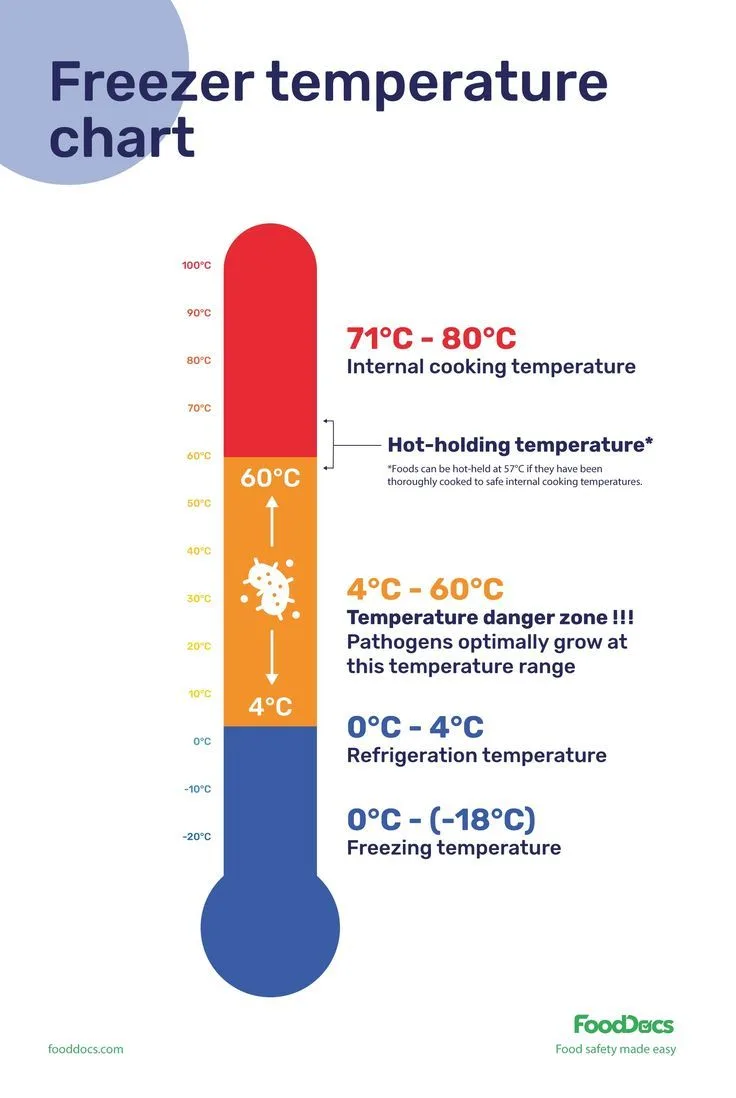
Image source: Web (Bing) / voyage.supersportgeo.de
Rated temperature range. Most compressor units list 0°F to 50°F (−18°C to +10°C). A few premium models reach −8°F (−22°C). That range covers fridge or freezer mode on a thermostat, not both at once.
Maximum ambient rating. Look for something near 109°F (43°C). This is the air temperature the unit is designed to work in. Above it, expect derating, meaning the coldest achievable temperature rises.
Power draw. Manufacturer figures usually reflect a 77°F (25°C) room and an empty box. Real consumption runs higher once you add food, sun, and lid openings.
| Spec sheet claim | What it means in practice |
|---|---|
| 0°F to 50°F range | Achievable in mild ambient, one mode at a time |
| 43°C max ambient | Holds spec up to about 109°F air |
| 45W average draw | Measured empty, at 77°F ambient |
| 1.5A hourly average | Doubles in freezer mode or heat |
Aggregate user reviews report that some budget dual-zone models share a single sensor, so both compartments track one temperature. Verify independent thermostats before paying extra for the second zone.
One shopping tip: compare quoted energy use per 24 hours rather than peak watts. Peak watts tell you what wiring you need. Daily amp-hours tell you what battery you need.
Only the second number decides whether the fridge runs cold all weekend.
Frequently Asked Questions
Can a portable camping fridge work as a real freezer?
Yes, if it’s a compressor model. Set it to 0°F (−18°C) and it freezes and stores food like a home freezer. Thermoelectric coolers can’t freeze anything, and absorption fridges only manage marginal freezer performance in cool conditions.
How cold will a camping fridge get on a 100°F day?
A compressor fridge typically holds its setpoint plus 5°F to 12°F of drift, so a 37°F setting lands around 42°F to 49°F. Shade, ventilation, and a pre-chilled load reduce the drift. Thermoelectric models manage only about 60°F in the same conditions.
Why does my electric cooler only reach 55°F?
Because it’s almost certainly thermoelectric. Those units cool 36°F to 40°F below ambient air and no further. On a 95°F day, 55°F inside is the physics, not a fault.
A compressor model is the fix.
Will a camping fridge flatten my car battery overnight?
It can, if battery protection is set to Low or switched off. Most compressor fridges offer three-stage cutoffs around 10.4V, 11.1V, and 11.8V. Medium or High shuts the fridge down before the battery drops too far to start the engine.
How long does a portable fridge take to get cold?
Roughly 30 to 60 minutes to reach fridge temperatures from a 70°F to 80°F room. Freezer mode takes one to three hours. Pre-chilling the unit and its contents on mains power at home shortens that dramatically.
Does pre-chilling before a trip really matter?
Yes, and it’s the cheapest performance upgrade there is. A cold box plus cold food means the compressor starts the trip maintaining temperature instead of fighting to pull it down. Expect noticeably better holdover on day one.