A refrigerator is one of the most common appliances found in homes and businesses worldwide. For many, it’s an everyday object that keeps food fresh and drinks cold. But have you ever wondered how it actually works? The science inside your fridge is both simple and fascinating, involving principles of physics, engineering, and chemistry.
This guide will help you understand the inner workings of a refrigerator, from its main components to the process that makes it cool. Whether you’re curious or need to troubleshoot a problem, this article will give you clear answers in plain English.
The Basic Principle: How Cooling Happens
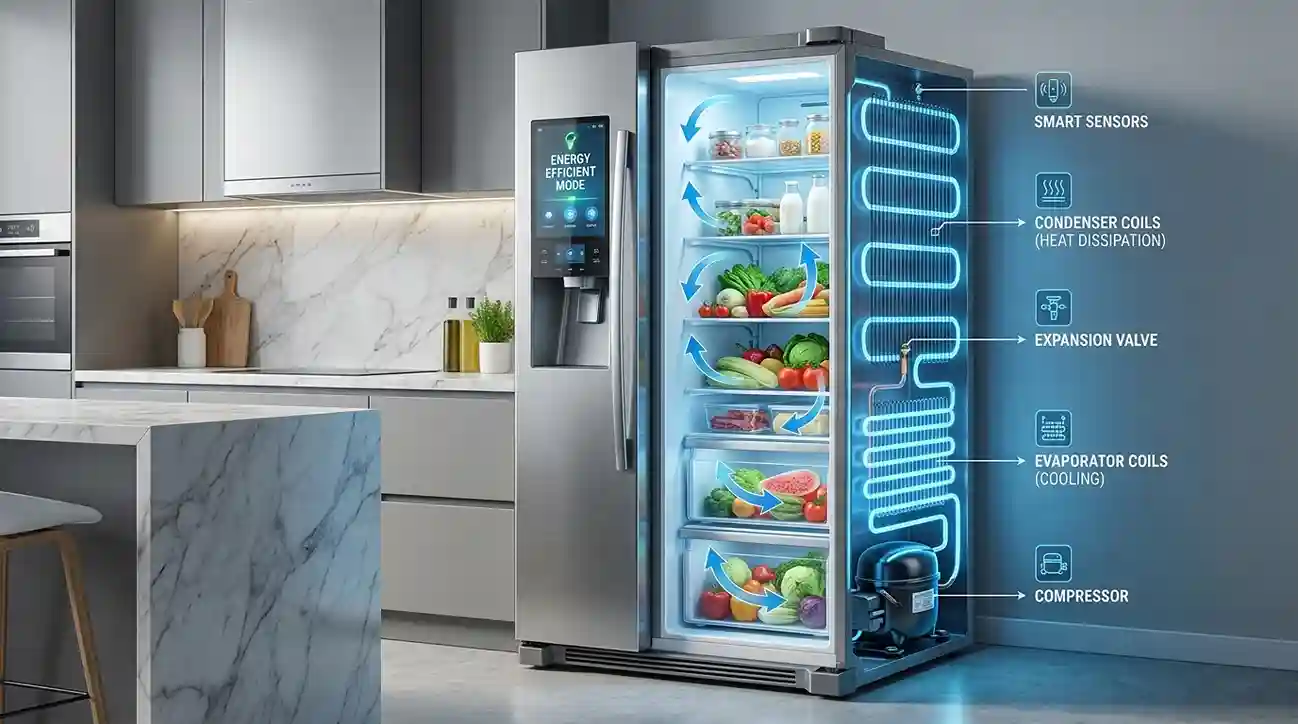
At the heart of every refrigerator is a process called heat transfer. The main goal is to move heat from inside the fridge (where you keep your food) to the outside (the room). This is not about making things “cold” directly. Instead, the fridge removes heat from food and transfers it elsewhere.
This cooling effect uses the principle that when a liquid turns into a gas, it absorbs heat from its surroundings. This process is called evaporation. The refrigerator repeats this cycle continuously, using a closed system filled with a special fluid called a refrigerant.
Main Components Of A Refrigerator
To understand how a refrigerator works, it’s important to know the function of its main parts. These components work together to keep your food cool and safe.
| Component | Function |
|---|---|
| Compressor | Compresses the refrigerant, raising its pressure and temperature |
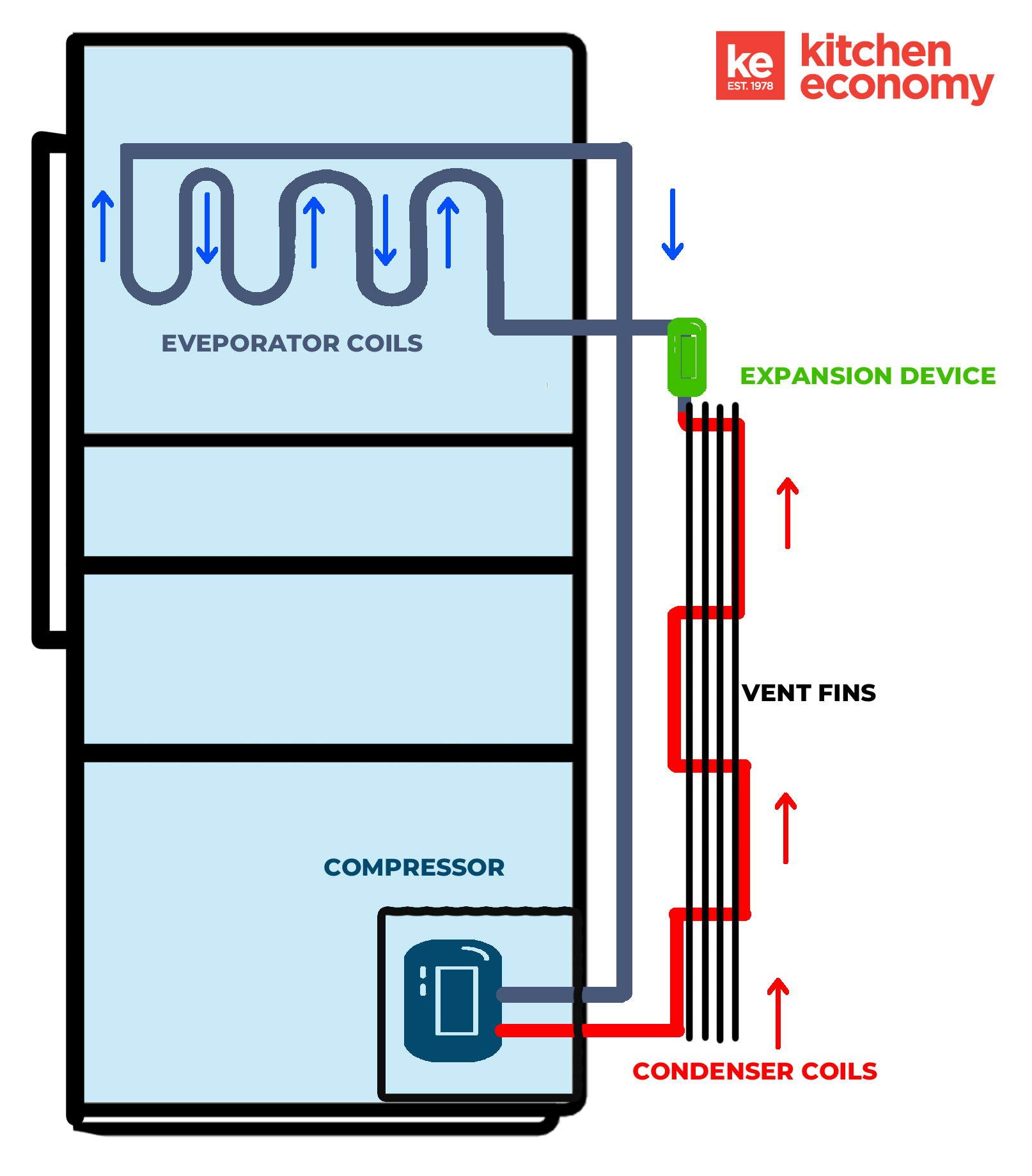
| Condenser coils | Release heat from the refrigerant to the room air |
| Expansion valve (or capillary tube) | Lowers the pressure of the refrigerant, cooling it rapidly |
| Evaporator coils | Absorb heat from inside the fridge, cooling the air and food |
| Thermostat | Monitors and controls the temperature inside the fridge |
| Refrigerant | The special fluid that circulates, absorbing and releasing heat |
| Fan(s) | Circulate air over the coils and throughout the fridge |
Non-obvious Insight 1
Many people think the compressor “creates” cold. Actually, it’s the evaporator coils that do the cooling. The compressor’s job is to move the refrigerant through the cycle.
Non-obvious Insight 2
The thermostat doesn’t cool the fridge. It simply tells the compressor when to turn on or off, based on the temperature inside.
The Refrigeration Cycle: Step By Step
The secret behind your refrigerator’s cooling power is the refrigeration cycle. Here’s how it works, step by step:
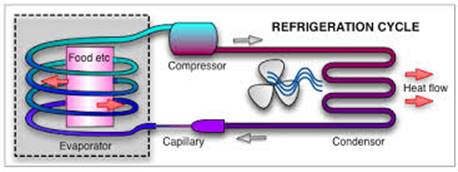
- Compression: The compressor squeezes the refrigerant gas, raising its pressure and temperature. The hot, high-pressure gas moves to the condenser coils.
- Condensation: As the gas travels through the condenser coils (usually at the back or bottom of the fridge), it releases heat to the outside air. The gas cools and turns into a high-pressure liquid.
- Expansion: The high-pressure liquid passes through the expansion valve or capillary tube. Here, its pressure drops suddenly, and it becomes a cold, low-pressure liquid.
- Evaporation: The cold liquid refrigerant enters the evaporator coils inside the fridge. As it absorbs heat from the air (and your food), it evaporates back into a gas. This process absorbs energy, making the inside of the fridge colder.
- Repeat: The refrigerant, now a low-pressure gas, returns to the compressor to start the cycle again.
| Step | What Happens | Location |
|---|---|---|
| 1. Compression | Gas is compressed, gets hot | Compressor |
| 2. Condensation | Heat is released, gas turns to liquid | Condenser coils (outside) |
| 3. Expansion | Pressure drops, liquid gets cold | Expansion valve/capillary tube |
| 4. Evaporation | Liquid absorbs heat, turns to gas | Evaporator coils (inside) |
This cycle happens many times every hour. When you open the fridge door, warm air enters, and the cycle speeds up to remove the extra heat.
Types Of Refrigerators
There are several types of refrigerators, each using the same basic principle but with some differences in design and features.
Top Freezer
This classic style has a freezer compartment on top and a larger fridge section below. It’s very common in homes around the world and is usually affordable and energy-efficient.
Bottom Freezer
The freezer is located at the bottom, which makes the fridge section (used more often) easier to access. These are popular in modern kitchens.
Side-by-side
Both fridge and freezer sections run from top to bottom, side by side. These units often have extra features like water dispensers and ice makers.
French Door
French door refrigerators have two doors for the fridge section and a freezer drawer at the bottom. They offer wide shelves and easy access.
Compact Or Mini Fridge
Small versions, often found in dorm rooms or offices. They work the same way as big fridges but have fewer features.
Smart Refrigerators
These newer models connect to the internet, show digital displays, and sometimes have cameras inside. They still use the same refrigeration cycle for cooling.
Credit: arcticwalkins.com
What Is Refrigerant?
A refrigerant is the special fluid that circulates inside the fridge. It’s responsible for absorbing and releasing heat. Over the years, the type of refrigerant used has changed for safety and environmental reasons.
- Older fridges used chemicals called CFCs (chlorofluorocarbons), which were found to harm the ozone layer.
- Modern fridges use safer alternatives like HFCs (hydrofluorocarbons) or even newer, more eco-friendly options such as R600a (isobutane).
The amount of refrigerant inside your fridge is small, but it is essential. If there is a leak, the fridge can’t cool properly and should be fixed by a professional.
How The Thermostat And Sensors Work
The thermostat is the “brain” of your refrigerator’s cooling system. It constantly checks the temperature inside the compartment. If the temperature rises above a set point, the thermostat signals the compressor to turn on. Once the desired temperature is reached, it tells the compressor to turn off.
Some modern fridges use electronic sensors instead of mechanical thermostats. These sensors can be more accurate and help save energy.
A common beginner mistake is setting the thermostat to the coldest setting, thinking food will stay fresh longer. However, this can waste energy and even freeze fresh food. Usually, keeping the fridge between 37°F and 40°F (3°C to 4°C) is best.
How Frost-free Technology Works
Older refrigerators often needed to be defrosted by hand. Ice would build up on the evaporator coils and reduce efficiency. Modern fridges often use frost-free or “auto-defrost” technology.
A small heater warms the evaporator coils for a short time, melting any ice. The water drains away, and the cooling process continues. This means less maintenance for you and better performance.
Energy Efficiency And Power Consumption
Refrigerators run all day, so their energy use matters. According to the U.S. Department of Energy, a modern fridge uses about 100 to 800 kWh per year, depending on size and features. Choosing an ENERGY STAR rated model can reduce power usage by 10–15%.
Here are some factors that affect how much energy a refrigerator uses:
- Size: Bigger fridges generally use more power.
- Age: Older models are less efficient.
- Temperature setting: Lower settings use more electricity.
- Door opening: Frequent opening lets in warm air, making the compressor work harder.
- Location: Fridges placed in hot areas (like next to an oven) use more energy.
| Fridge Type | Average Annual Energy Use (kWh) | Typical Size (cubic ft.) |
|---|---|---|
| Mini Fridge | 100–200 | 1.7–4.5 |
| Top Freezer | 350–500 | 14–20 |
| Side-by-Side | 600–800 | 20–28 |
Common Problems And Troubleshooting
Even the best refrigerators can have issues. Here are some common problems and what might cause them:
- Fridge not cooling: Could be a thermostat issue, blocked condenser coils, or low refrigerant.
- Noisy operation: May be a problem with the fan or compressor.
- Water leaking: Usually a blocked defrost drain.
- Frost buildup: Faulty door seal, or defrost system not working.
- Fridge runs constantly: Thermostat set too low, or warm air leaking in.
A simple fix many people overlook is cleaning the condenser coils. Dust and pet hair can block airflow, making the fridge work harder. Cleaning the coils twice a year can improve efficiency and extend the life of your appliance.
The Role Of Insulation
A refrigerator’s walls contain insulation—usually foam—to help keep the cold air inside. Good insulation reduces the work the cooling system has to do. Damaged or thin insulation means the compressor will run longer, using more energy and wearing out faster.
Credit: www.warehouseappliance.com
Environmental Impact
Refrigerators have become more eco-friendly, but they still have an impact on the environment:
- Energy use: More efficient models save electricity and reduce greenhouse gases.
- Refrigerant leakage: Older refrigerants like CFCs and HFCs can harm the ozone layer or contribute to global warming if released. Newer refrigerants are safer.
- End-of-life: Fridges must be properly recycled to prevent pollution.
When buying a new fridge, check its energy rating and refrigerant type. Proper disposal of old units is also important. The US Environmental Protection Agency (EPA) provides guidelines for safe recycling of old fridges. For more on environmental impacts, visit the EPA’s refrigerator energy tips.
Tips For Using Your Refrigerator Efficiently
You can help your fridge work better and last longer by following these tips:
- Keep the fridge at 37–40°F (3–4°C), and the freezer at 0°F (-18°C).
- Do not overload the fridge; allow space for air to circulate.
- Avoid putting hot food directly inside; let it cool first.
- Check and replace door seals if they are worn or damaged.
- Defrost the freezer if ice builds up (unless you have a frost-free model).
- Clean condenser coils regularly.
- Place the fridge away from heat sources like ovens or sunlight.
Credit: www.kitchen-economy.co.uk
Frequently Asked Questions
Why Does My Refrigerator Run All The Time?
A refrigerator may run non-stop if the thermostat is set too cold, the door seal is leaking, or the condenser coils are dirty. Check these first before calling a technician.
How Long Should A Refrigerator Last?
Most modern refrigerators last 10–15 years. Regular cleaning and maintenance can help extend their life.
What Causes Frost To Build Up In My Fridge Or Freezer?
Frost usually forms when warm, moist air gets inside, often due to a damaged door seal or frequent opening. It can also happen if the defrost system is not working.
Is It Safe To Use A Refrigerator With A Damaged Seal?
A damaged seal lets warm air in, making the fridge work harder and increasing energy use. It’s best to replace a faulty seal as soon as possible to avoid food spoilage and high bills.
What Is The Safest Way To Dispose Of An Old Refrigerator?
Old fridges should be recycled by a certified program. They contain refrigerants and insulation that can be harmful if not handled properly. Check with your local waste management or visit the EPA’s guidelines for safe disposal.
Refrigerators are a great example of everyday technology that uses smart science to make our lives easier. Understanding how your fridge works can help you use it more efficiently, fix small problems, and make better choices when it’s time for a new one.
With the right care and knowledge, your refrigerator can keep things cool and safe for many years.