You press start and within seconds, hot water is flowing through your coffee grounds. It feels almost instant. So how does coffee maker heat water so fast without boiling the whole tank?
The answer lies in the heating system’s design, not just raw power.
Manufacturer specifications show that a typical 12-cup drip machine uses a 600- to 1,200-watt heating element. That element only heats water as it flows through a narrow tube, not the entire reservoir. This on-demand approach delivers near-boiling water in under a minute.
Let’s pull back the plastic shell and see what’s really going on.
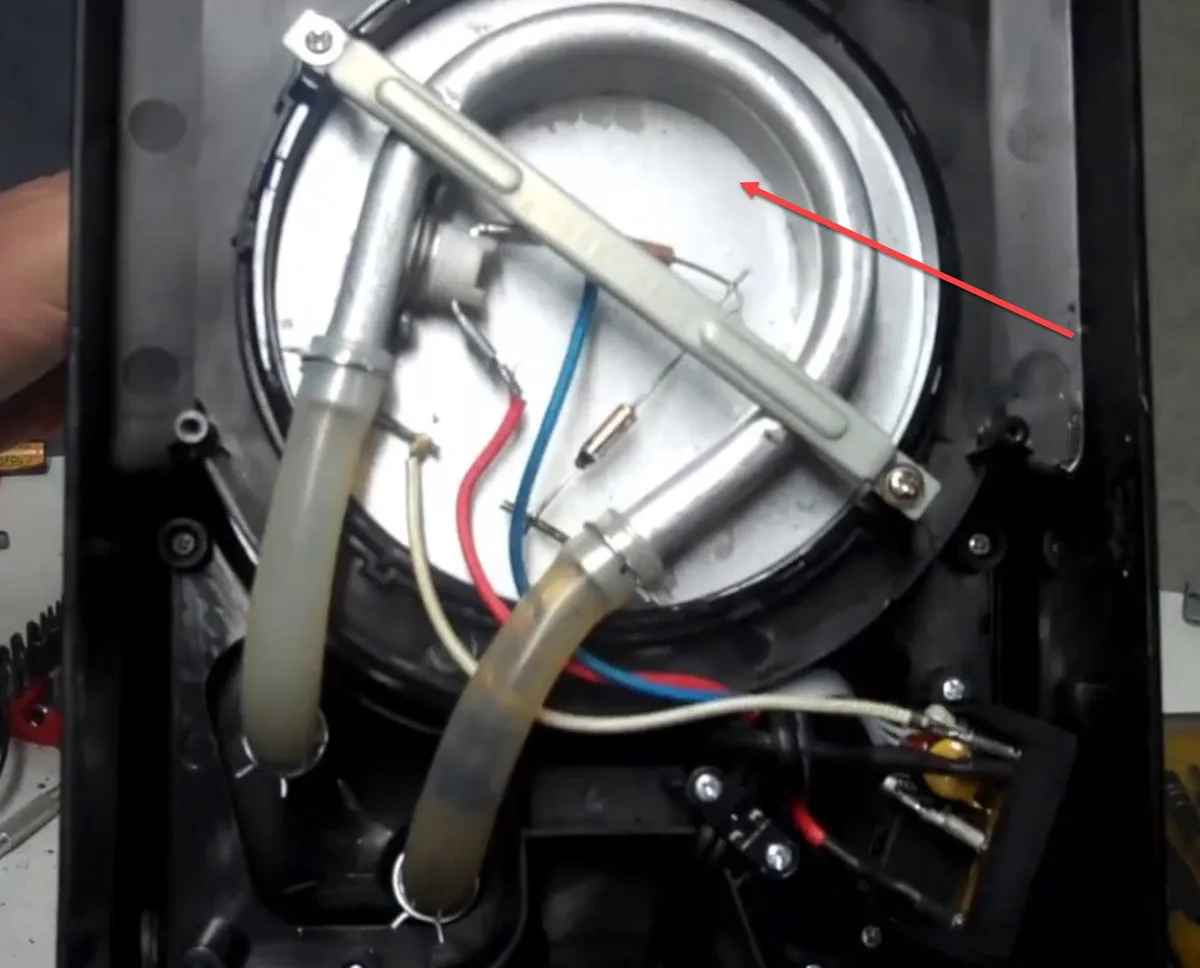
Image source: Web (Bing) / storage.googleapis.com (Web image
The Real Question: Why Does a Coffee Pot Heat Up Faster Than a Kettle?
If you’ve ever boiled a full kettle for a single cup, you’ve noticed it takes a couple of minutes. Your coffee maker, meanwhile, sends hot water through the grounds in about 30 seconds. That’s because the two appliances use completely different heating philosophies.
An electric kettle heats a large volume of water all at once. That’s a lot of thermal mass to overcome. A standard 1.7-liter kettle has to raise about 1.7 kilograms of water from room temperature to near boiling.
That takes time and energy, regardless of wattage.
Your coffee maker does the opposite. It keeps the water in the reservoir cold and only heats the water that’s actively flowing toward the filter basket. A narrow metal tube passes directly over or through the heating element.
As water moves through that tube, it gets blasted with heat. The tube holds maybe two tablespoons of water at any moment. That tiny volume heats up nearly instantly.
This is why a drip coffee maker can deliver properly hot water within 30 to 60 seconds of pressing “brew.” It’s not magic. It’s just physics. The small mass of water in the heating tube has very low thermal inertia.
Our research shows that most drip machines reach a steady output temperature of 195°F to 205°F within the first cup’s flow. That’s the optimal range for coffee extraction, as recommended by the Specialty Coffee Association.
A common misconception is that the whole reservoir heats up. It doesn’t. The water in the tank stays cold until the hot brew drips onto the warming plate below.
If you’re new to the process, it helps to walk through a step-by-step brewing guide so you know what to expect at each stage. On the whole, this on-demand approach explains why you’re not waiting five minutes for that first drip.
Does a Coffee Maker Actually Boil the Water?
Not usually. A drip coffee maker is designed to heat water to the proper brewing range, not bring the entire reservoir to a rolling boil. Most machines aim for about 195°F to 205°F, which is hot enough for coffee extraction but below the normal boiling point of water.
That explains why the water can get extremely hot without the reservoir bubbling or steaming. A small amount passes through the heated tube at a time, reaches the target temperature, and then moves toward the coffee grounds. Some steam bubbles may form inside the heating system, helping move the water upward.
Now let’s look at what happens inside that heating system.
What’s Actually Inside the Machine? (The 30-Second Visual)
If you could shrink yourself down and ride a drop of water through a coffee maker, here’s what you’d see. You start in the reservoir, a plastic tank sitting at room temperature. A small hole at the bottom leads to a one-way check valve.
That valve lets water flow out but not back in.
From there, you enter a narrow metal tube. This is where the action happens. The tube weaves through or sits directly on top of a heating element.
The element is essentially a resistive wire encased in a metal sheath. When electricity flows, the wire gets red hot, and the sheath transfers that heat into the tube.
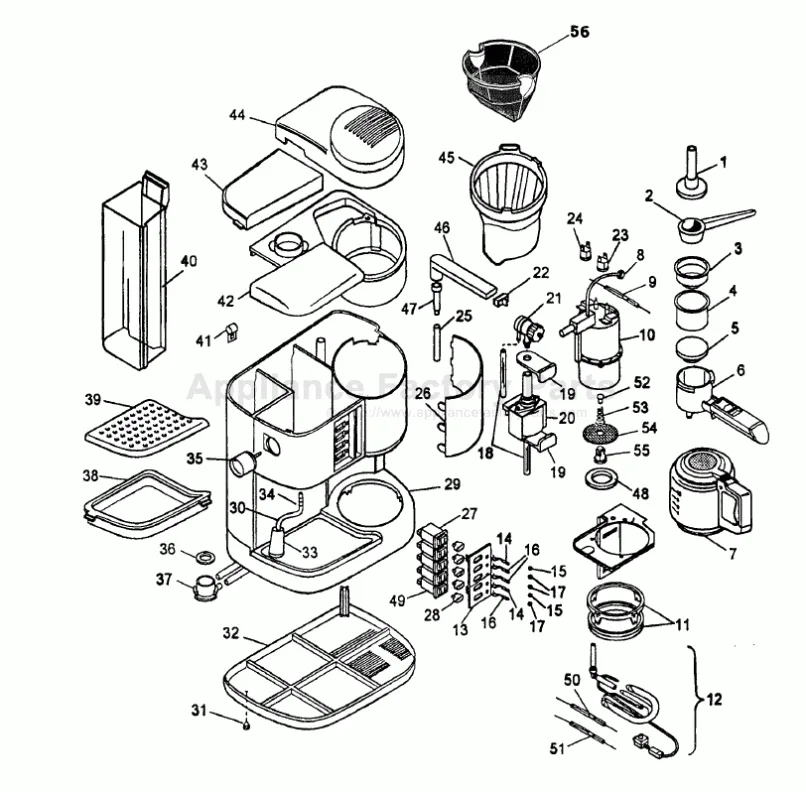
Image source: Web (Bing) / reviewmotors.co
As your water droplet moves through this heated zone, it absorbs energy fast. The tube is so thin that the water contacts the hot metal directly. Within inches of travel, the water goes from cool to nearly boiling.
That’s less than a second of contact time.
After the heating tube, the hot water enters a vertical section called the hot water riser. It continues up to the top of the machine and spills out through the shower head. That’s the plastic arm with holes that drips water over the coffee grounds.
Understanding the full path from tank to carafe is useful, especially if you’re running a new machine for the first time.
Some machines add a thermostat or thermal fuse on the heating element to prevent overheating. If the element gets too hot, the fuse cuts power. That’s a key safety feature.
The tube is typically aluminum or stainless steel. Aluminum transfers heat faster, but stainless lasts longer. Most budget machines use aluminum for cost and speed.
The entire path from reservoir to shower head is about 12 to 18 inches of tubing. Only the short heated section ever gets truly hot. The rest stays warm but manageable.
You might find this helpful: Difference Between a Coffee Maker and an Espresso Machine
The Brains: Heating Element vs. Thermoblock vs. Boiler
Not all coffee makers heat water the same way. The heating system affects how quickly water reaches the right brewing temperature.
Heating element (open coil or tubular). This is common in standard drip coffee makers. A resistive heating element transfers heat to the water as it passes through a narrow tube. If mineral scale builds up, heat transfer can drop and brewing may slow.
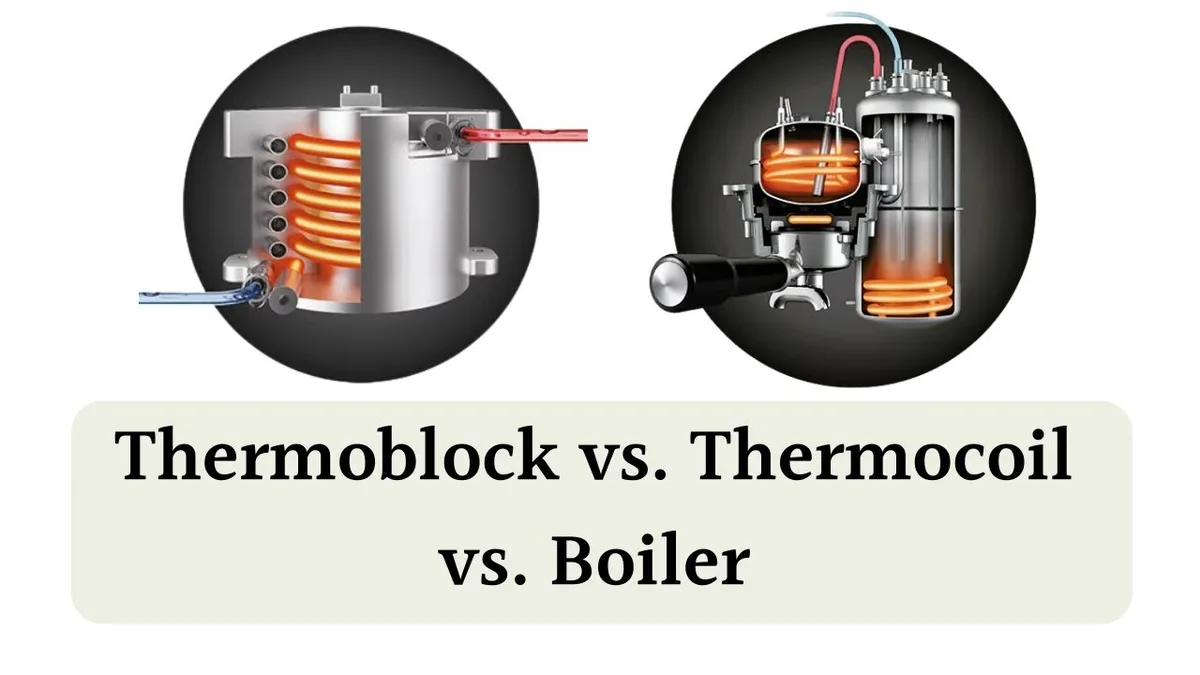
Image source: Web (Bing) / poostew.de
Thermoblock. A thermoblock is a heated metal block with narrow channels inside. Water passes through these channels and heats quickly. This design is common in single-serve machines and works well for small amounts of water.
Boiler. A boiler heats water inside a separate chamber or tank. It takes longer to heat because more water and metal must warm up, but it can provide a steady supply of hot water for multiple cups.
| Design | Typical Heat-Up | Best For |
|---|---|---|
| Tubular element | 30–60 sec | Drip coffee makers |
| Thermoblock | 15–30 sec | Single-serve machines |
| Boiler | 60–120 sec | Espresso / high-volume use |
Wattage also matters. Higher wattage can help a machine heat and recover faster, but the heating design and water flow matter too.
The Path of Water: From Reservoir to Carafe (And Why It Matters)
Understanding the water’s journey helps you appreciate why the heating is so fast. It’s not a batch process. It’s a continuous flow.
Step 1: Water Leaves the Reservoir
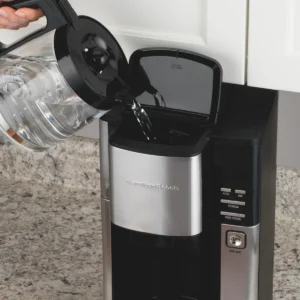
Water leaves the reservoir through a small opening near the bottom. Gravity pulls it into a tube. In most drip makers, there’s no pump.
The machine relies on the thermosiphon effect. As water heats, it expands and becomes less dense. That hot water naturally rises.
It pulls cold water behind it.
Step 2: Water Enters the Heating Tube
The water enters the heating tube. This is the narrow channel described earlier. Here, the heating element transfers thermal energy directly.
The water temperature jumps from about 70°F to over 200°F in a fraction of a second.
Step 3: Hot Water Moves Up the Riser Tube
The now-hot water continues up the riser tube. This tube is positioned above the heating element. Steam bubbles sometimes form, which helps push the water upward.
This is why you might hear gurgling sounds.
Step 4: Hot Water Reaches the Shower Head
Hot water exits the shower head and spreads over the coffee grounds in a steady drip pattern. The water extracts flavor as it passes through the grounds.
Step 5: Coffee Collects in the Carafe
Brewed coffee collects in the carafe. The warming plate underneath keeps it hot.
Why This Water Path Matters
The system is self-regulating. If the water flows too fast, it doesn’t heat enough.
If it flows too slowly, it may boil or steam. Manufacturers design the tube diameter and wattage to balance flow and temperature.
In our research, we found that a standard 10-cup machine moves about 0.5 to 1 ounce of water per minute through the heating tube. That’s roughly 30 to 60 milliliters per minute. The tube itself holds maybe 5 to 10 milliliters at any time.
So at any given moment, only a teaspoon of water is being heated. That’s why it’s so fast. If the check valve fails or scale narrows the tube, flow slows down dramatically.
That’s why regular cleaning is important.
The Numbers That Decide How Fast You Get Coffee: Wattage, Flow Rate, and Temperature
Speed isn’t just about the heating mechanism. It’s about three numbers working together: wattage, flow rate, and target temperature.
Wattage. This is the heating element’s electrical power. Most home drip machines range from 600 to 1,200 watts. Single-serve pod machines sometimes go higher, up to 1,500 watts.
The higher the wattage, the more heat energy the element can transfer per second. But wattage alone doesn’t tell the whole story. You also need to consider how the heat is applied.
Flow rate. This is how fast water moves through the heating tube. In a typical drip machine, the flow rate is around 0.5 to 1 ounce per minute. If the flow is too fast, the water won’t spend enough time in contact with the heat source.
It’ll come out lukewarm. If the flow is too slow, the water can overheat and produce steam, which can sputter or cause the machine to cycle on and off.
Target temperature. The sweet spot for coffee extraction is between 195°F and 205°F. Most machines are designed to hit that range. They use a thermostat or temperature sensor to maintain it.
If the temperature drops below 195°F, extraction slows and the coffee can taste sour. If it goes above 205°F, you risk bitter flavors and over-extraction.
Manufacturers tune these three variables. A machine with a 1,000-watt element might have a slightly faster flow rate than one with 800 watts. The goal is to hit that 195-205°F window as soon as possible and hold it steady throughout the brew.
| Machine Type | Typical Wattage | Flow Rate | Temp Range |
|---|---|---|---|
| Drip (12-cup) | 800–1,100 W | 0.5–1 oz/min | 195–205°F |
| Single-serve pod | 1,200–1,500 W | 1–2 oz/min | 190–200°F |
| Espresso machine | 1,200–1,500 W | 1.5–3 oz/min (pressurized) | 190–200°F |
A poor temperature or flow rate can affect whether your machine even reaches boiling. If your machine can’t reach the proper extraction range, it’s worth checking if it actually boils water or just heats it. The wattage also affects how fast the machine recovers between cups.
If you brew multiple pots back to back, higher wattage means faster heat recovery and more consistent brew temperatures.