Making coffee with a French press is more than just a brewing method—it’s a small daily ritual that brings out deep flavors and a wonderful aroma. Many coffee lovers prefer a French press because it is simple, affordable, and doesn’t require electricity or paper filters.
But to get the best cup, you need to understand not only the steps, but also the small details that often make a big difference. Whether you are new to French press brewing or want to refine your technique, this guide will walk you through everything you need to know.
What Is A French Press Coffee Maker?
A French press is a manual coffee maker with a glass or stainless steel container, a metal plunger, and a mesh filter. You add coffee grounds and hot water, let them brew, then press the plunger down to separate the grounds from your drink. This method allows the coffee’s natural oils and fine particles to stay in the cup, creating a rich and full-bodied flavor.
French presses come in different sizes, from single-cup models to large ones for sharing. Most use heat-resistant glass, but some are made of stainless steel for better durability and heat retention.
Why Use A French Press?
French press brewing is popular for several reasons:
- Full flavor: The mesh filter lets more of the coffee’s natural oils and small bits through, giving a thicker taste compared to drip coffee.
- Simplicity: No need for electricity or paper filters—just hot water and coffee grounds.
- Control: You can adjust the grind size, brew time, and coffee-to-water ratio easily.
- Affordable: Good French presses are often less expensive than electric machines.
For those who want a strong, flavorful cup and enjoy the brewing process, a French press is a great choice.
What You Need To Brew French Press Coffee
Before you begin, gather these items:
- French press (any size)
- Fresh coffee beans
- Coffee grinder (burr grinder preferred)
- Kettle (for boiling water)
- Measuring spoon or scale
- Stirring spoon (non-metal if using glass)
- Timer (phone or kitchen timer)
For best results, use filtered water and freshly roasted beans.
Step-by-step Guide: How To Use A French Press
Brewing great French press coffee is easy, but a few details matter. Here’s how to do it:
1. Measure Your Coffee And Water
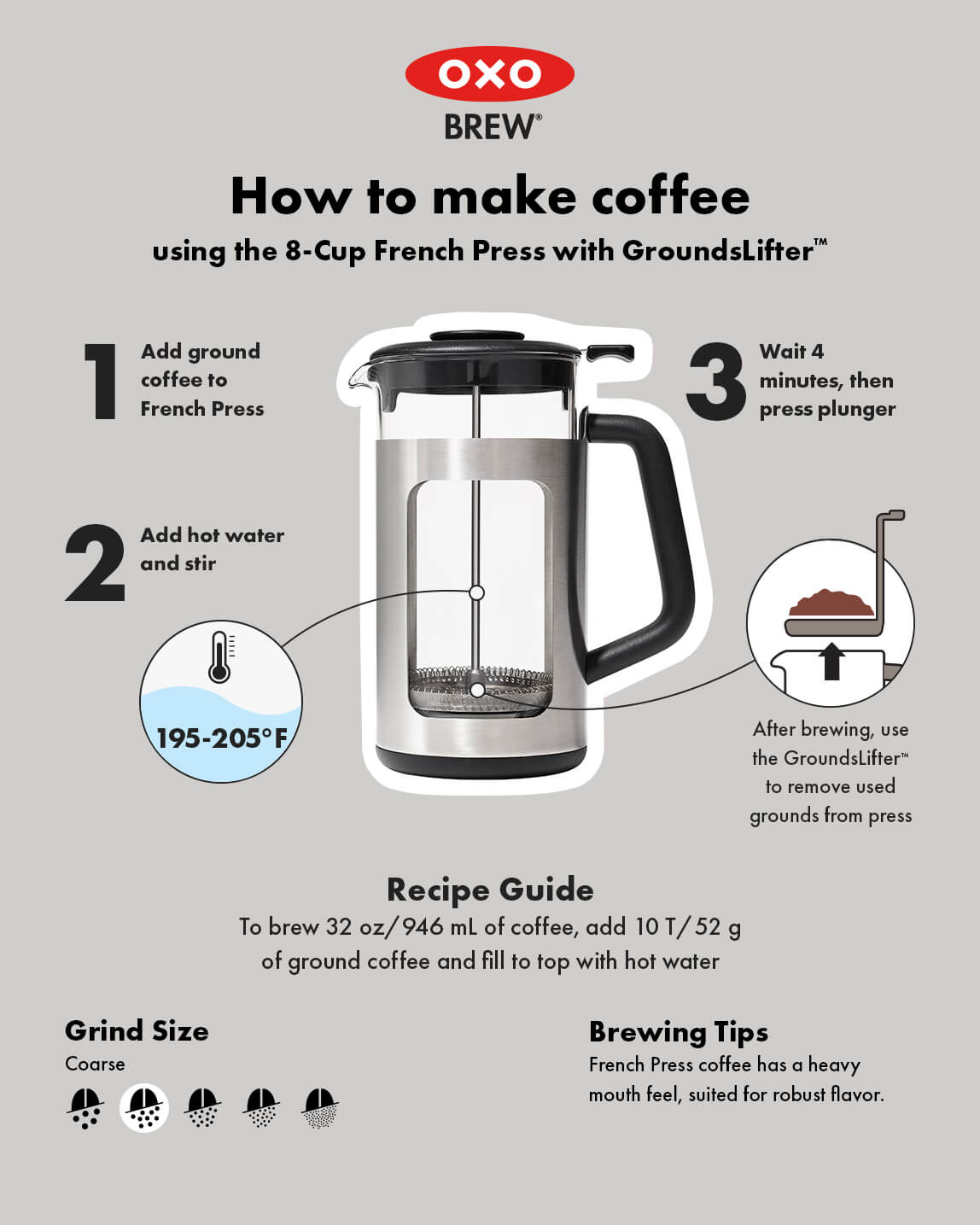
The ideal ratio is usually 1:15—one part coffee to 15 parts water by weight. For a classic 8-cup (34 oz/1 liter) French press, use about 56 grams (8 tablespoons) of coffee and 900 ml (30 oz) of water. If you don’t have a scale, a heaping tablespoon per 4 oz cup works as a basic guide.
2. Grind The Coffee Beans
French press coffee needs a coarse, even grind—about the size of breadcrumbs. Too fine and the coffee will taste bitter and be hard to press; too coarse and it will taste weak.
| Grind Size | Texture | Best For |
|---|---|---|
| Coarse | Bread crumbs | French press |
| Medium | Sand | Drip coffee |
| Fine | Table salt | Espresso |
Non-obvious tip: Grinding just before brewing keeps the coffee fresher and prevents a “stale” taste.
3. Heat Your Water
Heat water to 200°F (93°C), just below boiling. If you don’t have a thermometer, boil the water and let it rest for 30 seconds. Too hot or too cold water can ruin the flavor.
4. Add Coffee Grounds To The French Press
Pour the ground coffee into the empty press. Level the grounds gently to ensure even extraction.
5. Start Brewing: Add Water
Pour half the hot water over the grounds, making sure all are wet. Let it rest 30 seconds. This is called blooming. It releases carbon dioxide and improves taste.
After blooming, pour the rest of the water in a slow, steady stream.
6. Stir And Place The Lid
Stir gently with a non-metal spoon to mix the grounds. Place the plunger on top but do not press down yet—this helps keep in the heat.
7. Steep For 4 Minutes
Set your timer for 4 minutes. This is the most common brew time. For a stronger cup, try 5 minutes; for lighter, 3 minutes.
Advanced tip: If you notice muddy or bitter coffee, try stirring right after pouring the water and again at the 1-minute mark.
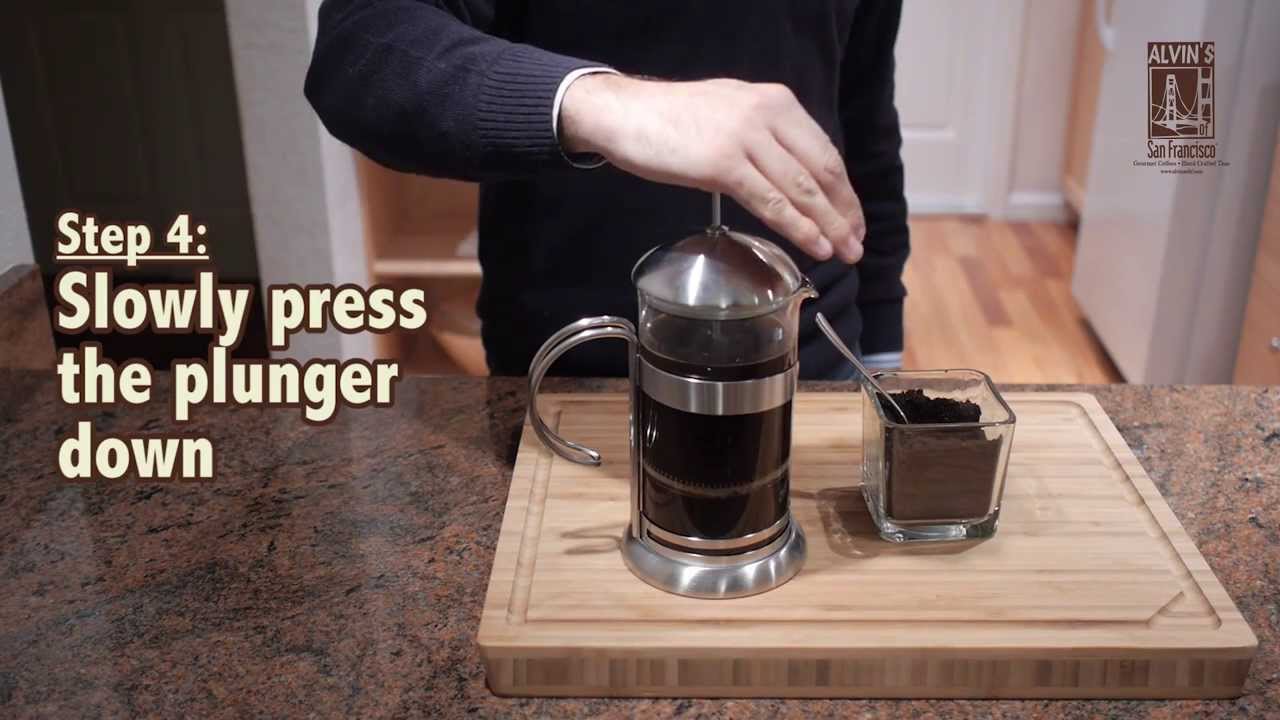
8. Press The Plunger Slowly
After the time is up, press the plunger down slowly and steadily. If you press too fast, grounds can escape into the coffee or the press may spill.
9. Serve And Enjoy
Pour the coffee into cups right away. Don’t let the coffee sit in the press—it will keep brewing and may become bitter.
Cleaning Your French Press
Cleaning is important for taste and longevity. After brewing:
- Dump the grounds into the trash or compost.
- Rinse all parts with warm water.
- Use mild soap if oils build up.
Some French presses are dishwasher-safe, but always check your model’s instructions.
Common Mistakes And How To Avoid Them
Many beginners make similar errors. Here’s how to avoid them:
- Too fine grind: Makes pressing difficult and coffee bitter.
- Leaving coffee in the press: Causes over-extraction and bitterness.
- Not measuring: Guessing leads to inconsistent results.
- Skipping cleaning: Old oils and grounds ruin the flavor.
- Using boiling water: Scorches the grounds, creating a burnt taste.
Comparing French Press To Other Brewing Methods
French press coffee stands out for its flavor and texture. Here’s a quick comparison:
| Method | Flavor | Body | Ease of Use | Brewing Time |
|---|---|---|---|---|
| French Press | Rich, bold | Full | Easy | 4 min |
| Drip Machine | Clean, mild | Light | Very easy | 5-10 min |
| Espresso | Strong, intense | Very full | Hard | 1 min |
| AeroPress | Clean, bright | Medium | Medium | 2 min |
Non-obvious insight: French press coffee has more “mouthfeel” (the texture in your mouth) because the filter lets more fine particles through. This is why some love it—and some don’t.
Choosing The Right French Press
Not all French presses are the same. Here’s what matters:
- Size: Common options are 12 oz (single), 34 oz (2-4 people), and 51 oz (6-8 people).
- Material: Glass looks elegant but can break. Stainless steel keeps coffee hot longer and is almost unbreakable.
- Filter quality: A tight filter means fewer grounds in your cup.
- Ease of cleaning: Simple designs are best.
Example: Comparing Two Popular French Presses
| Model | Capacity | Material | Heat Retention | Price (USD) |
|---|---|---|---|---|
| Bodum Chambord | 34 oz | Glass, steel | Medium | 30-40 |
| Frieling Stainless Steel | 36 oz | Stainless steel | High | 80-100 |
A stainless-steel model costs more but lasts longer and keeps your coffee hot.

Credit: www.youtube.com
Tips For Better French Press Coffee
- Use fresh beans: Coffee loses flavor quickly. Grind just before brewing.
- Try filtered water: Minerals in tap water can change the taste.
- Preheat the press: Pour hot water in, swirl, and pour out before brewing. It helps keep your coffee hot.
- Experiment with timing: Adjust steeping time for your taste.
- Stir gently: Too much stirring can break up grounds and make the coffee muddy.
Troubleshooting: Fixing Common Problems
If your French press coffee tastes off, try these solutions:
- Too bitter: Use coarser grounds, less brew time, or cooler water.
- Too weak: Use more coffee, finer grind, or longer brew time.
- Too many grounds in cup: Check the filter for gaps or replace if worn.
- Coffee cools too fast: Use a stainless steel press or preheat with hot water.
Credit: www.youtube.com
Is French Press Coffee Healthy?
French press coffee contains more cafestol, a natural oil that can raise cholesterol if you drink large amounts daily. For most people, moderate consumption is safe. If cholesterol is a concern, discuss with your doctor or use a paper filter.
For more on coffee and health, you can visit the Harvard T.H. Chan School of Public Health.
Frequently Asked Questions
How Much Coffee Should I Use In My French Press?
A common ratio is 1:15—one part coffee to 15 parts water by weight. For a 34 oz press, that’s about 8 tablespoons (56 grams) of coffee.
Can I Use Regular Pre-ground Coffee?
Yes, but most pre-ground coffee is too fine. It can slip through the filter and make the coffee gritty. For best results, buy whole beans and grind them coarsely just before brewing.
Why Does My French Press Coffee Taste Bitter?
Bitterness usually comes from too fine a grind, too long a brew time, or water that is too hot. Try using coarser grounds, a shorter brew time, or letting boiled water cool for 30 seconds before pouring.
How Do I Keep My French Press Coffee Hot Longer?
Preheat your French press with hot water before brewing and use a stainless steel press. Pour coffee into a thermal carafe right after brewing if you’re not drinking it all at once.
Is French Press Coffee Stronger Than Drip Coffee?
French press coffee often tastes stronger because more oils and fine particles get into the cup. However, the actual caffeine content is similar if you use the same amount of coffee and water.
A French press is a simple, satisfying way to brew rich, flavorful coffee at home. With a few key steps and attention to detail, you can enjoy a great cup every morning. Try adjusting the grind, brew time, and ratio to match your taste—and soon, you’ll have your own perfect routine.
Credit: www.oxo.com