Skip to content
Vacuum sealing is a clever way to keep food fresh, save space in your freezer, and make meal prep easier. But when it comes to soups, it’s easy to make a mess. Soup is liquid, and vacuum sealing machines pull air out fast—if you don’t use the right method, you’ll end up with spills or ruined bags.
Whether you want to store homemade chicken noodle soup or a creamy vegetable blend, learning how to vacuum seal soups without spilling is a skill worth mastering. This guide will show you practical steps, common mistakes, and some tips that even many experienced cooks miss.
Why Vacuum Seal Soups?
Vacuum sealing removes air from the bag, which helps prevent freezer burn and keeps food fresh longer. For soups, this process is especially valuable because:
- It preserves flavor and texture.
- It stops ice crystals from forming in the soup.
- It makes it easy to stack and store in the freezer.
According to the USDA, vacuum-sealed food can last up to 2-3 times longer in the freezer than food stored in regular containers or bags. If you meal prep or cook in bulk, vacuum sealing can save you money and reduce waste.
The Challenge: Liquids And Vacuum Sealers
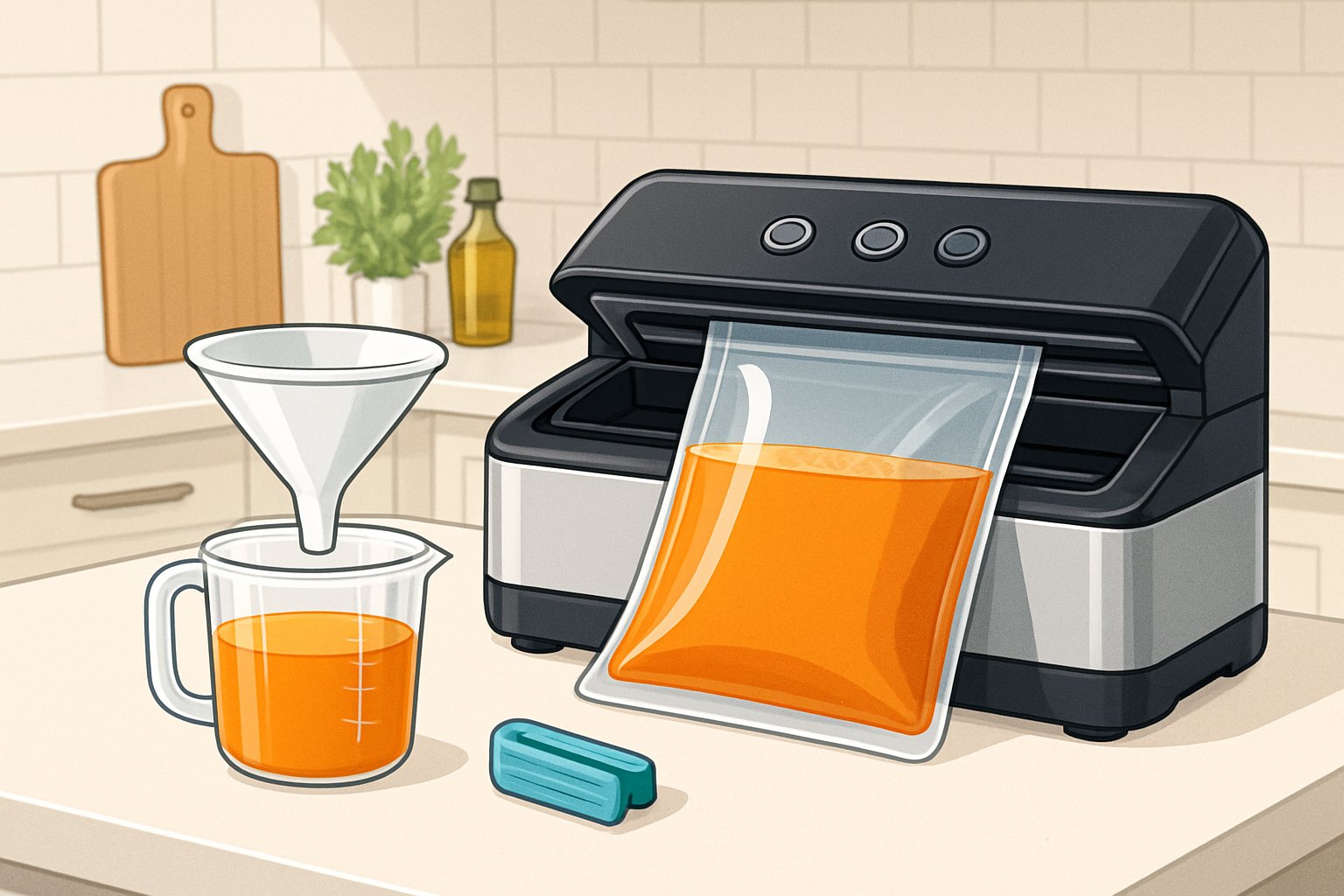
Most vacuum sealers are designed for solids. When you try to vacuum seal soup, the liquid can get pulled toward the machine’s sealing area. This causes spills, weak seals, and sometimes damage to the vacuum sealer. The secret is to prepare the soup and the bag correctly, and use the right method for your machine.
Best Soup Types For Vacuum Sealing
Not all soups behave the same. Some soups are easy to seal; others need extra care. Here’s a quick comparison:
| Soup Type | Sealing Difficulty | Tips |
|---|---|---|
| Broth-based | Moderate | Freeze before sealing |
| Chunky soups | Easy | Seal with chunks on top |
| Creamy soups | Hard | Freeze solid first |
| Pureed soups | Moderate | Freeze or use gentle mode |
Chunky soups (like minestrone or chicken noodle) are easier because you can keep the liquid away from the seal by positioning chunks near the opening. Creamy or pureed soups need to be frozen solid before sealing to avoid spills.
Step-by-step Guide: Vacuum Sealing Soups Without Spilling
1. Cool The Soup Completely
Never try to vacuum seal hot or warm soup. Hot soup creates steam, which interferes with the seal and can even damage your machine. Wait until your soup has cooled to room temperature or lower. If you’re in a hurry, put the soup pot in an ice bath or transfer it to shallow containers to speed up cooling.
2. Portion And Freeze The Soup
This is the biggest secret that many beginners miss: Freeze your soup first. Pour soup into containers or directly into vacuum bags, but don’t seal yet. Stand the bags upright in a tray or container for shape. Place them in the freezer until the soup is firm but not rock-hard (usually 2-4 hours). Freezing prevents liquid from being sucked into the vacuum sealer.
Practical Freezing Tips
- Fill bags only ¾ full to allow for expansion.
- Use bags with a flat bottom so they stand upright.
- Label bags with the soup name and date before freezing.
3. Prepare Vacuum Sealing Bags
Choose high-quality vacuum bags that are made for liquids. Cheap bags often fail and cause leaks. Make sure the bag is clean, dry on the inside near the seal area, and large enough to leave a few inches of space above the soup.
4. Position The Soup In The Bag
Once the soup is frozen, lay the bag flat so the frozen soup stays away from the sealing area. For chunky soups, arrange the solid pieces toward the top to block liquid movement.
5. Use The Right Vacuum Sealing Method
There are three main methods you can use:
Method 1: Standard Vacuum Sealing (for Frozen Soup)
- Place the frozen soup bag in the vacuum sealer.
- Set the machine to gentle mode if available.
- Seal, then check for leaks.
Method 2: “stop-and-seal” Technique
- Start vacuuming.
- When the bag begins to compress, press “Seal” before all air is out. This prevents liquid from reaching the seal.
- Some machines allow manual control; if yours doesn’t, watch closely and stop early.
Method 3: Chamber Vacuum Sealer
If you have a chamber vacuum sealer, you can seal liquids directly. The chamber equalizes pressure inside and outside the bag, so liquids stay put. These machines are expensive but ideal for liquid-heavy foods.
| Sealer Type | Best For | Liquid Handling |
|---|---|---|
| External sealer | Frozen soups | Freeze before sealing |
| Chamber sealer | Fresh or liquid soups | Direct sealing |
6. Double Seal For Extra Protection
After your first seal, move the bag slightly and add a second seal above the first. This is a tip that many home cooks overlook. Double sealing helps prevent leaks and freezer burn.
7. Clean Up And Store
Wipe the outside of the bag to remove any soup residue. Stack bags flat in your freezer for easy access. Vacuum-sealed soup can last 6-12 months in the freezer with taste and texture preserved.

Credit: outofair.com
Tips And Tricks For Success
- If you don’t have a vacuum sealer, use a zip-top bag and the “water displacement” method. Place the bag in water to push air out before sealing.
- For extra thick soups, freeze in muffin tins, then transfer portions to bags for easy meal prep.
- Always leave space at the top of the bag. Overfilling is a common mistake.
- If using a regular vacuum sealer, avoid sealing directly after adding liquid. Freeze, then seal.
- Don’t forget to label bags clearly. Soup looks similar when frozen.
You might find this helpful: Best Vacuum Sealer for Soups
Common Mistakes And How To Avoid Them
Many people struggle with vacuum sealing soup because they:
- Try to seal soup while it’s still liquid. This is the top mistake—always freeze first.
- Use bags that are too small, leading to spills when sealing.
- Overfill bags, so liquid gets squeezed toward the seal.
- Forget to double seal, risking leaks in the freezer.
- Ignore machine settings—using the wrong mode can pull liquid too quickly.
Avoiding these mistakes will make your vacuum sealing much easier and keep your freezer neat.
Credit: giraffyco.com
Safety And Storage Data
Proper vacuum sealing keeps soup safe and delicious. According to the National Center for Home Food Preservation, vacuum-sealed soup should be stored at 0°F (-18°C) or lower. Most bacteria and mold are stopped at these temperatures. Here’s a quick storage lifespan table:
| Soup Type | Vacuum-Sealed Freezer Life | Flavor Quality |
|---|---|---|
| Vegetable Soup | 8-12 months | Excellent |
| Chicken Soup | 6-10 months | Very Good |
| Creamy Soup | 4-8 months | Good |
| Beef Stew | 8-12 months | Excellent |
Always thaw soup safely, either in the refrigerator overnight or using the microwave on defrost mode.
Non-obvious Insights Most Beginners Miss
- Double sealing isn’t just for protection—it improves flavor retention by keeping air out longer. Many home cooks skip this step, but it makes a big difference.
- Labeling with reheating instructions helps when you’re in a hurry. Write “microwave on low for 5 minutes” or “thaw in fridge overnight” right on the bag.
- For meal prep, freeze soup flat. This saves freezer space and speeds up thawing.
- Chamber vacuum sealers are rare in homes, but some local butcher shops or food supply stores may offer vacuum sealing as a service.
Frequently Asked Questions
How Do I Prevent Soup From Spilling During Vacuum Sealing?
The best way is to freeze the soup before sealing. This keeps the liquid from being sucked toward the seal. Use a gentle mode if your machine has one, and never overfill the bag.
Can I Vacuum Seal Soup That Has Dairy Or Cream?
Yes, but creamy soups should always be frozen solid before sealing. Dairy can separate if frozen too long, so use within 4-8 months for best quality.
What If I Only Have An External Vacuum Sealer, Not A Chamber Sealer?
You can still seal soups. Just freeze the soup in the bag first, then use the standard vacuum sealer. Chamber sealers are ideal for liquids but aren’t necessary for most home cooks.
Is Vacuum Sealing Safe For All Soup Ingredients?
Vacuum sealing is safe for most soups. Avoid vacuum sealing hot soup and always freeze before sealing. Some herbs and spices may lose flavor over time, so consider adding fresh when reheating.
How Long Can Vacuum-sealed Soup Last In The Freezer?
Vacuum-sealed soup can last 6-12 months in the freezer. Creamy soups have a shorter shelf life. Always store at 0°F (-18°C) or colder for safety.
Vacuum sealing soups without spilling is simple if you follow the right steps. Freeze first, use quality bags, and double seal for best results. These methods will keep your soups fresh, your freezer organized, and your meal prep easy. For more tips on food preservation, visit the National Center for Home Food Preservation. With a bit of practice, you’ll enjoy delicious, homemade soup any time—without the mess.