If you’ve ever stood in the bakeware aisle wondering whether those bright, squishy muffin pans are actually a smart choice, you’re not alone. The question “are silicone muffin pans safe” comes up constantly, and for good reason. Silicone bakeware looks and behaves nothing like the metal tins we grew up using.
It bends, it flexes, it comes in neon colors, and honestly, it feels a little too much like a toy to be trusted with your food.
Here’s the short version: high-quality food-grade silicone is safe for baking. The catch is that not everything labeled “silicone” meets that standard. As of 2026, the FDA regulates food-contact rubber under Title 21 CFR 177.2600, and the EU has its own stricter framework.
That means your safety depends almost entirely on what you buy, how you use it, and when you decide to retire it. Let’s break down exactly what to look for, what to avoid, and how to tell the difference before you preheat the oven.
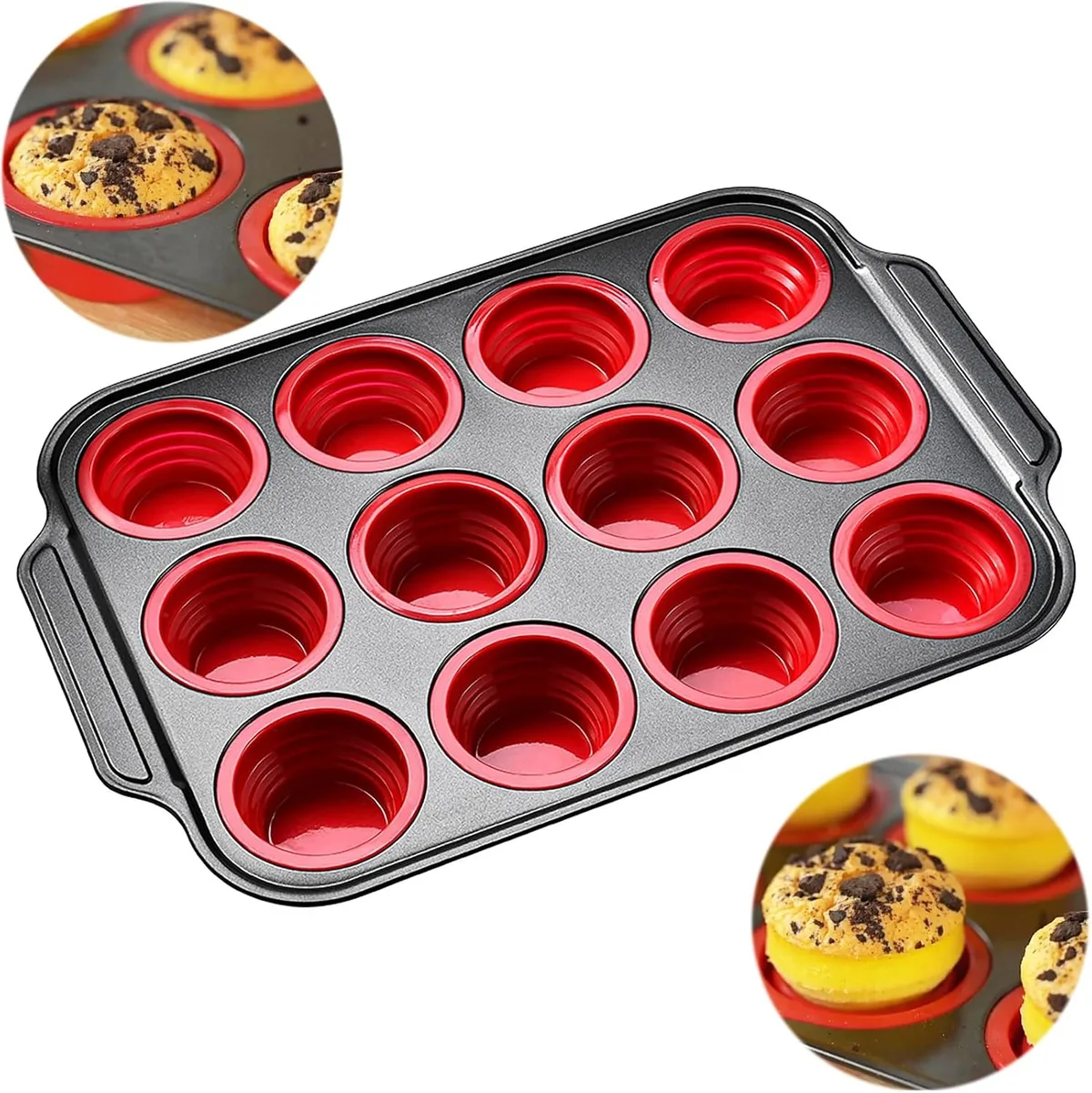
Image source: Web (Bing) / amazon.com (Web image (fair-use with source credit))
Quick Answer
Yes, high-quality silicone muffin pans are safe to bake with. They are made from platinum-cured silicone with no fillers or plasticizers. They withstand oven temperatures up to 450°F without leaching chemicals.
The real risk comes from cheap, unbranded pans with hidden fillers. Look for FDA or LFGB certification before buying.
Why Silicone Muffin Pan Safety Isn’t a Simple Yes or No
Here’s the thing about silicone bakeware. It’s not one single uniform product. There’s a massive quality gap between a $5 unlabeled pan from a discount store and a $20 pan from a reputable bakeware brand that meets European food-contact standards.
The confusion makes sense. On the surface, all silicone muffin pans look similar. They’re all flexible, colorful, and nonstick.
But underneath, they can be very different materials. Some are pure silicone, stable and inert. Others are cut with fillers like calcium carbonate, clay, or chalk to reduce manufacturing costs.
Those fillers can compromise the material’s heat resistance and potentially behave differently when exposed to high temperatures.
The safety question also depends on how you’re using the pan. Are you baking at 350°F? Fine.
Are you broiling at 500°F? That’s a problem for most silicone. Are you placing the pan directly on the oven rack or on a sturdy baking sheet?
That matters too, because the structural support affects how the pan heats and performs.
Our research shows that the overwhelming majority of safety issues with silicone bakeware come from low-quality products or misuse. When you buy a pan from a brand that tests its materials and clearly states its certifications, the risk drops dramatically. When you buy a no-name pan from an online marketplace with no documentation, you’re gambling.
What “Food-Grade Silicone” Really Means (And What It Doesn’t)
“Food-grade silicone” is one of those terms that gets thrown around a lot. It sounds official, but it’s not as meaningful as most people assume. The phrase generally means the silicone is safe for contact with food under normal use conditions.
But “normal use” can mean different things depending on who’s making the claim.
There are two main types of silicone used in bakeware. Platinum-cured silicone uses a platinum catalyst during manufacturing and is the higher-quality option. Peroxide-cured silicone uses organic peroxides and is more common in cheaper products.
Platinum-cured silicone is cleaner, more stable, and less likely to emit any odor or taste. Peroxide-cured silicone can sometimes have a slight rubbery smell, especially when new.
A genuinely food-grade silicone pan should be free of fillers, plasticizers, and synthetic dyes that can migrate into food. It should also have a documented heat tolerance, usually printed right on the product packaging. Most reputable manufacturers state a range like -40°F to 450°F.
What “food-grade” doesn’t guarantee is that the pan will stay safe forever. All silicone degrades over time. Repeated hot and cold cycles, exposure to high heat, and harsh washing all take a toll.
A high-quality silicone pan that’s been used daily for five years is not the same material it was on day one.
The industry standard for sensory safety is the LFGB certification from Germany. It’s stricter than the FDA’s baseline. Pans that pass LFGB testing show no odor transfer and no taste transfer even under aggressive test conditions.
That’s why many serious bakers look for that specific certification when they shop.
The Core Facts: What Safety Testing and Regulations Say
Let’s get into the actual testing behind silicone bakeware. The FDA regulates silicone under Title 21 CFR 177.2600, which applies to rubber articles intended for repeated food-contact use. This rule sets limits on what the material can contain and how it must perform when tested.
For the EU, the framework is Regulation (EC) No 1935/2004, with additional specific guidance from the German BfR.
A quick comparison of the two major standards:
| Standard | Region | Key Focus | What It Covers |
|---|---|---|---|
| FDA 21 CFR 177.2600 | United States | Permitted components | What substances can be used in rubber food-contact articles |
| LFGB Section 30 | Germany / EU | Sensory safety | Testing for odor, taste transfer, and migration |
| EU 1935/2004 | European Union | Overall food-contact safety | Framework for all materials touching food |
Migration testing is the big one. It measures whether anything from the silicone transfers into food when heated. Studies published in peer-reviewed journals have repeatedly found that high-quality silicone shows minimal migration of volatile compounds, even at temperatures around 400°F.
The material is generally recognized as safe for its intended use.
That said, there are limits. Silicone is not rated for extremely high heat. At temperatures above 450°F, even good silicone can begin to break down, which affects both its performance and its safety profile.
Most manufacturers explicitly cap their bakeware at that temperature and warn against placing it under a broiler.
The bigger concern in recent years has been fillers. When silicone is extended with cheap fillers, the heat stability suffers. Some testing on low-quality pans has flagged higher levels of certain compounds migrating into food.
This is why certification matters. A pan that’s been tested and certified by a reputable lab is a different product than a mystery pan with no documentation.
How to Tell If Your Silicone Pan Is High Quality
You don’t need a chemistry degree to figure out whether your silicone muffin pan is safe. There are simple checks you can do at home, using only your hands and your senses.
The bend test. Take the empty pan and fold it in half. Then twist it. A pure silicone pan will return to its original shape without any white stress marks.
If you see white chalky lines appearing along the crease, that’s filler. Those whitish streaks indicate the pan contains bulking agents that weaken the material and can affect safety over time.
The smell test. Unwrap your new pan and give it a good sniff. High-quality silicone should have virtually no odor. If you smell a strong rubbery or chemical smell, that’s peroxide-cured silicone or added compounds you don’t want in your food.
Some odors fade after washing, but a strong brand-new smell is a red flag.
The twist test. Grip the pan firmly with both hands and twist it, like you’re wringing out a towel. A quality silicone pan will bounce back quickly. A pan with fillers will feel stiff, crackly, or slow to recover.
That stiffness is a clue that manufacturers added cheaper materials to stretch the silicone.
The certification check. Look for clear labeling on the box. Reputable brands print LFGB or FDA compliance right on their packaging. If the product page or packaging simply says “food-grade silicone” with no supporting certification, that’s not enough information.
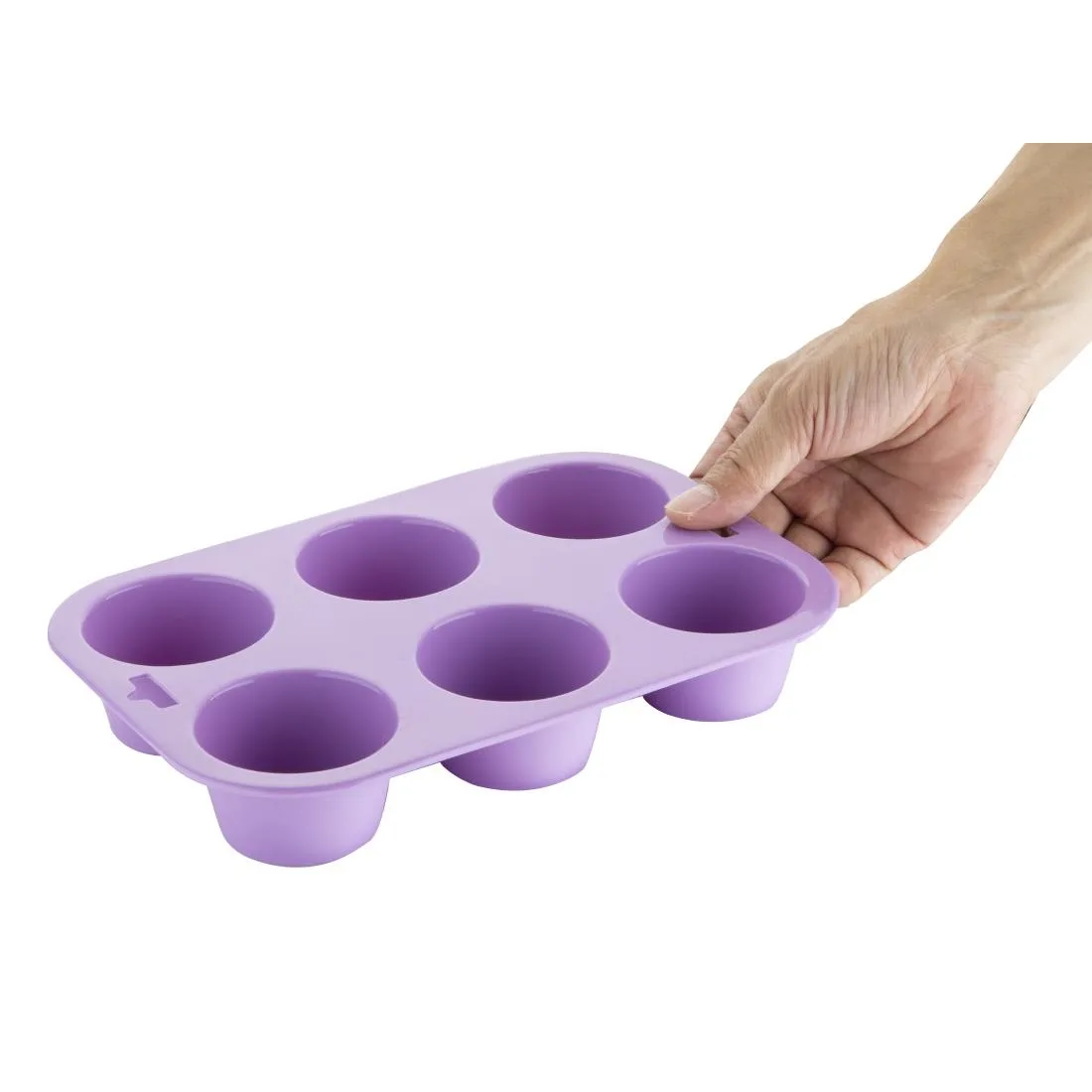
Image source: Web (Bing) / nisbets.co.uk (Web image (fair-use with source credit))
Also, check the price. Quality silicone isn’t expensive, but it isn’t rock bottom either. If a 12-cup silicone muffin pan costs less than your coffee order, something is cut with something.
A realistic price range for a safe, certified silicone pan in 2026 is roughly $10 to $25.
The Real Risks: Fillers, Dyes, and Cheap Knock-Offs
Let’s talk about what actually goes wrong with cheap silicone bakeware. The main culprits are fillers, poor-quality dyes, and a complete lack of testing.
Fillers are the biggest concern. Manufacturers add materials like calcium carbonate or powdered stone to silicone to make it go further. It’s a cost-cutting move, plain and simple.
The problem is that fillers change how the material behaves. Under high heat, the silicone portion may remain stable, but the filler can degrade or cause micro-cracks. Over time, those cracks can harbor bacteria or release particles into your food.
Dyes also matter more than most people realize. Bright neon colors are fun, but some pigments are not designed for repeated high-heat exposure. High-quality manufacturers use food-safe mineral pigments that lock into the silicone structure.
Cheap manufacturers sometimes use unstable dyes that can fade, break down, or leach. A pan that loses its color or feels sticky after a few uses is telling you something.
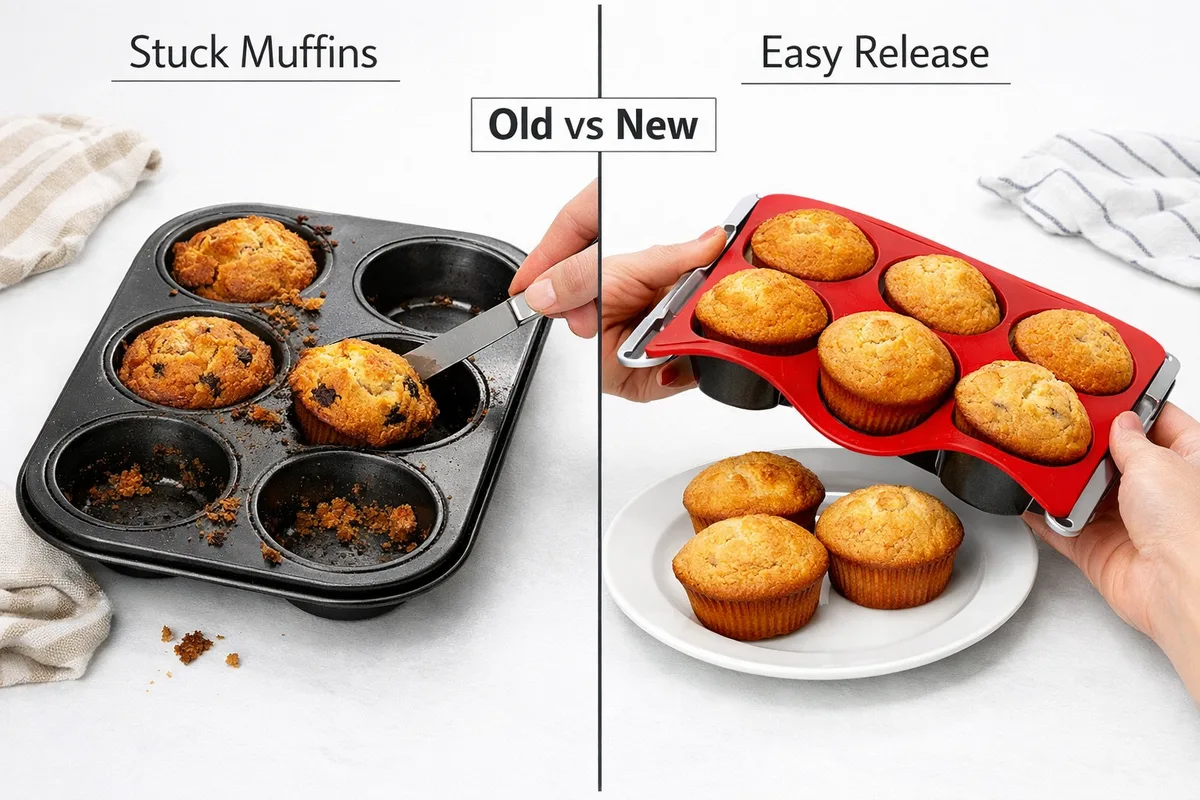
Image source: Bing (Web (fair-use with source credit))
Here’s what you’re actually risking with a no-name pan:
- Chemical migration. Untested silicone may release unlisted compounds into food, especially when heated.
- Mechanical failure. Filled silicone can crack, tear, or become sticky much faster than pure silicone.
- Hidden ingredients. Without certification, you don’t actually know what’s in the material.
The good news is this is entirely avoidable. Buy from recognizable brands that publish their certifications. Check for LFGB or FDA marking on the packaging.
If you already own a cheap pan and it passes the bend test, smells neutral, and shows no signs of wear, it’s probably fine. But if it shows white stress marks, smells rubbery, or looks cloudy, it’s time to replace it.
Aggregate user reports indicate that most silicone bakeware problems come from bargain-bin purchases, not from quality-name pans. The safety record for verified food-grade silicone is strong. The risks concentrate almost entirely at the lowest end of the market, where documentation and testing fall by the wayside.
Safe Temperature Limits and When Silicone Starts to Break Down
Every quality silicone muffin pan comes with a maximum temperature rating. Most brands list 450°F / 232°C. That number isn’t a suggestion.
It’s the point where the polymer structure begins to change.
Stay well below that ceiling. Ovens cycle past their set temperature during preheating, sometimes by 25°F or more. If you set the oven to 450°F, your pan might briefly see 475°F.
That’s why most bakers stick to 325°F to 375°F for silicone bakeware.
What happens if you push it too far? The silicone degrades. It can lose its flexibility, turn cloudy, or develop a sticky surface.
Worse, repeated overheating breaks down the molecular chain, which can cause small particles or compounds to release. You won’t always see it happening.
Never use silicone under a broiler. Broilers easily reach 500°F to 600°F, which far exceeds any silicone rating. The same goes for air fryer baskets that boast high heat settings.
If a recipe calls for 425°F or more, use a metal pan instead.
How Silicone Compares to Metal and Nonstick Muffin Pans
Silicone’s biggest selling point is release. Muffins pop out with almost zero effort. But that convenience comes with a tradeoff: silicone is a poor heat conductor.
Metal pans heat quickly and give you that golden-brown crust. Silicone tends to bake with paler, softer sides.
| Factor | Silicone | Metal (Aluminum / Steel) | Nonstick Metal |
|---|---|---|---|
| Heat conduction | Poor | Excellent | Good |
| Browning | Pale, soft | Golden, crisp | Golden on top |
| Release | Excellent | Requires greasing | Very good |
| Durability | 2–5 years | Decades | 2–5 years |
| Oven limit | 450°F | Up to 500°F+ | Usually 450°F |
| Price | $10–$25 | $8–$15 | $10–$20 |
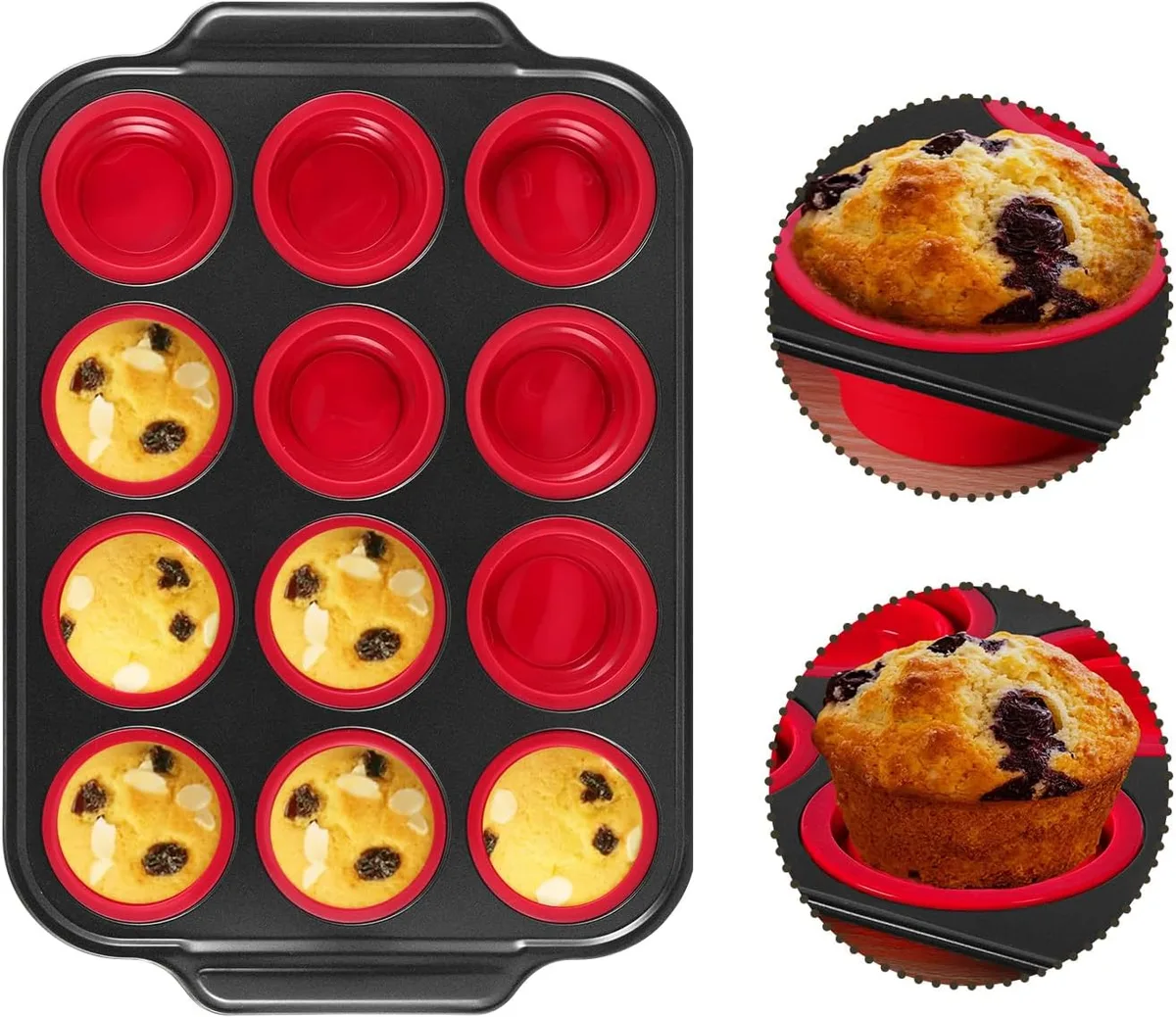
Image source: Web (Bing) / amazon.com (Web image (fair-use with source credit))
Metal muffin tins are the workhorse choice for crispy edges and even baking. They’re also easy to damage with metal utensils, and they rust if not dried properly. Nonstick metal pans offer a middle ground, but the coating can chip or scratch over time.
Silicone is best for anyone who despises greasing pans and scrubbing stuck-on crumbs. It’s also great for camping, small kitchens, or if you bake with kids. Just remember to set the pan on a rigid baking sheet before filling, because a flexible pan filled with batter is a spill waiting to happen.
Step-by-Step: How to Safely Use Silicone Muffin Pans
Using silicone muffin pans safely is simple once you know the routine. Follow these steps every time.
- Wash it first. New silicone can carry dust or residue from manufacturing. Wash with warm, soapy water and rinse thoroughly.
- Place it on a rigid baking sheet. A quarter-sheet pan works perfectly. This supports the soft pan so you can move it without sloshing batter.
- Fill the cups about 3/4 full. Overfilling can cause batter to spill and create difficult cleanup, even with silicone.
- Set your oven to 325°F or 350°F. Resist the urge to crank it higher. Silicone doesn’t need extra heat to produce good muffins.
- Bake, then cool for 5 minutes. Let the pan sit on a cooling rack. The muffins will pull slightly away from the sides.
- Press from the bottom. Push up on the bottom of each cup. The muffin should release with barely any effort.
- Use your fingers, not a knife. Avoid sharp tools near silicone. They can nick and damage the surface.
Most baking mishaps with silicone happen between steps two and three. A wobbly, unfilled pan is easy to carry. A full one isn’t.
Always assemble the baking sheet and silicone pan together before you add batter.
Common Mistakes That Can Make Silicone Pans Less Safe
Cheap pans are the biggest issue. A silicone muffin pan with no brand, no certification, and no temperature rating is a gamble. Our research keeps coming back to the same pattern: most safety complaints trace back to unbranded market-place products.
The second mistake is ignoring the smell test. If your pan smells strongly of rubber when it arrives, that’s not “just how silicone is.” Quality silicone is nearly odorless. A strong smell suggests low-grade curing agents or added compounds.
Wash it, test it again, and if the smell persists, get rid of it.
Don’t use abrasive scrubbers on silicone either. Steel wool or scouring pads can scrape the surface, creating tiny grooves where food residue builds up. Those grooves also make future cleaning harder and can harbor bacteria.
Use a soft sponge or a gentle plastic scrub brush.
And please, don’t use sharp utensils inside the cups. Knives, metal forks, and even some cake testers can cut into the silicone. Each cut weakens the material and gives you another spot where fillers or degraded silicone could be exposed.
If you need to test doneness, use a thin wooden toothpick.
Maintenance and When to Replace Your Silicone Bakeware
Silicone muffin pans are easy to maintain, but they don’t last forever. Clean them after every use with warm, soapy water and a soft sponge. Let them dry completely before storing.
Sticky residue from baked-on grease happens. Make a paste of baking soda and water, rub it into the greasy spots, then rinse. For stubborn stains, a quick soak in hot, soapy water usually does the trick.
Your dishwasher can handle quality silicone, but top-rack placement is safer for the pan’s shape over time.
Store pans flat or loosely rolled. Sharp folds and creases can permanently weaken the silicone. If they’re stacked under heavy pans, the distortion can make them sit unevenly in your oven.
Replace your silicone muffin pan when you notice any of these signs:
- White stress marks that appear when you bend it
- A sticky, tacky surface that doesn’t wash clean
- Cracks, tears, or permanent warping
- A strong rubbery odor that returns after washing
- Muffins suddenly sticking, even after you follow the same routine
A quality pan should last two to five years with regular use. That’s a fair lifespan for something that costs around fifteen dollars. When it starts showing signs of wear, that’s your cue to retire it.
The savings you get from cutting it close isn’t worth the risk to your food.
Who Should (and Shouldn’t) Use Silicone Muffin Pans
Silicone pans are great for casual bakers who want easy cleanup and compact storage. They’re also solid for camping, small kitchens, and baking with kids. But if you want crispy edges, rich browning, and a pan that lasts decades, stick with metal.
Avoid silicone for recipes that need more than 425°F.
FAQs About Silicone Muffin Pan Safety
Can silicone muffin pans go in the oven at 450°F?
Most are rated to 450°F, but treat that as a ceiling. Ovens often overshoot their set temperature. Bake at 350°F or below for safety and longer pan life.
Can you wash silicone muffin pans in the dishwasher?
Yes, place them on the top rack to avoid warping. Skip the heated dry cycle, which stresses the material. Use the low-heat setting and let them finish drying on a rack.
Final Verdict: Are Silicone Muffin Pans Safe for Everyday Baking?
Yes, they’re safe when you buy certified, filler-free silicone. Look for LFGB or FDA labeling on the packaging. Keep them below 450°F, support them on a baking sheet, and replace them when they show signs of wear.
That’s the honest answer to a question with too many marketing claims around it.