Are Wooden Dish Drying Racks Good?
If you’ve ever searched for ways to keep your kitchen organized, you’ve likely seen wooden dish drying racks. These racks are popular for their natural look, but are they actually good? Many people wonder if wood is practical for a wet environment like the kitchen.
This article will help you decide if wooden racks are right for your home. We’ll look at their advantages, challenges, how they compare to other materials, and what you should know before buying one. By the end, you’ll have a clear answer about wooden dish drying racks—without feeling lost in technical terms.
Why Wooden Dish Drying Racks Are Popular
Wooden racks have a special appeal. They look warm and natural in any kitchen. Unlike plastic or metal, wood feels organic and matches many kitchen styles—from classic to modern. Many people like how a wooden rack sits quietly on the counter, not grabbing too much attention.
But the real question is: does this beauty come with practical benefits? Let’s explore what makes wood stand out.
- Eco-friendly: Wood is a renewable material. Many racks use bamboo or hardwoods, which are often grown in sustainable forests. If you care about the environment, wooden racks are a greener choice than plastic.
- Gentle on dishes: Wood is softer than metal. It’s less likely to scratch plates or glasses. This is especially good for delicate items like fine china or wine glasses.
- Stable and sturdy: Quality wooden racks can hold a lot of dishes without wobbling. Some designs fold for easy storage, but they’re still strong when open.
- Quiet and non-slip: Unlike metal racks, wood doesn’t make loud clanking sounds. Plates tend to stay in place, so you don’t have to worry about accidents.
These points explain why many people prefer wooden racks. But popularity doesn’t always mean perfect performance.
Comparing Wooden Racks To Plastic And Metal
Choosing a dish rack isn’t just about looks. You need to think about durability, maintenance, and price. Here’s how wooden racks compare to plastic and metal options.
| Material | Durability | Maintenance | Price Range | Style |
|---|---|---|---|---|
| Wood | Medium (can warp if wet) | Requires drying and oiling | $20-$60 | Natural, warm |
| Plastic | High (resists water) | Easy, just wipe | $10-$40 | Modern, bright |
| Metal | High (if rust-resistant) | Needs regular cleaning | $25-$70 | Industrial, sleek |
Wood looks great, but it can warp if left wet. You need to dry it after use and sometimes oil it to keep the surface smooth. Plastic racks are cheap and water-resistant, but they can break or stain over time. Metal racks are strong, but they may rust if the coating wears off.
Non-obvious insight: Many people forget that wood can absorb smells from the kitchen. If you dry strong-smelling dishes (like garlic or fish), you should clean the rack soon after.
How Long Do Wooden Dish Drying Racks Last?
A big concern is lifespan. Most wood racks last 2-5 years with proper care. Bamboo racks tend to last longer than pine or other softwoods. If you leave a wooden rack in standing water, it may warp or develop mold in just a few months.
Here’s a simple table showing average lifespans:
| Rack Material | Average Lifespan | Care Needed |
|---|---|---|
| Bamboo | 5 years | Dry after use, oil every 6 months |
| Hardwood | 3-4 years | Dry after use, oil yearly |
| Pine/Softwood | 2 years | Dry after use, avoid heavy loads |
If you’re not careful, even a top-quality rack can fail early. Always dry the rack after use, and avoid putting it in the dishwasher.
You might find this helpful: Best Wooden Dish Drying Rack
Practical Benefits Of Wooden Dish Drying Racks
Wooden racks offer some unique benefits beyond their looks.
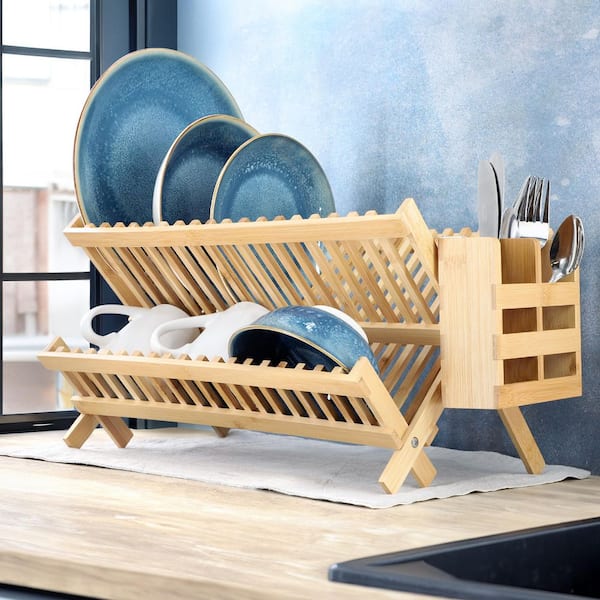
- Space-saving designs: Many wooden racks fold flat. This is great for small kitchens or people who want to store the rack when not in use.
- Customizable: Some brands let you adjust the slots for plates or cups. You can fit different dish sizes easily.
- No sharp edges: Wood is shaped smoothly, so you won’t cut your hands or damage dishes.
- Absorbs minor spills: Wood soaks up small drops, preventing puddles on the counter. But don’t let it stay wet for long.
Hidden tip: Some wooden racks can double as a pot lid holder or even a fruit display. If you’re short on space, this flexibility is useful.
Credit: www.homedepot.com
Problems With Wooden Dish Drying Racks
No product is perfect. Wooden racks have some drawbacks you should know:
- Water damage: The biggest risk is water. If the rack stays wet, it can warp, crack, or grow mold. This happens most often if you leave wet dishes overnight.
- Maintenance: You need to clean and dry the rack regularly. Some racks require oiling to prevent drying out or splitting.
- Staining: Foods like tomato sauce or coffee can stain the wood if spilled.
- Price: Wooden racks are often more expensive than plastic, especially high-quality ones.
Another insight: Many people try to clean wooden racks with harsh chemicals. This can damage the finish and make the wood rough. Use mild soap and water, and dry immediately.
Choosing The Right Wooden Dish Drying Rack
Not all wooden racks are the same. Here’s what to check before buying:
- Type of wood: Bamboo is best for moisture resistance. Hardwoods like oak or maple are strong but heavier. Softwoods are cheaper but less durable.
- Finish: Look for racks with a waterproof coating or natural oil finish. This protects against water and stains.
- Size and slots: Make sure the rack fits your dishes and your counter space. Some racks have large slots for plates, others small slots for cups.
- Foldability: If you have limited space, a folding rack is handy. Check if it locks securely when open.
- Brand reputation: Read reviews. Brands that use sustainable wood and quality finishes tend to offer longer-lasting products.
Common mistake: Many buyers forget to measure their sink or counter before buying. Check the rack’s size carefully to avoid disappointment.
Cleaning And Caring For Wooden Dish Drying Racks
Proper care is key to getting the most from your rack.
- Daily: Wipe the rack with a dry cloth after use. Make sure no water is sitting in the slots.
- Weekly: Clean with mild soap and warm water. Avoid soaking the rack.
- Monthly: Check for stains or rough patches. If needed, sand gently and apply mineral oil.
Don’t put the rack in the dishwasher or leave it outdoors. If you see mold, clean with vinegar and let the rack dry in sunlight.
A tip many people miss: If your rack develops a rough spot, use fine sandpaper to smooth it. This helps keep your dishes safe.
Wooden Dish Drying Racks And Kitchen Style
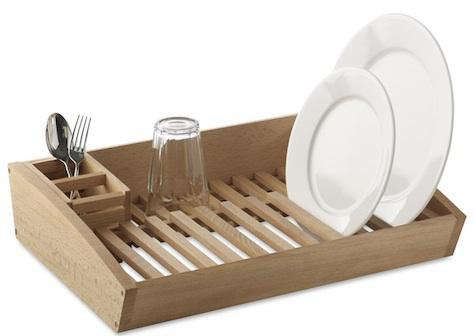
Wooden racks can change the look of your kitchen. They fit well in farmhouse, rustic, or Scandinavian styles. If you have wooden countertops or shelves, a wood rack blends naturally. Even in modern kitchens, a bamboo rack adds warmth.
Some people use wooden racks as more than just drying stations. You can display dishes, organize lids, or even hold towels. This flexibility makes wood a strong choice if you value both style and function.
Credit: www.remodelista.com
Are Wooden Dish Drying Racks Safe?
Yes, wooden racks are safe if used correctly. Wood is naturally antibacterial—especially bamboo. But you must keep the rack clean and dry. If you see mold or smell something strange, clean the rack right away.
Don’t use racks with splinters or cracks. These can trap bacteria or damage dishes. Always check the finish before buying.
Real-life Examples
Many people share positive experiences with wooden racks. For example, a family in Oregon used a bamboo rack for five years without problems, as long as they dried it daily. On the other hand, a student in New York left her rack wet overnight and saw mold in just two weeks.
Data shows that bamboo racks outsell pine racks by 40% in the US, mainly because bamboo is more water-resistant. Brands like Simple Houseware and Royal Craft Wood are highly rated for their durability and style.
If you want more details on the science behind bamboo’s strength and moisture resistance, see this Wikipedia article.
Comparing Popular Wooden Dish Drying Racks
Here’s a comparison of three popular racks:
| Brand | Material | Price | Foldable | Waterproof Finish |
|---|---|---|---|---|
| Simple Houseware | Bamboo | $25 | Yes | Yes |
| Royal Craft Wood | Bamboo | $30 | Yes | Yes |
| Generic Pine Rack | Pine | $15 | No | No |
The best racks use bamboo with a waterproof finish and foldable design. Cheaper racks often skip these features.
Frequently Asked Questions
Are Wooden Dish Drying Racks Hygienic?
Yes, wooden racks can be hygienic if you clean and dry them regularly. Bamboo is naturally antibacterial, but you should avoid leaving water or food particles on the rack. Clean with mild soap and dry after every use.
Will A Wooden Rack Warp Or Crack Over Time?
Wood can warp or crack if exposed to water for long periods. To prevent this, wipe the rack dry after each use and avoid soaking it. Using racks with a waterproof finish also helps.
Can I Use A Wooden Dish Drying Rack Outside?
It’s not recommended. Outdoor use exposes the rack to rain, humidity, and sun, which can quickly damage the wood. Keep wooden racks indoors and away from direct sunlight.
How Do I Remove Stains From A Wooden Rack?
For most stains, use mild soap and water. For tough stains, gently sand the area and apply mineral oil. Avoid harsh chemicals, as they can damage the wood.
Are Wooden Racks Worth The Higher Price?
If you value style, eco-friendliness, and gentle handling of dishes, wooden racks are worth the investment. They require more care than plastic, but last longer if maintained well.
Wooden dish drying racks offer a mix of style, practicality, and eco-friendliness. They need more care than metal or plastic, but reward you with a warm look and gentle touch. If you’re willing to maintain them, wooden racks can be a great addition to your kitchen.
Remember to check the wood type, finish, and design before buying. With proper care, a wooden rack can serve you well for years.

Credit: www.amazon.com