Yes, Pyrex can go in the air fryer — but the answer comes with non-negotiable conditions. If you use the wrong dish, a cracked oven-safe label, or skip the preheating step, you can turn an easy dinner into a dangerous cleanup. The good news is that Pyrex is safe in most air fryers when you treat it the right way. This guide explains exactly how to do that, what temperatures are safe, and which cookware is better for crisping.
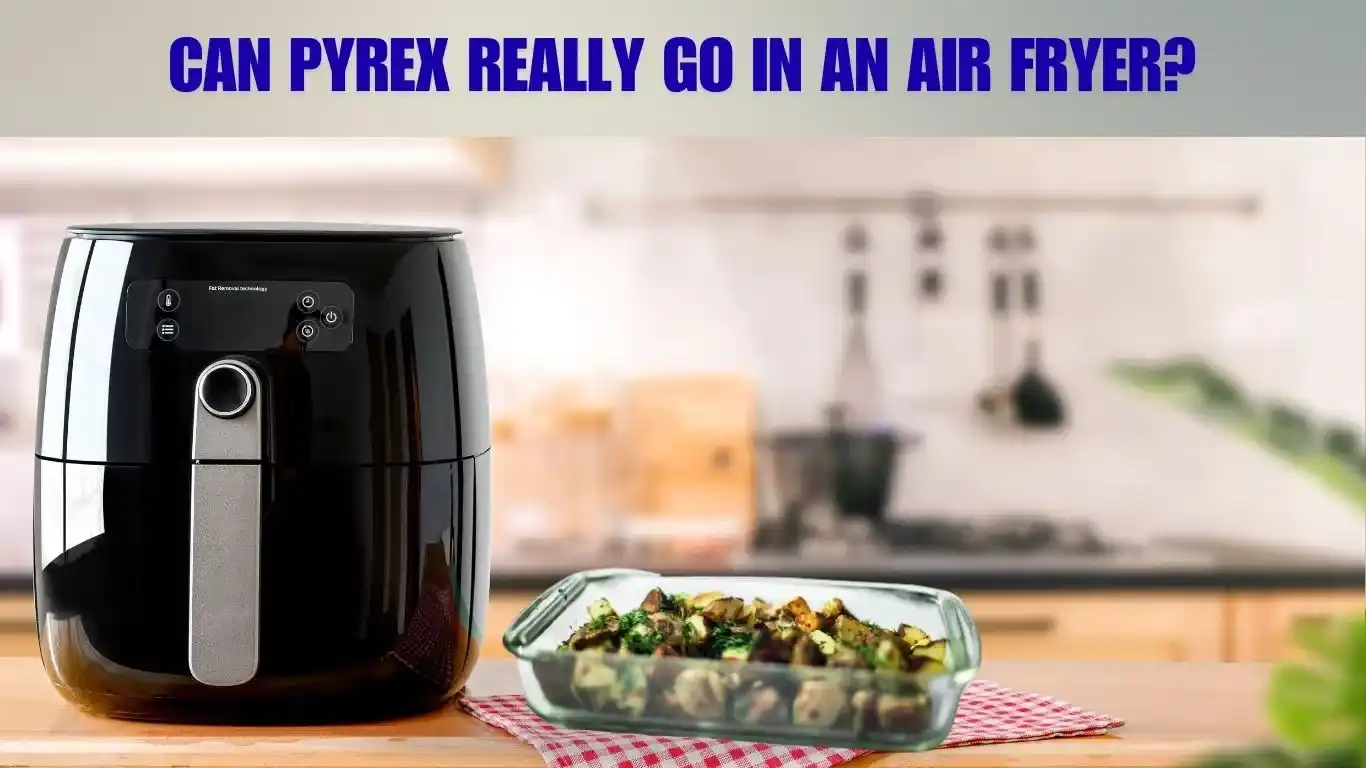
Pyrex is safe in an air fryer only if the dish is oven-safe, at room temperature, and placed in a preheated basket.
Can You Put Pyrex in an Air Fryer? The Short Answer
Yes, with rules. A Pyrex dish can go in an air fryer if it:
- Is marked oven-safe on the bottom.
- Is not chipped, cracked, or scratched.
- Is at room temperature before it enters a hot basket.
- Is used below 425°F (218°C) for US-market Pyrex.
- Leaves enough room around the edges for hot air to move.
If any of those conditions are missing, skip the glass. Use a metal pan or silicone mold instead.
What Makes Pyrex Different From Ordinary Glass
Pyrex is not like a drinking glass. It is engineered to handle heat. But even Pyrex has limits, and the limit depends on which type of Pyrex you own. You can also read our guide on how does an air fryer work without oil.
Two Formulations: Soda-Lime vs. Borosilicate
There are two common types of Pyrex kitchen glass:
| Type | Where it is common | Typical heat rating | Thermal shock resistance |
|---|---|---|---|
| Tempered soda-lime | Most US-market Pyrex | 425°F (218°C) in a preheated oven | Moderate |
| Borosilicate | Most UK/EU Pyrex and older vintage pieces | up to 300°C (572°F) | Higher |
Borosilicate glass expands less when heated, so it resists sudden temperature changes better. Soda-lime glass is cheaper and stronger in some ways, but it is more vulnerable to thermal shock — the kind of shock that happens when a cold dish hits a hot air fryer.
Check the markings on your dish and compare them with Pyrex's official care guidance, because the rules differ depending on where the dish was made. You can also read our guide on can you put foil in an air fryer.
How to Tell Which Pyrex You Own
Look at the base of the dish. Many dishes sold in Europe or the UK say “borosilicate” or list a maximum temperature like 300°C. Most dishes sold in the US simply say “Pyrex” and “oven safe.”
If the label is worn away, or you inherited a dish with no markings, treat it as unknown. Cookware without clear oven-safe instructions does not belong in an air fryer.
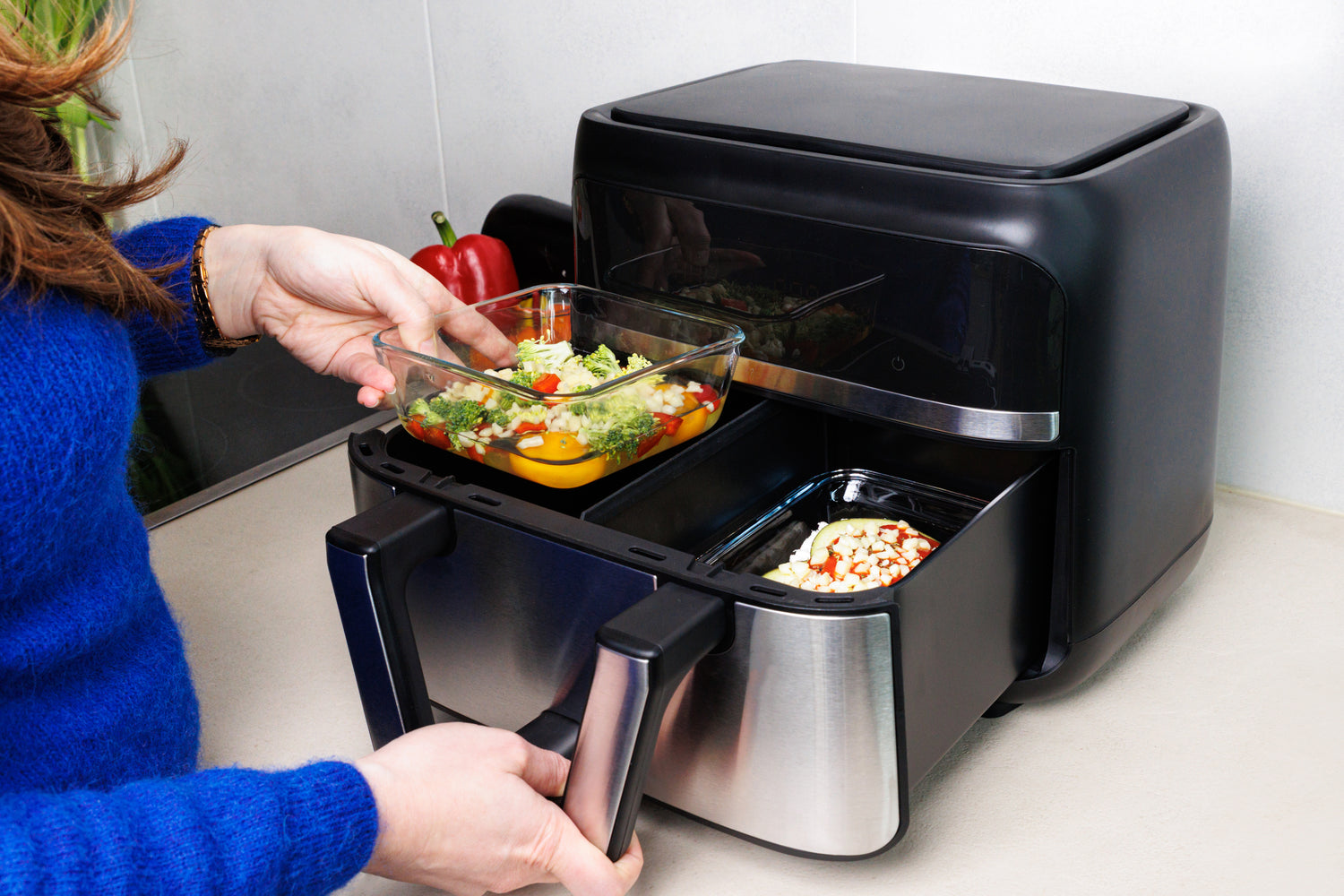
Image source: pyrex.co.uk
European Pyrex is usually borosilicate glass, which handles high heat and rapid temperature swings more easily.
How an Air Fryer's Heat Is Different From an Oven
Understanding the basics of air-fryer cooking helps you see why glass behaves differently in a fan oven than in a conventional oven. You can also read our guide on best bpa free air fryer.
An air fryer is basically a small convection oven. A heating element warms the air, and a powerful fan moves that hot air around the food. This is what creates the crispy surface. It also means the air reaches the dish from several directions at high speed, and the temperature inside can change quickly when the fan cycles on and off.
In a regular oven, heat rises slowly and evenly around the dish. In an air fryer, the dish can be hit by bursts of hot air while the outer edges stay cooler. That uneven heating is what makes thermal shock more likely. You can also read our guide on how to preheat an air fryer.
A common mistake is assuming that if a dish is oven-safe, it is automatically air-fryer-safe. It is usually fine, but you still need to protect the glass from sudden temperature changes and from touching the heating element.
Pyrex Temperature Limits in an Air Fryer
Most home air fryers max out at around 400°F to 450°F (200°C to 230°C). That means the air fryer’s temperature is rarely the problem by itself. The bigger risk is how fast that heat hits the glass.
Here is the practical guidance:
| Glass type | Maximum recommended temperature | Air fryer note |
|---|---|---|
| US Pyrex (tempered soda-lime) | 425°F / 218°C | Keep the setting at 400°F or below when possible |
| UK/EU Pyrex (borosilicate) | 300°C / 572°F | Most air fryers stay well below this limit |
Even with borosilicate glass, do not rely on the maximum rating alone. A room-temperature dish is safe. A straight-from-the-fridge dish is not, no matter how high the glass rating is.
Chips, Cracks, and Old Dishes
Inspect the dish before every use. A chip or tiny crack may look harmless, but it weakens the glass. When the dish heats up, that weak point can expand faster than the rest of the glass and cause a full break.
If you see any damage, do not put the dish in an air fryer, oven, or microwave. Retire it.
The Safest Way to Use Pyrex in an Air Fryer
Follow these steps for a safe and successful cook:
- Confirm the dish is oven-safe. Check the bottom for the words “oven safe” or a temperature rating.
- Inspect the glass. Hold it up to the light and look for cracks, chips, or scratches.
- Let cold dishes warm up. If the dish has been in the fridge or freezer, set it on the counter for 15 to 30 minutes before cooking.
- Preheat the air fryer without the glass inside. Let the empty basket or tray come up to temperature first.
- Place the Pyrex dish in the basket. Make sure the dish fits without touching the heating element and that there is space around all sides.
- Stay below 425°F. For US Pyrex, keep the temperature at 400°F when you can.
- Remove the dish with oven mitts. Set it on a dry trivet or wooden board, not on a cold, wet marble counter.
- Let it cool gradually. Do not run cold water over a hot dish.
If you are using a liner under the dish, confirm it is rated for air-fryer heat. The same caution that applies to foil liners in an air fryer also applies to parchment and silicone liners.
Do's and Don'ts Checklist
| Do | Don't |
|---|---|
| Do use an oven-safe Pyrex dish | Don’t put cold or frozen Pyrex into a hot basket |
| Do preheat the air fryer empty | Don’t preheat the Pyrex dish by itself |
| Do leave room around the dish | Don’t block the air flow |
| Do check for chips and cracks | Don’t use plastic Pyrex lids |
| Do use oven mitts when removing it | Don’t cool the dish on a cold surface |
Never Use These Pyrex Items in an Air Fryer
- Plastic lids. Most Pyrex storage lids are not oven-safe. Always remove them before cooking.
- Damaged glass. Any chip, crack, or scratch increases the chance of shattering.
- Unmarked or non-oven-safe containers. If the dish does not say it is oven-safe, do not assume it is.
- Pyrex measuring cups. Some measuring cups are oven-safe, but many are not meant for dry-air heat. Check the label, and when in doubt, use a different dish.
Better Alternatives to Pyrex in an Air Fryer
Pyrex is excellent for casseroles and bakes, but it is not the only option. Each cookware material has trade-offs.
| Material | Best for | Watch out for |
|---|---|---|
| Metal pans | Crisping, roasting, high heat | Gets very hot; always use mitts |
| Silicone molds | Muffins, eggs, small cakes | Lowers crispness; check heat rating |
| Oven-safe ceramic or stoneware | Casseroles, pot pies | Heavy; can crack if damaged |
| Disposable foil pans | Easy cleanup, one-off cooks | Thin; can leak or bend |
Metal pans generally give the crispiest results because they conduct heat faster than glass. Silicone is flexible and non-stick but less likely to brown the bottom of food. Pyrex is still the best choice when you want to watch food brown through the glass while it bakes.
If your current air fryer basket is too small for a standard Pyrex dish, a small countertop model might give you more room and better clearance for glass cookware.
Common Mistakes That Crack Glass in an Air Fryer
These are the mistakes that cause the most problems in real kitchens:
- Moving a dish from the fridge straight to the fryer. The sudden heat expands the glass unevenly and causes cracks.
- Preheating the Pyrex dish inside the air fryer. The glass heats too quickly without food absorbing some of that heat.
- Setting the temperature above the glass limit. For US Pyrex, that limit is 425°F.
- Using the plastic lid. Plastic can melt, warp, and release smoke.
- Filling the basket too full. If the dish blocks the air flow, the glass and the food cook unevenly.
- Placing the dish too close to the heating element. Direct radiant heat is much harder on glass than circulating hot air.
- Letting hot Pyrex touch acold, wet surface. Glass expands as it heats, and sudden contraction on a cold countertop can cause a violent crack. Set the dish down on a dry wooden board or trivet instead.
How to Check If Your Pyrex Is Oven‑Safe
Most Pyrex dishes have the answer stamped directly on the underside of the base. Look for one of these phrases:
- “Oven safe”
- “Suitable for oven up to 425°F”
- “Borosilicate” (for European models)
- A symbol with a stylised oven icon
If the stamp is faded or missing, do not guess. Contact the manufacturer through their website with the model number printed on the glass, or retire the dish for storage and reheating only.
Also check the lids. The glass base may be oven-safe, but many snap-on plastic lids are not. Always remove the lid before cooking.
The Best Dishes to Make With Pyrex in an Air Fryer
Pyrex is a great fit for recipes that benefit from gentle, even heat rather than intense direct air. When the biggest risk is thermal shock, choose dishes with a little liquid — the moisture helps the glass heat more evenly.
| Recipe type | Why Pyrex works | Suggested temp |
|---|---|---|
| Baked oatmeal or breakfast bakes | Liquid base absorbs heat steadily | 350°F / 175°C |
| Mac and cheese, casseroles | Moist, even cooking | 375°F / 190°C |
| Cornbread | Browned edges without burning | 350°F / 175°C |
| Egg frittatas | Gentle heat and easy removal | 330°F / 165°C |
You can also brown and crisp already‑cooked ingredients like barbecue-glazed chicken thighs in a Pyrex dish — just keep the temperature moderate. For a fan favourite, try baking cornbread in the basket with a small Pyrex round; the glass shows you when the bottom turns golden.
For recipes with a lot of fat or sugary glaze, consider how high-fat foods can create smoke and adjust the temperature accordingly.
After Cooking: Cooling and Cleaning Your Pyrex
How you treat the dish after cooking matters just as much as how you heat it.
- Let the dish cool on the counter. Do not place it on a wet towel, a cold sink, or a metal tray.
- Wait at least 10–15 minutes before washing, even if you are in a hurry.
- Use warm, soapy water. Let the dish soak for tough residue. Avoid running cold water directly onto a hot dish.
- Skip abrasive scouring pads. They create micro-scratches that weaken the glass over time.
A well-cared-for Pyrex dish will last for years. A neglected one may break without warning.
Is Pyrex Healthy for Air-Fryer Cooking?
Glass does not leach chemicals into food, and it does not react with acidic ingredients like tomatoes or citrus. That makes Pyrex an excellent choice for most baked dishes. If you are preparing meals for someone managing blood sugar, a glass dish lets you bake vegetables and lean proteins without added oils — a style of cooking that many find helpful for diabetic-friendly air frying. Just keep the fat content moderate to avoid excess smoke.
When to Use a Different Dish
Even with all the safety checks, some situations call for different cookware:
- High-temperature crisping above 425°F. Use a metal pan.
- Quick reheating of frozen food. Use the metal basket directly.
- Very large batches. Glass stays cooler at the centre; a metal tray browns faster on top.
- If your air fryer is small and space is tight. Glass needs more clearance from the heating element than metal does.
When in doubt, a lighter metal pan is always the safest choice for high heat.
Final Verdict: Can Pyrex Go in the Air Fryer Safely?
Yes, Pyrex can go in the air fryer safely — if you follow the guidelines in this article. The important conditions are:
- The dish says “oven safe.”
- The glass is undamaged.
- The dish is at room temperature before cooking.
- You preheat the air fryer while the dish is outside.
- You stay at or below 425°F (218°C) for US-market Pyrex.
- You never place the dish directly on the heating element.
Follow those rules and you can use your Pyrex dishes for casseroles, bakes, and reheated sides without worrying about a shattered surprise.
FAQs: Pyrex in the Air Fryer
Can Pyrex be used in an air fryer?
Yes, if the dish is marked oven-safe, is at room temperature, and is placed in a preheated air fryer at or below 425°F (218°C).
What happens if you put cold Pyrex in a hot air fryer?
The sudden temperature difference can cause the glass to crack or shatter from thermal shock. Always allow cold dishes to sit out for 15–30 minutes before cooking.
Can I preheat the Pyrex dish inside the air fryer?
No. Preheating the empty glass dish exposes it to rapid, uneven heat and raises the risk of breakage. Preheat the empty basket, then add the dish with the food inside.
How long can Pyrex stay in an air fryer?
There is no time limit, only temperature and handling limits. You can bake a casserole for 30–45 minutes at 350°F as long as the glass is undamaged and the dish fits with clearance.
Are Pyrex lids oven-safe?
Most Pyrex plastic lids are not. Remove the lid before cooking in an air fryer. Some newer glass lids are oven-safe, but check the label first.
What can I use instead of Pyrex in an air fryer?
Metal pans work best for crisping, silicone molds work well for muffins and eggs, and oven-safe ceramic or stoneware is also an option. Each material has a different heat tolerance.
Try a small Pyrex bake next time you use your air fryer and see how evenly it cooks your favourite casserole recipe. Once you master the temperature control, it is a reliable tool for many dishes beyond the standard basket.