Everyday, many people ask themselves: Can you cook frozen food in the oven? Life is busy, and frozen meals, vegetables, or snacks are quick answers. But is it safe? Is it tasty? Will your oven do the job well? Many are unsure, and mistakes can lead to uneven cooking, soggy meals, or even food that is unsafe to eat. This article will answer all your questions about cooking frozen food in the oven. You’ll learn about safety, cooking times, best practices, common errors, and even get some practical data. Whether you’re a student, a parent, or someone new to cooking, you’ll find clear guidance and helpful tips to make your next oven-cooked frozen meal better and safer.
Why Cook Frozen Food In The Oven?
Frozen food is popular because it saves time, reduces waste, and helps you plan meals ahead. Ovens are found in almost every home and are easy to use. When you cook frozen food in the oven:
- You skip thawing, saving time.
- You get crispy textures, which microwaves cannot do.
- You avoid extra oil, making meals healthier.
For example, oven-baked frozen French fries are crispier than those microwaved. Many frozen foods are designed to go straight from the freezer to the oven. This includes pizza, fish sticks, chicken nuggets, and vegetable mixes. The oven’s dry heat works well for these items.
Is It Safe To Cook Frozen Food In The Oven?
Safety is the top concern. The good news: Yes, it is safe—if you follow some simple rules.
Food Safety Basics
Frozen food must reach a safe temperature inside. The USDA recommends:
- 165°F (74°C) for poultry or mixed dishes.
- 145°F (63°C) for fish and beef.
- 140°F (60°C) for vegetables.
If you cook from frozen, the outside may look done while the inside is still cold. Always check the thickest part with a food thermometer.
Avoiding Bacterial Growth
Thawing food at room temperature before cooking is risky. Bacteria can grow quickly between 40°F and 140°F (the “danger zone”). Cooking straight from frozen avoids this risk.
Manufacturer Instructions
Most packaged frozen foods have clear oven instructions. These are tested for safety. Always follow them if available.
Common Myths
Some believe frozen food cannot cook evenly in the oven. While it takes longer, modern ovens and improved packaging mean most foods cook well if you follow instructions.
Types Of Frozen Food You Can Cook In The Oven
Not all frozen foods are equal. Some are perfect for oven cooking, others not so much. Here are some examples:
- Frozen pizza – Designed for ovens, gets a crispy crust.
- Breaded chicken – Nuggets, tenders, patties; oven makes them crunchy.
- Fish sticks – Oven keeps them firm and crisp.
- French fries and potato products – Oven gives them golden color.
- Frozen vegetables – Roasted vegetables develop flavor and texture.
- Lasagna and casseroles – Ovens cook them evenly.
- Frozen pastries – Croissants, pies, turnovers.
- Meatballs and burger patties – Oven browns them nicely.
- Frozen appetizers – Spring rolls, samosas, mozzarella sticks.
- Frozen seafood – Shrimp, fish fillets.
Some items, like soups or stews, don’t work well in the oven. They need moist heat, so stovetop or microwave is better.
How To Cook Frozen Food In The Oven: Step-by-step
Cooking frozen food in the oven is simple, but a few details matter. Here’s a step-by-step guide for best results.
1. Preheat Your Oven
Always preheat. Frozen food needs steady heat from the start. Most ovens take 10–15 minutes to reach the set temperature.
2. Choose The Right Temperature
Most frozen foods cook at 375°F to 425°F. Check packaging for exact temperature. If you don’t have instructions:
- Pizza, fries, breaded items: 400°F
- Vegetables: 375°F
- Pastries: 375–400°F
3. Arrange Food Properly
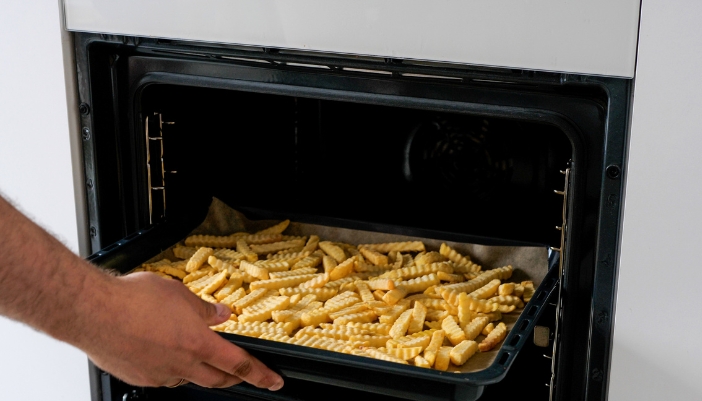
Spread food in a single layer. If items touch or overlap, they may not cook evenly. Use a baking sheet or oven-safe dish.
4. Use Parchment Paper Or Foil
For items like fries or fish sticks, parchment paper prevents sticking. Foil can speed up browning, but use it wisely. Don’t cover food completely unless instructions say so.
5. Adjust Cooking Time
Frozen food takes longer than fresh. Add 5–10 minutes to the suggested time if you’re unsure. Check halfway and flip or stir if needed.
6. Check For Doneness
Use a food thermometer for meats. For pizza or pastries, look for golden color and bubbling cheese or filling.
7. Let It Rest
After cooking, let food sit for a few minutes. The heat inside will finish cooking and juices will settle.
Oven Cooking Example
Let’s look at frozen chicken nuggets:
- Preheat oven to 400°F.
- Place nuggets in a single layer on a baking sheet.
- Bake for 20–25 minutes, turning halfway.
- Check internal temperature: 165°F minimum.
Credit: www.heinsappliance.com
Cooking Times For Common Frozen Foods
Cooking times depend on oven, food type, and thickness. Here’s a useful comparison table:
| Frozen Food | Oven Temp | Time (min) | Flip/Turn? |
|---|---|---|---|
| Pizza | 425°F | 15–25 | No |
| Chicken Nuggets | 400°F | 20–25 | Yes |
| Fish Sticks | 400°F | 15–20 | Yes |
| French Fries | 425°F | 20–30 | Yes |
| Vegetables | 375°F | 20–25 | Stir |
| Lasagna | 375°F | 60–90 | No |
| Pastries | 375–400°F | 18–25 | No |
These times are for standard ovens. Convection ovens may cook faster; check your manual.
Benefits Of Cooking Frozen Food In The Oven
Why choose the oven instead of a microwave or stovetop? Here are the main benefits:
- Crispy texture: Ovens give foods a crunchy crust.
- Even cooking: Heat surrounds the food, cooking it uniformly.
- Large batch cooking: You can cook more food at once.
- Less oil: Most oven recipes need little or no oil.
- Better flavor: Roasting brings out natural flavors.
For example, oven-roasted frozen vegetables develop caramelized edges and richer taste. Microwaves leave them soft or watery.
Common Mistakes When Cooking Frozen Food In The Oven
Many people make simple errors that ruin their meals. Avoid these:
1. Not Preheating The Oven
Skipping preheat leads to uneven cooking and longer times.
2. Crowding The Tray
Too much food means less airflow, so items steam instead of roast.
3. Ignoring Temperature
Cooking at the wrong temperature changes texture. Too low: soggy. Too high: burnt outside, raw inside.
4. Not Checking Doneness
Some foods look done outside but are cold or unsafe inside. Use a thermometer or check color and texture.
5. Forgetting To Flip Or Stir
Many foods need to be turned halfway for even browning.
6. Using Wrong Cookware
Thin trays heat quickly, thick ones slow down cooking. Use what works for your oven.
7. Not Following Instructions
Packaged frozen foods often have tested oven instructions. Ignoring these leads to poor results.
How Oven Cooking Compares To Other Methods
Let’s compare oven cooking to microwave and stovetop methods:
| Method | Texture | Flavor | Batch Size | Cooking Time | Safety |
|---|---|---|---|---|---|
| Oven | Crispy, golden | Rich, roasted | Large | Medium | High |
| Microwave | Soft, sometimes soggy | Mild | Small | Fast | High |
| Stovetop | Varies (crispy or soft) | Good, but needs oil | Medium | Medium | High |
Oven cooking stands out for texture and batch size. Microwaves are fast, but often produce limp food. Stovetop is flexible, but can be messy and needs more attention.
Tips For Better Oven Cooking With Frozen Food
Want to improve your results? Try these tips:
- Use convection setting if your oven has it. Fans speed up cooking and make food crispier.
- Add seasoning before cooking. Frozen vegetables and fries taste better with salt, pepper, or spices.
- Spray with oil for extra crispiness. A light mist helps browning.
- Space food out. More space means more even cooking.
- Use a rack for breaded foods. Air circulates underneath, making both sides crispy.
- Cover edges of pizza with foil if they cook too fast.
- Let food cool slightly before serving. This improves texture and flavor.
Many beginners forget about seasoning. Most frozen foods are bland. A sprinkle of garlic powder, paprika, or Italian herbs can make a big difference.
Special Considerations For Different Ovens
Every oven is a bit different. Here’s how to adjust:
Conventional Ovens
These cook with heat from top and bottom. They work well for frozen food, but may need longer times.
Convection Ovens
These have a fan that circulates air. Food cooks faster and browns better. Reduce cooking time by 20% or lower temperature by 25°F.
Toaster Ovens
Good for small batches, but not for large meals. They may have hot spots, so watch carefully.
Air Fryer Ovens
Some ovens now have air fryer settings. These are great for fries, nuggets, or snacks. Food gets extra crispy.
How To Test Your Oven
If you’re unsure about your oven’s accuracy, use an oven thermometer. Place it inside and compare to the set temperature. Some ovens run hot or cold, affecting cooking times.
How To Cook Frozen Meat And Fish In The Oven
Meat and fish need special care. Here’s what to do:
Frozen Chicken, Beef, Pork
- Place in a single layer.
- Add 5–10 minutes extra cooking time.
- Check internal temperature: 165°F for chicken, 145°F for beef/pork.
- Cover with foil if browning too quickly.
Frozen Fish
- Place fillets on a lined tray.
- Season lightly.
- Bake at 400°F for 20–25 minutes.
- Check for flakiness and internal temp (145°F).
Example: Cooking Frozen Salmon Fillets
- Preheat oven to 400°F.
- Place fillets on parchment paper.
- Season with salt, pepper, lemon juice.
- Bake for 20–25 minutes.
- Check for opaque color and internal temp.
Can You Cook Homemade Frozen Food In The Oven?
Not all frozen food comes from the store. Homemade frozen meals are easy to cook in the oven if you follow these steps:
- Freeze in oven-safe containers.
- Label with date and contents.
- Do not overfill containers; leave space for expansion.
- For casseroles or lasagna, cook from frozen or thaw overnight in the fridge.
Homemade frozen pizza, bread, or vegetables roast well. You may need to add extra cooking time (10–20% longer) compared to fresh.
How To Prevent Soggy Or Dry Results
Getting the right texture is a challenge. Here’s how to avoid soggy or dry food:
- Do not cover food completely. Steam makes food soft.
- Use oven racks or wire trays for breaded items.
- Do not add extra water. Frozen vegetables release moisture.
- Watch for overcooking. Dry food is usually cooked too long.
- Flip food halfway through cooking.
If you notice your food is always soggy, try increasing oven temperature or spacing items further apart.
Nutrition Facts: Oven Cooking Vs Other Methods
Does oven cooking change nutrition? Not much, but there are differences.
| Method | Fat Added | Calories | Vitamin Loss | Mineral Loss |
|---|---|---|---|---|
| Oven | Low | Medium | Low | Low |
| Microwave | None | Low | Medium | Low |
| Stovetop (fried) | High | High | Low | Medium |
Oven cooking uses less oil than frying, so it’s healthier. Microwaves are gentle but can reduce vitamins in vegetables if overcooked. Stovetop frying adds fat and calories.

Credit: bakingsteel.com
The Science Behind Cooking Frozen Food
When you cook frozen food, the heat must travel through ice crystals before reaching the food. This slows cooking. Ovens use dry heat, so moisture escapes, making food crisp. Microwaves use radiation to excite water molecules, heating food from the inside, but not crisping.
Food scientists say ovens are best for foods that need browning or crusts. For more details, see this Serious Eats article.
Real-life Examples And Insights
Many beginners forget that oven cooking is not just about timing. The position of the tray matters. Use the middle rack for most foods. The top rack cooks faster and browns more, but can burn thin items.
Another insight: Frozen food often improves with a quick spray of oil. Even frozen fries or nuggets crisp up better.
Some foods, like frozen pastries, need to be placed on parchment paper. Otherwise, filling leaks and sticks to the tray.
Credit: www.birdseye.com
When Not To Cook Frozen Food In The Oven
Sometimes, oven cooking is not the best choice:
- Foods needing lots of moisture (soups, stews).
- Items with delicate sauces (may burn).
- Small single servings (microwave is faster).
If you need a quick meal, microwave is faster. For best flavor and texture, oven is usually better.
Final Thoughts: Can You Cook Frozen Food In The Oven?
Yes, you absolutely can cook frozen food in the oven. It’s safe, simple, and often produces the best texture and flavor. Ovens allow you to skip thawing, save time, and cook large batches. Follow the right steps: preheat, space food, use correct temperature, and check doneness. Avoid common mistakes, and you’ll enjoy crispy, tasty meals. Many frozen foods are designed for oven use, and even homemade meals can be frozen and baked later.
Remember to check packaging instructions, use a thermometer for meats, and experiment with seasoning. Oven cooking is a skill anyone can learn, and with these tips, your frozen meals will taste better than ever.
Frequently Asked Questions
Can I Cook All Frozen Foods In The Oven?
No, not all frozen foods are suitable. Foods like soups, stews, or items needing moist heat should be cooked on the stove or microwave. Oven works best for pizza, fries, breaded chicken, vegetables, and casseroles.
Is It Necessary To Thaw Frozen Food Before Oven Cooking?
Usually, no. Most frozen foods can go straight in the oven. Thawing is needed only for large items (like whole chickens) or when instructions specify. Cooking from frozen is safe if you follow temperature guidelines.
How Can I Make Frozen Food Crispier In The Oven?
Use a convection setting, spray lightly with oil, and space food out. Flip or stir halfway through cooking for even browning. Avoid covering food completely, which can make it soggy.
What Is The Best Oven Temperature For Cooking Frozen Food?
Most frozen foods cook well at 375°F to 425°F. Check packaging for exact instructions. If unsure, start with 400°F and adjust time as needed.
How Do I Know If Frozen Food Is Fully Cooked In The Oven?
Check internal temperature with a thermometer: 165°F for poultry, 145°F for fish and beef. Look for golden color, bubbling, and crispy texture. If unsure, cook for a few minutes longer and check again.
Cooking frozen food in the oven is simple, safe, and gives great results. With these guidelines, you can enjoy convenient meals without sacrificing flavor or safety. Experiment, learn, and enjoy your next oven-cooked frozen meal.