Making pasta is a quick, satisfying meal that many people love. But what if you’re in a dorm, office, or hotel room and only have an electric kettle? Is it possible to cook pasta using just this appliance? The answer is yes—though it comes with some limitations and important steps. Let’s explore how you can make pasta in an electric kettle, the pros and cons, and tips for getting the best results.
What Is An Electric Kettle?
An electric kettle is a small appliance designed to boil water fast. Most kettles have a heating element inside and automatic shut-off for safety. They’re popular in homes, dorms, and workplaces for making tea, coffee, or instant noodles. Some people use them for other foods, like eggs or pasta, because they’re convenient and don’t need a stove.
Can You Cook Pasta In An Electric Kettle?
Yes, you can cook many types of pasta in an electric kettle. However, there are some things to keep in mind:
- The kettle must not have exposed heating coils.
- Only dry pasta (not fresh) is recommended.
- You need to watch the kettle closely to prevent overflow or sticking.
- Some shapes cook better than others.
Cooking pasta in a kettle is not as easy as using a pot, but with the right method, it’s possible.
How To Make Pasta In An Electric Kettle
Let’s break down the steps so you can cook pasta in your kettle safely and effectively.
Step 1: Check Your Kettle
First, look inside your kettle. Exposed heating coils can be damaged by pasta or cause burning. If your kettle has a flat bottom (no coils), it’s safer. If you have coils, avoid cooking pasta directly inside—use an alternative method like soaking pasta in hot water.
Step 2: Measure Your Pasta
Most kettles hold between 1 to 1.7 liters of water. Don’t cook too much pasta at once—about 80-100 grams (3–4 ounces) is enough for one serving. This prevents overflow and ensures the pasta cooks evenly.
Step 3: Fill And Boil Water
Pour enough water to cover the pasta, usually about 1 liter. Add a pinch of salt if desired. Turn on the kettle and wait for the water to boil.
Step 4: Add Pasta
Once the water is boiling, add the pasta. Smaller shapes like penne, fusilli, or macaroni are best because they fit easily and cook evenly. Stir gently with a spoon or chopstick to prevent sticking.
Step 5: Keep The Kettle Hot
Most kettles turn off automatically when the water boils. To cook pasta, you’ll need to restart the kettle every few minutes to keep the water hot. Pasta needs 8–12 minutes to cook, depending on the shape.
Step 6: Check For Doneness
Test the pasta after 8 minutes. If it’s soft but still firm (al dente), it’s ready. If not, restart the kettle and cook for a few more minutes. Stir occasionally so the pasta doesn’t clump.
Step 7: Drain And Serve
Carefully pour the water and pasta through a strainer. Avoid burning yourself—kettle water is very hot. Rinse the pasta with cool water if needed. Then add sauce, cheese, or other toppings.
Electric Kettle Vs. Traditional Pot Cooking
Is it better to cook pasta in a kettle or a pot? Here’s a quick comparison:
| Method | Cooking Time | Ease | Flavor | Safety |
|---|---|---|---|---|
| Electric Kettle | 10–15 min | Medium | Good | Watch for overflow |
| Traditional Pot | 8–12 min | Easy | Best | Safer (more control) |
The kettle is slower and less convenient than a pot, but it’s useful when you don’t have access to a stove.
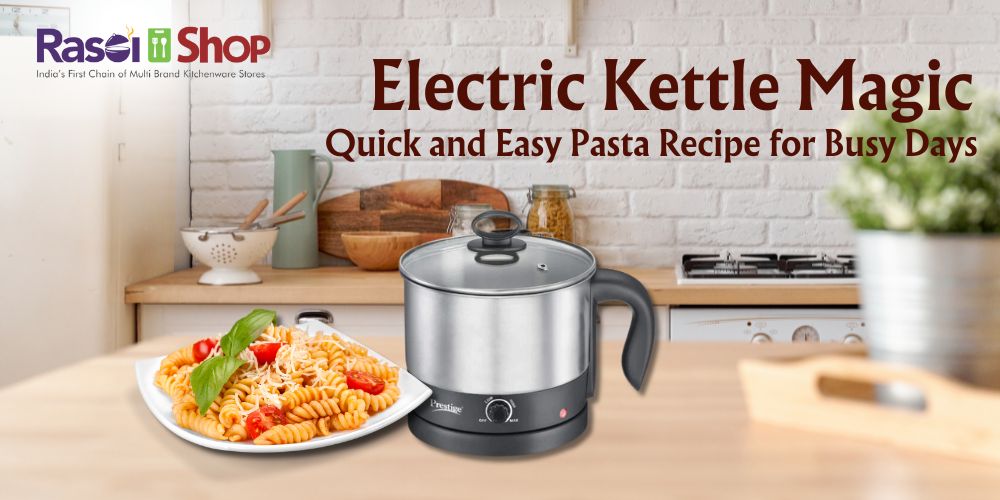
Credit: www.rasoishop.com
Which Pasta Shapes Work Best?
Not all pasta shapes cook well in a kettle. Here’s a table showing which types are ideal:
| Pasta Shape | Recommended? | Reason |
|---|---|---|
| Spaghetti | Sometimes | May stick out, uneven cooking |
| Macaroni | Yes | Small, cooks evenly |
| Fusilli | Yes | Compact, easy to stir |
| Penne | Yes | Fits well, good texture |
| Lasagna | No | Too large for kettle |
| Shells | Yes | Small, cooks quickly |
Tip: Break longer pasta into shorter pieces before adding to the kettle.
Practical Tips For Making Pasta In A Kettle
Cooking pasta in a kettle can be tricky. Here are some tips to help:
- Use small pasta shapes for easier cooking.
- Don’t overfill the kettle—too much pasta causes overflow.
- Restart the kettle often to keep water hot.
- Stir gently to prevent sticking and uneven cooking.
- Drain carefully—hot water can cause burns.
- Add oil to the water to reduce sticking (optional).
- Clean the kettle thoroughly after cooking to remove starch.
Many people forget to stir or overfill the kettle, leading to messy results. Keep these tips in mind for better pasta.
Common Mistakes To Avoid
Beginners often make simple mistakes when cooking pasta in a kettle. Here’s what to watch out for:
- Using too much pasta: The kettle can overflow or cook unevenly.
- Leaving pasta unattended: Kettle turns off automatically, so pasta sits in warm water and gets mushy.
- Cooking with exposed coils: Can damage kettle and cause burning.
- Not cleaning after use: Starch builds up and affects future boiling.
Avoid these issues by following the steps and tips above.
Is Cooking Pasta In A Kettle Safe?
Safety depends on your kettle type and how you cook. If you follow the steps and don’t overload the kettle, it’s generally safe. However, exposed coils can be a problem. Never cook pasta in a kettle with visible heating elements—starch can burn and damage the kettle.
Also, always drain carefully and avoid touching hot surfaces. Clean the kettle well after cooking to prevent buildup.

Credit: www.youtube.com
How Does Pasta Taste From A Kettle?
Many people wonder if kettle-cooked pasta tastes good. Here’s a quick taste comparison:
| Cooking Method | Texture | Taste | Appearance |
|---|---|---|---|
| Kettle | Softer, sometimes uneven | Good | May stick together |
| Pot | Al dente, even | Excellent | Separate pieces |
If you stir and monitor the kettle, pasta can taste nearly as good as pot-cooked. The biggest difference is texture—sometimes kettle pasta is softer or sticks together.
Can You Cook Other Foods In An Electric Kettle?
Electric kettles are not just for pasta. You can make instant noodles, oatmeal, boiled eggs, and even soup. However, always check your kettle type and clean it well after cooking. Some foods leave residue that can affect future boiling.
For more ideas on what you can cook in a kettle, visit Wikipedia.

Credit: www.youtube.com
Real-life Examples: Cooking Pasta In A Kettle
Students in dorms and travelers often use kettles to cook pasta. For example, college students living in rooms without kitchens boil water in a kettle, add macaroni, then restart the kettle every few minutes. After draining, they mix in tomato sauce and cheese. The result is a hot, simple meal with minimal equipment.
Another example: office workers craving pasta for lunch. They bring dry pasta, use the kettle to cook it, and add store-bought pesto or Alfredo sauce. It’s quick, affordable, and avoids using a microwave.
Is It Worth Making Pasta In A Kettle?
Cooking pasta in a kettle is about convenience. If you don’t have a stove, it’s the best option. The taste and texture are good if you follow the steps. However, it’s not as easy as using a pot, and you need to be careful with safety and cleanup.
The biggest advantage is flexibility—you can make pasta almost anywhere. The main drawbacks are slower cooking and the risk of sticking or overflow.
Frequently Asked Questions
Can I Cook Fresh Pasta In An Electric Kettle?
Fresh pasta is softer and cooks faster, but it can stick and break apart in a kettle. It’s better to use dry pasta. If you try fresh pasta, use small amounts and stir often.
Will Cooking Pasta Damage My Electric Kettle?
If your kettle has exposed heating coils, pasta can burn and damage them. Always use a kettle with a flat bottom and clean it well after cooking.
How Do I Stop Pasta From Sticking Together?
Stir the pasta gently every few minutes. Adding a little oil to the water helps. Also, don’t overload the kettle—cook smaller portions.
Can I Make Pasta Sauce In The Kettle?
Most kettles are not made for cooking thick sauces. Prepare the sauce separately or use ready-made sauce after draining pasta.
Is It Safe To Cook Other Foods In An Electric Kettle?
Yes, but always check your kettle type. Foods with lots of starch or residue can affect boiling and taste. Clean thoroughly after each use.
Cooking pasta in an electric kettle is possible and convenient when you don’t have a stove. With the right kettle and careful steps, you can enjoy a hot meal almost anywhere. Remember to use small pasta shapes, stir often, and clean up well.
If you’re looking for creative ways to make food in limited spaces, the electric kettle is a useful tool.