Few kitchen upgrades deliver the same morning payoff as an air fryer. It preheats in minutes, crisps faster than a conventional oven, and makes your everyday bagel taste like it just came from a bakery. The question "can you put bagel in air fryer?" has a simple answer: absolutely. But getting the perfect golden crust and chewy interior takes a bit of know-how.
After testing bagels in air fryers for years, I've learned that small tweaks make the difference between a perfect breakfast and a disappointing one. Here are my nine favorite tips, plus everything you need to know to nail it on the first try. You can also read our guide on how to preheat an air fryer.
 A split bagel resting cut-side up for even browning.
Why Air Fryer Bagels Beat Traditional Toasters
You've probably noticed that toaster bagels come out uneven—golden in one spot, pale in another, and sometimes dried out before the center warms through. An air fryer solves this with a simple principle: rapid circulation of hot air around the entire surface.
Benefits Over Traditional Toasting
Standard pop-up toasters rely on radiant heat from heating elements. That's why bagel halves placed near the coils brown faster than the parts facing the center. An air fryer surrounds your bagel with moving hot air, so the crust develops uniformly without hot spots. You can also read our guide on can you put foil in an air fryer.
Here's what that means in practical terms:
- Faster results: Most bagels are ready in 4–6 minutes versus a typical toaster's 1–2 minutes plus a second pass.
- Better texture: The circulating air evaporates surface moisture quickly, creating a crispy shell while the interior steams gently.
- More control: You can adjust temperature and time easily, which reduces the risk of burning.
The Texture Secret Most People Miss
The magic of an air-fried bagel lies in the temperature gradient. At 350°F (175°C), the outside reaches a golden crisp while the center stays soft and slightly chewy—exactly what you want. Toasters often push the surface temperature too high, which burns the crust before the inside warms. Air fryers operate in a gentler, steadier range.
If you're new to air frying, the learning curve is forgiving. Start with simple ingredients and work your way up. Our kitchen tips collection has plenty of beginner-friendly guidance to build your confidence.
Choosing the Right Bagel for Air Frying
Not every bagel behaves the same in an air fryer. Some crisp beautifully; others turn into hockey pucks. Understanding how different types respond to circulating heat will save you some disappointing mornings.
Fresh vs. Frozen
Fresh bagels are naturally soft and chewy, so they need just 3–4 minutes to warm through and crisp up. If you're reheating a day-old bagel, an air fryer actually revives it better than a toaster—the heat restores that fresh-baked texture.
Frozen bagels work great too, but they need a bit more time. Add 2–3 minutes to your usual cooking window. Let frozen bagels sit on the counter for 10–15 minutes to thaw slightly before air frying. This step is worth the small wait—it prevents cold spots and ensures even heating through the middle.
Best Bagel Varieties
- Plain and sesame: These crisp evenly and tolerate higher heat without burning.
- Everything bagels: The seeds get delightfully crunchy in the air fryer. Watch them closely—the garlic and onion bits can scorch if you walk away.
- Cinnamon raisin: These sweet bagels contain more sugar, which means they brown faster. Use a lower temperature (around 325°F) to avoid burning.
- Thick bakery bagels: They need an extra minute or two. Slice them in half to speed up cooking and get more surface area for crisping.
How to Prepare Bagels for Air Frying
Good preparation is the difference between a bagel you remember and one you forget. These steps take less than a minute but change the outcome significantly.
Slicing and Seasoning
Cut your bagel evenly in half horizontally. An uneven cut means one side cooks faster than the other, leaving you with a burnt edge and a raw center. Use a serrated knife to avoid squashing the soft interior.
Season lightly before cooking. A pinch of garlic powder, onion powder, or Everything Bagel seasoning adds flavor without dominating. But go easy—aggressive seasoning can burn in the air fryer's concentrated heat. A thin, even layer is all you need.
Toppings You Can Add Before Air Frying
Some toppings take well to a few minutes in the air fryer:
- Shredded cheese: A small handful melts into a golden, bubbly layer. Keep it thin enough to melt evenly.
- Butter: Brush melted butter on the cut side of the bagel before air frying. It promotes even browning and adds rich flavor.
- Everything seasoning: Sprinkle on a generous pinch before cooking. The heat releases the oils in the seeds, intensifying their flavor.
Skip watery toppings like sliced tomatoes or wet cream cheese before cooking—they create soggy patches and can make a mess in the basket.
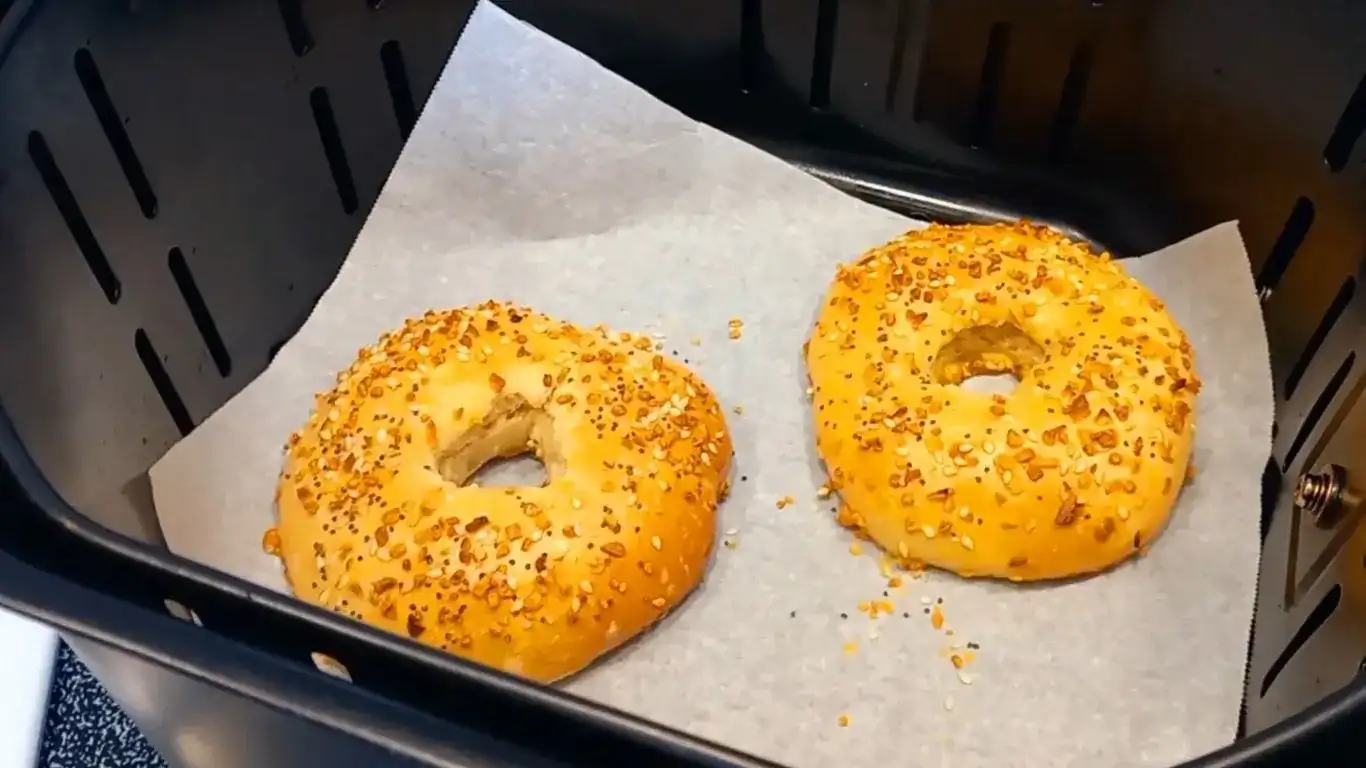 Seasonings and cheese applied before air frying for maximum crunch.
A Note on Cleanup
Seasonings and melting cheese can leave residue on your air fryer basket. Empty and wipe the basket while it's still warm for the easiest cleanup. If you let residue bake on, it's much harder to remove—kind of like dealing with a greasy range hood if you keep putting off the maintenance.
Best Air Fryer Settings for Perfect Bagels
Temperature and timing are the two dials that get you from "good" to "perfect." Here's what works consistently:
Ideal Temperature and Time
| Bagel Type | Temperature | Time | Result |
|---|---|---|---|
| Fresh, halved | 350°F / 175°C | 3–4 minutes | Golden crust, soft center |
| Frozen, halved | 350°F / 175°C | 5–7 minutes | Crispy outside, fully warm |
| Thick bakery bagel | 350°F / 175°C | 5–6 minutes | Evenly heated through |
| Sweet/flavored bagel | 325°F / 163°C | 3–4 minutes | Browned without burning |
Check at the halfway point. Every air fryer runs a bit differently, and a quick look prevents over-browning.
Adjusting for Your Air Fryer Model
Air fryers share the same basic design but differ in power and heat distribution. Some run hot; others need extra time. The first time you cook a bagel, stay close and check it frequently. If your machine runs hot, drop the temperature by 10–15 degrees. If it cooks slowly, add 1–2 minutes to the timer.
Learn your particular machine's quirks over time. The more you use it, the more intuitive the adjustments become.
Step-by-Step Guide: How to Air Fry a Bagel
This is my exact morning routine, refined through many test batches:
Step 1: Preheat the Air Fryer
Preheat your air fryer to 350°F (175°C) for 3–5 minutes. A hot basket from the start gives you better crust development. Cold baskets can leave you with a bagel that's soggy on the outside and cold in the middle.
Step 2: Place Bagels Cut-Side Up
Cut your bagel in half if it's whole, then place both halves in the basket with the cut side facing up. This orientation lets the hot air hit the interior surface directly, creating that crispy-chewy contrast you want.
Leave space between the halves. Overcrowding blocks air circulation and leads to uneven cooking.
Step 3: Monitor and Flip
Cook for 3–5 minutes, checking at the halfway mark. If you want both sides crispy, flip the halves at the 2-minute mark. Keep an eye on them—bagels can go from golden to burnt faster than you'd expect.
For extra-crunchy results, cook for 1 minute, flip, and cook for another 1–2 minutes. The short intervals give you more control.
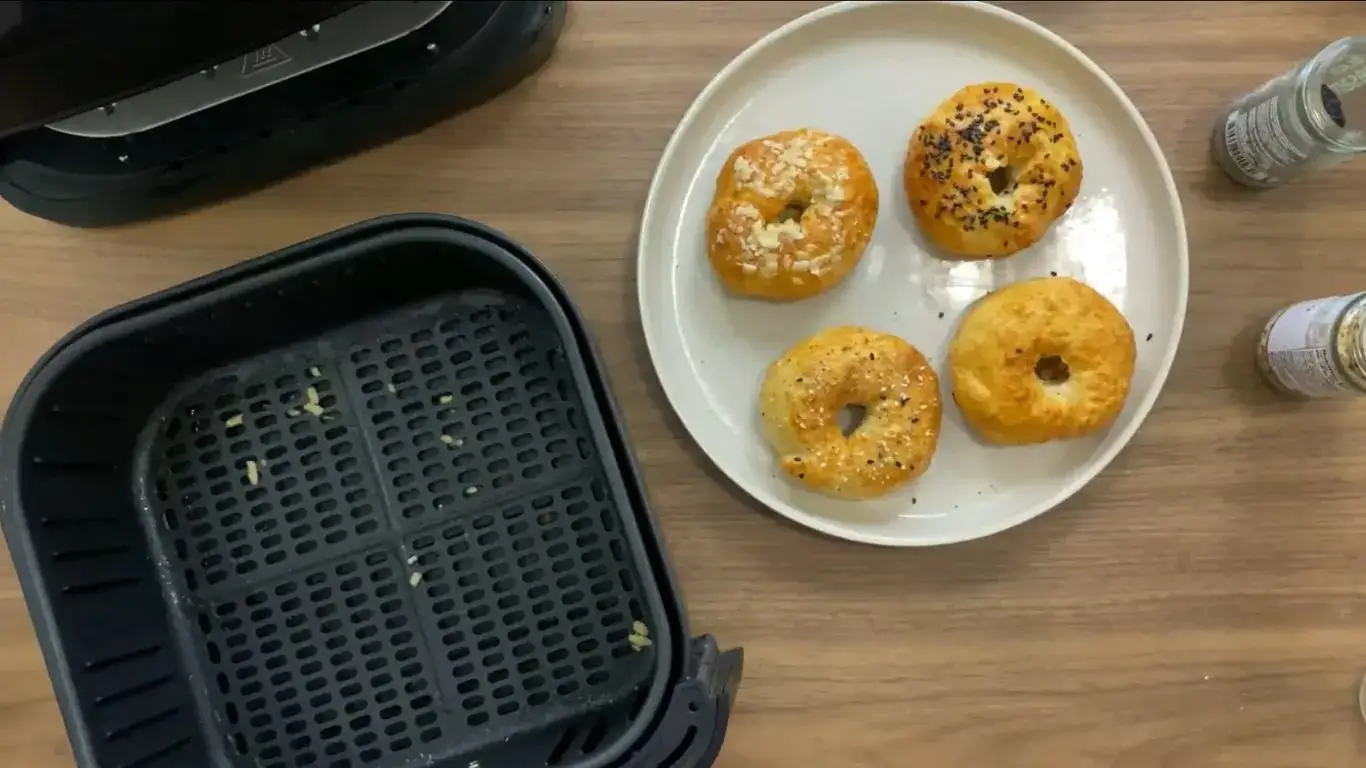 Fully toasted bagel halves with even browning and a soft interior.
Safety Tips Every Air Fryer Owner Should Know
Beyond making great bagels, using your air fryer safely matters just as much. A few straightforward habits keep your appliance—and your kitchen—in good shape.
- Don't fully block the basket with foil or parchment. Cut pieces to fit with room around the edges. Clogged airflow forces the fan to work harder and creates hot spots.
- Clean the basket after every use. Built-up grease can smoke at high temperatures and carries a fire risk. This is especially important when cooking anything with cheese or fats.
- Place the machine on a heat-safe surface away from walls, curtains, and other flammable materials.
- Never immerse the main body in water. Wipe the exterior with a damp cloth instead. The heating element and electronics aren't meant to get wet.
If you're looking for general kitchen safety guidance, the USDA's food safety page is a reliable resource for everything from storage to cooking temperatures.
Recipe Variations Worth Trying
Once you master the basic air-fried bagel, these variations will change your breakfast game. Each takes minutes from start to finish.
Garlic Cheese Bagel
Spread 1 teaspoon of softened butter on each bagel half, then sprinkle with 2 tablespoons of shredded mozzarella and a pinch of garlic powder. Air fry at 350°F for 4–5 minutes until the cheese melts and the edges crisp.
Sweet Cinnamon Bagel
Brush each half with melted butter and sprinkle with a mixture of 1 teaspoon cinnamon and 1 tablespoon sugar. Air fry at 325°F for 3–4 minutes. The sugar caramelizes into a light glaze—watch closely so it doesn't burn.
Everything Bagel with Cream Cheese
After air frying a plain bagel, spread cold cream cheese on top and sprinkle with Everything Bagel seasoning. The contrast between warm, crunchy bagel and cool cream cheese makes this a weekend favorite.
Troubleshooting: Fixing Soggy or Burnt Bagels
Even with practice, things go wrong occasionally. Here's how to fix the two most common problems.
Fixing Soggy Bagels
A soggy bagel usually means the temperature was too low or the basket was crowded. Crank the heat to at least 350°F and leave space between halves. If your bagel is still floppy, toast it for an extra 60 seconds. The added time evaporates surface moisture and brings up the crisp.
Fixing Over-Browning
Sweet bagels are the usual suspects for burning. Their higher sugar content means faster browning. Reduce the temperature to 325°F and check at the 2-minute mark. If the crust is darkening faster than you'd like, pull it out early. You can always cook it for another 30 seconds, but you can't uncook a burnt bagel.
Handling Dense or Under-Cooked Centers
Some bagels, especially thick ones from local bakeries, need longer in the basket. Slice them thinner to reduce the cooking time, or increase the temperature to 365°F for more intense heat. Watch closely to make sure you don't burn the outside before the inside warms through.
Serving and Storing Air-Fried Bagels
Getting the bagel perfect is only half the battle. Serving and storage make sure none of that effort goes to waste.
Serving Suggestions
Serve air-fried bagels warm, right from the basket. The crust starts to soften once it hits the plate, so the eat-immediately window matters. Spread cream cheese, butter, or your favorite toppings on while the bagel is still hot.
For a casual lunch, stuff your bagel with deli meat, cheese, and fresh veggies. Air-fried bagels hold up surprisingly well in sandwiches.
Storing Leftovers
- At room temperature: Store in a paper or plastic bag for up to 2 days.
- In the fridge: Keep in an airtight container for up to a week. The texture will firm up, but reheating in the air fryer revives it nicely.
- In the freezer: Wrap bagels tightly in plastic wrap and place them in a freezer-safe bag. They'll keep for 3 months.
When you're ready to eat a frozen bagel, pop it straight into the air fryer at 350°F for 4–5 minutes. No thawing required for this approach.
Air Fryer vs. Toaster: Which Is Better for Bagels
If you're on the fence about whether an air fryer is worth the counter space, the bagel test is a good benchmark. In practice, the air fryer wins on nearly every metric that matters for bagels.
| Factor | Air Fryer | Toaster |
|---|---|---|
| Even browning | Excellent — air circulation covers all surfaces | Uneven — hot spots near the elements |
| Crispiness | Deep, consistent crisp | Thinner, less satisfying crust |
| Softness inside | Retained — center steams gently | Can dry out with prolonged toasting |
| Versatility | Toasts, bakes, roasts, fries | Bagels and bread only |
| Cleanup | Basket washes in minutes | Crumb tray needs emptying |
If you already own an air fryer, it will likely become your go-to for bagels—and more. The same appliance that makes weeknight dinners easier handles your Saturday morning breakfast with equal ease. Once you master the basic technique, you'll wonder how you ever settled for toaster results.
Final Thoughts
So yes, you can absolutely put a bagel in an air fryer—and you should. The combination of a crispy exterior and a soft, chewy interior is exactly what a great bagel should be, minus the artisan bakery wait time. Air frying takes the guesswork out of the process, delivering consistent results in under ten minutes.
Start with the basics: preheat your machine, halve your bagel evenly, and keep the temperature at 350°F. From there, experiment—try cheese toppings, seasonings, or frozen bagels from the grocery store. With a little practice. you'll find your perfect bagel in just a few minutes every morning.
Frequently Asked Questions
Can you air fry a bagel from frozen?
Yes. Air fry frozen bagels at 350°F for 5–7 minutes. They'll get crispy on the outside and warm in the middle without thawing first.
How long does it take to air fry a bagel?
Most bagels take 3–5 minutes at 350°F. Fresh bagels are on the shorter end, while frozen or thick bagels need the full time.
Should you slice a bagel before air frying?
Yes. Slicing the bagel in half exposes the interior surface to hot air, which promotes even toasting and adds crispy surface area.
Can you add toppings before air frying a bagel?
Yes. Butter, shredded cheese, garlic powder, and Everything Bagel seasoning all do well in the air fryer. Avoid wet toppings like tomatoes or cream cheese until after cooking.
Is an air fryer better than a toaster for bagels?
For most people, yes. An air fryer provides more even browning, a crispier crust, and preserves the soft interior better than a toaster.