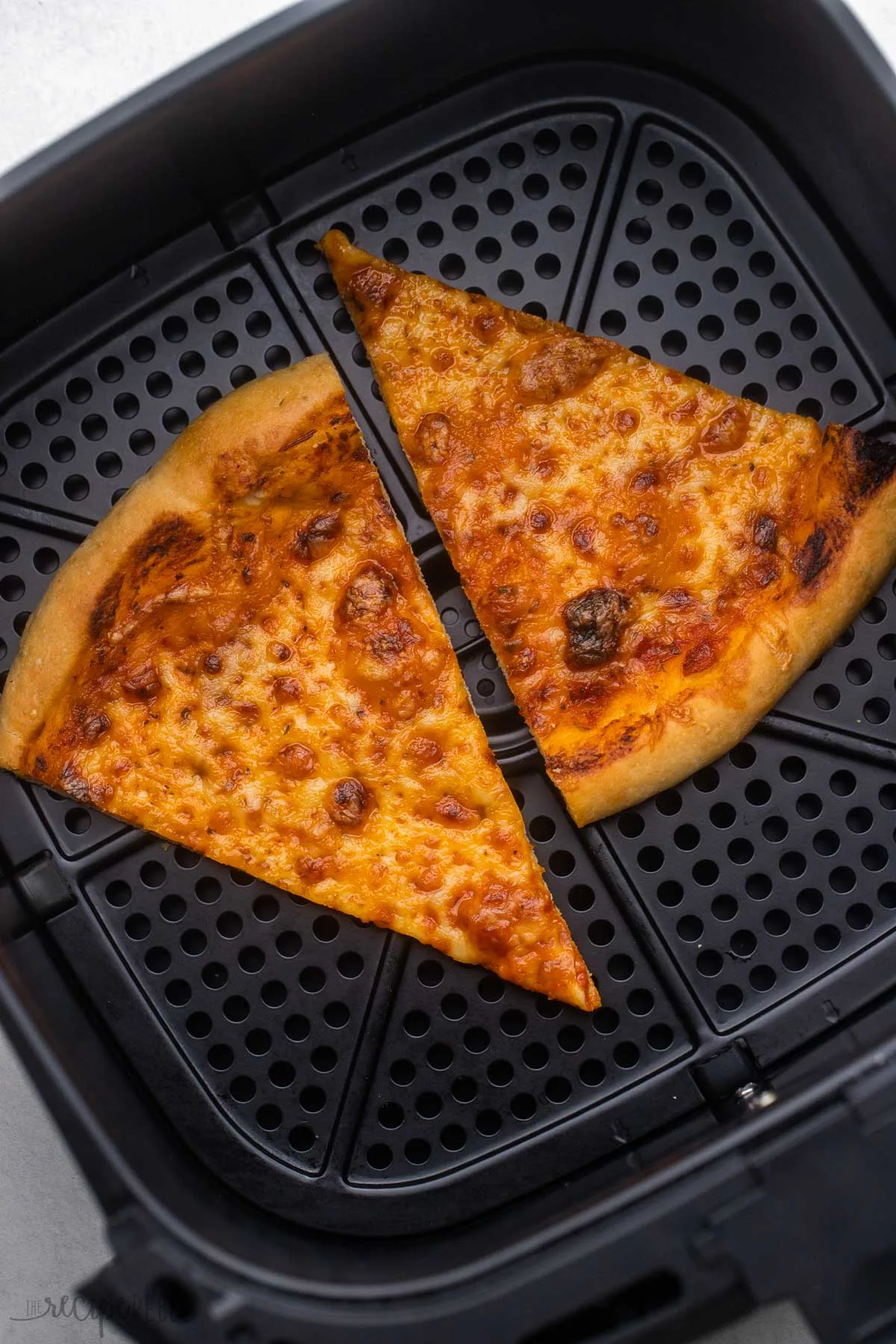
Image source: Web (Bing) / thereciperebel.com (Web image (fair-use with source credit))
Can You Put Pizza in the Air Fryer? The Complete Guide
You’re staring at a lukewarm slice from last night, wondering if your air fryer can do the impossible. The short answer is yes, you can put pizza in the air fryer, and the results are honestly surprising. That floppy, soggy slice you’d normally nuke into rubber comes out with a crispy bottom and melty toppings that rival the original delivery.
As of 2026, most basket-style air fryers hit temperatures between 180°F and 400°F with powerful fans that circulate hot air at speeds of up to 10 feet per second. That rapid circulation is exactly what transforms leftover pizza into something worth eating again. The method you use though depends heavily on what kind of pizza you’re starting with, so let’s break it down branch by branch.
Quick Answer
Yes, pizza goes in the air fryer. Reheating leftovers takes 3 to 5 minutes. Frozen mini pizzas cook in 8 to 12 minutes.
Raw dough works, but only in small batches. The key is matching your time and temperature to the pizza style.
How the Air Fryer Actually Cooks Pizza (and Why It’s Different From an Oven)
A conventional oven heats the air around your food, and that heat slowly radiates inward. An air fryer, on the other hand, uses a powerful fan to blast hot air directly at the surface of whatever you’re cooking. That forced convection is what creates the crispy exterior you’d normally associate with deep frying.
The physics matter here. When hot air moves rapidly across the surface of pizza dough, it pulls moisture away from the crust. This dehydration effect firms up the bottom of the slice and browns the cheese faster than a standard oven could.
What you get is a slice with a crackly underside, a puffy edge, and toppings that haven’t dried out.
There’s a trade-off though. Basket-style air fryers have a limited footprint, usually 2 to 8 quarts. A standard 12-inch delivery pizza slice folds into most baskets fine, but a whole large pizza won’t fit.
Toaster oven-style air fryers handle bigger loads but often have less intense airflow. Before you start, take a peek inside your unit and understand what you’re working with. If you’re unsure about your specific model’s layout, our visual guide to the inside of an air fryer can help.
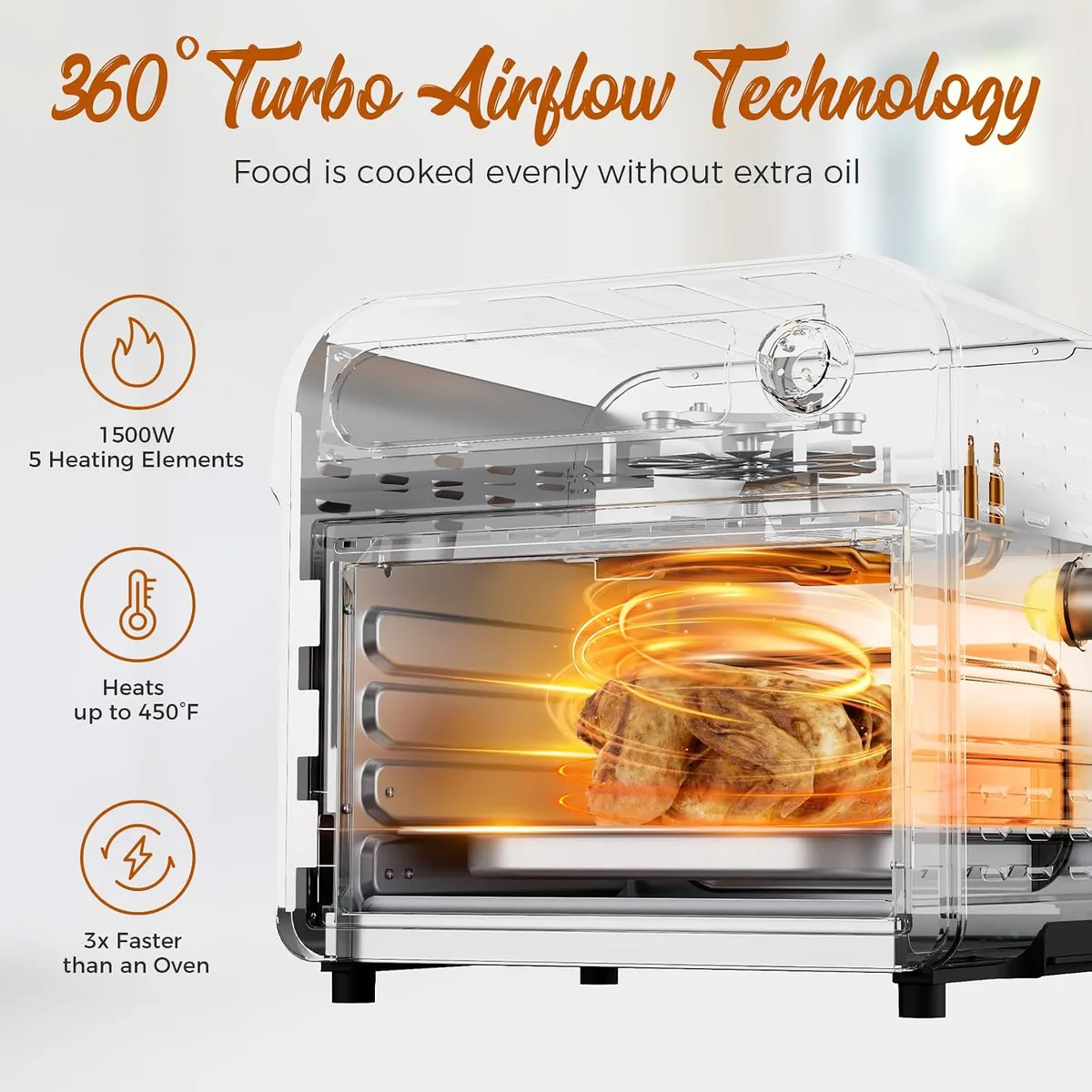
Image source: Web (Bing) / manuals.plus (Web image (fair-use with source credit))
The fan placement matters too. Most basket models have the heating element and fan at the top, blowing air downward onto the food. That works great for crisping the top of a slice, but it does nothing directly for the bottom.
That’s why flipping or using a perforated liner makes such a big difference. Perforated parchment allows air to reach the underside of the crust, which is the difference between a crispy slice and a soft one.
Branch 1: Reheating Leftover Pizza (The #1 Use Case)
This is where the air fryer truly shines. If you’ve ever reheated pizza in the microwave and bitten into a doughy, chewy nightmare, you know the struggle. The air fryer fixes that in under five minutes, and the texture is genuinely close to fresh out of the oven.
Here’s why it works: the circulating air re-crisps the crust by driving out moisture, while the high heat melts the cheese quickly before the toppings burn. The result is a slice with structural integrity. You can actually hold it from the crust without the tip drooping.
The exact settings depend on your pizza’s crust thickness:
| Crust Type | Temperature | Time | Notes |
|---|---|---|---|
| Thin crust (NY-style) | 350°F | 3 to 4 minutes | Check at the 2-minute mark |
| Thick crust (deep-dish) | 375°F | 5 to 6 minutes | Longer time for thicker dough |
| Stuffed crust | 350°F | 4 to 5 minutes | Watch for cheese leakage |
| Gluten-free crust | 325°F | 3 minutes | Lower heat prevents burning |
Step-by-Step: Reheating a Single Slice
Start by letting your slice sit at room temperature for about 10 minutes. Cold dough straight from the fridge needs more time to heat through evenly, and the outside will burn before the center warms up.
Preheat your air fryer to 350°F or 380°F, depending on your crust type. Most models need 2 to 4 minutes to reach temperature. If your unit doesn’t have a preheat function, just run it empty for three minutes.
Place the slice in the basket in a single layer. Don’t overlap slices, and don’t stack them. If you’re reheating more than one, do them in batches.
Overcrowding blocks airflow and traps steam, which undoes all the crispiness you’re going for.
Set the timer for the low end of your crust range. Check on the pizza at the halfway point. If the cheese hasn’t started bubbling, let it go a bit longer.
Every air fryer runs slightly hotter or cooler than its dial suggests, so visual cues matter more than exact minutes.
Let the slice rest for 60 seconds after the timer goes off. The interior is volcanic, and the crust continues to crisp as it cools slightly.
If you’re using a toaster oven-style air fryer, the process is nearly identical. Just give it an extra minute since the air circulation is usually less aggressive than a basket model.
Branch 2: Cooking Frozen Pizza in an Air Fryer
Yes, you can cook frozen pizza in an air fryer, but you need to manage your expectations about size. A standard 12-inch frozen pizza won’t fit in a basket-style air fryer. What works are the personal-sized and mini pizzas, the ones that come individually wrapped or in boxes meant for one person.
These frozen pizzas cook beautifully in an air fryer. The rapid air circulation produces a crust that’s noticeably crispier than what you’d get from a full-sized oven, and the cooking time drops dramatically.
| Frozen Pizza Size | Temperature | Time | What to Watch |
|---|---|---|---|
| Mini pizza (5-inch) | 370°F | 8 to 10 minutes | Cheese fully melted |
| Personal pizza (7-inch) | 375°F | 10 to 12 minutes | Edge is golden brown |
| French bread pizza | 380°F | 8 to 10 minutes | Crust is firm |
| Flatbread pizza | 350°F | 7 to 9 minutes | Don’t overcook the edges |
The Workflow for Frozen Pizza
Remove the pizza from its packaging and let it sit for 5 minutes. This short rest helps the dough thaw slightly, which prevents an undercooked center.
Preheat your air fryer to 370°F to 380°F. While it heats up, check that your pizza fits in the basket with at least half an inch of clearance on all sides. If it touches the sides, the edges will burn while the center lags behind.
Place the frozen pizza directly in the basket. You don’t need oil, and you don’t need a liner unless your basket has a history of sticking. Cook for the recommended time, then check for doneness.
The cheese should be bubbly and lightly browned in spots, and the crust should be firm to the touch.
Here’s the tricky part: frozen pizzas cook unevenly in air fryers. The bottom often stays softer than the top because the fan blows downward. Flipping the pizza halfway through cooking helps, but that’s messy with liquid cheese.
A better solution is using a perforated parchment liner, which allows some air to reach the bottom of the crust.
If you’re cooking a frozen pizza that’s too large for your basket, cut it in half while frozen. A sharp knife will slice through a frozen pizza cleanly. Cook each half separately, and they’ll turn out just as good as the whole thing.
Branch 3: Making Pizza From Raw Dough in an Air Fryer
This is the branch where things get messy, so let’s be upfront: making pizza from scratch in a basket-style air fryer is a challenge. The high-powered fan blows lightweight dough around, and wet toppings create steam that messes with the crispiness. That said, it’s absolutely doable if you use the right base.
The best candidates for air fryer pizza from raw dough are pre-made flatbreads, naan, pita bread, and tortillas. These bases are already cooked and just need to be topped and heated. They won’t blow around like fresh dough, and they crisp up beautifully in the circulating air.
What Works Best
Naan and flatbread make the best air fryer pizza bases. They’re sturdy enough to hold toppings, they crisp well, and they cook in about 7 minutes. Pita bread works too, but it tends to puff up in the middle unless you press it down.
Tortillas make a thin, cracker-crisp base that’s perfect for personal pizzas.
Fresh, raw pizza dough is the riskiest option. The dough is wet, sticky, and lightweight. When the fan kicks on, it can literally push the dough to one side of the basket.
If you want to use fresh dough, you need to par-bake it first in a conventional oven or use a basket with a tight-fitting parchment liner that extends up the sides to hold the dough in place.
The Optimized Workflow
Preheat your air fryer to 350°F for a flatbread or naan base, 370°F for a tortilla base.
While it heats, prep your toppings. Keep them light. A heavy load of sauce and cheese will steam the base instead of crisping it.
Aim for a thin layer of sauce, a moderate sprinkle of cheese, and toppings that are thinly sliced. If you’re using sausage or pepperoni, consider pre-cooking the meat to render out excess fat.
Place your base in the basket, then add the toppings. Don’t overload the center, because the middle gets the least airflow. A bare crust edge is fine, and it’ll puff up nicely.
Cook for 5 to 7 minutes for a flatbread or naan. Check at the 5-minute mark. The cheese should be melted and starting to brown, and the edges should be golden and crisp.
If you’re using a tortilla base, check at 3 to 4 minutes; it goes from crisp to burnt very quickly.
Let the pizza rest for a minute before cutting. The cheese is molten, and the structure needs a moment to set. Slice with a pizza cutter or a sharp knife.
This method works great for individual servings. You can make a batch of personal pizzas for a family dinner by cooking them one at a time, or you can make a single quick lunch that’s cheaper than delivery. If you’re curious about other unconventional air fryer uses, we’ve covered everything from steak to corn on the cob, and the same principles of airflow and moisture management apply.