Can You Use A Dutch Oven On The Stove?
If you love cooking, you might have heard about the Dutch oven. This heavy, thick pot is famous for making stews, soups, and even baking bread. But many people wonder: Can you use a Dutch oven on the stove? The answer is yes—but there are important details you need to know before putting your Dutch oven on your burner. Using it the right way can give you delicious meals, help your cookware last longer, and keep you safe in the kitchen.
What Is A Dutch Oven?
A Dutch oven is a large, deep pot made from cast iron, sometimes coated with enamel. It comes with a tight-fitting lid to keep moisture inside. These pots are known for their ability to retain heat and cook food evenly. They are popular for slow-cooked dishes and are used in kitchens around the world.
Dutch ovens can be:
- Bare cast iron (needs seasoning)
- Enamel-coated cast iron (easy to clean, does not need seasoning)
Most Dutch ovens are heavy, usually 5–10 pounds (empty). They range from 2 quarts to over 8 quarts in size. The material is thick and solid, which is key for slow cooking and even heat distribution.
Can You Use A Dutch Oven On The Stove?
Yes, you can use a Dutch oven on the stove, whether you have gas, electric, or induction. Dutch ovens are designed to handle direct heat. However, you must follow some simple rules to avoid damage or accidents.
Stove Types And Compatibility
Dutch ovens work with most stove types:
| Stove Type | Compatible? | Notes |
|---|---|---|
| Gas | Yes | Even heat, good control |
| Electric | Yes | Heat slowly, avoid high heat |
| Induction | Yes (if cast iron) | Enamel/cast iron works; check bottom for flatness |
| Glass/Ceramic | Yes, with caution | Heavy pot may scratch surface |
Most Dutch ovens are made for both stove and oven use, but always check your manufacturer’s instructions.
Why Use A Dutch Oven On The Stove?
Using a Dutch oven on the stove gives you:
- Even cooking: The thick walls spread heat evenly.
- Versatility: You can sauté, simmer, boil, and braise.
- One-pot meals: Start cooking on the stove, finish in the oven.
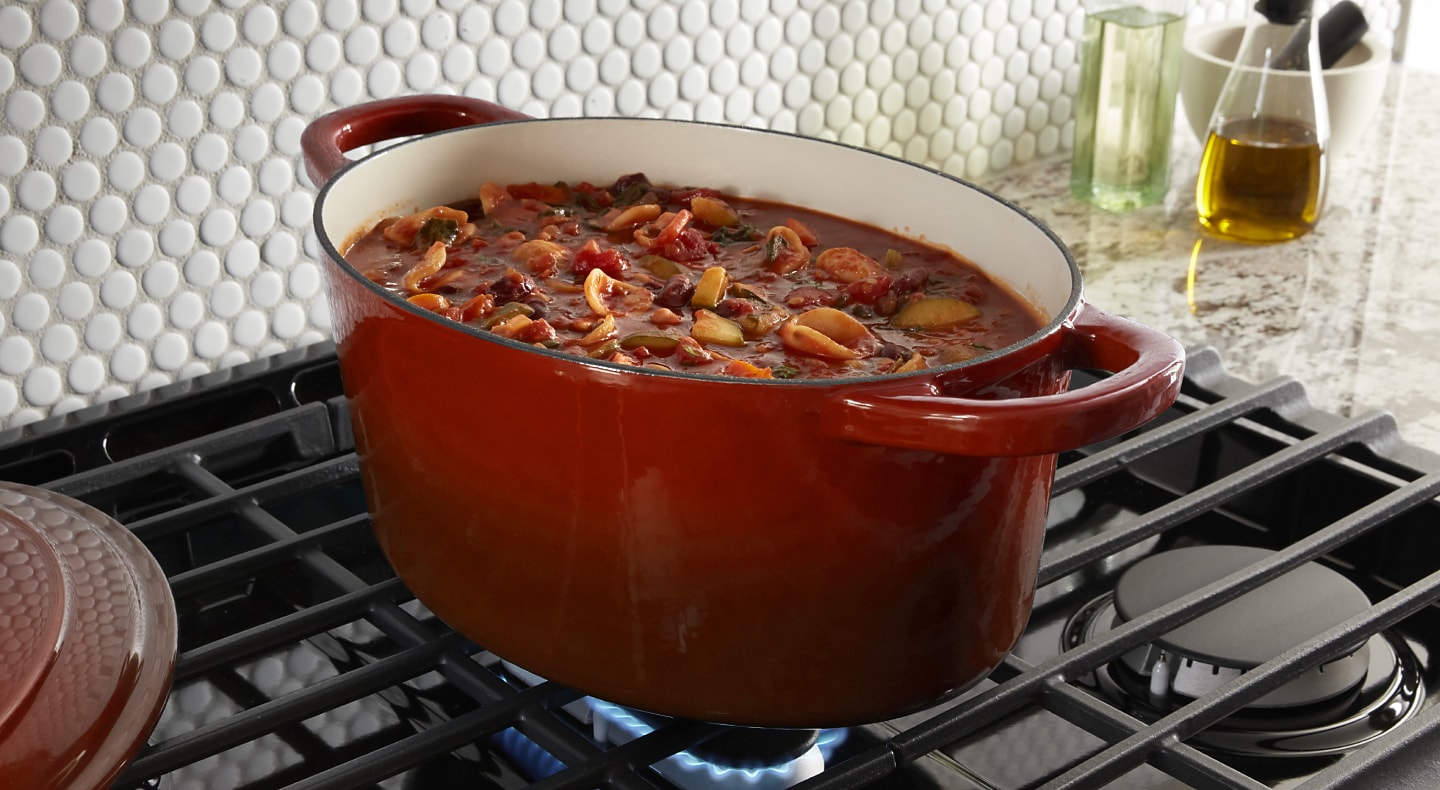
Many chefs use Dutch ovens for recipes like chili, risotto, or even frying chicken.
Credit: www.maytag.com
How To Safely Use A Dutch Oven On The Stove
Dutch ovens are tough, but improper use can cause cracks, chips, or stains. Here’s how to use yours safely:
1. Avoid Sudden Temperature Changes
Never place a cold Dutch oven on a hot burner, or a hot pot on a cold surface. This can cause thermal shock and crack the enamel.
2. Use Low To Medium Heat
Dutch ovens retain heat well. High heat can burn food or damage the enamel. Always start with low or medium, and increase slowly if needed.
3. Preheat Gently
If your recipe needs preheating, let the pot warm slowly. Don’t heat an empty pot for too long.
4. Watch The Weight On Glass Stovetops
Dutch ovens are heavy. Dragging them on glass or ceramic stoves can scratch or crack the surface. Lift, don’t slide.
5. Use Proper Utensils
Metal utensils can scratch enamel. Choose wood, silicone, or plastic.
6. Avoid Dry Cooking
Enamel Dutch ovens need some liquid. Cooking dry can damage the coating.
You might find this helpful: Best Dutch Ovens Under $50
Practical Example
If you’re making beef stew, start by browning meat on low heat. Add vegetables and liquid, then simmer gently. If you finish in the oven, transfer carefully.
Dutch Oven Vs Other Pots On The Stove
How does a Dutch oven compare with regular pots? Let’s look at some differences:
| Feature | Dutch Oven | Stainless Steel Pot | Nonstick Pot |
|---|---|---|---|
| Heat retention | Excellent | Good | Moderate |
| Oven safe | Yes | Some models | Rarely |
| Durability | High | High | Low to medium |
| Best for | Slow cooking, stews | Boiling, pasta | Quick sauté, eggs |
Dutch ovens are best for recipes needing slow, steady heat. Stainless pots are lighter and boil water faster. Nonstick pots are good for quick tasks but cannot handle high heat.

Credit: www.zulaykitchen.com
Common Mistakes When Using A Dutch Oven On The Stove
New users often make mistakes that can ruin their Dutch oven or their food. Watch out for these errors:
1. Heating An Empty Dutch Oven
Don’t heat the pot with nothing inside. The enamel can crack or discolor.
2. Using High Heat
Dutch ovens don’t need high heat. It can burn food or damage the pot.
3. Sudden Cold Or Hot Contact
Avoid moving the pot from hot stove to cold counter, or vice versa.
4. Dragging On Glass Stovetops
Always lift the pot. Dragging can scratch or break the stove.
5. Wrong Utensils
Using metal can scratch the enamel. Choose soft materials.
6. Ignoring Manufacturer’s Instructions
Check your Dutch oven’s manual for stove compatibility.
A less obvious mistake is failing to dry the Dutch oven fully before storing. Moisture can cause rust (especially on bare cast iron). Another is skipping seasoning on bare cast iron, which leads to sticking and rust.
Cooking Tips For Dutch Oven On The Stove
To get the best results, try these expert tips:
- Brown meat in batches
Don’t overcrowd the pot. Brown a few pieces at a time for better flavor.
- Use liquid wisely
Dutch ovens need enough liquid to prevent burning. For stews, cover the meat and vegetables.
- Simmer, don’t boil
Simmering gives tender results. Boiling is too harsh.
- Monitor cooking time
Dutch ovens cook slower. Allow extra time for recipes.
- Stir occasionally
Food can stick to the bottom. Stir every 20–30 minutes.
- Check lid fit
A tight lid keeps moisture in. If yours is loose, add a layer of foil under the lid.

Credit: www.reddit.com
Cleaning And Caring For Your Dutch Oven
Proper care keeps your Dutch oven working for years.
- Let it cool before cleaning
Never wash a hot Dutch oven. Wait for it to cool.
- Avoid harsh scrubbers
Use soft sponges. Steel wool can scratch enamel.
- Use mild soap
Enamel is easy to clean. Bare cast iron needs gentle soap or just hot water.
- Remove stuck food with soaking
For tough spots, fill with water and let soak. Avoid harsh chemicals.
- Dry completely
Water causes rust, especially on bare cast iron.
- Store with lid slightly open
This prevents moisture build-up and odors.
Cleaning Example
After cooking chili, let your Dutch oven cool. Fill with warm water, add mild soap, and wipe with a soft sponge. Dry with a towel, then leave the lid ajar.
Dutch Oven Safety On The Stove
Dutch ovens are safe, but here are some safety reminders:
- Handles get hot
Use oven mitts. Cast iron retains heat.
- Heavy pot caution
Lift carefully to avoid dropping.
- Watch for steam burns
Hot steam escapes when you lift the lid.
- Keep children away
Dutch ovens stay hot for a long time.
- Check for chips or cracks
Damaged enamel can flake into food.
When Not To Use A Dutch Oven On The Stove
There are times when a Dutch oven is not the best choice:
- Delicate sauces
Enamel can discolor with acidic foods like tomato sauce cooked too long.
- Quick cooking
If you need to boil water fast, a lighter pot is better.
- Low heat only
If your recipe needs high heat, use a stainless pot.
- Microwave or grill
Never use a Dutch oven in a microwave or on a grill.
Dutch Oven Brands And Stove Compatibility
Not all Dutch ovens are equal. Some brands are more compatible with stovetops than others.
| Brand | Stove Compatibility | Notes |
|---|---|---|
| Le Creuset | Gas, electric, induction, glass | High-quality enamel; expensive |
| Lodge | Gas, electric, induction | Bare and enamel options |
| Staub | Gas, electric, induction, glass | Heavy, durable enamel |
| Cuisinart | Gas, electric, induction | Affordable; lighter enamel |
Always check the bottom of the pot for compatibility marks.
Non-obvious Insights For Dutch Oven Cooking
- Preheating with food, not empty: Many recipes say “preheat the pot.” Instead, add oil or food first, then heat. This protects the enamel and gives better browning.
- Using parchment for sticky dishes: For bread or sticky desserts, line the Dutch oven with parchment paper. This prevents sticking and makes cleanup easier.
Real-world Example: Making Soup On The Stove
Let’s say you’re making chicken soup in your Dutch oven. Start by sautéing onions and garlic with a little oil over medium heat. Add chicken and brown lightly. Pour in water or broth, add vegetables, then let simmer with the lid on.
After 1 hour, check for tenderness. If you want a richer flavor, cook longer at low heat. This method works for many stove recipes.
Frequently Asked Questions
Can All Dutch Ovens Be Used On A Stovetop?
Most Dutch ovens, especially cast iron and enamel-coated models, are safe for stovetops. Always check your pot’s manual for specific instructions.
Is It Safe To Use A Dutch Oven On A Glass Stovetop?
Yes, but be careful. Dutch ovens are heavy and can scratch or break glass. Lift the pot, don’t slide it, and avoid sudden temperature changes.
Can I Fry Food In A Dutch Oven On The Stove?
Absolutely. Dutch ovens are great for frying because they maintain steady heat. Just use enough oil and monitor the temperature.
What Is The Best Heat Setting For Dutch Ovens On The Stove?
Use low to medium heat. Dutch ovens hold heat well, so high heat is rarely needed and may damage the enamel.
How Do I Know If My Dutch Oven Works With Induction Stoves?
If your Dutch oven is made of cast iron (bare or enamel), it will work with induction stoves. The bottom should be flat for best contact.
If you want to learn more about cookware safety and compatibility, you can visit Wikipedia.
Dutch ovens are powerful tools for stovetop cooking. With the right care, they offer delicious, slow-cooked meals and last for decades. Just remember the tips and cautions above, and your Dutch oven will be a kitchen hero.