So, can you use an immersion blender in a dutch oven? Yes, with some important caveats. The answer isn’t a clean yes or no.
It depends on two things: what your Dutch oven is made of and what kind of blade guard your immersion blender has. Get those two factors right, and you’ll blend soups, sauces, and purees directly in the pot without issue. Get them wrong, and you risk scratching an expensive enamel finish or ruining your cast iron seasoning for good.
Manufacturer specifications indicate that most enameled cast iron cookware is rated for metal utensils, but that rating assumes gentle contact, not a vibrating metal blade guard scraping against the walls. In our research, the core issue comes down to surface hardness. Porcelain enamel is glass-like, and a stainless steel blade guard can leave permanent marks if you press it against the interior.
As of 2026, most major immersion blender brands still ship with metal guards as standard, so this is a practical concern for most home cooks.
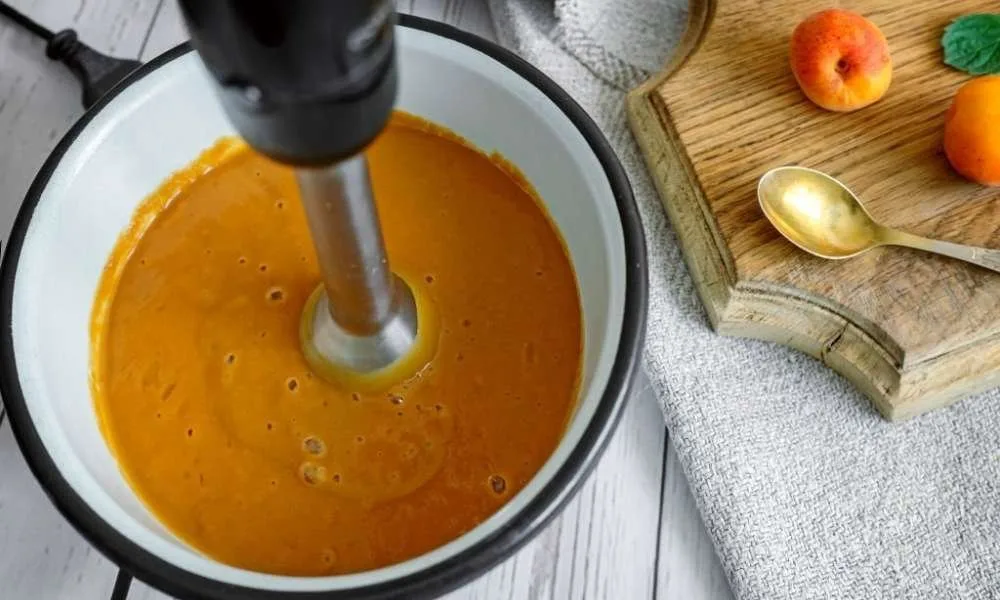
Image source: Web (Bing) / storage.googleapis.com (Web image (fair-use with source credit))
Quick Answer
Yes, you can use an immersion blender in a Dutch oven, but only if you’re careful.
The safest combo is an enameled Dutch oven with a plastic blade guard.
A metal guard can scratch enamel, leaving permanent marks.
Bare cast iron should be avoided entirely, since blending can scrape off the seasoning.
Technique matters more than the tools. Keep the blade fully submerged and off the bottom.
Why This Is Trickier Than It Looks
The problem isn’t the blending itself. Your immersion blender will puree soup just as well in a Dutch oven as it will in a stainless steel stockpot. The issue is what happens when the tool touches the pot’s interior.
Dutch ovens are heavy, thick-walled pots designed for slow cooking and heat retention. They come in three main interior finishes: porcelain enamel (glossy and scratch-prone), bare cast iron (coated in a fragile seasoning layer), and stainless steel. Each one reacts differently to an immersion blender’s vibrating blade guard.
Your immersion blender, meanwhile, has a metal or plastic guard covering the blades. That guard is what actually contacts the pot’s surface. When you’re blending and chasing food into the corners, the guard scrapes against the wall.
That constant friction is what damages the cookware.
It’s not about whether blending works. It’s about whether your specific pot can handle the contact. Let’s break down each interior type so you know exactly what you’re working with.
Check Your Dutch Oven: 3 Interior Types and What They Mean
Before you even plug in your immersion blender, flip the lid or check the bottom of your pot. The interior finish determines everything about how you blend safely.
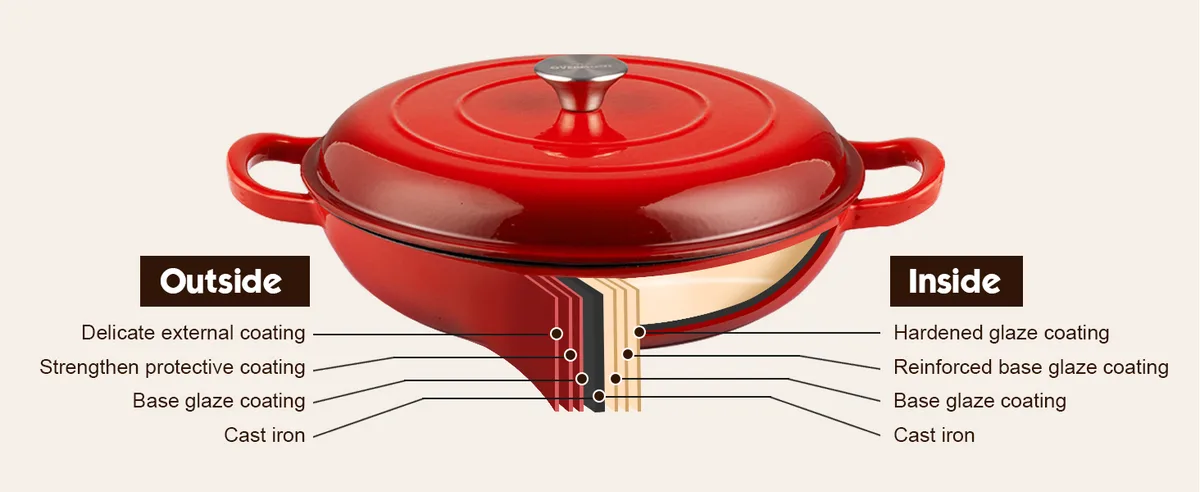
Image source: Bing (Web (fair-use with source credit))
Porcelain Enamel
This is the glossy, smooth coating found on brands like Le Creuset, Staub, and many mid-range options. It’s essentially glass baked onto the cast iron. Benefits include no seasoning required, acidic foods are safe, and cleanup is easy.
The downside is that enamel scratches. A metal blade guard can leave gray scuff marks that are difficult to remove. In serious cases, repeated scraping can chip the enamel, exposing the raw cast iron underneath.
That leads to rust and permanent damage.
Bare Cast Iron
Bare cast iron Dutch ovens, like those from Lodge or any camping-style Dutch oven, rely on a polymerized oil seasoning to prevent rust and create a nonstick surface. An immersion blender blade guard can scrape that seasoning off. Once the bare iron is exposed, food starts sticking, and the spot is vulnerable to rust.
You can re-season the pot, but blending regularly means you’ll be re-seasoning often, which gets tedious fast.
Stainless Steel
Some modern Dutch ovens are made entirely from stainless steel. They might have the same thick-walled, heavy design, but the interior is bare metal. Stainless steel is much harder than enamel and doesn’t have a seasoning layer to worry about.
Your immersion blender won’t scratch it, dent it, or ruin it. This is the safest option for blending directly in the pot.
| Interior Type | Scratch Risk | Rust Risk | Blend Directly? |
|---|---|---|---|
| Porcelain enamel | High (scuffs and chips) | Low (unless chipped) | Yes, with care |
| Bare cast iron | Low (surface wear) | High (if seasoning stripped) | Avoid |
| Stainless steel | Very low | None | Yes, no worries |
Check Your Immersion Blender: Which Parts Actually Touch the Pot?
Your immersion blender has one main contact point with the pot: the blade guard. This is the bell-shaped housing around the blades. It’s usually metal or plastic, and that difference matters more than you’d think.
Metal Blade Guard
Most immersion blenders on the market, including popular models from Breville, KitchenAid, and Cuisinart, ship with stainless steel blade guards. Metal is durable, easy to clean, and won’t melt or absorb odors. But metal against enamel is a problem.
The metal guard vibrates at high speed while you blend. Even light pressure against the pot’s wall can leave gray or black scuff marks on the enamel. These marks are often just superficial, but they’re stubborn and look bad.
Plastic Blade Guard
Some budget-friendly models and a few higher-end brands use a plastic or nylon blade guard. Plastic is softer than enamel, so it won’t scratch the surface. This makes plastic-guard blenders the safer choice for enameled Dutch ovens.
The tradeoff is that plastic guards can crack over time, and some users report they stain or retain odors.
Removable vs. Fixed Shaft
Another factor is whether the blending shaft detaches from the motor body. A removable shaft is easier to clean and makes it easier to inspect the blade guard for damage. A fixed shaft is simpler but harder to clean, especially after blending thick soups.
Neither affects scratch risk, but removable shafts give you more control during cleanup.
Your best bet for Dutch oven blending is an immersion blender with a plastic guard. If yours has a metal guard, you can still use it, but you’ll need to adjust your technique to keep the guard away from the pot’s walls.
The Decision Guide: Can You Blend In There or Not?
Here’s the simple decision tree. Match your pot and blender, and you’ll know in seconds whether blending directly is worth the risk.
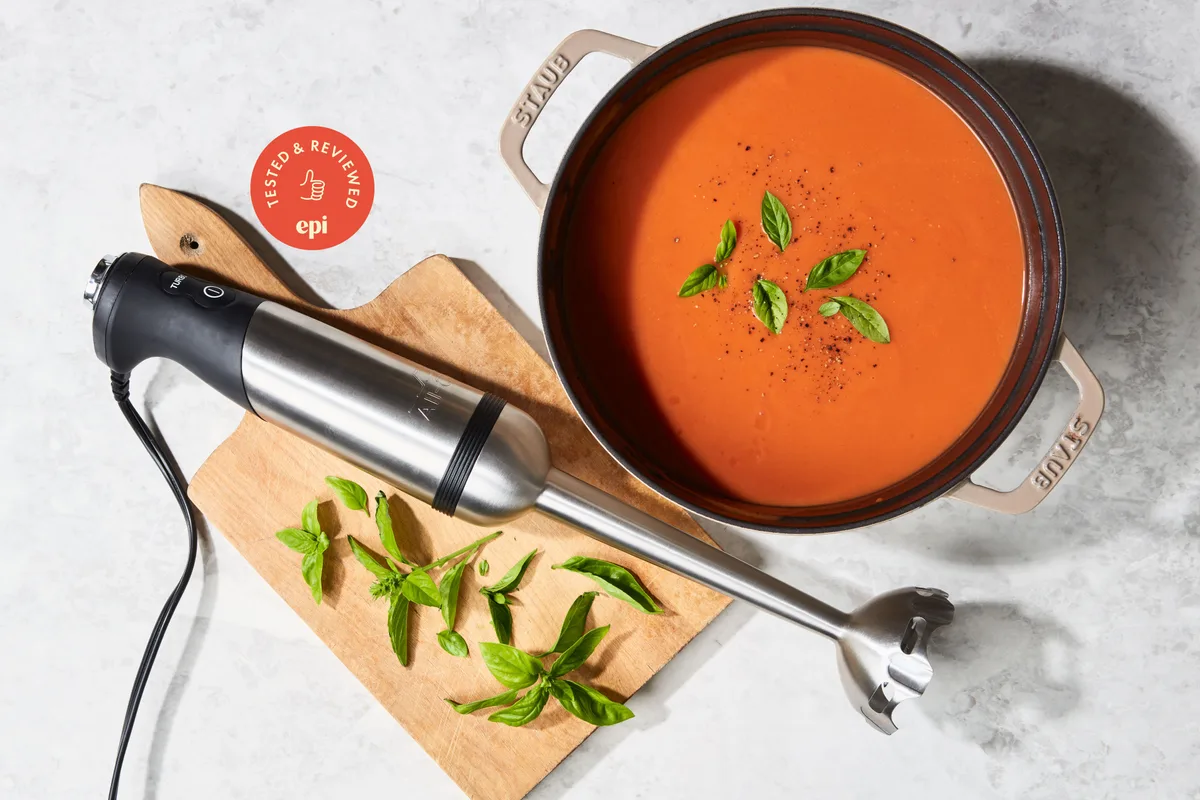
Image source: Web (Bing) / storage.googleapis.com (Web image (fair-use with source credit))
- Enameled Dutch oven + plastic guard → Safe. Blend away. Just keep the guard submerged and avoid pressing hard into the bottom or corners.
- Enameled Dutch oven + metal guard → Proceed with caution. Use a gentler touch, keep the guard fully submerged, and avoid scraping the walls. Check the surface afterward for new scuffs.
- Bare cast iron Dutch oven + any guard → Avoid. The blade guard will eventually wear down the seasoning, especially if you blend frequently. Transfer to a stainless steel pot or blend with a potato masher instead.
- Stainless steel Dutch oven + any guard → Totally fine. No scratch risk, no seasoning risk. Blend as much as you want.
If you fall into the “avoid” category, you have two options. First, transfer your soup to a separate stainless steel bowl or pot before blending. Second, skip the immersion blender entirely and use a countertop blender in batches.
It’s more cleanup, but it protects your cookware.
For those in the “proceed with caution” group, the next section covers exactly how to blend without damaging your Dutch oven.
Final Verdict
Yes, you can use an immersion blender in a Dutch oven, but use care. For enameled pots, a plastic-guard blender is the safest choice. Avoid using an immersion blender in bare cast iron, as it can damage the seasoning.
Keep the blade fully submerged and never let the guard scrape the sides or bottom. When in doubt, transfer your food to a separate container before blending.