Skip to content
Standing in the kitchen aisle, the two machines look similar: a water tank, a place for ground coffee, a carafe or cup tray. Yet a coffee maker and an espresso machine use completely different physics to brew — and they produce completely different drinks.
A coffee maker relies on gravity to drip water through coarse grounds, producing a large, milder cup. An espresso machine forces near-boiling water through finely ground coffee at about nine times atmospheric pressure, producing a small, intense shot crowned with crema. You can also read our guide on clean coffee maker with vinegar.
This guide breaks down every difference: how each machine works, what they cost, which drinks you can actually make, and how to choose. By the end, you will know exactly which brewer fits your routine.
Why the Confusion? Both Start With Coffee
Both machines start with the same raw ingredients — hot water and roasted coffee — and both extract soluble flavour compounds from the grounds. That is where the similarity ends.
Espresso and drip coffee diverge in four ways that matter: pressure, grind size, brew time, and coffee-to-water ratio. Professional bodies such as the Specialty Coffee Association publish separate brew standards for each method, precisely because the variables are so different.
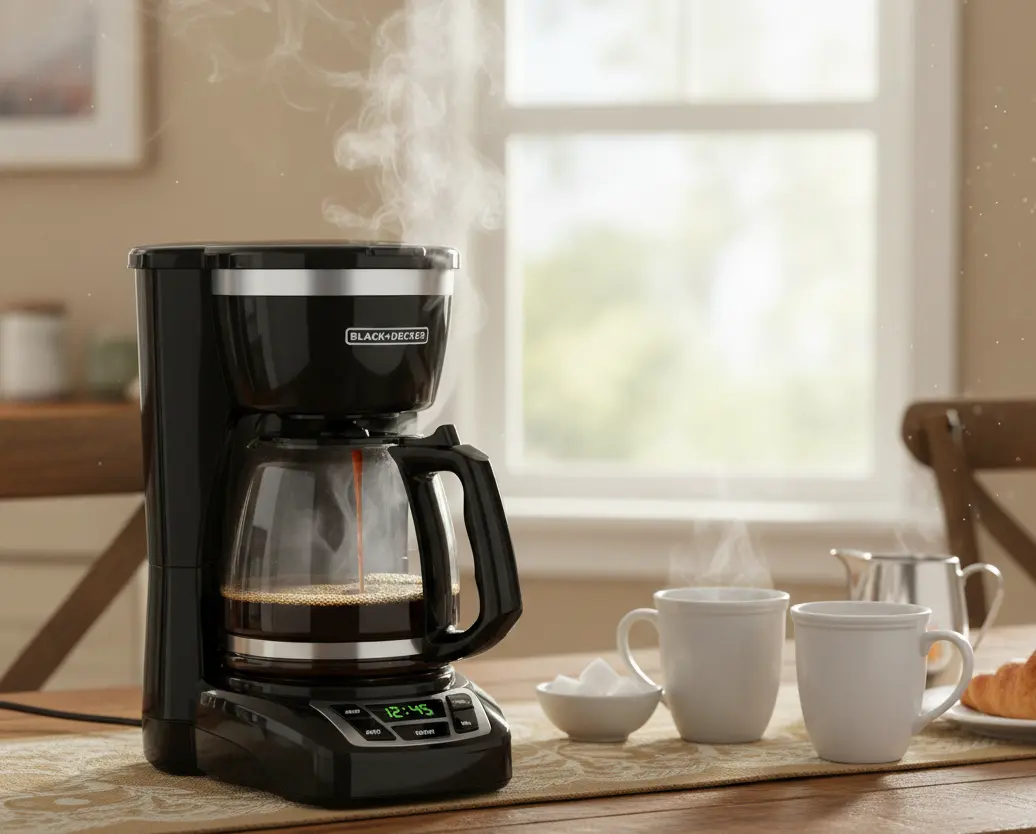
Left: a gravity drip brewer. Right: a pump-driven espresso machine. Same counter, very different drinks.
How a Coffee Maker Works
At its core, a drip coffee maker is simple. A heating element warms water in the reservoir, then sends it through a tube to the showerhead above the filter basket. The hot water — usually between 195°F and 205°F — saturates the grounds, and gravity pulls the liquid down through the filter into a carafe. The whole cycle takes four to six minutes.
Because there is no pressure, the water moves slowly, so the grind must be medium-coarse. Too fine a grind will clog the filter and over-extract, producing bitterness. Too coarse, and the water rushes through, yielding a thin, sour cup.
What ends up in your mug is a clean, balanced, lower-concentration brew. Drip coffee has a lighter body and less intensity than espresso, which makes it easy to drink in large volumes.
Types of Coffee Makers
- Drip carafe machine — brews 8 to 12 cups at once; the classic family brewer.
- Single-serve pod machine — one cup in under a minute, but pods add a recurring cost.
- Pour-over — you control the water flow; brings out delicate, sweet flavours.
- French press — full immersion brewing with a bold body and no paper filter.
How an Espresso Machine Works
Espresso is made by pressure, not drops. An espresso machine heats water, then uses a pump to push it through a tightly packed “puck” of very finely ground coffee at roughly 9 bars — about 130 psi. That pressure creates a dense, concentrated extraction in just 25 to 30 seconds.
The dose and yield are intentionally small. A standard espresso recipe is roughly a 1:2 ratio: for every gram of dry coffee, you extract about two grams of liquid. A single shot is roughly one fluid ounce; a double is around two.
The fine grind and pressure work together to create the hallmark of real espresso: crema, a golden-brown foam of coffee oils and carbon dioxide that forms on top of the shot.
Espresso is intense, syrupy, and bittersweet. Because it is so concentrated, it also serves as the foundation for lattes, cappuccinos, and americanos — something a drip coffee maker simply cannot do.
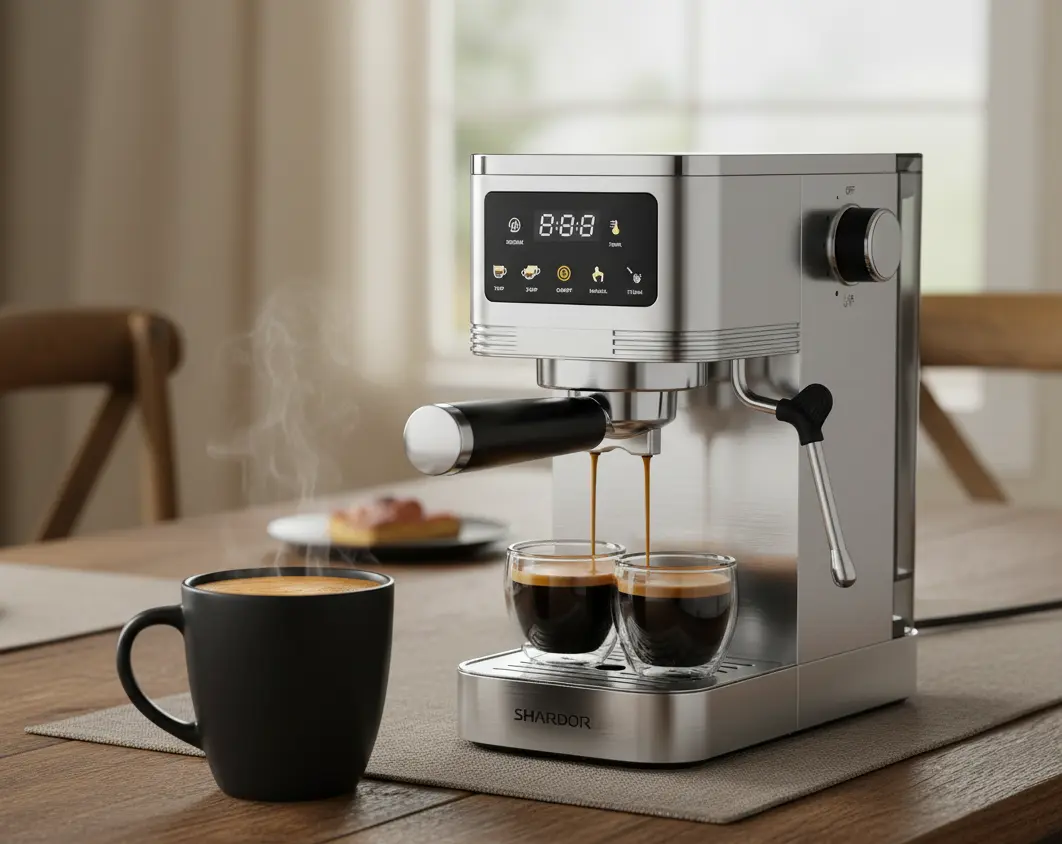
Pressurised water is forced through a fine, tamped coffee puck to extract a concentrated shot.
Types of Espresso Machines
- Manual lever machine — total control over pressure and flow; steep learning curve.
- Semi-automatic machine — you start and stop the shot; the most common home espresso type.
- Fully automatic / super-automatic — grinds, tamps, and brews at the touch of a button.
- Pod espresso machine — capsules for fast, consistent shots with minimal cleanup.
A note on marketing: don’t be seduced by “19 bars of pressure” claims. What matters is the pressure at the coffee puck, and the standard there is about 9 bars.
Main Difference Between Coffee Maker and Espresso Machine
| Factor | Coffee Maker | Espresso Machine |
|---|---|---|
| Pressure | None — gravity only | About 9 bars / 130 psi |
| Grind size | Medium-coarse | Very fine, almost powdery |
| Brew time | 4–6 minutes | 25–30 seconds |
| Water temperature | ~195–205°F | ~195–205°F at the group head |
| Typical yield | 8–12 oz cup or full carafe | 1–2 oz shot |
| Crema | None | Yes, when the coffee is fresh |
| Body and flavour | Clean, lighter, milder | Dense, syrupy, intense |
| Milk steaming | No | Yes, on most machines |
| Skill required | Set and forget | Practice to pull great shots |
| Typical price | $30–$150+ | $100–$1,000+ |
The water temperatures overlap. The decisive difference is pressure — and the grind size that pressure requires.
Why Grind Size Changes Everything
Grind size is the hidden variable that makes or breaks both brewing methods. It controls how quickly water can pull flavour from the beans.
A coarse grind has large particles and big gaps between them, so water flows through quickly. That suits drip machines, where gravity is the only force at work.
A fine grind has a huge surface area and tight gaps, creating resistance. That resistance is exactly what espresso needs. Without it, water would blast through the puck in a few seconds and produce a weak, sour shot.
| Grind | Surface Area | Extraction Speed | Best Used For |
|---|---|---|---|
| Coarse | Low | Fast water flow | Drip, French press, cold brew |
| Medium | Moderate | Moderate flow | Pour-over, some drip machines |
| Fine | High | Slower, resistant flow | Espresso, moka pot |
This is why a burr grinder is worth owning. Blade grinders produce uneven particles — some dust, some boulders — which causes simultaneous over- and under-extraction. In espresso, uneven grind is the most common reason a fresh, dialled-in shot still tastes bad. For many people, a capable burr grinder is a better first purchase than a more expensive espresso machine.
Espresso vs Coffee: Strength, Caffeine, and Flavour
Let’s settle the word “strong.” In coffee talk, strength usually means concentration, not caffeine intensity.
Espresso is several times more concentrated than drip coffee. But the serving is tiny. A single shot and an eight-ounce mug of brewed coffee fall into a similar caffeine range per serving — espresso just delivers it in one fast, intense sip. Exact amounts vary widely by bean, roast, and brew ratio, so treat any single number as a rough guide. The US Food and Drug Administration publishes caffeine guidance for consumers who want the details.
Flavour differs too. Drip coffee comes across cleaner, brighter, and lighter in mouthfeel. Espresso extracts more oils and dissolved solids, giving it a syrupy body, caramelised sweetness, and a bittersweet finish. Crema adds texture and aroma that drip coffee never develops.
If you love the taste of espresso but want a larger drink, an americano — espresso plus hot water — gives you espresso character with drip-like volume.
What Can You Actually Make With Each Machine?
Before buying, think about the drinks you will make most often.
With a coffee maker you can brew:
- A full pot of hot coffee
- Iced coffee (brew double-strength, then pour over ice)
- Cold brew (steep coarse grounds for 12–24 hours)
- Café au lait, if you warm milk separately
With an espresso machine you can brew:
- Ristretto, espresso, and doppio
- Americano and long black
- Cappuccino, latte, flat white, and mocha
- Cortado and macchiato
- Steamed milk and microfoam for latte art
The steam wand is the real advantage of an espresso machine. If you only have a coffee maker and still want foamy milk, you can get a quick homemade latte by frothing warm milk with a hand blender — it won’t create true microfoam, but it works in a pinch.
Space, Time, and Skill: The Honest Trade-Offs
Here’s what nobody tells you before you buy: the espresso workflow is longer than the shot itself.
You grind, dose, distribute, tamp, pull the shot, steam milk, and then clean the portafilter and steam wand. Once you build the habit, that routine takes three to five minutes per drink — and it rewards attention.
A drip machine, by contrast, takes about thirty seconds of effort and returns a full carafe five minutes later.
A common pattern is owning both: an espresso machine for weekend lattes, and a simple drip brewer for weekday fuel. If you only want one machine, ask yourself how you drink coffee on a normal Tuesday, not on a lazy Sunday.
Heat-up time also matters. Many espresso machines need five to fifteen minutes to reach temperature, while a drip brewer is ready within a minute.
Cost, Maintenance, and Long-Term Value
| Coffee Maker | Espresso Machine | |
|---|---|---|
| Upfront price | $30–$150+ | $100–$1,000+ |
| Common lifespan | 3–5 years | 5–10+ years |
| Recurring costs | Filters and beans | Beans, descaling, occasional service |
| Repair complexity | Simple and cheap | More parts, more cost |
Watch out for the hidden costs. Pod machines — whether drip-style or espresso-style — are far more expensive per cup than ground coffee. Espresso’s real hidden cost is often the grinder. A decent espresso-capable burr grinder is a worthwhile expense, because a cheap grinder will make even an expensive machine underperform.
Daily maintenance:
- Coffee makers: Rinse the carafe and filter basket daily. Once a month, run a cycle with a descaling solution or white vinegar followed by two fresh-water cycles.
- Espresso machines: Wipe the steam wand after every use — milk residue hardens and clogs it fast. Rinse the portafilter and group head, and backflush with clean water weekly. A dedicated espresso cleaner monthly keeps the internal lines tasting neutral.
Hard water accelerates scale in both machines. If you have very hard tap water, filtered water extends the life of both and noticeably improves flavour.
The Best Espresso Alternatives That Aren’t Espresso Machines
Not ready to spend on an espresso machine? You can still get intense, concentrated coffee.
- Moka pot — uses stovetop steam pressure to push water through a fine grind. It produces a bold, strong brew that sits between drip coffee and espresso. It isn’t true espresso, but many people happily use it for espresso-style drinks. A proper technique makes all the difference, so it helps to learn the stovetop moka pot method before your first brew.
- French press — full immersion in a pot, no pressure required. You control the steep time, so you can push extraction to get a richer, heavier body than drip coffee. The metal mesh filter lets the natural oils through, which adds texture comparable to espresso.
- AeroPress — air pressure from a hand-powered plunger forces hot water through fine grounds quickly. It yields a small, strong, smooth cup with some of espresso’s concentration, with far less cleanup than a machine. It is also portable and nearly indestructible — a great pick if you travel and want decent on-the-road espresso. A compact travel kettle works well with it.
Each of these is a stepping stone. Start with one of these, and you will learn what you actually value in a cup before you commit to a bigger purchase.
Common Misconceptions, Debunked
“A coffee maker can make espresso if you use the right beans.” — No. Espresso requires pressure. A coffee maker has none, so you cannot create crema or the concentrated body no matter what beans you use.
“Espresso has more caffeine than drip coffee.” — By volume, yes. By serving, it is roughly even. A single 1-oz shot and an 8-oz cup of drip coffee both land in the same ballpark. Espresso’s intensity comes from concentration, not caffeine.
“Fancy espresso machines make better espresso automatically.” — A super-automatic machine does everything, but the quality is capped by your beans and grinder, not the machine. Two identical machines more than anything rely on freshly roasted coffee and uniform grind.
“A moka pot makes espresso.” — It makes strong, concentrated coffee, but it operates at 1 to 2 bars of pressure, not the 9 bars of proper espresso. The confusion is common, and the taste difference is real once you have tried both side by side.
How to Choose Between a Coffee Maker and an Espresso Machine
Walk through these four questions to reach the right decision for your kitchen.
1. What do you normally drink?
A simple drip brew each morning → coffee maker. Lattes, cappuccinos, and straight shots → espresso machine.
2. How much do you brew?
A household of several coffee drinkers, or a pot for a full morning → drip brewer with a larger carafe. A person or two → espresso machine, since shots are made one or two at a time.
3. What is your budget — honest budget?
Look beyond the upfront price. A coffee maker plus a decent grinder can run you under $200. An espresso machine plus the matching burr grinder starts around $400–$600 and climbs well past $1,000. If you add pods, the recurring cost makes drip pod machines expensive over time.
4. How much attention do you want to give?
Espresso is a hobby. You dial in grinder settings, watch yields, and fiddle with temperature. If that sounds like a chore, get a drip brewer. If it sounds like part of the fun, the espresso machine will reward you for years.
Also measure your counter before committing. Espresso machines are heavy and wide, and they need clearance above to open the water tank. The best counter space is a clear 12×12 inches minimum, plus access to an outlet that isn’t shared with a kitchen appliance you already run.
Final Thoughts: Coffee Maker vs Espresso Machine
The difference comes down to physics and priorities.
A coffee maker is gravity-driven, forgiving, and ideal for a large, mild cup with steady, consistent flavour. An espresso machine is pressure-driven, demanding, and built for concentrated, intense drinks with milk. There’s no best machine — only the one that fits how you actually drink coffee. If you prefer volume and simplicity, choose the coffee maker. If you crave the crema, the syrup texture, and the ritual, the espresso machine earns its place on the counter.
A practical middle path: buy a simple in-between option, like a stovetop moka pot or a manual AeroPress, experiment with a few beans, and refine your taste before spending on a full machine. Then, whichever way you go, you’ll know exactly what you’re buying.
Frequently Asked Questions
Can a regular coffee maker make espresso?
No. A coffee maker relies on gravity; it cannot generate the high pressure needed to extract a concentrated shot with crema. You will only get drip coffee.
Which is better: an espresso machine or a coffee maker?
Neither is objectively better — it depends on preference. Espresso machines make strong, concentrated shots with milk options; coffee makers brew larger, milder cups with less effort. Choose based on your taste and how much time you are willing to spend each morning.
Are coffee machines and espresso machines the same thing?
No. The brewing mechanism is entirely different. A coffee machine lets hot water drip through grounds under gravity, while an espresso machine uses pressure of about 9 bars to force water through fine grounds. The resulting drinks differ in strength, texture, size, and flavour.
Is two shots of espresso the same as a cup of coffee?
Not for taste or concentration, and roughly the same for caffeine. Two shots is about two ounces of very intense coffee; a cup is eight ounces of much lighter brew. The caffeine content varies, so it is not an equal substitution.
Do I need a grinder for both?
For drip coffee, a grinder improves freshness but is optional if you buy pre-ground. For espresso, a good burr grinder is essential — pre-ground coffee is too coarse and stale for quality shots. If you are buying an espresso machine, include the grinder in your budget.