Skip to content
Do Air Purifiers Make The Air Dry
Many people wonder if air purifiers make the air in their homes dry. You may have noticed dry skin, a scratchy throat, or static electricity after using one, and it’s easy to blame the purifier. But do these machines really lower humidity, or is there another reason for these changes?
This article explores what air purifiers actually do, how they affect your room’s moisture, and what you should know before buying or using one.
How Air Purifiers Work
To understand if air purifiers dry the air, you first need to know what they do. Air purifiers pull air from the room, filter out particles, and then push clean air back out. The main goal is to remove dust, allergens, pollen, smoke, and sometimes odors or chemicals. Most common types include:
- HEPA filter purifiers: Trap fine particles
- Activated carbon purifiers: Absorb gases and odors
- Ionic purifiers: Use ions to attract pollutants
- UV-C purifiers: Kill germs using ultraviolet light
All these types clean the air in different ways, but none are designed to add or remove water vapor. Their main focus is on air quality, not humidity.
The Science: Do Air Purifiers Lower Humidity?
Many people think their air feels drier when running a purifier, but most air purifiers do not lower humidity. Here’s why:
- Filtration, Not Drying: Air purifiers use fans to move air through filters. These filters catch particles, not water molecules. Water vapor is much smaller than dust, pollen, or smoke and passes right through most filters.
- No Condensation: Unlike air conditioners or dehumidifiers, purifiers do not cool air or collect moisture. Air conditioners and dehumidifiers use cold coils to condense water, physically removing it from the air. Air purifiers do not have this feature.
- Room Circulation: Some people feel air is drier because purifiers move air around, which can increase evaporation from skin or surfaces. This might make the air feel cooler or drier, but actual humidity levels remain nearly the same.
Data Example: Humidity Before And After Using An Air Purifier
To see the effect, here’s a simple comparison.
| Time | Humidity (%) | Air Purifier Status |
|---|---|---|
| 8:00 AM | 45 | Off |
| 12:00 PM | 44 | On |
| 4:00 PM | 44 | On |
In most real-life tests, the humidity stays almost the same after hours of running a purifier. Any small change is usually due to air movement or outside factors, not the purifier itself.
Common Types Of Air Purifiers And Humidity
Not all air purifiers are the same, but most household models do not affect humidity. Let’s look at the most popular types:
Hepa Filter Purifiers
These are the most common. A HEPA filter captures particles like dust or pet dander but does not affect moisture. The air comes in, passes through the filter, and goes back out with the same water vapor content.
Activated Carbon Purifiers
Activated carbon absorbs gases and odors. It does not react with water vapor in normal home use, so humidity is not changed.
Ionic And Uv-c Purifiers
Ionic purifiers and UV-C purifiers do not physically filter air. Instead, they use electrical charges or light to neutralize pollutants. These systems also do not remove water vapor.
Air Purifiers With Additional Functions
Some devices combine air purification with humidifiers or dehumidifiers. These combo units can change humidity, but a basic air purifier does not. Always check the product description—if it says “humidifier” or “dehumidifier,” then humidity will change.
Why Air May Feel Drier With An Air Purifier
Even though air purifiers do not remove water vapor, many people report the air feels drier. There are a few reasons for this:
- Increased Air Movement: Purifiers use fans to move air. This air flow can speed up evaporation from your skin or eyes, making you feel drier.
- Winter Heating: People often use purifiers when windows are closed and heating is on. Heaters lower humidity, so the real cause is the heater, not the purifier.
- Cleaner Air: Less dust means fewer particles for water vapor to attach to, but this effect is very small. Some people are simply more aware of the air after cleaning.
- Placebo Effect: If you expect air to be drier, you may notice dryness more—even if the purifier is not the cause.

Credit: smartairfilters.com
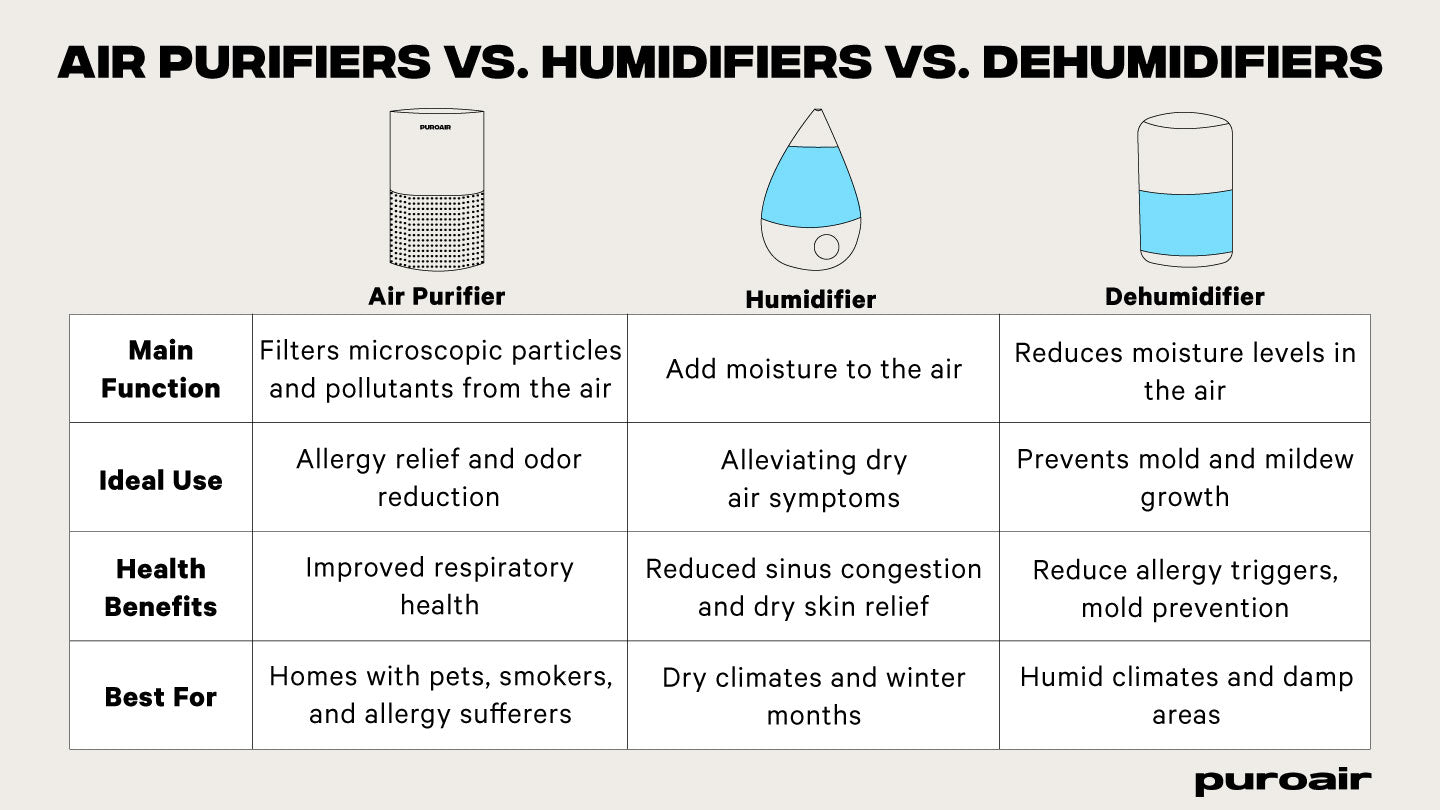
Comparing Air Purifiers, Humidifiers, And Dehumidifiers
It’s easy to mix up the different machines that affect air quality. Here’s a quick comparison.
| Device | Main Function | Effect on Humidity |
|---|---|---|
| Air Purifier | Removes particles | No change |
| Humidifier | Adds moisture | Increases humidity |
| Dehumidifier | Removes moisture | Decreases humidity |
If your room feels dry, you need a humidifier, not an air purifier. If your room is too damp, use a dehumidifier.
When Air Purifiers Might Slightly Affect Humidity
There are rare cases when an air purifier might change humidity a little, but these are not common:
- Ozone Generators: Some purifiers create ozone, which can react with water vapor. However, this effect is tiny and not enough to feel.
- Desiccant Filters: A few special purifiers use materials that can absorb water, but these are not regular home models. Most people never use these.
- Combo Units: Devices that combine air purification with humidity control will obviously change humidity, but this is not due to the purifier part.
Practical Tips For Using Air Purifiers Without Dry Air Problems
If you feel your air is dry, but you want to keep using your air purifier, here are some tips:
- Check Your Room’s Humidity: Buy a cheap hygrometer (humidity meter) to monitor your indoor humidity. Ideal indoor humidity is between 40–60%.
- Use a Humidifier if Needed: If your humidity drops below 40%, use a humidifier along with your purifier.
- Avoid Placing Purifier Near Heaters: Heated air is dry, so keep your purifier away from heat sources to avoid extra dryness.
- Add Plants: Houseplants can add a little humidity to your room. Some people notice the air feels less dry with a few plants.
- Drink Water and Use Moisturizer: If you feel dry skin or throat, stay hydrated and use lotion. This helps more than changing your purifier settings.
Non-obvious Insights Most People Miss
- Fan Speed and Placement Matter: Higher fan speeds move more air, which increases evaporation from your skin. If you feel dry, try a lower speed or move the purifier further away from where you sit.
- Closed Rooms Trap Dryness: If you run a purifier in a small, closed room, and the air already lacks moisture, it will feel drier over time simply because no new moist air comes in. Opening a door or window for a short time can help.
Credit: getpuroair.com
User Experiences And Case Studies
Many users share similar stories online. For example, one apartment dweller in New York ran a HEPA air purifier all winter and felt dry air. After buying a hygrometer, she discovered her humidity was only 25%. The real cause was her building’s central heating—not the air purifier.
Another user with allergies ran a purifier year-round but only noticed dryness in the winter. In the summer, with the same purifier, the air felt fine. This shows that seasonal heating and air conditioning have a bigger impact on humidity than purifiers.
What The Experts Say
According to the Environmental Protection Agency (EPA), air purifiers do not change moisture levels in your home. The EPA recommends maintaining humidity between 30–50% for comfort and health. If dryness is a problem, the EPA suggests using a humidifier, not adjusting your purifier.
For more detailed information on air quality and humidity, you can visit this EPA guide.

Credit: www.iqair.com
Table: Common Causes Of Dry Indoor Air
Here’s a quick overview of what usually dries out indoor air.
| Source | Effect on Humidity |
|---|---|
| Central heating | Major decrease |
| Air conditioning | Moderate decrease |
| Dehumidifier | Strong decrease |
| Air purifier | No change |
| Open windows (in dry climate) | Small decrease |
| Open windows (in humid climate) | Small increase |
Notice that air purifiers are not a main cause of dry air.
When To Worry About Dry Air
Dry air can cause skin irritation, sore throat, itchy eyes, and static electricity. It may also make you more likely to get sick, as dry air lets viruses travel more easily. But if you suspect your air purifier, check other sources first. Heaters, air conditioners, and poor ventilation are usually the real reasons.
Should You Buy A Humidifier?
If your room is dry and you want cleaner air, you don’t need to stop using your air purifier. Instead, consider adding a humidifier. This way, you get both clean and comfortable air. Some modern devices even combine both, but always check reviews and specifications to make sure they meet your needs.
Final Thoughts
Most air purifiers do not make the air dry. If you notice dry air, it is usually due to other factors like heating or weather, not your purifier. Understanding what each device does helps you make the right choice for your home. If you want clean air and comfortable humidity, use an air purifier together with a humidifier. Always monitor your room’s humidity, especially in winter, for the best comfort and health.
Frequently Asked Questions
Do Air Purifiers Reduce Room Humidity?
No, standard air purifiers do not remove water vapor or lower humidity. They filter out particles like dust and pollen but leave moisture untouched.
Why Does My Air Feel Drier After Using An Air Purifier?
It’s often because of increased air movement, winter heating, or psychological effects—not the purifier itself. The purifier’s fan can make you feel cooler or drier, but actual humidity stays about the same.
Can Air Purifiers With Hepa Filters Dry Out The Air?
No, HEPA filters only trap solid particles. They do not absorb water vapor, so they do not dry the air.
Should I Use A Humidifier With My Air Purifier?
Yes, if your home’s air is dry, using a humidifier with an air purifier is a good idea. The purifier cleans the air, while the humidifier adds moisture.
Are There Any Air Purifiers That Also Change Humidity?
Some devices combine air purification with humidifying or dehumidifying functions. Always check the product details—basic air purifiers do not affect humidity, but combo units can.