Do Fire Extinguishers Expire
A fire extinguisher is something most people hope they’ll never need. But when a fire breaks out, that red canister could make the difference between a small scare and a disaster. Many homes, offices, and public places have fire extinguishers hanging on the wall, ready just in case. Yet, a question often comes up: Do fire extinguishers expire? If you have one sitting under the kitchen sink or in your office, it’s smart to know if it will actually work when needed.
There’s a common belief that fire extinguishers last forever, but this isn’t true. Like many safety devices, they have a limited lifespan. Ignoring their expiration can put people and property at risk. In this article, you’ll learn how long fire extinguishers last, how to check their condition, signs of expiration, and what to do with expired units.
This guide is clear, practical, and designed for anyone who wants to stay safe—whether at home or at work.
What Is A Fire Extinguisher’s Lifespan?
Not all fire extinguishers are the same. The type of extinguisher, how it’s made, and how it’s stored all affect how long it lasts. Most fire extinguishers last between 5 to 15 years. Some can last longer with proper care, while others may need to be replaced sooner.
Typical Expiry Periods
| Type of Extinguisher | Average Lifespan |
|---|---|
| Dry Chemical (ABC) | 10–12 years |
| CO2 | 5–10 years |
| Water/Water Mist | 10 years |
| Foam | 5–10 years |
| Wet Chemical (K-Class) | 5–6 years |
Manufacturers usually stamp a date on the body or label. This is either the manufacture date or the expiration date. If you cannot find the date, check the bottom or near the handle. If the extinguisher is older than the typical lifespan, it’s safer to replace it.
Why Do Fire Extinguishers Expire?
Fire extinguishers are pressurized containers filled with chemicals or gas. Over time, several things can go wrong:
- Loss of pressure: If the canister loses pressure, the contents may not spray out well during an emergency.
- Chemical breakdown: Some agents, like dry powder or foam, can clump or settle, making them less effective.
- Valve or seal failure: Rubber seals can crack, and valves can corrode, causing leaks.
- Rust or physical damage: Metal parts can rust, or the shell can be damaged, especially if stored in damp or outdoor places.
These issues may not be visible from the outside. That’s why regular inspection and maintenance are important, even if the extinguisher looks fine.
How To Check If Your Fire Extinguisher Is Expired
Checking a fire extinguisher’s condition doesn’t require special tools. Here’s what to do:
- Find the date: Look for a printed or stamped date (year and month). It might be on the label, bottom, or neck.
- Check the pressure gauge: The needle should be in the green zone. If it’s in the red (too high or too low), the extinguisher may not work.
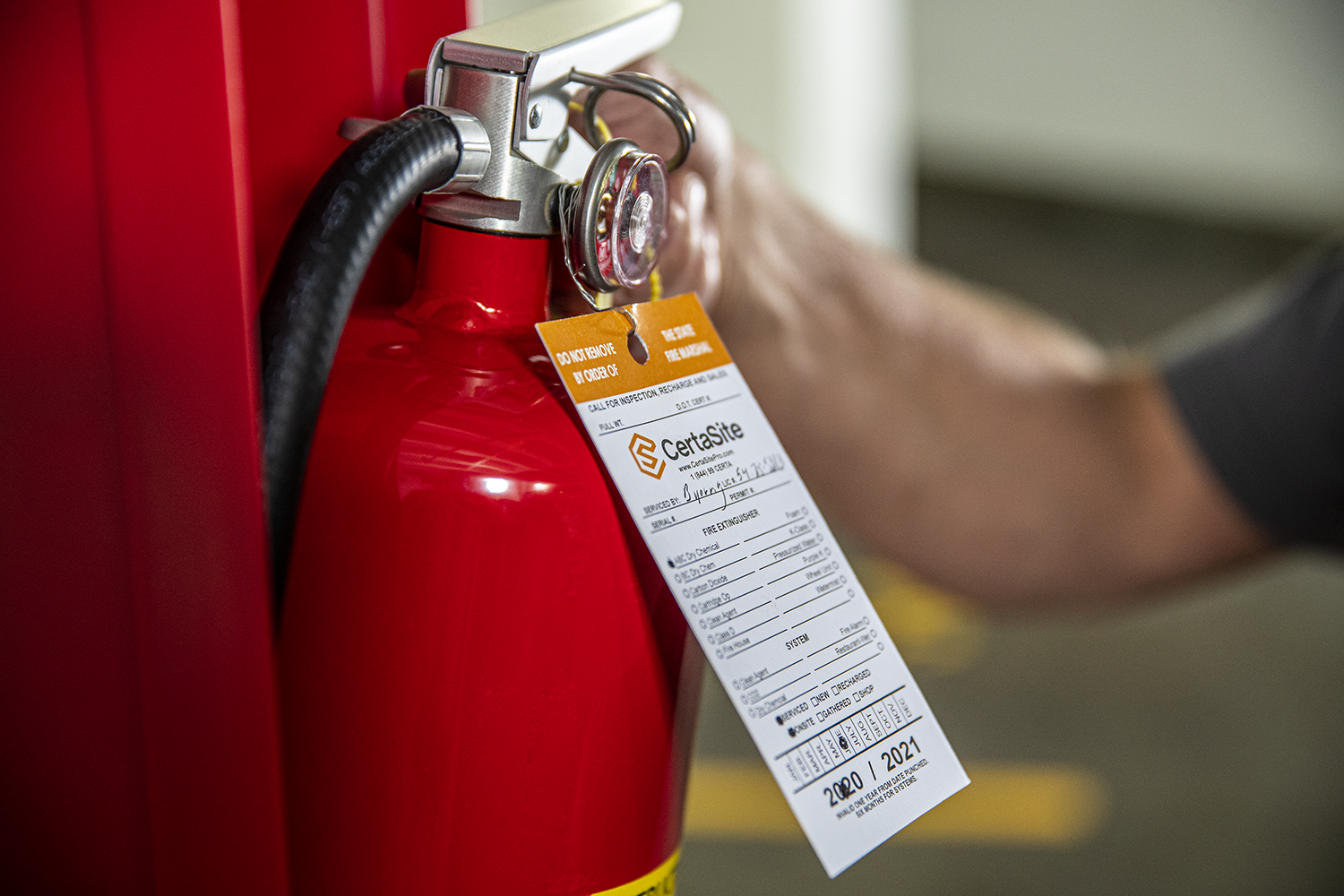
- Look for inspection tags: Many extinguishers have a tag showing the last professional check. If it’s been more than a year, schedule an inspection.
- Physical inspection: Look for rust, dents, or a missing safety pin. Check that the nozzle isn’t blocked.
If you see any of these problems, the extinguisher could be expired or unsafe to use.
Example Of Label And Pressure Gauge
| Label Marking | What It Means |
|---|---|
| “Manufactured: 06/2015” | Made in June 2015. Expiry likely 2026–2027. |
| Gauge in red zone (left) | Too little pressure; may not discharge properly. |
| Gauge in green zone | Pressure is normal; ready for use. |
| No inspection tag | Inspection history unknown; get checked soon. |
Pro tip: If you can’t find a date, and the extinguisher looks old or worn, it’s often better to replace it. Using an expired unit can be more dangerous than having none.
Are All Fire Extinguishers Disposable?
Not every fire extinguisher is thrown away after expiry. There are two main types:
- Disposable: These are meant to be used once or replaced after the expiry date.
- Rechargeable: These can be refilled and used again if properly serviced.
Look for a label or marking. Disposable extinguishers often say “Do Not Recharge.” Rechargeable ones will have a metal valve and say “Recharge After Use.”
You might find this helpful: Best Fire Extinguisher for Kitchen
Comparison: Disposable Vs. Rechargeable
| Feature | Disposable | Rechargeable |
|---|---|---|
| Cost | Lower upfront | Higher upfront |
| Maintenance | Replace after use/expiry | Can be refilled, needs yearly check |
| Valve Type | Plastic | Metal |
| Label Marking | “Do Not Recharge” | “Recharge After Use” |
Many homes use disposable models because they’re cheaper and easier to replace. Businesses often use rechargeable ones because regular inspection is required by law.
Credit: www.certasitepro.com
What Happens If You Use An Expired Fire Extinguisher?
Trying to fight a fire with an expired extinguisher is risky. Here’s what could happen:
- The extinguisher may not discharge at all.
- It might spray weakly, not reaching the fire.
- The chemicals could clog the nozzle.
- A damaged or rusted canister can leak or even burst.
Expired extinguishers can give a false sense of security. You might waste precious seconds trying to use it, only to find it doesn’t work. In some cases, expired extinguishers have exploded when used, causing injury.
Non-obvious insight: Even if an extinguisher is rarely used, age and environment can cause it to fail. For example, storing one in a humid garage or hot car can speed up corrosion and shorten its life.
How To Dispose Of Expired Fire Extinguishers
You should never throw a fire extinguisher in the regular trash. They are pressurized and can explode if crushed or heated.
Safe Disposal Steps
- Check local rules: Some cities have special drop-off points for hazardous waste.
- Contact the fire department: Many departments accept old extinguishers or can tell you where to take them.
- Use recycling centers: Some centers can handle the metal and chemicals safely.
- Discharge before disposal: If allowed, you can empty the extinguisher outside (point away from people and animals), then recycle the metal.
Never try to open or cut apart a pressurized canister yourself. It’s dangerous and can result in injury.
Non-obvious insight: Some recycling centers may only accept fire extinguishers if they are fully depressurized. If you’re unsure, always ask before dropping one off.
Tips For Fire Extinguisher Maintenance
Proper care can extend the life of your fire extinguisher and ensure it works when needed.
- Check the pressure gauge monthly.
- Inspect for damage: Look for rust, dents, or leaks.
- Keep the nozzle clean: Make sure it’s not blocked.
- Store in a dry, cool place: Avoid extreme heat or moisture.
- Turn it upside down every few months (for dry chemical types) to prevent the powder from settling.
- Schedule annual professional inspections, especially for rechargeable types.
If you notice anything unusual, replace or service the extinguisher right away.
Legal And Safety Standards
In the US, fire extinguisher standards come from the National Fire Protection Association (NFPA) and OSHA (Occupational Safety and Health Administration). Businesses are required to:
- Have the right type and number of extinguishers.
- Inspect them monthly.
- Get a yearly maintenance check by a certified technician.
- Replace or service expired or damaged units right away.
For homes, these rules aren’t strict, but following them is wise for safety. Insurance companies may also require up-to-date extinguishers, especially in rental properties or workplaces.
You can learn more about fire extinguisher standards at the NFPA official website.

Credit: support.firstalert.com
Common Myths About Fire Extinguisher Expiry
Myth 1: “They last forever if not used.”
Truth: Even unused extinguishers age and can lose pressure or become unsafe.
Myth 2: “You can check them once every few years.”
Truth: Problems can develop quickly, especially in harsh environments.
Myth 3: “All extinguishers can be recharged.”
Truth: Many home models are disposable and should not be refilled.
Myth 4: “If it looks fine, it’s good.”
Truth: Internal issues, like leaks or chemical breakdown, may not show on the outside.
Frequently Asked Questions
How Can I Tell If My Fire Extinguisher Is Expired?
Look for a manufacture or expiry date on the label or body. If it’s older than the typical lifespan (usually 10–12 years for dry chemical types), or if the pressure gauge is out of the green zone, it’s likely expired.
Can I Recharge A Disposable Fire Extinguisher?
No. Disposable extinguishers are not made to be refilled. Attempting to recharge them is unsafe. Replace them with a new unit if expired or used.
What Should I Do With An Expired Fire Extinguisher?
Take expired extinguishers to a hazardous waste facility, recycling center, or local fire department. Do not throw them in regular trash bins, as they are pressurized and could be dangerous.
Is It Safe To Use An Expired Fire Extinguisher In An Emergency?
It’s not recommended. Expired extinguishers may fail or work poorly, putting you at greater risk. If it’s your only option and the fire is small, use it with caution, but call the fire department immediately.
How Often Should Fire Extinguishers Be Inspected?
At home, check your extinguisher once a month for pressure and damage. Businesses must also have a yearly professional inspection according to NFPA and OSHA rules.
A reliable fire extinguisher is a key part of any safety plan. They don’t last forever, and ignoring expiry dates can have dangerous results. By checking regularly, maintaining, and replacing when needed, you’ll be better prepared for a fire emergency. Stay safe, and remember: a working extinguisher gives you peace of mind when it matters most.