Skip to content
If you enjoy making dried fruits, jerky, or healthy snacks at home, you probably know about food dehydrators. These machines use heat and airflow to remove moisture from food, making it last longer. But one question often comes up: Does a dehydrator consume a lot of electricity? If you’re worried about energy bills or want to understand how efficient dehydrators really are, this article will help. We’ll break down how much power they use, how they compare to other kitchen appliances, what factors affect their energy consumption, and how you can save electricity while dehydrating. You’ll also find real examples, practical tips, and answers to common questions.
Understanding Dehydrator Electricity Consumption
Many people assume dehydrators use a lot of power because they run for many hours. But the reality is a bit different. To understand their electricity use, you need to look at wattage, run time, and your local electricity rates.
A typical home dehydrator uses between 300 and 1000 watts. Most models fall in the 400–600 watt range. Commercial dehydrators may use more, but for home use, the numbers are lower than you might expect.
If your dehydrator has a 500 watt rating and you run it for 10 hours, it will consume 5 kilowatt-hours (kWh) of electricity. If your local rate is $0.15 per kWh, the total cost is $0.75 per batch. This is often cheaper than using your oven for the same purpose.
Here’s a simple calculation:
- Power (watts) x hours used / 1000 = kWh
- KWh x electricity rate = cost
So, a 600 watt dehydrator running for 8 hours:
- 600 x 8 / 1000 = 4.8 kWh
- 4.8 x $0.15 = $0.72
Most people don’t realize that the actual cost per batch is less than a dollar, especially if you fill the trays and maximize efficiency.
Comparing Dehydrators To Other Kitchen Appliances
How does a dehydrator stack up against other appliances? Many users think dehydrators are big energy hogs, but ovens, microwaves, and air fryers often use more power for short periods.
Here’s a comparison of typical wattages and usage times:
| Appliance | Wattage | Typical Use Time | Total kWh (per use) |
|---|---|---|---|
| Dehydrator | 500 W | 8 hours | 4 kWh |
| Oven (electric) | 2400 W | 1 hour | 2.4 kWh |
| Microwave | 1200 W | 15 minutes | 0.3 kWh |
| Air fryer | 1500 W | 20 minutes | 0.5 kWh |
You’ll notice a dehydrator uses less power per hour, but since it runs longer, the total kWh can add up. Still, for the amount of food you process, it’s usually efficient.
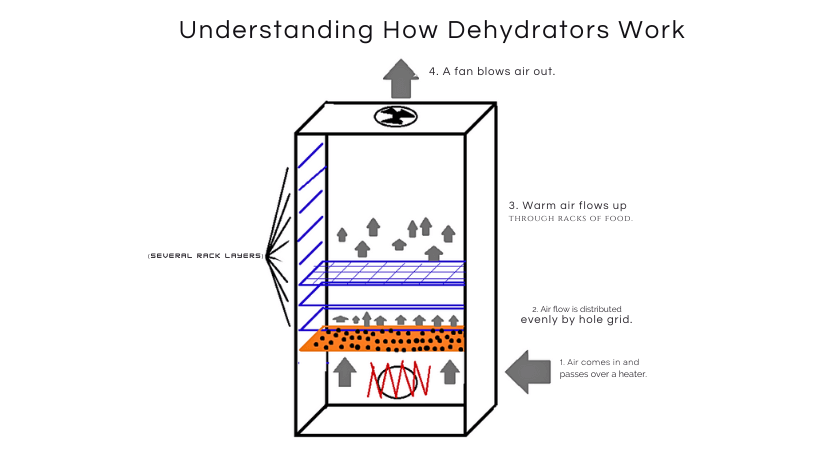
Credit: www.vevor.com
Factors That Affect Dehydrator Electricity Use
The amount of electricity a dehydrator uses isn’t fixed. Several factors can change how much energy you need:
- Wattage: Higher wattage means faster drying, but more electricity per hour.
- Temperature setting: Lower temperatures use less power, but drying takes longer.
- Number of trays: More trays filled with food can maximize efficiency. Running half-empty trays wastes energy.
- Room temperature: A hot room can speed up drying, requiring less energy.
- Type of food: Foods with higher moisture (like apples) need more drying time than dry foods (like herbs).
- Dehydrator design: Models with better airflow and insulation dry faster and use less energy.
Many beginners miss the importance of filling all trays and using the right temperature. Running a dehydrator with only one tray wastes electricity, while overloading can slow drying and use more power over time.
Real-life Examples Of Dehydrator Power Usage
Let’s look at some actual numbers from popular dehydrator models:
| Brand/Model | Wattage | Run Time (avg) | Total kWh (per batch) |
|---|---|---|---|
| Excalibur 9-Tray | 600 W | 10 hours | 6 kWh |
| Nesco Snackmaster | 500 W | 8 hours | 4 kWh |
| Presto Dehydro | 600 W | 7 hours | 4.2 kWh |
| Cosori Premium | 600 W | 8 hours | 4.8 kWh |
If your local electricity rate is $0.13–$0.16 per kWh, these batches cost $0.52 to $0.96 each. That’s quite affordable, especially when you compare it to store-bought snacks.
How To Reduce Dehydrator Electricity Consumption
Even though dehydrators aren’t huge energy users, you can still optimize and save more. Here are practical ways to cut electricity:
- Slice food evenly: Uniform pieces dry faster and use less energy.
- Don’t overload trays: Spread food in a single layer for best airflow.
- Use all trays: Fill your dehydrator to capacity, so you get more dried food per batch.
- Start with drier foods: Less moisture means less drying time.
- Choose the right temperature: Use the recommended setting for each food. Too high wastes energy; too low means longer drying.
- Monitor drying progress: Check food regularly. Remove trays that finish early.
- Dry during off-peak hours: If your electricity company charges less at night, run your dehydrator then.
- Clean your dehydrator: Dirty fans and vents reduce efficiency.
Many users overlook off-peak hours and cleaning. These small steps can make a noticeable difference.
Is Dehydrating At Home More Efficient Than Buying Dried Foods?
You might wonder if making dried snacks at home is worth the effort and cost. In many cases, yes. Home dehydration lets you control quality, avoid preservatives, and reduce packaging waste. Even with electricity costs, homemade dried fruit or jerky is usually cheaper per pound than store-bought.
For example, a pound of dried apples in stores can cost $10–$15. With home dehydration, you pay for fresh apples (about $2–$3 per pound) and under $1 for electricity. That’s a big savings. Plus, you get to choose the ripest fruit and skip added sugars.

Credit: www.fsdalle.com
Comparing Dehydrator Types: Stackable Vs. Shelf Models
Dehydrators come in two main designs: stackable (round) and shelf (box). Which is more efficient?
| Type | Typical Wattage | Airflow | Efficiency |
|---|---|---|---|
| Stackable (round) | 500–700 W | Vertical | Good for small batches, less even drying |
| Shelf (box) | 600–1000 W | Horizontal | Better for large batches, more even drying |
Shelf models use more power but dry food more evenly and usually finish faster. Stackable models are good for beginners or small families. Choose based on your needs and batch sizes.
Common Mistakes That Increase Electricity Use
If you’re new to dehydrating, you might make errors that raise your energy bills. Here are some mistakes to avoid:
- Running with empty trays: Always fill trays to maximize efficiency.
- Using the wrong temperature: Too high or too low wastes energy.
- Overlapping food: Crowded trays block airflow and slow drying.
- Ignoring maintenance: Dirty fans and vents make your dehydrator work harder.
One insight many beginners miss: the first hour is the most energy-intensive. After that, moisture loss speeds up. That’s why it’s important to start with proper tray loading and food prep.
You might find this helpful: How to Make Beef Jerky in a Food Dehydrator
Are Dehydrators Safe For Long Use?
Safety is another concern. Dehydrators are designed for long hours, but you should still follow guidelines:
- Place on a flat, heat-resistant surface.
- Don’t block vents.
- Check cords for damage.
- Unplug when finished.
Modern dehydrators have safety features like overheat protection and automatic shut-off. Still, never leave them unattended for very long.
Environmental Impact: Is Home Dehydrating Eco-friendly?
Food dehydrators use electricity, so there is some environmental impact. However, compared to ovens or buying packaged snacks, the footprint is lower. You reduce food waste, avoid plastic packaging, and often use local produce.
If you want to minimize your impact:
- Use renewable energy if possible.
- Dehydrate in bulk to save multiple batches.
- Compost food scraps.
According to the U.S. Department of Energy, small appliances like dehydrators use less energy than most kitchen ovens or stovetops. This makes them a smart choice for eco-conscious snack makers.
Credit: juicerville.com
Frequently Asked Questions
How Much Does It Cost To Run A Dehydrator For 8 Hours?
A typical 500–600 watt dehydrator uses 4–4. 8 kWh for 8 hours. If your electricity rate is $0. 15 per kWh, the cost is about $0. 60–$0. 72 per batch. Costs may vary based on wattage and local rates.
Can I Reduce Energy Use By Drying Food Overnight?
Yes. If your electricity provider offers off-peak rates at night, you can save money by drying overnight. Also, room temperature is often lower at night, which may help with consistent drying.
Is A Dehydrator More Efficient Than Using An Oven?
For drying foods, dehydrators are usually more efficient. Ovens use higher wattage and don’t have good airflow for dehydrating. Dehydrators are designed for longer use and lower temperatures, which saves electricity.
Does The Number Of Trays Affect Energy Use?
Yes. Using all trays means you get more food per batch, making each kilowatt-hour count. Running only one tray wastes energy. Always try to fill your dehydrator fully.
What Foods Dry Fastest And Use Less Electricity?
Foods with low moisture, like herbs or cherry tomatoes, dry quickly and use less energy. Fruits with high moisture, like pineapple or apples, take longer and use more electricity. Slicing food thinly can help reduce drying time and energy use.
Final Thoughts
Dehydrators don’t consume as much electricity as many people think. Their wattage is moderate, and the cost per batch is usually less than a dollar. With smart choices—like using all trays, slicing food evenly, and drying during off-peak hours—you can keep energy use low and enjoy healthy snacks without worrying about your power bill.
Compared to ovens and store-bought snacks, dehydrators are efficient and cost-effective. If you want to make the most of your dehydrator, pay attention to loading, temperature, and maintenance. This way, you can save money, reduce waste, and enjoy homemade treats with confidence.