Electric kettles are everywhere today. Many people use them to boil water for tea, coffee, instant noodles, or even cooking. But one question comes up often: Does an electric kettle consume more electricity compared to other ways to heat water? If you’re trying to save money or protect the environment, understanding this topic is important.
In this article, we’ll look at how much power an electric kettle uses, compare it to other appliances, and help you decide what’s best for your needs.
How Does An Electric Kettle Work?
An electric kettle heats water using a metal heating element at the bottom. When you turn it on, electricity flows through the element, making it hot. The heat is transferred directly to the water, causing it to boil.
Most modern electric kettles have:
- Automatic shut-off when the water boils
- Power ratings between 1200 and 3000 watts
- Insulated walls to keep heat inside
These features help kettles work fast and safely. But the key question is: how much electricity does this process use?
Power Consumption Of Electric Kettles
The power rating of an electric kettle is usually printed on the base. For example, a typical kettle might say “1500W” or “1.5 kW”. This number tells you how much electricity the kettle uses per hour if running nonstop.
Let’s look at an example:
- Kettle power: 1500W (1.5 kW)
- Time to boil 1 liter: About 4 minutes
Electricity Used = Power × Time
= 1.5 Kw × (4/60) Hours
= 0.1 Kwh (kilowatt-hours)
If you boil water twice a day, that’s 0. 2 kWh per day. Over a month, it adds up to about 6 kWh.
Real-world Data
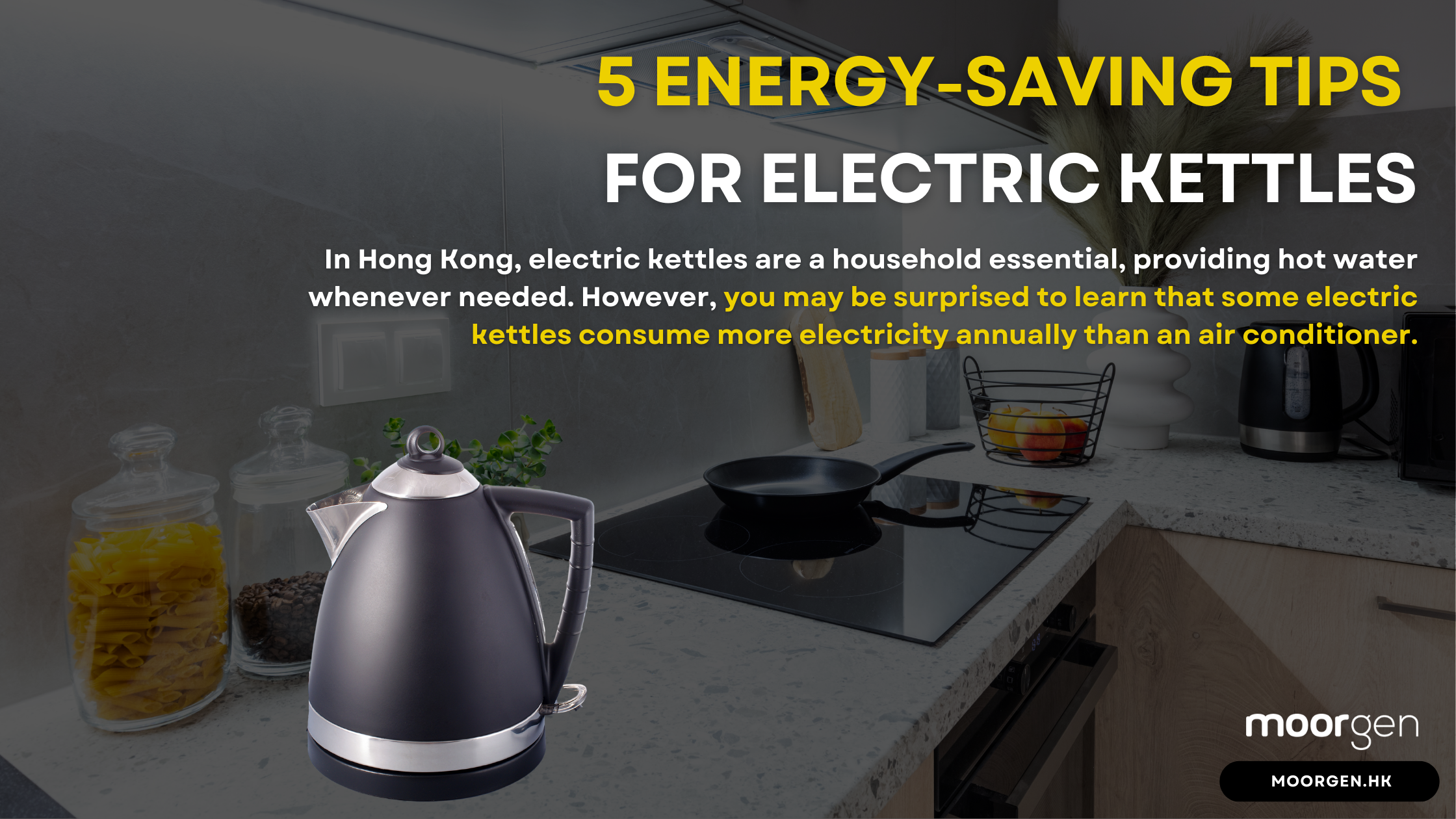
Studies show that boiling 1 liter of water with a 1500W kettle uses about 0.1 kWh. In places where electricity costs $0.15 per kWh, this means it costs 1.5 cents to boil a liter.
Credit: moorgen.hk
Comparing Electric Kettle Vs. Other Heating Methods
Is an electric kettle more efficient than a microwave, stovetop, or traditional kettle? Let’s compare them.
Electric Kettle Vs. Microwave
Microwaves use electromagnetic waves to heat water. But they’re not as efficient, because some energy is lost heating the container and air.
| Method | Power Rating | Time to Boil 1L | Energy Used (kWh) |
|---|---|---|---|
| Electric Kettle | 1500W | 4 min | 0.1 |
| Microwave | 1200W | 6 min | 0.12 |
Electric kettles are usually more efficient than microwaves.
Electric Kettle Vs. Stovetop
Stovetops (gas or electric) heat the pot and water together. Much energy escapes into the air.
| Method | Power/BTU | Time to Boil 1L | Energy Used |
|---|---|---|---|
| Electric Kettle | 1500W | 4 min | 0.1 kWh |
| Electric Stovetop | 2000W | 7 min | 0.23 kWh |
| Gas Stovetop | 7000 BTU | 6 min | ~0.18 kWh (converted) |
Electric kettles heat water more directly, so they usually use less energy.
Electric Kettle Vs. Traditional Kettle
A traditional kettle is heated on a stove. It loses more heat to the surroundings.
| Method | Efficiency (%) | Energy Used (kWh) |
|---|---|---|
| Electric Kettle | ~80% | 0.1 |
| Traditional Kettle | ~40% | 0.2 |
Electric kettles are twice as efficient as traditional kettles.
Factors Affecting Electricity Consumption
Electric kettles don’t always use the same amount of electricity. Several factors change how much power they need.
Amount Of Water
Boiling more water takes more energy. If you only need one cup, don’t fill the kettle all the way. Many people waste electricity by boiling more water than they need.
Starting Temperature
If you start with cold water, it takes longer to boil. Water from the fridge uses more energy than water from the tap.
Kettle Efficiency
High-quality kettles have better insulation and faster heating elements. Cheap kettles might lose heat, using more power.
Limescale Build-up
Over time, kettles can get limescale (white mineral deposits) inside. This reduces efficiency, so cleaning the kettle regularly helps save electricity.
Practical Tips To Reduce Electric Kettle Power Use
You can use your electric kettle more efficiently and save money. Here are some easy tips:
- Boil only what you need. If you want one cup, use just that amount of water.
- Clean your kettle. Remove limescale every few weeks.
- Choose a good kettle. Look for models with thick insulation and automatic shut-off.
- Don’t re-boil water. Heating water again wastes electricity.
- Use tap water at room temperature. It boils faster than cold water.
These habits can cut your electricity bill.
Non-obvious Insights Beginners Miss
Many people think only about the kettle’s wattage. But two things matter just as much:
- Time spent boiling: A higher-wattage kettle boils water faster. It uses more power per second, but runs for a shorter time. The total energy used is often similar.
- Boiling more than needed: This is the biggest waste. For example, boiling 1 liter when you only need 250 ml uses four times more electricity.
So, the way you use the kettle is as important as its power rating.

Credit: www.reddit.com
Environmental Impact Of Electric Kettles
Electricity use affects the environment. If your electricity comes from coal or gas, boiling water with a kettle creates carbon emissions. But because kettles are efficient, they often have a lower impact than gas stoves or microwaves.
For example:
- Boiling 1 liter of water (0.1 kWh) = about 0.05 kg CO2 in the US (average grid emission)
- Using solar or wind power reduces this to almost zero
If you care about the planet, use only the water you need, and choose renewable electricity.
Are Electric Kettles Costly To Run?
Let’s calculate yearly cost.
- Daily use: 2 liters boiled (0.2 kWh)
- Yearly use: 0.2 × 365 = 73 kWh
- Average US electricity cost: $0.15 per kWh
- Yearly cost: 73 × $0.15 = $10.95
This is a small part of most home electricity bills. If you boil more water or use a less efficient kettle, the cost will be higher.
You might find this helpful: Best Electric Kettle With Keep Warm Function
Common Mistakes When Using Electric Kettles
- Boiling too much water: Most people fill the kettle more than needed.
- Ignoring limescale: This makes the kettle less efficient.
- Re-boiling leftover water: Heating water twice uses extra energy.
- Buying cheap models: Poor insulation means more heat loss.
- Not checking wattage: Some kettles are much more powerful than others.
Avoid these mistakes to save electricity.
When Does An Electric Kettle Use More Electricity?
An electric kettle can use more electricity than other appliances if:
- You boil more water than needed
- The kettle is old or has lots of limescale
- You use high-wattage kettles for small amounts of water
But for boiling small amounts quickly, kettles are usually the most efficient option.
Does The Electric Kettle Consume More Electricity Overall?
If you compare an electric kettle to other methods:
- Electric kettles are usually more efficient for boiling water
- Using kettles saves time and money if used correctly
- For large amounts, gas stoves may be cheaper in some places, but less efficient
So, the answer is: Electric kettles do not consume more electricity for boiling water compared to microwaves, stovetops, or traditional kettles. In fact, they often use less.
Frequently Asked Questions
Does Boiling Water In An Electric Kettle Cost A Lot?
No. Boiling 1 liter costs about 1.5 cents in most places. Over a year, it’s less than $11 for daily use.
Why Does My Kettle Seem Slow Or Use More Electricity?
Usually, it’s because of limescale build-up or boiling too much water. Clean your kettle and only boil what you need.
Is It Better To Use A Microwave Or Stovetop?
Electric kettles are more efficient than microwaves and stovetops for boiling water. They waste less energy.
Can I Save Electricity By Switching Kettles?
Yes. Choose a kettle with good insulation and automatic shut-off. This can save up to 20% of energy.
How Often Should I Clean My Electric Kettle?
Clean your kettle every 2–4 weeks to remove limescale. This keeps it efficient and saves electricity.
Electric kettles are a smart way to boil water. If you use them correctly, they help save electricity and money. By following simple tips and avoiding common mistakes, you can make your kitchen more efficient. For more information, you can check resources like Wikipedia to learn about kettle technology and energy use.
Choosing the right kettle and using it wisely makes a difference—for your wallet and the planet.