Skip to content
When you step into the kitchen and reach for a 3 quart saucepan, you might wonder: how big is it, really? This question is more important than it sounds. The size of your cookware affects how much food you can prepare, which recipes work best, and even how easy cleanup will be. If you’re new to cooking or just confused by the measurements, you’re not alone. Many people buy pots and pans without fully understanding their capacity, then struggle to use them efficiently.
Today, we’ll break down the exact size of a 3 quart saucepan, compare it to other popular sizes, and help you decide if it’s right for your cooking needs.
Understanding Quart Measurements
The word quart is a unit of volume. In the United States, one quart equals 4 cups, 32 fluid ounces, or about 0.95 liters. When cookware is labeled “3 quart,” it means the pot or pan can hold 3 quarts of liquid. So, a 3 quart saucepan is designed to hold 12 cups or 96 ounces. This measurement is for the total capacity, not the usable space during cooking. You rarely fill a saucepan to the very top, but knowing its maximum size helps you plan recipes.
Many beginners confuse quarts with liters or gallons. For quick reference:
- 1 quart = 0.946 liters
- 1 quart = 0.25 gallon
So, a 3 quart saucepan is just under 3 liters, or about three-quarters of a gallon.
Physical Dimensions Of A 3 Quart Saucepan
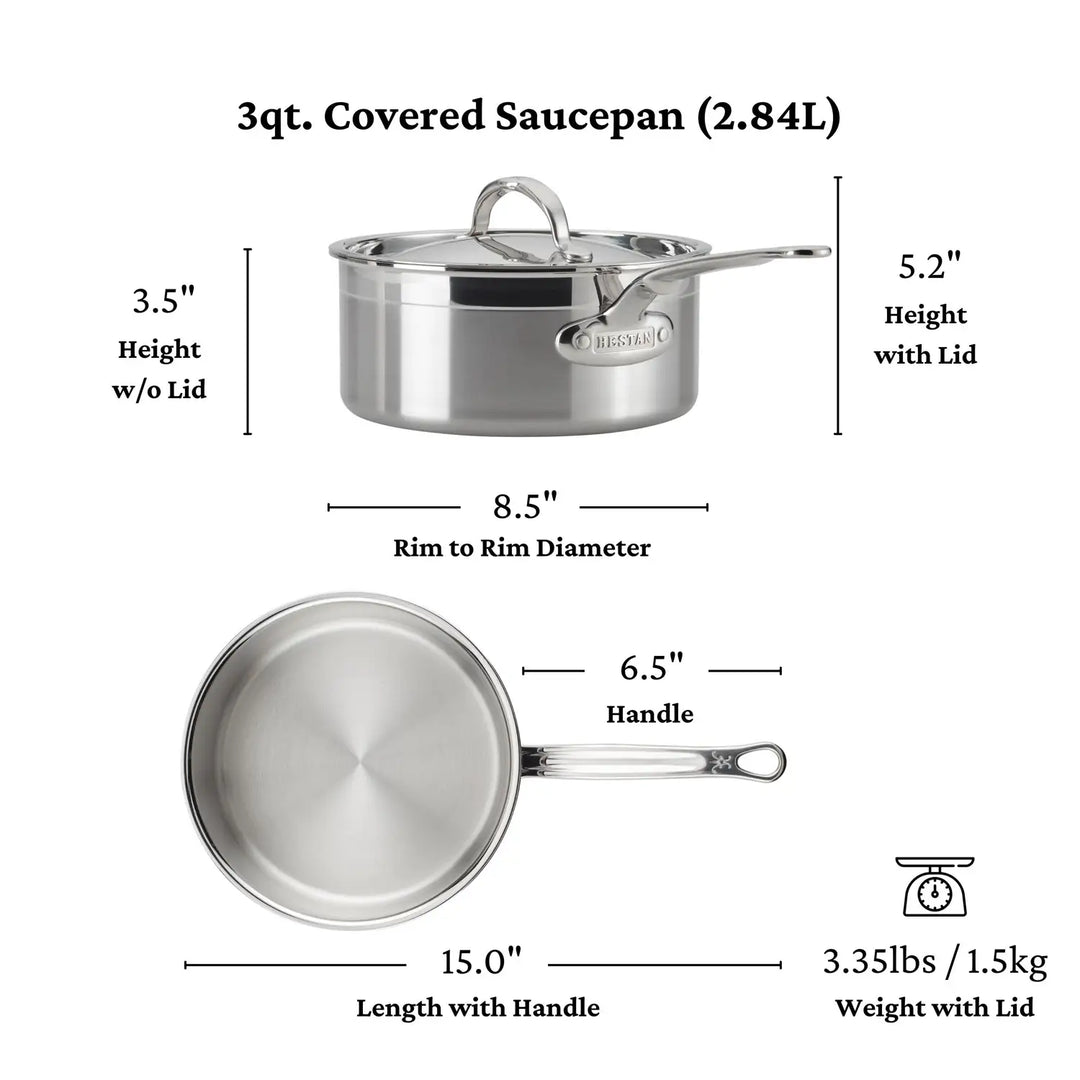
How big is a 3 quart saucepan in terms of actual size? Most 3 quart saucepans are:
- Diameter: 8 to 9 inches (20–23 cm)
- Height: 4 to 5 inches (10–13 cm)
These measurements can vary slightly based on the brand and design. For example, some pans are wider and shallower, while others are taller and narrower.
A typical 3 quart saucepan is large enough to cook soup for two to four people, boil pasta, or make a sauce for a family dinner. If you’re cooking for yourself or a small group, this size is very practical.
Here’s a quick comparison:
| Saucepan Size | Approximate Diameter | Approximate Height | Capacity (Cups) |
|---|---|---|---|
| 1 Quart | 6 inches | 3 inches | 4 |
| 2 Quart | 7 inches | 3.5 inches | 8 |
| 3 Quart | 8 inches | 4 inches | 12 |
| 4 Quart | 9 inches | 4.5 inches | 16 |
This chart shows how a 3 quart saucepan fits between smaller and larger sizes.
What Can You Cook In A 3 Quart Saucepan?
If you’re wondering what recipes work best, the 3 quart saucepan is very flexible. Here are some examples:
- Soups and stews: You can make enough soup for a family of four, or prepare stew for meal prep.
- Boiling pasta: It comfortably holds about 8 ounces (half a box) of dry pasta, plus water.
- Rice and grains: Cook up to 2 cups of dry rice, which is enough for 4–5 servings.
- Sauces: Simmer tomato sauce or gravy for a group.
- Blanching vegetables: Perfect for boiling broccoli, carrots, or green beans.
A non-obvious insight: If you try to cook large quantities in a 3 quart pan, it may overflow. For example, boiling more than 8 ounces of pasta or making soup with lots of bulky ingredients can push the limits. For most daily cooking, though, this size is a good balance between capacity and manageability.
Comparing 3 Quart Saucepans To Other Sizes
Choosing the right saucepan means knowing how a 3 quart saucepan compares to other common sizes. Let’s look at two main comparisons: smaller pans and larger pans.
1 Quart Vs. 3 Quart
A 1 quart saucepan is much smaller. It’s best for heating a can of soup, melting butter, or preparing a single serving of oatmeal. You’ll quickly outgrow this size if you cook for more than one person.
2 Quart Vs. 3 Quart
The 2 quart saucepan is popular for sides or small batches. It’s good for boiling a couple of eggs or making a small amount of sauce. However, it may not be enough for family meals.
3 Quart Vs. 4 Quart
A 4 quart saucepan is larger and better for big batches. It’s ideal for boiling a pound of pasta or making soup for six or more. But it can feel bulky for smaller tasks.
Here’s another table to highlight differences in usage:
| Saucepan Size | Best For | Typical Servings | Weight (Empty) |
|---|---|---|---|
| 1 Quart | Single servings, melting | 1–2 | 1.2 lbs |
| 2 Quart | Small sides, sauces | 2–3 | 1.5 lbs |
| 3 Quart | Family meals, pasta | 3–5 | 2.0 lbs |
| 4 Quart | Large soups, batch cooking | 5–7 | 2.4 lbs |
Credit: hestanculinary.com
Three Key Aspects Of A 3 Quart Saucepan
This topic mentions three items, so let’s cover three main aspects individually: capacity, physical dimensions, and common uses.
Capacity
The most important feature is capacity. As described, a 3 quart saucepan holds 12 cups. When you fill it, remember that you shouldn’t go all the way to the brim—leave space to avoid spills. For liquid-heavy recipes, aim to fill it two-thirds full.
For dry ingredients, like pasta or rice, the pan’s capacity determines how much you can cook at once. For example, cooking 2 cups of dry rice (which expands to about 6 cups cooked) is easy in a 3 quart pan.
Physical Dimensions
The physical dimensions affect storage and handling. Most 3 quart saucepans have a sturdy handle, a tight-fitting lid, and a flat base for even heating. The pan usually fits on standard stovetops without crowding other pots.
A non-obvious tip: Some brands make 3 quart pans slightly wider or taller. If you like simmering, a wider pan helps reduce faster. If you prefer boiling, a taller pan prevents splashes.
Common Uses
Common uses for a 3 quart saucepan include:
- Boiling water for pasta or eggs
- Cooking grains like rice, quinoa, or barley
- Making sauces, gravies, and soups
- Heating leftovers or canned foods
- Blanching vegetables
Some cooks use a 3 quart pan for desserts, such as pudding or custard, because it’s small enough to control temperature but large enough for several servings.
Material Choices And Their Impact
Saucepans come in different materials: stainless steel, aluminum, copper, or nonstick coatings. Each material affects cooking performance and durability.
- Stainless steel is tough and resists rust. It heats evenly but can be heavy.
- Aluminum is lightweight and heats quickly. Sometimes it reacts with acidic foods.
- Copper offers precise temperature control but is expensive and needs care.
- Nonstick pans are easy to clean, but the coating can wear out over time.
A 3 quart saucepan made from quality material will last longer and cook better. For example, stainless steel pans often have a layered base to prevent hot spots.
Practical Tips For Using A 3 Quart Saucepan
To get the most from your 3 quart saucepan, follow these practical tips:
- Don’t overfill: Leave at least 1 inch from the top when boiling liquids.
- Use the right burner: Match the pan’s size to the stovetop burner for even heating.
- Stir regularly: For sauces or soups, stirring helps prevent sticking.
- Use the lid: Covering the pan speeds up boiling and saves energy.
- Clean gently: If your pan is nonstick, avoid metal utensils.
A tip beginners often miss: If you’re unsure about the pan’s size, fill it with water and measure how many cups it holds. This way, you know its true capacity.
Is A 3 Quart Saucepan Right For You?
A 3 quart saucepan fits most kitchens. It’s not too big or too small. If you cook for 2–4 people, it’s perfect. For larger families, you may need a bigger pot. For single servings, a smaller pan is better.
Consider your favorite recipes. If you often make pasta, soup, or grains, a 3 quart saucepan is a smart choice. It’s also easy to store and handle.
Some buyers make the mistake of choosing a pan that’s too large or too small. Think about your needs, and pick a size that matches your cooking style. If you’re unsure, start with a 3 quart pan and add other sizes as needed.
Credit: www.youtube.com
Comparison Of Brands And Prices
There are many brands offering 3 quart saucepans, each with its own features. Prices range from $20 (basic aluminum) to over $100 (premium stainless steel or copper).
Here’s a look at some popular options:
| Brand | Material | Typical Price | Warranty |
|---|---|---|---|
| Cuisinart | Stainless Steel | $35–$50 | Limited Lifetime |
| All-Clad | Stainless Steel | $90–$120 | Lifetime |
| T-fal | Nonstick Aluminum | $25–$35 | 1 Year |
| Calphalon | Nonstick | $40–$60 | 10 Years |
For reviews and detailed specifications, you can visit Consumer Reports.
Frequently Asked Questions
How Many People Can A 3 Quart Saucepan Serve?
A 3 quart saucepan can serve 3–5 people for most recipes, such as soup or pasta. It’s ideal for small families or couples. If you need to cook for more, consider a larger pot.
Can I Use A 3 Quart Saucepan For Frying?
Yes, you can use it for shallow frying, such as sautéing vegetables or pan-frying chicken. However, it’s not designed for deep frying because it’s not deep enough.
Is A 3 Quart Saucepan Oven Safe?
Most stainless steel or aluminum 3 quart saucepans are oven safe, but check the manufacturer’s instructions. Nonstick pans or those with plastic handles may not be safe at high temperatures.
What Are The Common Mistakes When Choosing Saucepan Size?
Many people buy pans that are too large or too small. A common mistake is not considering how much food you usually cook. Another error is ignoring storage space in your kitchen.
How Do I Clean A 3 Quart Saucepan?
Wash with warm soapy water and a soft sponge. For tough stains, soak the pan first. Avoid abrasive cleaners, especially on nonstick pans. Dry thoroughly to prevent rust.
A 3 quart saucepan offers a perfect balance for everyday cooking. Now that you know its size, uses, and comparisons, you can make smarter choices in your kitchen. Whether you’re boiling pasta, making soup, or simmering sauce, this pan is a reliable tool.
Remember the tips and comparisons shared here, and you’ll find the 3 quart saucepan is one of the most useful pieces of cookware you’ll own.

Credit: americankitchen.com