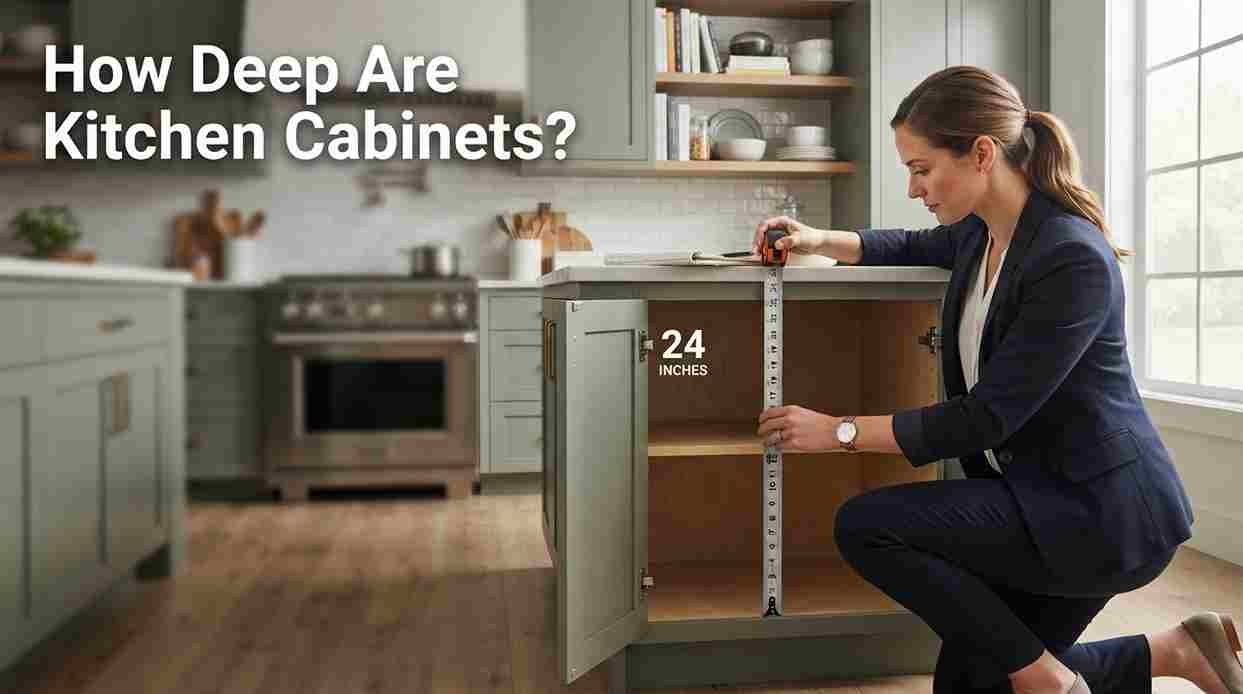
How Deep Are Kitchen Cabinets?
When you plan a new kitchen or update your current space, one detail makes a huge impact: the depth of your kitchen cabinets. This simple measurement affects how much you can store, how easy it is to reach items, and even how your kitchen looks and feels. Yet, many homeowners don’t know the standard sizes, why depth matters, or what to consider if you want a custom solution.
Let’s explore everything you need to know about kitchen cabinet depth, using clear examples and practical advice for any project.
Standard Kitchen Cabinet Depths
Most kitchens use cabinets with standard dimensions, which help designers fit appliances and countertops efficiently. But what are these standard depths, and why do they exist?
Base Cabinets
The base cabinets are the ones that sit on the floor, supporting your countertop. In almost all US kitchens, the standard depth for base cabinets is 24 inches (measured from the wall to the front of the cabinet, not including the door or drawer face). This depth allows enough space for a standard countertop, which usually hangs over the cabinet edge by about an inch.
Some kitchens, especially small ones, may use shallower base cabinets—such as 12, 15, or 18 inches deep—on special walls or in narrow spaces. But for most work areas, 24 inches is the norm.
Wall Cabinets
Wall cabinets are mounted above the countertop. The standard depth here is 12 inches, making them half as deep as base cabinets. This makes it easy to reach stored items without bumping your head or blocking the workspace below.
Sometimes, wall cabinets are made deeper—15 or 18 inches—to store large plates or create a more modern look. However, going deeper can make it hard to reach the back, especially for shorter users.
Tall Cabinets And Pantries
Tall cabinets (also called pantry cabinets) can run from floor to ceiling. Their depth is usually 24 inches, like base cabinets, to line up with appliances and countertops. Some pantry cabinets are 12 or 18 inches deep to save space or fit into smaller kitchens.
Quick Reference
Here’s a summary of the most common kitchen cabinet depths:
| Cabinet Type | Standard Depth (inches) | Common Alternatives |
|---|---|---|
| Base Cabinets | 24 | 12, 15, 18, 21 |
| Wall Cabinets | 12 | 15, 18 |
| Tall/Pantry Cabinets | 24 | 12, 18 |
Why Cabinet Depth Matters
Choosing the right cabinet depth is about more than just looks. The size you pick changes how your kitchen functions every day.
- Storage Space: Deeper cabinets offer more room for large pots, pans, and pantry items. But if cabinets are too deep, things at the back can get lost or forgotten.
- Appliance Fit: Standard depths match most kitchen appliances, like dishwashers and stoves, so everything lines up and looks neat.
- Countertop Size: Countertops are usually 25–25.5 inches deep to allow a small overhang. If cabinets are not a standard size, you may need custom countertops, which can cost more.
- Movement and Safety: Cabinets that are too deep can make it hard to walk through a narrow kitchen or reach the back shelf, leading to accidents.
Custom And Non-standard Cabinet Depths
Sometimes, the standard sizes won’t work. Maybe your kitchen is small, or you want a unique design. Custom cabinet depths allow you to make the most of every inch.
Shallow Cabinets
If you have a narrow space, like a hallway kitchen or under a window, shallow cabinets (as little as 9–12 inches deep) can make the area usable without blocking walkways. These are also good for extra storage in dining rooms or laundry areas.
Extra-deep Cabinets
Some people want extra-deep cabinets, up to 30 inches, to store large items like baking trays or bulk food. This can be helpful in big kitchens but may make it hard to reach the back.
Appliance Cabinets
Many modern kitchens have cabinets built to fit specific appliances—like wall ovens, microwaves, or deep refrigerators. These may be 27 or 30 inches deep so the appliance sits flush with the cabinet face.
Unique Spaces
Older homes, angled walls, or unusual kitchen layouts often require custom cabinet depths. Skilled cabinetmakers can build cabinets to almost any size, but this adds cost and complexity.
Measuring For Cabinet Depth
Getting the right measurement is critical. Even a small mistake can lead to appliances sticking out or drawers hitting walls.
Steps To Measure Cabinet Depth
- Start at the Wall: Measure from the finished wall surface to the front edge where the cabinet will end.
- Check for Obstacles: Look for outlets, pipes, or uneven walls that may affect how deep your cabinets can be.
- Consider Countertop Overhang: Remember, standard countertops overhang the cabinet by about 1 inch.
- Match Appliances: Make sure the depth matches your appliances. For example, a standard dishwasher is about 24 inches deep.
Common Measuring Mistakes
- Forgetting to account for wall thickness or tile backsplash
- Measuring to the cabinet door, not the box (always measure the box)
- Not checking the width of doorways (the cabinet must fit through)
Comparing Cabinet Depths: Storage And Usability
Cabinet depth affects both how much you can store and how easy it is to use the space. Here’s a comparison to help you see the impact:
| Depth (inches) | Storage Volume (cubic feet, per 36″ wide, 34.5″ high cabinet) | Ease of Access |
|---|---|---|
| 12 | ~3 | Very Easy |
| 18 | ~4.5 | Easy |
| 24 | ~6 | Moderate |
| 30 | ~7.5 | Difficult |
Key Insight: While deeper cabinets hold more, items at the back are harder to reach without pull-out drawers or organizers.
Special Considerations For Cabinet Depth
Kitchen design is not only about standard sizes. A few non-obvious factors can affect your choice.
Countertop Appliances
If you use appliances like a microwave, coffee maker, or toaster oven on your countertop, make sure the wall cabinets above are not too deep. Otherwise, you may not have enough workspace or headroom.
Corner Cabinets
Corner base cabinets often use a diagonal or L-shape design, with depths that differ from standard cabinets. These are usually 24 inches deep on each side, but the inner corner can be larger to fit lazy Susans or pull-out shelves.
Ada Compliance
If you need an accessible kitchen for wheelchair use, cabinet depths may be reduced to 21 inches to make it easier to reach the back. Sinks and cooktops may also have different requirements.
Toe Kicks
The toe kick—the recessed space at the bottom of a cabinet—usually does not affect depth, but it is important for comfort. Standard toe kicks are 3.5–4.5 inches high and 3 inches deep.
Tips For Choosing The Right Cabinet Depth
Making a good decision means thinking about your lifestyle, kitchen size, and budget. Here are some expert tips:
- Test Storage Needs: Before deciding, measure your largest pots, plates, or pantry items. Will they fit in a 12-inch or 24-inch deep cabinet?
- Think About Reach: If you’re shorter, deep cabinets may be hard to use, especially on upper walls.
- Plan for Organizers: Pull-out trays, lazy Susans, and drawer inserts can help you use deep cabinets more efficiently.
- Mix and Match: It’s fine to use different depths in the same kitchen—shallow cabinets for spices, standard ones for pots, and deep ones for pantry storage.
- Consider Future Appliances: If you might upgrade to a wider fridge or oven, make sure your cabinet depth will still work.
Cost And Installation Factors
Custom cabinet depths can add beauty and storage, but they also affect cost and installation time.
- Custom Sizing: Non-standard cabinets cost more because they must be made to order.
- Countertop Costs: If you choose a depth that’s not standard, expect to pay extra for a custom countertop.
- Installation Challenges: Deeper or shallower cabinets may require changes to plumbing, wiring, or flooring.
- Resale Value: Most homebuyers expect standard cabinet sizes. Too many custom sizes can make your kitchen harder to sell.

Credit: www.thomasvillecabinetry.com
Cabinet Depths For Different Kitchen Styles
Some kitchen designs use unique cabinet depths to create a certain look or function.
Modern Kitchens
Modern kitchens often feature full-depth base cabinets with clean lines. Sometimes, wall cabinets are deeper (15–18 inches) to create visual interest or store larger items. However, this can make the space feel smaller.
Traditional Kitchens
Traditional kitchens usually stick with standard depths—24 inches for base, 12 inches for wall cabinets. This keeps the space open and easy to use.
Small Kitchens
In small kitchens, using shallow cabinets (as little as 12 inches) on one wall can open up floor space. Sometimes, designers use open shelves above shallow base cabinets to avoid a cramped feeling.
Open-plan Kitchens
For kitchens that open into living spaces, designers may use deeper base cabinets on an island—27 or 30 inches—to create more storage and a wider eating bar.
Real-world Examples
Let’s look at how cabinet depth works in practice.
- Galley Kitchen: A narrow galley kitchen uses 24-inch base cabinets on one side and 12-inch on the other, making the walkway wider and safer.
- Family Kitchen: A busy family kitchen might use standard 24-inch base cabinets, but add a 30-inch deep island for baking and homework.
- Condo Kitchen: In a small city condo, 15-inch deep wall cabinets provide extra space for dishes without feeling too bulky.
Trends In Cabinet Depth
Kitchen design trends change over time. Here are a few current ideas:
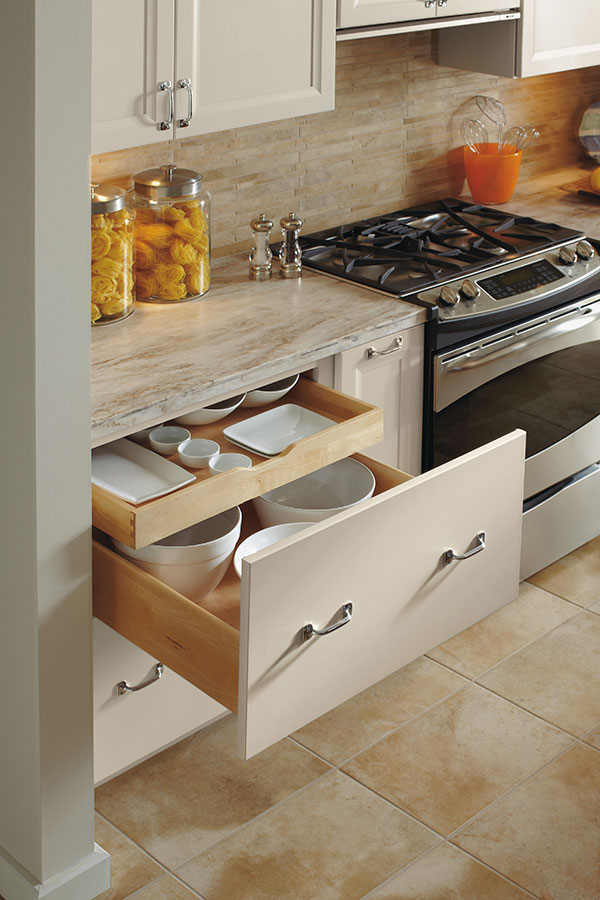
- Deep Drawer Base Cabinets: Many new kitchens replace lower cabinets with deep drawers (24 inches or more) for easy access to pots and pans.
- Hidden Appliances: Some designers use extra-deep cabinets (up to 30 inches) to hide refrigerators or dishwashers behind matching doors.
- Slim Cabinets: Tall, shallow cabinets (as little as 6 inches deep) are used for spice racks or tray storage near ovens.
For more about kitchen cabinet standards and history, the Wikipedia Kitchen Cabinet page offers useful background.
Frequently Asked Questions
How Deep Should Kitchen Base Cabinets Be?
The standard depth for kitchen base cabinets is 24 inches. This fits most countertops and appliances. Shallower cabinets (12–18 inches) are used in small kitchens or special areas.
Are Wall Cabinets Always 12 Inches Deep?
Most wall cabinets are 12 inches deep, but some are made 15 or 18 inches deep for extra storage. Just make sure deeper cabinets don’t block your workspace or make it hard to reach items.
Can I Have Custom Cabinet Depths?
Yes, you can order cabinets in almost any depth. Custom sizes work well in unusual spaces, but they cost more and may require special countertops.
Will Deeper Cabinets Increase My Kitchen Storage?
Deeper cabinets increase storage volume, but they can make it harder to reach the back. Using pull-out drawers or organizers can help you make the most of the extra space.
What Is The Best Cabinet Depth For A Small Kitchen?
For small kitchens, shallow cabinets (12–15 inches deep) can save space and make the room feel bigger. You can mix shallow and standard-depth cabinets to get the best of both worlds.
Whether you’re building new or remodeling, understanding cabinet depth helps you create a kitchen that’s beautiful, practical, and just right for your needs. With the right choices, you’ll enjoy a kitchen that works well for years to come.
Credit: www.omegacabinetry.com