Hot water dispensers have become a common sight in homes, offices, and public spaces. They save time, offer convenience, and make it easy to prepare drinks like tea, coffee, or even instant soup. But have you ever wondered, how hot is the water in a water dispenser? This is a question many users ask, especially when safety, drink quality, or device performance is important. Let’s explore how water dispensers heat water, what temperatures you can expect, and why these details matter more than you might think.
How Water Dispensers Heat Water
Modern water dispensers use electricity to quickly heat water. Inside the machine, you’ll find a heating element—usually a metal coil or plate. When you press the hot water lever, the dispenser releases water that has been kept at a high temperature inside a small tank.
There are two main heating methods:
- Continuous heating: The device keeps water hot all the time, ready to use.
- On-demand heating: The water heats up only when you need it, which saves energy but can take a little longer.
Most dispensers have a thermostat that controls the temperature and stops the water from getting too hot. This safety feature prevents burns and also helps the machine last longer.
Typical Hot Water Temperatures
The actual temperature of hot water in a dispenser depends on the model, brand, and country. However, most devices heat water to a range that is safe for use but also hot enough to make drinks and food.
Here’s a breakdown of common temperature ranges:
| Dispenser Type | Typical Hot Water Temperature (°F) | Typical Hot Water Temperature (°C) |
|---|---|---|
| Home/Office Standard Dispensers | 185–200 | 85–93 |
| Commercial/Restaurant Dispensers | 190–205 | 88–96 |
| Instant Boiling Water Taps | 198–212 | 92–100 |
| Child-Safe Models | 160–180 | 71–82 |
Most hot water dispensers keep water between 185°F and 200°F (about 85°C to 93°C). For comparison, water boils at 212°F (100°C) at sea level. Some high-end or commercial units can reach just below boiling, while child-safe models are set lower to reduce burn risk.
Why Water Temperature Matters
The temperature of hot water in a dispenser isn’t just about making drinks faster. It affects safety, taste, and even the lifespan of your machine.
Safety And Scalding Risk
Water hotter than 140°F (60°C) can cause burns in seconds. That’s why most home dispensers stay below boiling point. Devices with child locks or lower temperature settings help prevent accidents, especially in places with children or elderly people.
Drink Quality And Food Preparation
Certain drinks need water at specific temperatures to taste best. For example, black tea needs water close to boiling, while green tea tastes better with water around 175°F (80°C). Instant noodles and oatmeal also cook faster with hotter water.
Here’s a quick guide for common drinks:
| Beverage/Food | Ideal Water Temperature (°F) | Ideal Water Temperature (°C) |
|---|---|---|
| Black Tea | 200–212 | 93–100 |
| Green Tea | 160–180 | 71–82 |
| Instant Coffee | 185–200 | 85–93 |
| Hot Chocolate | 185–190 | 85–88 |
| Instant Noodles | 200–212 | 93–100 |
Appliance Durability
Constantly heating water to very high temperatures can wear out a dispenser’s internal parts, especially the heating element. Most brands set a temperature that balances quick heating with long device life.
Differences Between Dispenser Types
Not all water dispensers are the same. Some offer only hot and cold, while others include room temperature or even sparkling water. Let’s compare the main types:
| Type | Main Features | Hot Water Temperature Range (°F) |
|---|---|---|
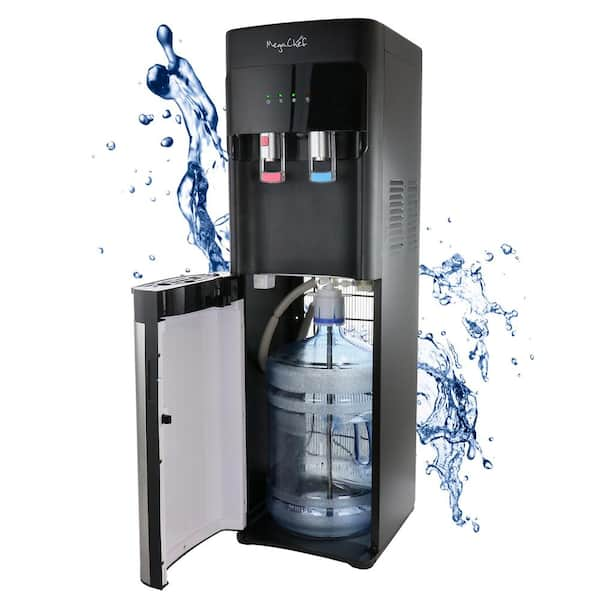
| Bottle-Type Dispenser | Uses water bottles; easy to install | 185–200 |
| Plumbed-In Dispenser | Connects to water supply; often larger | 190–205 |
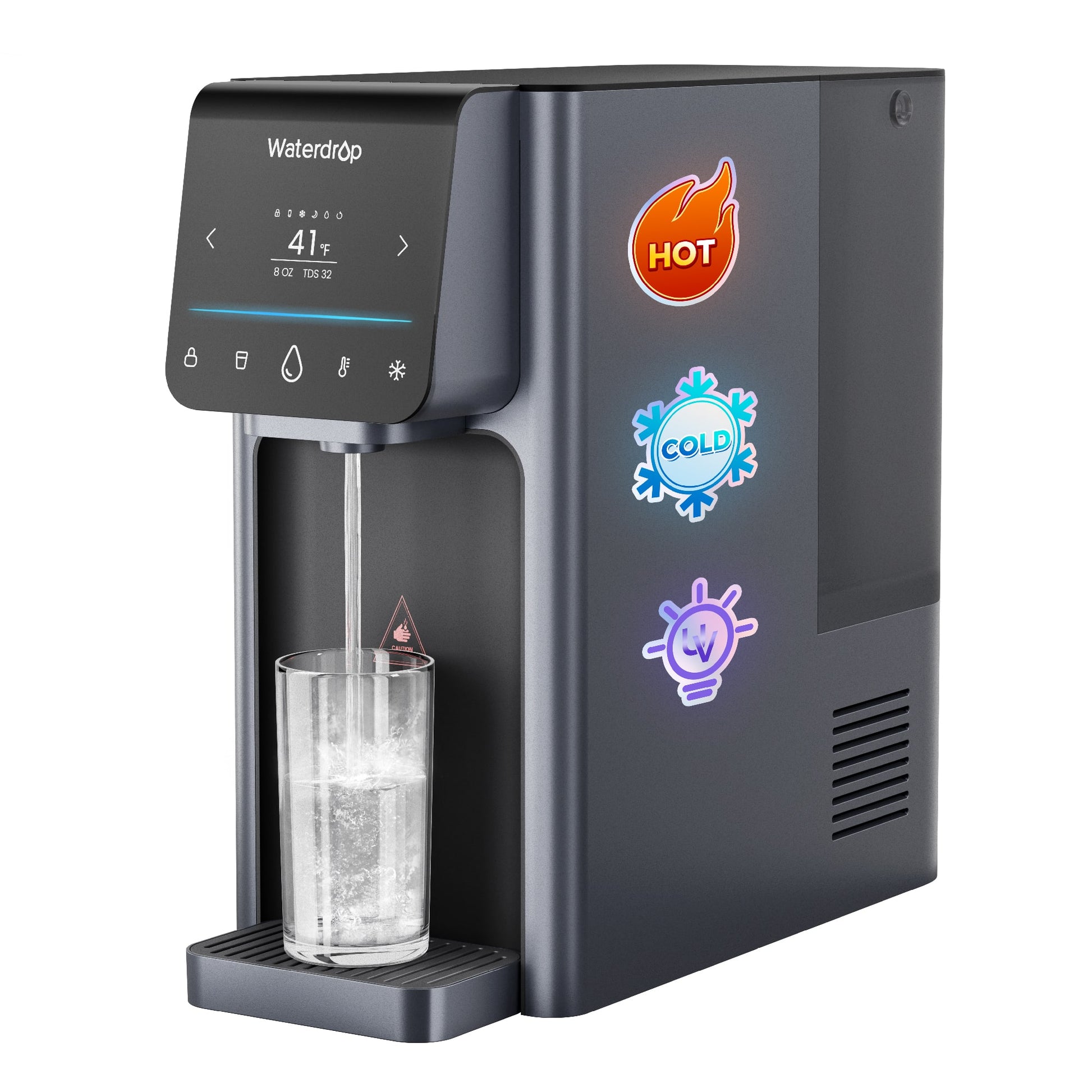
| Countertop Instant Tap | Very hot water; compact design | 198–212 |
| Childproof Model | Lower temperature for safety | 160–180 |
If you need water for baby formula or sensitive drinks, a childproof model is a smart choice. For coffee lovers, an instant boiling tap may be better.
Credit: www.waterdropfilter.co.uk
How To Check Your Dispenser’s Hot Water Temperature
Many users never test the actual temperature of their dispenser’s hot water. But it’s easy to check—and it can help you use the device safely and effectively.
What You Need
- A digital food thermometer (the kind used for meat or candy)
- A heat-proof cup
Steps To Measure
- Let the dispenser heat up fully (most have a ready light).
- Dispense a cup of hot water.
- Place the thermometer in the water, making sure it doesn’t touch the cup’s sides.
- Wait for the reading to stabilize.
If the temperature is much lower or higher than expected, check the manual. Some devices allow you to adjust the thermostat, while others might need repair.
Non-obvious tip: If you live at a high altitude, water boils at a lower temperature, so don’t expect 212°F even from a “boiling” water tap.
Safety Features And Regulations
Manufacturers must follow rules to keep water dispensers safe. In the US, standards from organizations like UL (Underwriters Laboratories) and NSF International guide maximum temperatures and safety locks.
Common Safety Features
- Child safety lock: Prevents accidental dispensing of hot water.
- Automatic shut-off: Stops heating if the device gets too hot.
- Double-walled tanks: Reduce the risk of burns from touching the device.
Some newer models even let you choose the hot water temperature. This is useful for making tea or baby bottles.
Credit: www.homedepot.com
Energy Use And Temperature Settings
Hot water dispensers use energy to keep water hot. If the temperature is set too high, the device uses more power. Some modern units have eco-modes or timers to reduce energy use.
If you want to save on electricity:
- Use on-demand heating if possible.
- Lower the thermostat slightly (but not below 160°F for safety).
- Turn off the dispenser when not in use for long periods.
According to the US Department of Energy, lowering the hot water temperature by even 10°F can save up to 5% in energy costs for some appliances.
Common Mistakes Users Make
Many people don’t realize that the way you use your dispenser affects both safety and performance. Here are mistakes to avoid:
- Ignoring regular cleaning: Mineral deposits can build up, affecting heating efficiency and water taste.
- Not checking the temperature: Over time, thermostats may drift, and water can get too hot or too cold.
- Placing the dispenser near heat sources: Sunlight or appliances like ovens can confuse the thermostat, leading to overheating.
- Using the wrong voltage: Always check if your dispenser matches your country’s power supply.
- Not using filtered water: Hard or dirty water can damage the heating element and affect taste.
Insider tip: Even if your dispenser has a filter, changing it every 3–6 months keeps both the water and the heater in good shape.
Troubleshooting Inconsistent Hot Water
If your dispenser sometimes gives hot water and sometimes only warm, it might be due to:
- Sediment buildup: This acts as insulation, so the heater can’t transfer heat properly.
- Thermostat problems: The control may not be working, leading to unstable temperatures.
- Overuse: Dispensing hot water in large amounts can empty the tank, and it takes time to reheat.
A good habit is to wait a few minutes between large servings, especially during busy times like office lunch hours.
What To Do If Your Dispenser Is Too Hot Or Too Cold
If you suspect your water is hotter or colder than it should be:
- Check the manual for instructions on adjusting the thermostat.
- Unplug the unit and let it cool before inspecting.
- For models without adjustment, you might need to contact customer support.
- If the water is dangerously hot, stop using the dispenser until it’s fixed.
Some older dispensers can develop thermostat failures, causing them to overheat. This is not only a burn risk but can also damage the machine.
Real-world Examples
- In an office setting, a standard dispenser keeps water at about 190°F (88°C). This is hot enough for coffee and tea but not boiling, which prevents scalding.
- In a restaurant, an instant-boiling tap can reach 205°F (96°C), making it perfect for French press coffee or sterilizing utensils.
- At home, a child-safe unit may stay at 170°F (77°C), safe enough to mix formula but not high enough to burn.
Understanding these differences can help you pick the right device and use it confidently.
Comparing Hot Water Dispensers And Kettles
Some people ask if a water dispenser can replace a kettle. Here’s a quick comparison:
- Speed: Dispensers give hot water instantly, while kettles take 2–5 minutes to boil.
- Temperature control: Some dispensers allow precise settings; basic kettles usually don’t.
- Capacity: Dispensers can serve many cups in a row, while kettles need refilling.
- Energy use: Dispensers use more energy if left on all day; kettles use less if boiled only when needed.
If you need lots of hot drinks quickly, a dispenser is best. For occasional use, a kettle may be more efficient.
How To Choose The Right Hot Water Dispenser
When buying a water dispenser, consider:
- Temperature range: Make sure it can reach the heat level you need.
- Safety features: Look for child locks and automatic shut-off.
- Tank size: Larger tanks are better for busy offices or families.
- Adjustable thermostat: Useful if you want to set exact temperatures.
- Filter compatibility: Important for taste and machine health.
If you want to see an example of energy-saving features, check the details on the ENERGY STAR website.
Frequently Asked Questions
How Hot Does A Typical Water Dispenser Get?
Most standard water dispensers heat water to between 185°F and 200°F (85°C to 93°C). Some commercial units can reach up to 205°F, while child-safe models may be set lower.
Is Dispenser Hot Water Hot Enough To Sterilize?
Almost. Water must be at 212°F (100°C) to sterilize, which is boiling. Most dispensers do not reach this, but their water is hot enough for most drinks and instant foods.
Can I Adjust My Water Dispenser’s Hot Water Temperature?
Some models have an adjustable thermostat, usually inside the unit or controlled by a dial. Check your manual to see if your device allows this.
Why Is My Dispenser’s Hot Water Not Hot Enough?
Possible reasons include a faulty thermostat, sediment buildup in the tank, or the device not being fully heated. Regular cleaning and maintenance help avoid this problem.
Is It Safe For Children To Use The Hot Water Tap?
Most modern dispensers have child safety locks. Still, always supervise children around hot water to prevent burns.
Water dispensers are a smart addition to any kitchen or office, but understanding exactly how hot their water gets helps you use them safely and make the best drinks every time.

Credit: www.fetco.com