Smoke detectors are a small but powerful tool that protects lives and property. Most people install them and forget about them, but these devices don’t last forever. Knowing how long smoke detectors last is crucial for home safety. A failed detector can mean missing the early warning of a fire, which can be deadly. Many homeowners, renters, and even some landlords are unsure about replacement schedules, battery life, and how to check if a detector is still working. This guide will help you understand the lifespan of smoke detectors, signs you need a new one, and how to make sure your home stays protected.
How Long Do Smoke Detectors Last?
Most smoke detectors are designed to last between 8 and 10 years. This lifespan is set by manufacturers after testing how well the sensors and internal parts work over time. After a decade, even if the detector looks fine, its sensors may become less sensitive. This means it might not detect smoke or fire as quickly, or sometimes not at all.
Why do they expire? The sensors inside, especially in ionization and photoelectric detectors, gradually wear out. Dust, humidity, and everyday air pollution can also affect performance. According to the National Fire Protection Association (NFPA), you should replace all smoke detectors at least every 10 years, regardless of their type or brand.
Types Of Smoke Detectors And Lifespans
There are two main types of smoke detectors:
- Ionization smoke detectors: These are better at detecting fast, flaming fires. Their lifespan is typically 8–10 years.
- Photoelectric smoke detectors: These respond well to slow, smoldering fires. Their recommended lifespan is also 8–10 years.
Some modern models combine both sensor types. Combination detectors follow the same replacement rule: 10 years maximum.
Battery-powered Vs. Hardwired Models
- Battery-powered smoke detectors: Batteries must be changed at least once a year, but the detector itself needs replacement after 8–10 years.
- Hardwired smoke detectors: These connect to the home’s electrical system and often have backup batteries. The unit itself still needs replacement after 10 years.
Smart Smoke Detectors
Smart detectors, which connect to Wi-Fi or your phone, often have built-in lithium batteries. These batteries can last up to 10 years, which matches the detector’s lifespan. When the battery dies, the whole unit should be replaced.
Why Smoke Detectors Don’t Last Forever
The main reason is sensor degradation. Over time, exposure to dust, insects, moisture, and even cooking fumes can make the sensors less sensitive. A detector may not warn you of smoke as quickly, or sometimes not at all. The plastic housing can also break down, affecting internal parts.
Another factor is electrical wear. Even hardwired detectors face issues like power surges, corrosion, and wiring faults. These problems can stop the detector from working correctly.
A less obvious point: Technology improves. Older detectors may not respond to newer fire hazards, such as synthetic materials or modern furnishings, as well as new models.
Signs Your Smoke Detector Needs Replacement
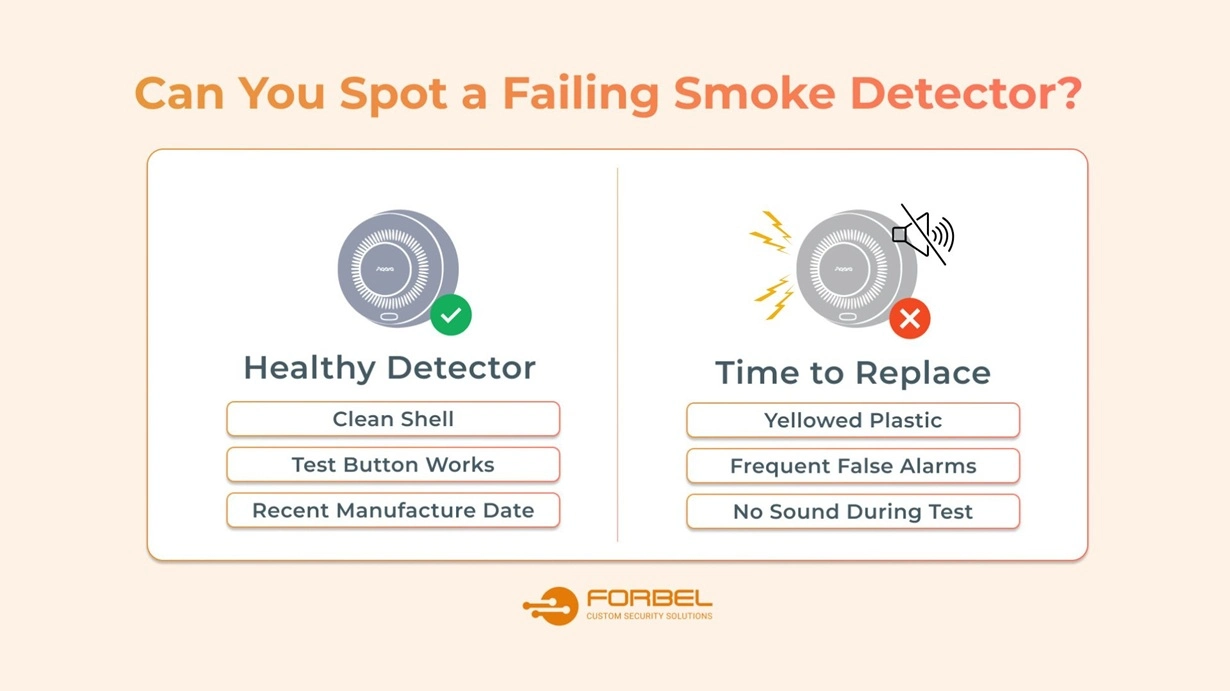
A smoke detector rarely fails with a big warning. Here are signs you need a new one:
- Chirping or beeping, even after replacing batteries
- Yellowed plastic, which suggests aging and exposure to heat
- Failure to respond to smoke tests
- No light indicator or the light stays off
- Physical damage: Cracks, water marks, or missing parts
If your detector shows any of these signs, replace it immediately.
How To Check The Age Of Your Smoke Detector
Most smoke detectors have a manufacture date printed on the back or inside. To check:
- Remove the detector from its base.
- Look for the date stamp or sticker.
- If it’s over 10 years old, replace it—even if it seems fine.
If you can’t find a date, assume it’s time for a replacement. Many older models lack a visible date, and these are likely past their safe period.

Credit: support.firstalert.com
Comparison: Smoke Detector Lifespans By Type
To clarify, here’s a quick comparison of common types:
| Type | Typical Lifespan | Battery Change |
|---|---|---|
| Ionization | 8–10 years | Annually |
| Photoelectric | 8–10 years | Annually |
| Hardwired | 10 years | Annually (backup battery) |
| Smart Detector | Up to 10 years | Replace unit |
Factors That Shorten Smoke Detector Life
Smoke detectors can fail before their 10-year mark because of:
- High humidity: Causes corrosion and sensor problems.
- Extreme temperatures: Heat or cold can damage electronics.
- Dust and dirt: Clogs sensors and reduces sensitivity.
- Bugs and insects: Can get inside and block sensors.
- Paint and chemicals: If you paint over the detector, it may stop working.
If your home has these conditions, check detectors more often and consider earlier replacement.
How To Maintain Smoke Detectors For Maximum Life
Regular care helps your smoke detector last as long as possible:
- Test monthly: Press the test button to confirm it sounds.
- Clean gently: Use a vacuum or soft brush to remove dust.
- Replace batteries yearly: Even in hardwired detectors, change backup batteries.
- Don’t paint: Never cover the detector with paint or stickers.
- Keep clear: Don’t block with furniture or curtains.
What Happens If You Don’t Replace Old Smoke Detectors?
Old detectors may fail silently. They could miss smoke, delay alarms, or even stop working completely. Many home fires become deadly because detectors didn’t alert people in time. According to the NFPA, three out of five fire deaths happen in homes with no working smoke detectors. Keeping detectors up-to-date is one of the simplest ways to prevent tragedy.
Smoke Detector Lifespan Statistics
Here are some real numbers to show why timely replacement matters:
- The NFPA reports 30% of smoke detector failures are caused by dead batteries, but 25% are due to age or damage.
- Studies show detectors older than 10 years are 50% less reliable than new ones.
- Homes with working smoke detectors have half the fire death rate compared to homes with no detectors.
Comparison: Smoke Detector Replacement Intervals Vs. Other Safety Devices
For perspective, see how smoke detectors compare to other common safety tools:
| Device | Recommended Replacement Interval |
|---|---|
| Smoke Detector | 8–10 years |
| Carbon Monoxide Detector | 5–7 years |
| Fire Extinguisher | 12 years (service), 6 years (check) |
| Emergency Flashlight | 5 years |
Practical Tips: Replacing Smoke Detectors
Replacing a smoke detector is simple, but a few tips make it safer and easier:
- Turn off power: For hardwired detectors, shut off the breaker before starting.
- Read instructions: Follow the manual for your model.
- Use proper mounting: Install on ceilings or high walls, away from vents.
- Label install date: Write the date of installation on the detector for easy tracking.
- Test after install: Press the test button to confirm it works.
Non-obvious Insights: What Most People Miss
- Different rooms need different detectors: Kitchens and bathrooms may require special models to avoid false alarms from cooking or steam.
- Smoke detectors are not fireproof: If exposed directly to flames or heat, they can melt or fail. Place them where fires are unlikely to start right below the detector.
- Smart detectors need software updates: Some models require updates for new fire detection algorithms. Check the manufacturer’s website for updates.

Credit: www.reddit.com
Common Mistakes When Replacing Smoke Detectors
- Ignoring the manufacture date: Many people only change batteries, not the whole detector.
- Mismatching types: Using the wrong detector for the room (e.g., ionization in the kitchen) leads to false alarms.
- Not testing after installation: Always press the test button.
- Leaving old detectors as backups: Remove all expired detectors; don’t keep them alongside new ones.
Smoke Detector Placement Matters
Having new detectors is not enough. You must place them correctly:
- Install one in every bedroom
- Place at least one on every floor, including basements
- Avoid placing near windows, doors, or vents, which can interfere with smoke detection
Credit: forbel.com
Smoke Detector Laws And Regulations
In the US, local codes may require smoke detectors in specific locations. For example, many states demand detectors in every bedroom and outside sleeping areas. Landlords are often legally responsible for replacing detectors on schedule. Check your local regulations to ensure compliance.
If you want more details on fire safety codes, visit the NFPA.
Frequently Asked Questions
How Do I Know If My Smoke Detector Is Too Old?
Check for a manufacture date on the back or inside the unit. If it is over 10 years old, replace it. If there’s no date, it’s safest to install a new detector.
Can I Just Change The Battery Instead Of Replacing The Whole Detector?
Changing the battery keeps the detector powered, but the sensor itself wears out over time. After 10 years, replace the whole unit, not just the battery.
What Happens If I Paint Over My Smoke Detector?
Painting can block the sensor and vents, making the detector useless. Always remove the detector before painting and reinstall after the paint is dry.
Are Smart Smoke Detectors More Durable?
Smart detectors use newer technology and sealed batteries, but their lifespan is still 8–10 years. When the battery dies, you must replace the whole unit.
Do Smoke Detectors Work During A Power Outage?
Battery-powered detectors work even when the power is out. Hardwired detectors usually have a backup battery. Always check the battery regularly to ensure protection during outages.
Smoke detectors are a silent guardian in every home. Understanding their lifespan and the need for regular replacement can save lives. Checking dates, testing monthly, and replacing every 10 years is simple but powerful. Don’t wait for a beep or a fire—keep your detectors fresh and your home safe.