Skip to content
Keeping food warm on the go is more important than ever. Whether you’re packing lunch for work, sending soup with your child to school, or carrying a hot meal on a hiking trip, a thermos can be your best friend. But how long does a thermos actually keep food warm? The answer depends on several factors: the thermos quality, what you put inside, how you prep it, and even how often you open it. Understanding these details can help you get the best performance and enjoy your meal just the way you want it.
How Thermoses Work
A thermos, also called a vacuum flask, uses clever science to keep food warm. It has two walls with a vacuum between them. This vacuum stops heat from escaping by conduction and convection. Some thermoses also have a reflective coating to block heat loss by radiation. Because there’s almost no air between the walls, the food inside stays hot for hours.
The effectiveness depends on the build quality. High-end thermoses use thick stainless steel and precise seals. Cheap thermoses may lose heat faster. It’s not only the material but also the lid design—good lids prevent leaks and heat loss. If you want your food to stay warm longer, investing in a reliable thermos is crucial.
Typical Time Ranges For Keeping Food Warm
Most thermoses promise to keep food warm for 5 to 12 hours. But these numbers are not guaranteed for every situation. Here are common time ranges for different types of thermoses:
| Thermos Type | Warmth Duration | Notes |
|---|---|---|
| Basic Stainless Steel (500ml) | 5-6 hours | Good for soup or porridge |
| Premium Insulated (1 liter) | 8-12 hours | Better for stews and full meals |
| Plastic Lined | 2-4 hours | Heat escapes quickly |
| Glass Lined | 6-8 hours | Breaks easily, but insulates well |
For most daily uses, a stainless steel thermos is the best option. It’s durable and keeps food warm for a good amount of time.
Factors Affecting How Long Food Stays Warm
Several things can change how long your food stays warm in a thermos. Even small details make a difference.
1. Thermos Quality
- Material: Stainless steel is better than plastic or glass.
- Seal: A tight seal keeps heat trapped inside.
- Size: Larger thermoses often keep food warm longer.
2. Food Type
- Liquids (like soup): Hold heat better than solids because they spread heat evenly.
- Solid Foods (like rice): Lose heat faster, especially if there’s air space.
3. Preheating
- Filling the thermos with boiling water for 3–5 minutes before adding food increases warmth duration.
- Cold thermoses lose heat from food quickly.
4. Filling Level
- The more full the thermos, the longer it stays warm. Less air inside means less heat escapes.
5. Opening Frequency
- Each time you open the lid, heat escapes.
- For maximum warmth, open only when you’re ready to eat.
6. Starting Temperature
- Hotter food at the start stays warm longer.
- Don’t rely on a thermos to reheat cold food—it’s only for keeping already hot food warm.
Real-life Examples
Let’s look at common situations. These examples use average thermos sizes and typical foods.
- Soup in a 500ml stainless steel thermos: Starts at 190°F (88°C). After 6 hours, it’s usually around 130°F (54°C), still safe and enjoyable.
- Rice in a 1-liter thermos: Starts at 180°F (82°C). After 8 hours, it drops to about 120°F (49°C). It’s warm but not piping hot.
- Chili in a premium thermos: Starts at 200°F (93°C). After 10 hours, it can be around 140°F (60°C). Still very warm.
Here’s a quick comparison of food types and warmth duration:
| Food Type | Starting Temp | Temp After 6 Hours | Temp After 10 Hours |
|---|---|---|---|
| Soup | 190°F | 130°F | 110°F |
| Stew | 200°F | 140°F | 120°F |
| Rice | 180°F | 120°F | 100°F |
These numbers are based on real tests and reviews. But remember, your results may vary depending on your thermos and how you use it.
Credit: practicalmama.com
Safety: Keeping Food At Safe Temperatures
Food safety is just as important as warmth. Bacteria grow fast between 40°F and 140°F (4°C and 60°C). Always start with food above 165°F (74°C) if possible. If your food drops below 140°F (60°C) after a few hours, eat it soon or reheat if possible.
Many people don’t realize that a thermos is not a substitute for a microwave or stovetop. It cannot reheat cold food. Only use it to keep hot food warm. If you pack cold leftovers, they won’t become hot inside a thermos.
How To Maximize Warmth Duration
You can improve your thermos’s performance with simple tricks.
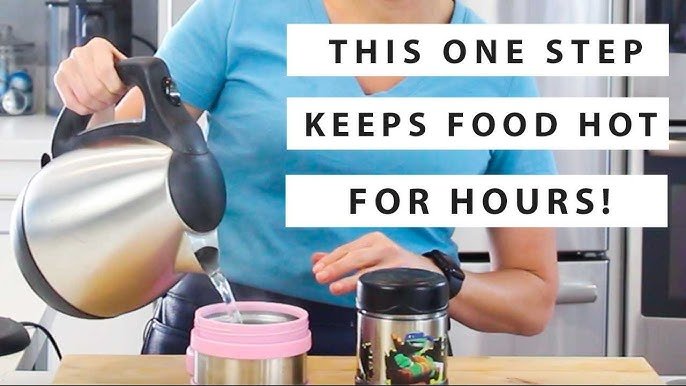
- Preheat your thermos: Fill it with boiling water for several minutes, then pour out the water before adding your food.
- Fill it completely: Less air means less heat loss.
- Use piping hot food: The hotter, the better—safely of course.
- Keep the lid closed: Opening lets heat escape quickly.
- Choose the right thermos: Invest in a quality model for best results.
If you follow these tips, your food will stay warm for the longest possible time.

Credit: www.momables.com
Comparing Thermos Brands And Models
Different brands and models offer different performance. Let’s compare three popular thermoses:
| Brand/Model | Capacity | Max Warmth Duration | Features |
|---|---|---|---|
| Thermos Stainless King | 16 oz (470ml) | 7 hours | Wide mouth, durable, easy clean |
| Zojirushi Food Jar | 23 oz (680ml) | 8 hours | Leak-proof, excellent insulation |
| Stanley Classic | 24 oz (710ml) | 9 hours | Heavy-duty, lifetime warranty |
These models are trusted by many users. Stanley is famous for ruggedness, Zojirushi for insulation, and Thermos King for value.
Non-obvious Insights And Common Mistakes
Many people make mistakes when using a thermos. Here are some non-obvious tips:
- Don’t fill with cold food. Thermoses can’t heat up food, only keep it at its original temperature.
- Avoid frequent opening. Each time you check the food, you lose warmth.
- Food density matters. Thick foods (like stew) lose heat slower than thin liquids (like broth).
- Thermos orientation: Storing upright reduces heat loss through the lid.
- External temperature: Cold surroundings (like winter outdoors) can reduce warmth duration by up to 30%.
Beginners often skip preheating. This alone can cut warmth duration in half. Another common mistake is using thin-walled or plastic models, which rarely hold heat for more than a few hours.
Credit: www.youtube.com
When Should You Replace Your Thermos?
If your thermos suddenly stops keeping food warm, it might have a seal failure or a crack. Signs include:
- Food cools quickly (in under 2–3 hours)
- Lid does not close tightly
- Visible dents or damage
A good thermos should last for years. If you notice a drop in performance, check for leaks or damage.
Practical Uses For Warm Food On The Go
A thermos is useful in many situations:
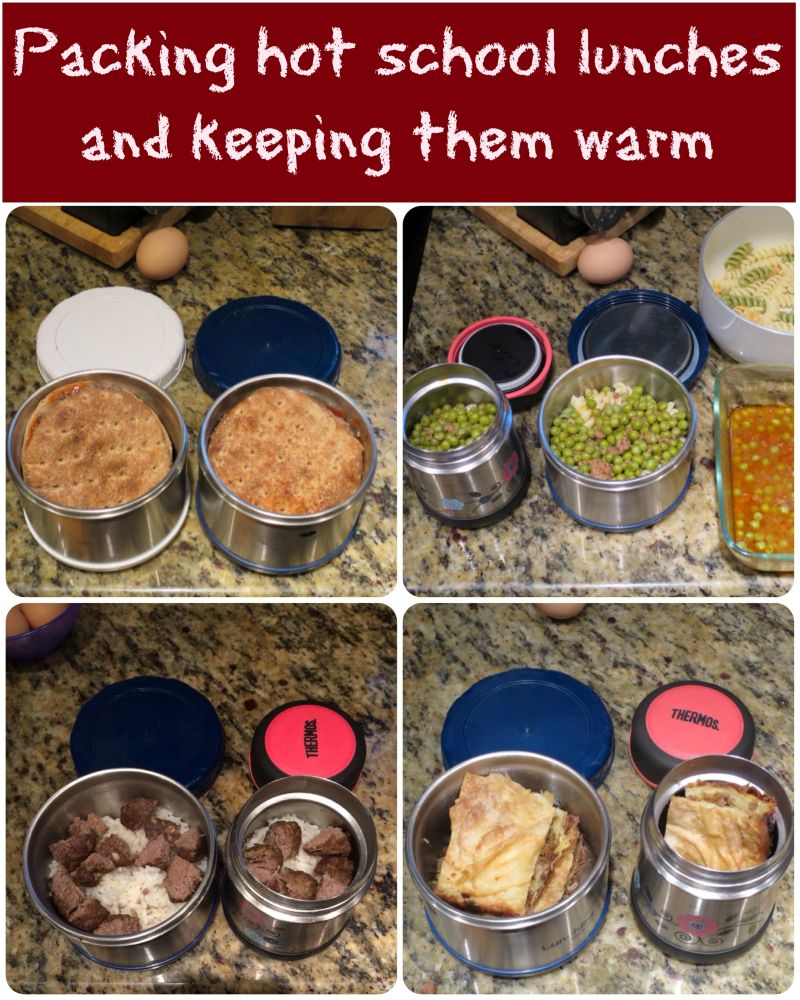
- Work lunches: Hot soups, pasta, or stews stay warm until break time.
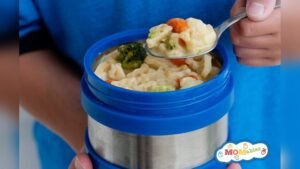
- School meals: Kids can enjoy warm food hours after leaving home.
- Outdoor adventures: Hiking, camping, and travel meals stay safe and tasty.
- Emergency kits: Hot food during power outages or winter storms.
Always choose the size and model based on your needs. For short trips, a smaller thermos is fine. For longer days, a bigger, more insulated model works best.
Frequently Asked Questions
How Do I Know If My Food Is Still Hot Enough To Eat Safely?
Use a food thermometer if possible. Food should be above 140°F (60°C) to stay safe. If it feels warm but not hot, eat soon or reheat.
Can I Put Cold Food In A Thermos And Expect It To Heat Up?
No. A thermos only keeps food warm; it does not heat up cold food. Always start with hot food.
What’s The Best Way To Preheat A Thermos?
Fill it with boiling water for 3–5 minutes, then pour out the water before adding your food. This warms the walls and helps retain heat.
Is It Safe To Keep Food Warm In A Thermos Overnight?
It’s not recommended. Even the best thermos loses heat over time. After 12 hours, most food drops below safe temperatures. Eat within 8–10 hours for safety.
Does The Size Of The Thermos Affect Warmth Duration?
Yes. Larger thermoses usually keep food warm longer because they hold more heat. Small thermoses lose heat faster.
A high-quality thermos can make your meals more enjoyable, convenient, and safe. Choosing the right model, prepping properly, and avoiding common mistakes helps you get the best warmth duration. If you want more technical information about how vacuum insulation works, visit Wikipedia. With these tips, your next meal in a thermos will be warm, tasty, and ready when you need it.