If you want perfectly cooked eggs every time, an egg cooker can make your mornings easier. But how long does an egg cooker actually take? The answer depends on several factors, including the type of egg you want (soft, medium, or hard-boiled), the machine’s design, and even your altitude.
This guide breaks down everything you need to know about egg cooker timing, so you can get exactly the results you want, every single time.
Understanding How Egg Cookers Work
Egg cookers are small kitchen appliances designed to steam eggs quickly and consistently. They usually hold 6–12 eggs at a time and use a heating plate, a water reservoir, and a lid to create steam. The machine measures time or water amount to determine doneness.
Most egg cookers don’t just boil eggs—they can also make poached eggs, omelets, and even scrambled eggs. The basic process is simple: add water, place your eggs, select the setting, and press start. A buzzer or click signals when the eggs are ready. This means you don’t need to watch a timer or worry about overcooking.
Many models use a measured cup to decide how much water is added. More water means longer cooking time and a firmer yolk; less water means a shorter time and a softer yolk.
Factors That Affect Egg Cooker Timing
Before we dive into numbers, it’s important to know what changes the time your egg cooker will need:
- Egg Size: Large eggs usually need more time than medium or small eggs.
- Number of Eggs: Filling the tray with 1 egg or 7 eggs can change the timing slightly.
- Desired Consistency: Soft, medium, or hard yolks all need different times.
- Egg Temperature: Eggs straight from the fridge take longer than room temperature eggs.
- Machine Wattage: Higher wattage means faster steaming.
- Water Amount: Most cookers use more water for hard-boiled eggs, less for soft-boiled.
- Altitude: Higher altitudes can increase cooking time because water boils at a lower temperature.
Not all egg cookers are the same, and some come with extra features like digital timers, auto shut-off, and multiple trays. Reading your specific manual is always smart, but the general principles stay the same.
Typical Cooking Times For Different Eggs
Let’s get to the numbers. Most egg cookers fall into a predictable timing range. Here’s what you can expect for the three most common egg types, using standard large eggs and an average machine:
| Egg Type | Water (ml) | Cooking Time (minutes) | Texture |
|---|---|---|---|
| Soft-Boiled | 25–30 | 6–8 | Firm white, runny yolk |
| Medium-Boiled | 35–40 | 8–10 | Firm white, slightly set yolk |
| Hard-Boiled | 50–60 | 11–14 | Firm white and yolk |
These numbers are averages. Some machines might be a minute or two faster or slower. For poached eggs and omelets, the timing is a little different, as explained below.
Poached Eggs And Omelets
Most egg cookers include a small tray for poaching eggs or making omelets. These dishes use the steam differently:
- Poached eggs: 5–7 minutes
- Omelets: 8–10 minutes
You usually need to grease the poaching or omelet tray lightly to prevent sticking.
Comparing Popular Egg Cooker Brands
Different brands have slightly different timing, water requirements, and features. Here’s a quick comparison of three popular models: Dash Rapid Egg Cooker, Cuisinart Egg Central, and Elite Gourmet Easy Egg Cooker.
| Brand / Model | Capacity | Hard-Boiled (min) | Soft-Boiled (min) | Omelet (min) | Special Features |
|---|---|---|---|---|---|
| Dash Rapid Egg Cooker | 6 eggs | 12–14 | 7–8 | 8–10 | Auto shut-off, buzzer |
| Cuisinart Egg Central | 10 eggs | 15–16 | 8–10 | 9–11 | Two tiers, omelet tray |
| Elite Gourmet Easy Egg Cooker | 7 eggs | 12–13 | 8–9 | 10–12 | Indicator light, poaching tray |
These numbers show that while most cookers are similar, there can be small differences. It’s also common for first-time users to overcook or undercook eggs. That’s why it’s helpful to test and adjust the water amount for your taste.

Credit: bydash.com
Step-by-step: Using An Egg Cooker For Perfect Results
Even though egg cookers are simple, using them correctly makes a big difference. Here’s how to get the best out of your machine:
- Read the Manual: Each cooker has its own instructions. Start there.
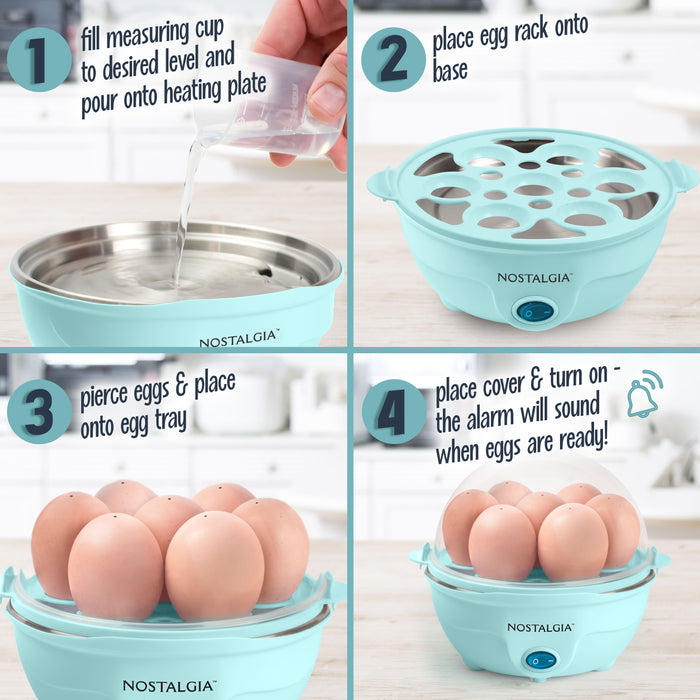
- Measure Water Correctly: Use the included measuring cup. The water amount is key to timing.
- Pierce Egg Shells: Most cookers come with a small pin to pierce the fat end of the egg. This prevents eggs from cracking.
- Arrange Eggs Properly: Place eggs with the pierced end up.
- Start the Cooker: Select your setting or just press start if there’s only one button.
- Wait for the Signal: Most machines beep or click when done.
- Cool Eggs Fast: Move eggs to cold water right away. This stops cooking and makes peeling easier.
For poached eggs or omelets, grease the trays first, then add eggs or mixture. The same water measurement rules apply.
Common Mistakes To Avoid
Many beginners make small errors that affect timing and results:
- Using the wrong water amount: Too much water means overcooked eggs, too little means undercooked.
- Not piercing eggs: This can lead to cracked shells and messy eggs.
- Ignoring egg size: Jumbo eggs need more time and water than medium eggs.
- Starting with cold eggs: If you want even results, let eggs sit at room temperature for 10–15 minutes before cooking.
How Egg Cookers Compare To Other Cooking Methods
You might wonder why someone would use an egg cooker instead of boiling eggs on the stove or using a microwave. Here’s a comparison to help you decide:
| Method | Time (Hard-Boiled) | Consistency | Ease of Use | Cleanup |
|---|---|---|---|---|
| Egg Cooker | 11–14 min | Very consistent | Very easy | Minimal |
| Stove Top | 15–20 min | Can vary | Moderate | Pot to wash |
| Microwave | 8–10 min | Risk of explosion | Tricky | Easy |
Egg cookers save a few minutes compared to the stove and give more reliable results. Microwaves can be fast but often lead to rubbery or exploded eggs unless you use a special container.
How To Adjust Cooking Time For Your Preferences
Egg cookers are designed for ease, but you might want to fine-tune your results. Here’s how:
- Softer yolks: Use less water than the manual suggests for soft-boiled eggs.
- Firmer yolks: Use more water, but don’t go over the line for hard-boiled eggs.
- Altitude adjustment: If you live above 3,000 feet, add an extra 1–2 minutes.
It’s a good idea to keep a small notebook or note on your phone with your preferred settings for each egg type and size. This way, you don’t have to guess next time.
Non-obvious Insights Most Beginners Miss
- Humidity and kitchen temperature affect steaming: On a humid summer day, eggs may cook slightly faster because the air is already moist. In a dry winter kitchen, you might need a few seconds more.
- Egg freshness matters: Very fresh eggs are harder to peel, even when cooked perfectly. Using eggs that are at least a week old makes peeling much easier.
- Lid placement affects cooking: If the lid is not seated tightly, steam escapes, which can extend cooking time and give uneven results.
- Descaling improves performance: Mineral build-up on the heating plate slows down heating. Use vinegar to clean your cooker every month for consistent timing.
How To Clean And Maintain Your Egg Cooker
Cleaning your egg cooker is simple but important for safety and performance:
- Unplug and cool: Always unplug and let the machine cool before cleaning.
- Wipe heating plate: Use a damp cloth to remove any residue.
- Wash trays and lid: Most parts can go in the dishwasher, but check your manual.
- Descale monthly: If you see white spots, run a cycle with vinegar and water (50/50) to remove minerals.
- Dry completely: Store the cooker dry to prevent mold or odors.
A clean egg cooker works faster and lasts longer.
When Timing Goes Wrong: Troubleshooting Guide
If your eggs aren’t coming out right, don’t worry. Here are solutions to common timing problems:
- Eggs undercooked: Add more water or let eggs sit in hot steam for another minute.
- Eggs overcooked: Use less water or remove eggs immediately after the signal.
- Uneven cooking: Make sure all eggs are the same size and placed upright.
- Cracked eggs: Pierce the shell, and don’t use eggs with hairline cracks.
It’s normal to need 2–3 tries to find your “sweet spot” for timing. Once you do, results are repeatable and reliable.

Credit: www.thefoodieaffair.com
Are Egg Cookers Worth The Time Savings?
For busy families, meal preppers, or anyone who eats eggs often, egg cookers offer real value. You can set it up, walk away, and have breakfast or a snack ready in minutes. While you might save only 5–7 minutes per batch, you also gain:
- No need to watch the stove
- No risk of boiling over
- Consistent results every time
Some people worry about the extra appliance on their counter. However, most egg cookers are small (about the size of a large mug) and easy to store. They use less energy than boiling water on the stove, too.
Practical Tips For Faster, Tastier Eggs
- Start with room temperature eggs: This shortens cooking time by 1–2 minutes.
- Use filtered water: Reduces mineral build-up and gives slightly better steam.
- Add a pinch of salt to the water: This can help prevent egg whites from leaking if cracks form.
- Peel eggs under running water: The shell comes off easier, especially for hard-boiled eggs.
- Try flavoring the water: Add a slice of lemon or a dash of vinegar to add subtle flavor to the eggs.
- Batch cooking: Cook a full tray and refrigerate eggs for up to a week for quick snacks or salads.
Credit: nostalgiaproducts.com
How Egg Cookers Have Changed Over Time
Egg cookers have evolved from simple steamers to smart appliances. Modern models may include:
- Digital timers and displays
- Multiple trays for poaching and omelets
- Larger capacity (up to 14 eggs)
- Automatic shut-off and keep-warm features
- Stainless steel construction for easier cleaning
Some advanced models link to apps or allow custom programming. While these features can add convenience, the core function—using steam to cook eggs evenly—remains the same.
For a deeper look at how egg cookers work, check the background and types on Wikipedia.
Frequently Asked Questions
How Long Does An Egg Cooker Take For Hard-boiled Eggs?
Most egg cookers take 11 to 14 minutes for hard-boiled eggs using large eggs. The exact time depends on water amount, egg size, and your machine’s wattage. Always check your manual for best results.
Can I Cook Fewer Eggs Than The Cooker’s Capacity?
Yes, you can cook just one or two eggs in most egg cookers. Timing usually doesn’t change much, but very few eggs may cook a bit faster. Add a splash less water if you like softer eggs.
Do Egg Cookers Work With Extra-large Or Jumbo Eggs?
Egg cookers can handle extra-large or jumbo eggs, but you may need more water and an extra minute or two. Overfilling the tray may cause uneven cooking. Always pierce larger eggs to prevent cracking.
Why Are My Eggs Hard To Peel After Cooking?
Eggs are harder to peel if they’re very fresh. For easiest peeling, use eggs at least a week old, and transfer them to cold water immediately after cooking. Rolling the eggs gently before peeling can help.
Can I Use My Egg Cooker For Other Foods?
Some egg cookers can steam vegetables, dumplings, or small potatoes using the included trays. Always check your manual, as not all models are designed for these foods. Never overfill with water.
Egg cookers are a small investment that delivers reliable, tasty eggs with almost no effort. Whether you’re cooking for yourself or a family, knowing exactly how long an egg cooker takes helps you plan—and enjoy—your meals with confidence.