Skip to content
Every home has one, but few people think about the size of their kitchen trash can until it’s time to buy a new one. You might wonder, “How many gallons is a kitchen trash can? ” The answer can help you keep your kitchen clean, reduce mess, and even save money on trash bags.
Choosing the right size is not just about fitting the space—it’s about fitting your daily life.
A too-small can means frequent trips to the outdoor bin, while a too-large one can take up precious space and lead to odors if trash sits too long. As a practical advisor, I’ll help you understand kitchen trash can sizes, why they matter, and how to pick the best one for your home.
Why Kitchen Trash Can Size Matters
The size of your kitchen trash can affects much more than you might think. It changes how often you need to take out the trash, how fresh your kitchen smells, and even how your kitchen looks. Many people buy the wrong size because they don’t realize how much waste their household produces, or they simply choose whatever fits under the sink.
A can that’s too small can overflow quickly, leading to spills and frustration. On the other hand, a can that’s too big can encourage you to leave trash sitting longer, which can attract pests and create odors. The right size makes life easier and keeps your kitchen more hygienic.
Common Kitchen Trash Can Sizes In Gallons
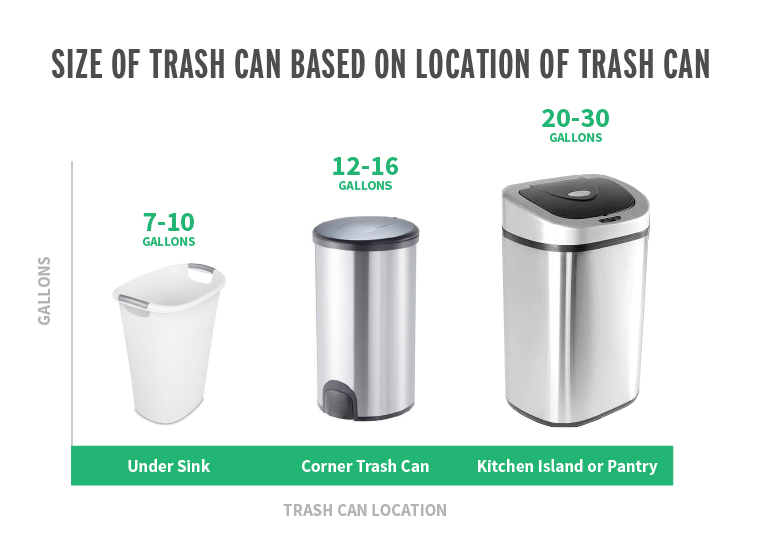
Kitchen trash cans come in a variety of sizes. In the US, they are almost always measured in gallons. Most homes use a can between 10 and 20 gallons, but there are smaller and larger options. Here’s an overview of the most common sizes:
| Size (Gallons) | Typical Use | Fits Where? |
|---|---|---|
| 4-7 gallons | Small kitchen, single person, bathroom | Under sink, tight spaces |
| 8-10 gallons | Small family, apartment | Under counter, corner |
| 12-16 gallons | Average family, standard kitchen | Beside cabinets |
| 20+ gallons | Large family, high-traffic kitchen | Open floor plan, pantry |
The most popular size for a standard kitchen is 13 gallons. This size balances capacity with the need to take out the trash before it smells.
How To Measure A Kitchen Trash Can
If you already have a trash can and want to know its size, you can find the capacity in gallons by measuring. Here’s how:
- Measure the height, width, and depth (or diameter for round cans) of the can, in inches.
- Multiply these numbers to find the volume in cubic inches.
- Divide the total cubic inches by 231 (since one US gallon = 231 cubic inches).
For example, if your rectangular can is 24 inches tall, 10 inches wide, and 12 inches deep:
- 24 x 10 x 12 = 2,880 cubic inches
- 2,880 ÷ 231 ≈ 12.5 gallons
For a round can, use the formula for cylinder volume (π × radius² × height).
Pro tip: Manufacturers often round up the gallon size, so if you measure 12.5 gallons, your can is likely sold as a 13-gallon can.
Factors That Affect The Best Size For Your Kitchen
Choosing the right kitchen trash can involves more than just guessing. Consider these factors:
1. Household Size
- Single or couple: 7-10 gallons is usually enough.
- Family of 3-5: 12-16 gallons works for most.
- Large families: 20+ gallons may be necessary.
2. Cooking Habits
If you cook at home every day and generate a lot of food scraps, you’ll need a larger can. Takeout-heavy households may need less capacity.
3. Frequency Of Trash Collection
If you take out the trash daily, a smaller can might work. If you prefer to empty it less often, go bigger.
4. Available Space
Measure the space where you want to put the can. Don’t forget to leave room to open the lid.
5. Bag Compatibility
Check what trash bags are available in your area. The 13-gallon size is the most common, so bags are easy to find and usually less expensive.
Small Vs. Large Kitchen Trash Cans: Pros And Cons
Both small and large trash cans have advantages and disadvantages. Here’s a direct comparison:
| Feature | Small Can (4-8 gal) | Large Can (12-20+ gal) |
|---|---|---|
| Space Needed | Minimal | More floor/cabinet space |
| Odor Control | Better (emptied more often) | Can be worse if not emptied often |
| Bag Cost | Usually cheaper | Standard bags easier to find |
| Best For | Singles, small kitchens | Families, frequent cooks |
Popular Kitchen Trash Can Sizes By Brand
Some brands are known for certain popular sizes. Here are some common kitchen trash can sizes you’ll see in stores:
- Simplehuman 13 Gallon – One of the best-selling models for medium to large families.
- Rubbermaid 13 Gallon Step-On – Reliable and durable, fits standard bags.
- Glad Stainless Steel 20 Gallon – For extra-large kitchens or heavy use.
- Sterilite 7 Gallon Swing-Top – Good for small spaces or as a secondary can.
- ITouchless 14 Gallon Sensor Can – For tech lovers or high-traffic kitchens.
- Umbra 10 Gallon Sleek Can – Great for apartments and modern kitchens.
- Hefty 12.8 Gallon Touch Lid – Slightly less than standard, but fits most 13-gallon bags.
The 13-gallon size is the industry standard for a reason: it’s large enough for most needs, but not so big that trash sits for days.

Credit: georgefurniture.com
Matching Trash Bags To Gallon Size
One detail many people overlook is bag fit. Using the wrong size bag can lead to rips, spills, or wasted plastic. Most trash bags are labeled with gallon sizes, but check your can’s dimensions.
For best results:
- A 13-gallon trash can should use 13-gallon bags.
- For cans over 16 gallons, look for “tall kitchen bags” or “extra-large kitchen bags.”
- For small cans (4-8 gallons), use “bathroom” or “office” size bags.
If your can is an unusual shape, measure the height and circumference and check the bag package for sizing guides.
Special Types Of Kitchen Trash Cans
Kitchens today may use more than one kind of trash can. Here are a few special types and their usual sizes:
Slim Or Under-counter Cans
Usually 7-10 gallons. These fit in narrow spaces or under the sink. Ideal for small kitchens, but need to be emptied more often.
Dual-compartment Cans
These help with sorting trash and recycling in one unit. Each compartment is often 7-8 gallons, so the total can be 14-16 gallons, but divided.
Step-on And Sensor Cans
The mechanism doesn’t change the size, but these features are often found on 13-gallon models for convenience.
Compost Bins
Many people keep a small 1-3 gallon bin on the counter or under the sink for compost. Not for all trash, but useful for kitchen scraps.
How Kitchen Trash Can Sizes Compare Globally
In the US, kitchen trash cans are usually measured in gallons. In other countries, liters are common. For reference:
- 4 gallons ≈ 15 liters
- 8 gallons ≈ 30 liters
- 13 gallons ≈ 50 liters
- 20 gallons ≈ 75 liters
If you’re reading packaging or guides from another country, convert liters to gallons by dividing by 3. 785.
Common Mistakes When Choosing Trash Can Size
Many people make the following mistakes:
- Guessing instead of measuring: Always measure the space and estimate how much trash you make each day.
- Choosing a can that’s too big: Large cans are tempting, but if you don’t fill them regularly, odors can build up.
- Not considering bag availability: Unusual sizes can make bags expensive or hard to find.
- Ignoring recycling and compost needs: You may need two cans, or a dual-compartment can, especially if your city requires recycling.
One less obvious mistake: assuming the can’s gallon size is the only thing that matters. Shape, lid type, and height can be just as important for daily use.
When To Upgrade Or Downsize Your Kitchen Trash Can
You might need a new trash can if:
- Your current one overflows often.
- The lid doesn’t close with a full bag.
- You’ve moved to a bigger (or smaller) kitchen.
- Local rules now require sorting trash and recycling.
- You started composting and now produce less trash.
If you’re unsure, try tracking how many times you empty your can per week. If it’s more than once daily, a bigger can may help. If you rarely fill it, consider downsizing to keep things fresher.
You might find this helpful: Best Trash Can for Kitchen
Kitchen Trash Can Size And Design Trends
Modern kitchens are more open, and design is now a bigger factor. Stainless steel, soft-close lids, and even smart cans are popular. However, the 13-gallon size remains the most common because it fits most needs and bag types.
Some new models offer features like odor filters, built-in bag storage, and motion sensors. These can be useful but don’t change the basic sizing needs.

Credit: www.plasticplace.com
How To Make The Most Of Your Kitchen Trash Can
Here are two useful tips most people miss:
- Line the bottom of your can with old newspaper or baking soda to absorb spills and odors.
- Don’t overpack bags. Stretching a bag to fit more can cause tears and make taking out the trash harder.
If you’re tight on space, look for cans with a rectangular design—they fit against walls and maximize capacity without taking up extra room.
Frequently Asked Questions
What Is The Standard Size Of A Kitchen Trash Can?
The most common size is 13 gallons. This size fits most kitchens, holds enough trash for a family of three or four, and matches the most widely available trash bags.
Can I Use A Larger Trash Can In A Small Kitchen?
Yes, but be careful. A large can can take up valuable floor space and may lead to odors if not emptied often. For small kitchens, a 7-10 gallon can is more practical.
How Do I Know What Size Trash Bags To Buy?
Match the gallon size of your trash can to the bags. If your can is an odd shape, measure the height and circumference and check the bag package for size recommendations.
What’s The Difference Between A Kitchen Trash Can And A Bathroom Trash Can?
Kitchen trash cans are larger (usually 10-20 gallons), designed for more waste and often have features like lids or step pedals. Bathroom cans are smaller (3-5 gallons), fit under sinks, and handle lighter waste.
Credit: trashcansunlimited.com
Where Can I Find More Information About Kitchen Trash Cans?
You can learn more about kitchen trash can sizes and types at the official EPA recycling site, which also covers waste management and recycling tips.
In the end, the right kitchen trash can size depends on your home, habits, and space. Taking a few minutes to measure and consider your needs can save you hassle and keep your kitchen cleaner every day.