Cleaning your lunch box may seem simple, but doing it right can make a big difference. A clean lunch box keeps your food safe, prevents bad smells, and can help you avoid sickness. Many people wash their lunch boxes quickly, but few know the best ways to clean every part, remove stains, and keep odors away.
If you use your lunch box daily, learning the proper cleaning method will help it last longer and keep your meals fresh. This guide will give you step-by-step advice, practical tips, and answers to common questions so you can keep your lunch box as clean as possible.
Why Cleaning Your Lunch Box Matters
Lunch boxes are used to carry food every day, so they collect crumbs, spills, and bacteria easily. Studies show that lunch boxes can hold up to 10,000 bacteria per square inch if not cleaned regularly. Some bacteria can cause stomach illness, especially for children.
Cleaning your lunch box prevents bacteria, mold, and bad smells. It also helps your lunch box stay strong and look good longer.
Different Types Of Lunch Boxes And Their Cleaning Needs
Lunch boxes come in many materials and shapes. Each type has its own cleaning needs.
| Type | Cleaning Difficulty | Common Issues |
|---|---|---|
| Plastic | Easy | Stains, odors |
| Metal | Medium | Rust, scratches |
| Fabric (Insulated) | Hard | Mold, deep stains |
| Glass | Easy | Breakage, heavy |
Plastic lunch boxes are the most common. They are easy to wash but can absorb smells. Metal lunch boxes are strong but can rust if not dried well. Fabric lunch boxes need special care because food can soak into the material, causing mold.
Glass lunch boxes are easy to clean but must be handled carefully.

Credit: www.wikihow.com
How To Clean A Lunch Box: Step-by-step
1. Empty The Lunch Box
First, remove all food, wrappers, and containers. Shake out crumbs. If your lunch box has removable parts, take them out.
2. Check The Manufacturer’s Instructions
Most lunch boxes have cleaning instructions on their label or packaging. Some are dishwasher safe, others need hand washing. Reading the instructions helps avoid damage.
3. Wash With Soap And Water
Fill a sink or basin with warm water. Add a few drops of mild dish soap. Use a soft sponge or cloth to scrub all surfaces, including corners and seams. For plastic and glass, avoid harsh scrubbers because they can scratch.
4. Clean Removable Parts
Wash any removable trays, containers, or ice packs separately. Sometimes, these items have hidden food bits or mold. Pay special attention to lids and seals.
5. Rinse Thoroughly
Soap residue can cause bad taste or skin irritation. Rinse the lunch box and all parts with clean water. Make sure no soap is left behind.
6. Dry Completely
Moisture is the enemy of lunch boxes, especially fabric and metal. Use a clean towel to dry all parts. Let the lunch box air dry with the lid open to prevent moisture buildup.
7. Disinfect Weekly
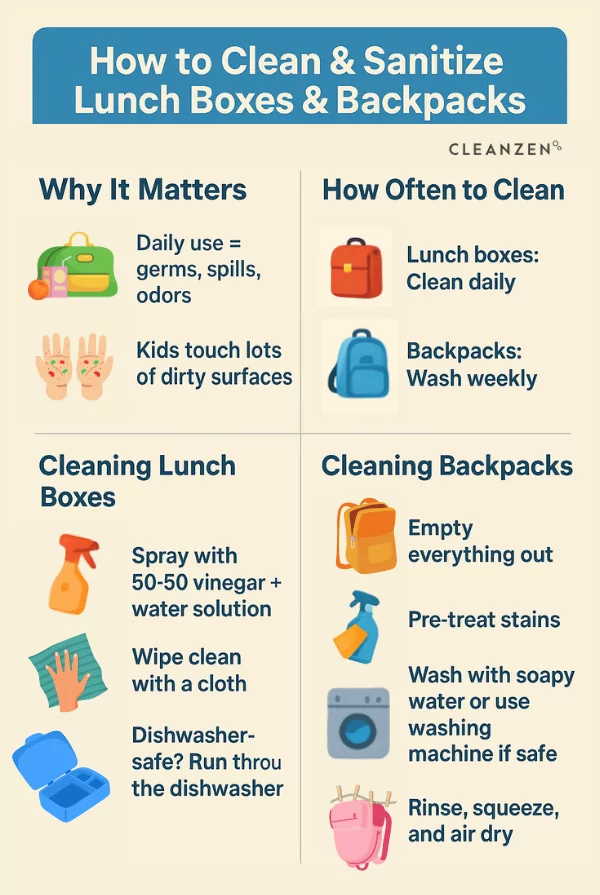
Once a week, use a disinfectant spray or a mix of vinegar and water to kill hidden germs. Spray and let it sit for a few minutes, then wipe dry.
8. Remove Tough Stains And Odors
If your lunch box smells or has stains, use extra cleaning methods.
- Baking soda paste: Mix baking soda with a little water, rub on stains, and let sit for 15 minutes before rinsing.
- Lemon juice: Wipe the inside with lemon juice to remove smells.
- White vinegar: Soak a cloth in vinegar and wipe surfaces. Vinegar kills bacteria and removes odors.
9. Clean Fabric Lunch Boxes
Fabric lunch boxes are tricky. Check labels for washing instructions. Most can be cleaned by hand. Use warm, soapy water and scrub gently. For deep cleaning, some can be machine washed. Always air dry completely to prevent mold.
10. Clean Metal And Glass Lunch Boxes
Metal lunch boxes should not be soaked for too long. Wash quickly and dry right away to prevent rust. For glass lunch boxes, avoid sudden temperature changes to prevent cracking.
Common Mistakes When Cleaning A Lunch Box
Many people make mistakes that can shorten their lunch box’s life or make it unsafe.
- Using harsh chemicals: Strong cleaners can damage plastic and fabric, and leave toxic residue.
- Skipping drying: Not drying properly causes mold and rust.
- Ignoring corners: Bacteria often hide in seams and corners.
- Not cleaning removable parts: Lids, seals, and trays need regular cleaning.
- Cleaning too quickly: Rushing can leave food bits behind.
Avoid these mistakes to keep your lunch box safe and strong.
Credit: cleanzen.com
How Often Should You Clean A Lunch Box?
Clean your lunch box daily after each use. Deep cleaning and disinfecting should be done once a week. For fabric lunch boxes, wash the whole lunch box every month, or more often if spills happen.
Extra Tips For Keeping Your Lunch Box Fresh
- Use ice packs to keep food cool. Cold prevents bacteria.
- Store your lunch box open at night. This lets air flow and stops smells.
- Place a small pack of baking soda inside overnight to absorb odors.
- Avoid packing strong-smelling foods if your lunch box absorbs odors easily.
Credit: www.reddit.com
Handling Special Lunch Box Issues
Mold
If you see mold, do not use the lunch box until it is cleaned. Wash with hot water and soap, then disinfect with vinegar or bleach (use only a tiny amount and rinse well). Mold in fabric lunch boxes may mean you need to buy a new one.
Sticky Residue
Sticky spots from jams or sauces need extra attention. Use a sponge with baking soda or vinegar to scrub, then rinse well.
Faded Colors
Some lunch boxes lose color after washing. This is common for fabric and printed plastic. To protect colors, wash with mild soap and avoid strong sunlight during drying.
Damaged Parts
Check for cracks, broken seals, or worn handles. Damaged lunch boxes can be unsafe and leak. Replace parts or buy a new lunch box if needed.
Best Products For Cleaning Lunch Boxes
Here is a comparison of common cleaning products for lunch boxes:
| Product | Effectiveness | Safe for Children | Price Range |
|---|---|---|---|
| Mild dish soap | High | Yes | $ |
| Baking soda | Medium | Yes | $ |
| White vinegar | High | Yes | $ |
| Disinfectant spray | Very high | Depends | $$ |
Using mild dish soap is safe and effective for daily cleaning. Baking soda and vinegar help with odors and stains. Disinfectant sprays are good for deep cleaning but check if they are safe for children’s lunch boxes.
How To Clean Lunch Box Accessories
Lunch boxes often have accessories like cutlery, containers, and ice packs. Wash cutlery and containers with soap and water. For ice packs, wipe with a damp cloth and dry well. Some accessories can be cleaned in the dishwasher, but always check instructions.
When To Replace Your Lunch Box
A lunch box should last at least one school year, but sometimes problems mean it’s time to replace it. If your lunch box has:
- Cracks or holes
- Broken seals
- Persistent mold
- Unremovable smells
It is safer to buy a new one. Old lunch boxes can leak, attract bacteria, and make food unsafe.
Real-life Example: Cleaning A Child’s Lunch Box
A parent noticed their child’s lunch box had a bad smell and sticky residue after a week of use. They emptied the lunch box, washed with soap and water, but the smell remained. They made a paste with baking soda and water, scrubbed the inside, and left it overnight.
In the morning, the smell was gone. They started disinfecting weekly and drying the lunch box open every night. The lunch box stayed clean and fresh for the rest of the school year. This shows that extra steps and regular care can solve common lunch box problems.
Table: Lunch Box Cleaning Frequency
Here’s a simple schedule for cleaning:
| Action | Frequency |
|---|---|
| Basic wash (soap & water) | Every day |
| Disinfect | Once a week |
| Deep clean (remove odors/stains) | Monthly |
| Check for damage | Monthly |
Following this schedule will help your lunch box stay safe and strong.
Frequently Asked Questions
How Do I Remove Tough Stains From My Lunch Box?
Use a paste made of baking soda and water. Rub it on the stain, let sit for 15 minutes, then rinse. For plastic, lemon juice also works well.
Can I Put My Lunch Box In The Dishwasher?
Check the label first. Most plastic and glass lunch boxes are dishwasher safe, but fabric and metal usually need hand washing.
What Should I Do If My Lunch Box Smells Bad?
Wash with soap and water, then wipe with vinegar or lemon juice. Leave a small pack of baking soda inside overnight to absorb odors.
How Can I Clean A Fabric Lunch Box?
Hand wash with warm, soapy water. For deep cleaning, check if it can go in the washing machine. Always air dry completely.
Is It Safe To Use Disinfectant Sprays?
Some disinfectant sprays are safe, but always check the label. For children’s lunch boxes, use natural options like vinegar or mild soap when possible. For more info, visit CDC Food Safety.
Keeping your lunch box clean is not just about looks—it’s about health and safety. With a few simple steps, regular care, and the right products, you can enjoy fresh meals every day and avoid common problems. Remember, a clean lunch box is a small step that brings big benefits for you and your family.