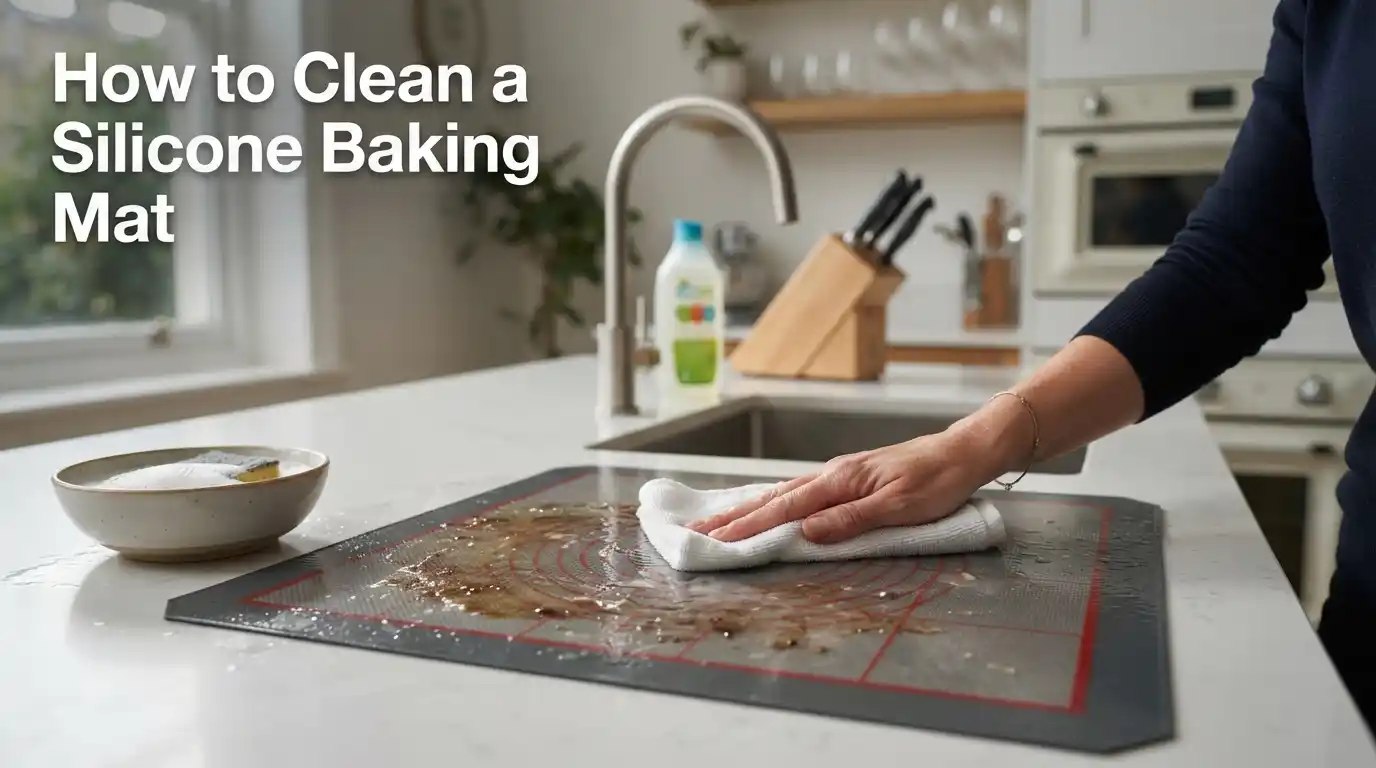
Cleaning a silicone baking mat is simple, but many people make mistakes that reduce its lifespan. Silicone mats are popular because they are reusable, heat-resistant, and save money compared to parchment paper. However, they can get sticky, stained, or even smell bad if not cleaned well.
If you’ve ever wondered how to clean a silicone baking mat properly, you’re in the right place. This guide will show you every step, give practical tips, and help you avoid common errors—so your mat stays fresh and safe for baking.
Why Silicone Baking Mats Need Special Care
Silicone baking mats are made from food-grade silicone, which is flexible and non-stick. Unlike metal or glass pans, silicone can absorb odors and oils over time. Regular cleaning is not enough; sometimes you need deeper cleaning to remove stubborn residues. Improper cleaning can make your mat look dirty, feel greasy, and even affect the taste of your baked goods.
Some new users think silicone mats are indestructible. But rough cleaning, using the wrong products, or storing them poorly can actually damage the mat. Learning the right cleaning method extends its life and ensures food safety.
Basic Cleaning: After Each Use
Cleaning your silicone mat after every use is important. Here’s how to do it quickly and safely:
- Let It Cool: Wait until the mat is cool before washing. Sudden temperature changes can warp silicone.
- Wipe Off Crumbs: Use a soft cloth or paper towel to remove crumbs and loose bits.
- Wash with Soap and Water: Fill your sink with warm water and add a few drops of mild dish soap. Avoid harsh detergents. Use a soft sponge to gently scrub both sides of the mat.
- Rinse Well: Make sure all soap is rinsed off. Leftover soap can leave sticky spots.
- Dry Completely: Let the mat air dry, or use a clean towel. Avoid folding it while wet.
Many people skip drying, but moisture trapped in silicone can lead to odors or mold. Always dry your mat fully before storing.
Deep Cleaning: For Stubborn Stains And Odors
Sometimes, regular washing is not enough. If your mat has sticky residue, strong smells, or stains, try these steps:
Baking Soda Paste Method
- Make a Paste: Mix 2 tablespoons of baking soda with 1 tablespoon of water.
- Spread the Paste: Rub the paste over stained areas using a soft cloth.
- Let It Sit: Wait 15–20 minutes. The baking soda breaks down oils and odors.
- Scrub Gently: Use a soft sponge to scrub the mat. Avoid steel wool or rough brushes.
- Rinse Thoroughly: Wash away all paste and residue.
Baking soda is safe for silicone and removes smells without damaging the mat.
Vinegar Soak
- Fill a Basin: Use enough white vinegar to cover the mat.
- Soak the Mat: Place the mat in the vinegar for 30 minutes.
- Wash as Usual: After soaking, wash with soap and water.
- Rinse and Dry: Make sure all vinegar is gone, then dry completely.
Vinegar is effective for removing strong odors and some stains. However, do not use vinegar too often, as it can weaken silicone over time.
Removing Sticky Oil Residue
Silicone mats can get sticky from oils used in baking. Soap sometimes cannot remove this residue. Here are two proven techniques:
Salt Scrub
- Sprinkle Salt: Use coarse salt (like kosher salt) on the mat.
- Rub with a Damp Cloth: Gently rub the salt into the mat.
- Wash Off: Clean with soap and water as usual.
The salt acts as a gentle abrasive. It removes oil without scratching the silicone.
Lemon Juice
- Apply Lemon Juice: Squeeze fresh lemon juice on sticky areas.
- Let Sit for 5 Minutes: Acids in lemon break down oils.
- Wash and Rinse: Clean normally and rinse well.
Lemon juice also leaves your mat smelling fresh.
What Not To Do
Avoid these common mistakes to keep your silicone mat safe:
- No Sharp Objects: Never use knives or metal scrapers. They cut or tear the silicone.
- No Harsh Chemicals: Avoid bleach, oven cleaner, or strong detergents.
- No Dishwashers with Heated Dry: Some dishwashers get too hot or use harsh detergents. If you use a dishwasher, place the mat on the top rack and use gentle cycles.
- No Folding or Rolling When Wet: Always dry your mat fully before storing.
Many people ruin their mats by using strong cleaners or by folding them when still wet. Silicone is tough, but it can break down if treated poorly.
Comparing Cleaning Methods
To help you decide which cleaning method is best for your needs, here’s a comparison:
| Method | Best For | Time Required | Effectiveness | Safety for Silicone |
|---|---|---|---|---|
| Soap & Water | Regular cleaning | 5 minutes | Moderate | Very safe |
| Baking Soda Paste | Stains & odors | 20 minutes | High | Safe |
| Vinegar Soak | Strong smells | 30 minutes | High | Use sparingly |
| Salt Scrub | Sticky oil | 10 minutes | High | Safe |
| Lemon Juice | Freshening & oil | 10 minutes | Moderate | Safe |
Storage And Maintenance Tips
Proper storage keeps your mat in good condition. Here’s how:
- Flat Storage: Store mats flat in a drawer or on a shelf. If you must roll, do so loosely.
- Avoid Heavy Objects: Do not place heavy pans or dishes on top of your silicone mat.
- Keep Away from Sunlight: Direct sun can damage silicone, making it brittle.
- Check for Damage: Look for cracks or tears regularly. Replace mats if damaged.
Some users store mats folded or stacked under heavy cookware, which can cause permanent creases or cracks. Flat storage is always best.
You might find this helpful: Best Silicone Baking Mats
How Often Should You Deep Clean?
Deep cleaning depends on how often you use your mat:
- Light Use (once a month): Deep clean every 2–3 uses.
- Heavy Use (weekly or daily): Deep clean every week.
If you notice odors, stickiness, or stains, deep clean sooner. Over time, even regular soap and water may not remove all residues.
:max_bytes(150000):strip_icc()/how-to-clean-a-silicone-baking-mat-5194936-02-f648dd4bfcd34fe8975b81140f780b17.jpg)
Credit: www.thespruce.com
Signs Your Silicone Baking Mat Needs Replacing
Even with good cleaning, silicone mats do not last forever. Here are signs you should replace your mat:
- Cracks or Tears: Damaged mats can trap food and bacteria.
- Permanent Stains: If stains remain after deep cleaning, the mat may be worn out.
- Loss of Non-Stick: When food starts sticking even after cleaning, the surface is likely degraded.
- Warping: If the mat does not lie flat or is misshapen, it can affect baking results.
Using a worn-out mat can affect food quality and may even be unsafe.
Real-life Example: Cleaning In A Busy Kitchen
Imagine a bakery that uses silicone mats every day. Staff must clean mats quickly and keep them free of odors. They use soap and water after each use, but deep clean with baking soda paste every Friday. Storing mats flat and checking for damage each month helps them last longer.
In home kitchens, some people forget to deep clean. This leads to sticky mats and bad smells. One non-obvious tip is to mark your calendar for deep cleaning days. This keeps mats in top shape and avoids surprises during baking.
Comparing Silicone Mats Vs. Other Baking Surfaces
Understanding why silicone mats need special care is easier if you compare them to other baking surfaces.
| Surface Type | Cleaning Difficulty | Lifespan | Odor/Residue Issues | Cost |
|---|---|---|---|---|
| Silicone Mat | Easy to moderate | 2–3 years | Yes, can absorb | Medium |
| Parchment Paper | Disposable | Single use | No | Low |
| Metal Pan | Moderate | 5–10 years | Rarely | Medium to high |
| Glass Pan | Easy | 10+ years | No | High |
Silicone mats are more eco-friendly than parchment paper, but require more care than glass or metal pans to avoid odors and stains.
The Science Behind Cleaning Silicone
Silicone is made from polysiloxane, which is a chain of silicon and oxygen atoms. This makes it non-stick and flexible. However, oils and smells can get trapped in the small pores of the silicone. Soap alone cannot always remove these, which is why baking soda and vinegar are so effective. They break down oils and neutralize odors at the molecular level.
Some people think silicone is like plastic, but it is actually more porous. This is why deep cleaning is needed more often.
Practical Tips For Busy Bakers
If you bake often, here are some practical tips:
- Keep a Cleaning Kit: Have baking soda, vinegar, lemon, and salt ready.
- Quick Rinse After Use: If you don’t have time for a full wash, at least rinse with warm water.
- Rotate Mats: Use two or more mats and rotate them, so each gets time to dry fully.
- Inspect Weekly: Check mats for stains or damage every week.
Many beginners miss the importance of rotation and quick rinsing. These habits prevent buildup and keep mats fresh.
Frequently Asked Questions
How Do I Clean Silicone Baking Mats In The Dishwasher?
You can place your silicone mat on the top rack of the dishwasher. Use a gentle cycle and avoid high heat. Dishwashers may not remove deep stains or odors, so manual deep cleaning is still needed.
Can I Use Bleach Or Other Strong Cleaners?
No. Bleach and strong chemicals can damage silicone. They may cause the mat to break down or lose its non-stick properties. Always use mild soap, baking soda, vinegar, or lemon.
Why Does My Silicone Mat Smell Bad After Baking?
Odors are caused by oil and food residues trapped in the silicone. Deep cleaning with baking soda paste or vinegar can remove these smells. Make sure to dry the mat fully before storing.
How Long Do Silicone Baking Mats Last?
Most silicone mats last 2–3 years with proper care. Heavy use or poor cleaning can shorten this time. Replace mats if they show cracks, tears, or permanent stains.
Where Can I Find More Information About Silicone Kitchenware Safety?
For trusted information, visit the FDA’s official site. They provide details on food-grade silicone and kitchenware safety.
Keeping your silicone baking mat clean is easy with the right steps. Regular washing, deep cleaning, and proper storage will help your mat last longer and keep your baked goods tasting great. Avoid common mistakes, and enjoy hassle-free baking every time.