Skip to content
Cooking a poached egg in a saucepan can feel tricky at first. But once you learn the steps, it becomes a simple and quick way to prepare a healthy breakfast or add protein to salads and meals. Poached eggs are loved for their soft, creamy yolks and tender whites.
Unlike fried or boiled eggs, poached eggs don’t need oil or butter, making them lower in fat. With the right method, anyone can master poaching eggs—even with just a saucepan and water.
Many beginners worry about eggs breaking apart in water or ending up with messy results. The secret is in careful temperature control, gentle handling, and a few kitchen tricks. In this guide, you’ll learn how to poach eggs perfectly every time, what mistakes to avoid, and how to serve poached eggs in delicious ways.
You’ll also see how poaching compares to other egg-cooking methods, with data tables for clarity.
What You Need To Poach Eggs
Before you start, gather these basic items:
- Fresh eggs (freshness is important for best results)
- Saucepan (medium size, about 2–3 quarts)
- Water
- Vinegar (optional, helps whites stay together)
- Slotted spoon
- Small bowl or cup (for cracking eggs)
Ingredient Quantities
For 2 poached eggs:
- 2 large eggs
- 4 cups water
- 1 tablespoon vinegar (optional)
- Pinch of salt (optional)
You can poach more eggs at once if your saucepan is large enough, but it’s easier to start with one or two.
Step-by-step Guide: Poaching Eggs In A Saucepan
1. Choose The Freshest Eggs
Eggs that are a few days old tend to spread in water. Fresh eggs have stronger whites that hold shape. If you’re unsure about freshness, do a simple float test: place the egg in water. If it sinks and lies flat, it’s fresh.
2. Heat The Water
Fill the saucepan with water—enough to cover the eggs (about 2–3 inches deep). Heat until you see small bubbles forming at the bottom, but no rolling boil. The ideal temperature is 180–190°F (82–88°C). If you don’t have a thermometer, look for water steaming and tiny bubbles.
3. Add Vinegar (optional)
Vinegar helps the egg whites coagulate quickly, preventing them from spreading. Add 1 tablespoon of white vinegar to the water. Some people skip this step, but it’s useful for beginners.
4. Crack The Egg
Crack each egg into a small bowl or cup. This helps you slide the egg gently into the water and avoid breaking the yolk.
5. Create A Gentle Swirl (optional)
Stir the water gently in one direction with a spoon to create a whirlpool. This can help keep the egg white close to the yolk, especially if you’re poaching one egg at a time.
6. Slide The Egg Into Water
Bring the bowl close to the water’s surface and gently slide the egg in. Don’t drop from a height—this can break the yolk.
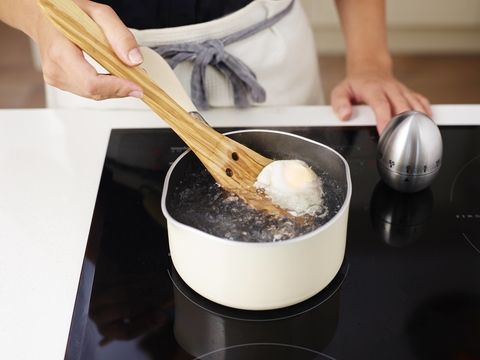
7. Poach The Egg
Let the egg cook undisturbed for 3–4 minutes. The white should set, and the yolk stays soft. For firmer yolk, cook a minute longer.
8. Remove And Drain
Use a slotted spoon to lift the egg out. Drain excess water by resting the egg on a paper towel or kitchen cloth.
9. Serve Immediately
Poached eggs are best served right away. Sprinkle with salt, pepper, or herbs for extra flavor.
Common Mistakes And How To Avoid Them
Many beginners make small errors that ruin poached eggs. Here are the most common mistakes:
- Water too hot or boiling: This breaks the egg apart. Always keep water just below boiling.
- Old eggs: Whites spread and don’t hold shape. Use fresh eggs.
- Dropping eggs from height: Causes yolk to break. Slide eggs gently.
- Cooking too many eggs at once: Eggs can collide and lose shape. Start with one or two.
- Skipping vinegar: Whites may spread more. For beginners, vinegar makes a difference.
A non-obvious tip: If you want to poach multiple eggs, use a wide saucepan and space them out. Don’t swirl the water when poaching more than one egg—swirling mixes the eggs together.
Comparison: Poached Eggs Vs Other Methods
Poached eggs are often compared to boiled and fried eggs. Here’s a simple data table showing differences in nutrition and preparation:
| Egg Type | Calories | Fat (g) | Cook Time | Texture |
|---|---|---|---|---|
| Poached | 70 | 5 | 3–4 min | Soft white, creamy yolk |
| Boiled | 70 | 5 | 10 min | Firm white, firm yolk |
| Fried | 90 | 7 | 5 min | Crispy edge, set yolk |
This comparison shows poached eggs are lower in calories than fried eggs and faster to cook than boiled eggs.

Credit: natashaskitchen.com
Why Freshness Matters For Poaching
Fresh eggs are key for perfect poached eggs. As eggs age, their whites become thinner and watery. This makes poaching harder—whites don’t stay around the yolk and can spread in the water. If your eggs are not very fresh, try adding a bit more vinegar or poach them in a fine mesh strainer before putting them in the water.
Freshness Data Table
| Egg Age | White Consistency | Poaching Result |
|---|---|---|
| 0–3 days | Thick | Holds shape well |
| 4–7 days | Medium | Slight spreading |
| 8+ days | Thin | Spreads in water |
If you’re buying eggs for poaching, check the pack date or ask your seller for the freshest batch.
Serving Ideas For Poached Eggs
Poached eggs are versatile. Here are some popular ways to serve them:
- On toast with avocado or tomato slices
- Over salads for extra protein
- With rice bowls or grain dishes
- Classic Eggs Benedict (with ham and hollandaise sauce)
- On soups for a creamy touch
For a healthier meal, serve poached eggs with steamed vegetables or whole-grain bread.
:max_bytes(150000):strip_icc()/MS-340956-easy-poached-eggs-03-19989-8716234109514708aa90c65938155227.jpg)
Credit: www.marthastewart.com
Tips To Make Poaching Easier
Some practical tips can make poaching eggs less stressful:
- Use a fine mesh strainer: Crack the egg into a strainer and let watery whites drain. This helps keep the egg compact.
- Try adding salt to the water: It helps flavor the egg and can improve white firmness.
- Practice with one egg at a time: Once you’re confident, try poaching two eggs together.
- Keep a timer nearby: Overcooking makes yolks firm. Set a timer for perfect results.
- Use a slotted spoon for removal: This prevents water from sticking to the egg.
A non-obvious insight: If you’re serving poached eggs for a group, you can make them ahead and store in cold water. Reheat in warm water just before serving. This technique is used in restaurants.
Troubleshooting: Fixing Common Problems
Sometimes, poached eggs don’t turn out as expected. Here’s how to fix common issues:
- Egg whites spread: Make sure eggs are fresh and water isn’t boiling. Add vinegar.
- Yolk breaks: Crack eggs gently and slide them in slowly.
- Egg sticks to the pan: Use enough water depth (at least 2 inches).
- Egg is undercooked: Leave in water for another minute.
- Egg is overcooked: Reduce cooking time and check earlier.
If your eggs still spread, try poaching them in a ramekin or cup inside the saucepan.
How Poaching Fits Healthy Eating
Poached eggs are a healthy choice. They don’t need oil or butter, so they’re lower in fat. Eggs give you protein, vitamin D, and choline. For people watching calories or cholesterol, poached eggs are a smart breakfast.
A study from the USDA shows one large poached egg has about 70 calories, 6 grams protein, and 5 grams fat. Eggs also contain B vitamins and minerals like selenium.
Poaching More Than One Egg At A Time
If you want to poach eggs for a family or group, you can do several at once. Here’s how:
- Use a wide saucepan and fill with enough water.
- Crack each egg into a separate cup.
- Slide eggs in one by one, spaced apart.
- Don’t swirl water—just let eggs cook gently.
- Remove each egg with a slotted spoon.
Restaurants sometimes poach many eggs ahead and reheat as needed. You can do the same at home for brunch parties.
Cooking Capacity Table
| Saucepan Size | Max Eggs at Once | Recommended Method |
|---|---|---|
| 2-quart | 2 | Swirl or still water |
| 3-quart | 4 | Still water, spaced apart |
| 5-quart | 6–8 | Still water, careful placement |
If you want to poach many eggs, practice with your saucepan and adjust water depth and timing.
Cleaning Up After Poaching
Poaching eggs leaves little mess compared to frying. You only need to clean the saucepan and slotted spoon. To prevent sticking, rinse the pan with cold water before adding eggs. If egg white sticks, soak the pan in warm water for 10 minutes and scrub gently.
Extra Tips For Perfect Poached Eggs
- Use eggs at room temperature: Cold eggs take longer to set and may spread.
- Don’t salt the water too much: Too much salt toughens the whites.
- Add herbs or spices after cooking: Sprinkle fresh herbs, paprika, or pepper for flavor.
- For richer taste, serve poached eggs with a drizzle of olive oil or yogurt.
If you want more details on egg science, check this Exploratorium Egg Science resource.
Credit: www.egginfo.co.uk
Frequently Asked Questions
How Do I Know If My Egg Is Poached Enough?
A poached egg is ready when the whites are firm and the yolk remains soft. Gently touch the egg with a spoon—if the white feels set but the yolk still jiggles, it’s done.
Can I Poach Eggs Without Vinegar?
Yes, but vinegar helps keep the whites together. If your eggs are very fresh, you can skip vinegar. For older eggs, vinegar makes poaching easier.
What’s The Best Way To Reheat Poached Eggs?
To reheat, place the poached egg in hot (not boiling) water for 30–60 seconds. This warms the egg without overcooking the yolk.
Why Did My Poached Egg Spread In The Water?
Eggs spread if they are old, water is too hot, or you drop them from a height. Use fresh eggs, gentle water temperature, and slide eggs close to the surface.
How Do I Make Poached Eggs For A Crowd?
Poach eggs ahead of time and store in cold water. Just before serving, reheat each egg in hot water for 1 minute. Use a large saucepan and space the eggs apart.
Poaching eggs in a saucepan is a skill worth learning. It gives you healthy, delicious eggs for breakfast, lunch, or dinner. With practice, you can poach eggs smoothly—no fancy gadgets needed. Try the steps above, use the tips, and enjoy the creamy texture of perfectly poached eggs.