Skip to content
Packing a hot lunch can turn a regular midday meal into something comforting and satisfying. But keeping food hot in a lunch box, especially for hours, is not always easy. Many people open their containers only to find their soup lukewarm or their rice cold.
If you want to keep food hot until lunchtime, there are proven ways to do it—without complicated tools or extra stress. This guide explains practical methods, smart product choices, and simple science, all in clear English.
Why Keeping Food Hot Matters
Hot food is not only about taste. Food safety is a big reason to keep your meal warm. Bacteria grow quickly when food sits between 40°F and 140°F (the “danger zone”). If you pack hot leftovers or soup and it cools, it can become unsafe to eat after just a few hours. Also, warm meals can make healthy options, like vegetables or whole grains, more enjoyable. For kids, a hot lunch often means they’ll actually eat what you pack.
The Science Behind Heat Retention
Heat always moves from warm places to cold places. When you put hot food in a lunch box, it loses heat to the air, the container, and the outside world. To keep food hot, you need to:
- Minimize heat loss: Use insulation to slow down how fast heat escapes.
- Start with hot food: The hotter the food, the longer it stays warm.
- Limit air space: Air is a poor insulator and speeds up cooling if there’s too much empty space.
Understanding these basics helps you choose the best methods for your lunch.
Choosing The Right Lunch Box
Not all lunch boxes keep food hot. Some are designed mainly for cold storage. For hot food, you need an insulated container. Here’s a quick comparison of common lunch box types:
| Lunch Box Type | Heat Retention | Best For |
|---|---|---|
| Plastic Lunch Box | Poor | Cold snacks, sandwiches |
| Metal Lunch Box | Fair | Sturdy, but not hot food |
| Insulated Bag | Good (with hot pack) | Mixed meals |
| Thermos/Insulated Jar | Excellent | Soups, stews, rice, pasta |
What Makes A Good Insulated Lunch Box?
The best containers for keeping food hot use double walls with a vacuum between them. This design stops heat from escaping by conduction (through the walls) or convection (through air). Stainless steel is more effective than plastic, as it holds heat better and is safer for hot foods.
Look for these features:
- Vacuum insulation
- Leak-proof lid
- Wide mouth for easy filling and cleaning
- Size suitable for your meal
A high-quality Thermos or stainless steel food jar can keep food hot for 5–8 hours.
How To Keep Food Hot In A Lunch Box: Step-by-step
1. Preheat Your Container
Before adding your hot food, preheat the lunch box. Fill it with boiling water, close the lid, and wait five minutes. This warms the inside so it doesn’t steal heat from your meal. Pour out the water just before you pack your lunch.
*Example*: If you put piping hot soup in a cold thermos, it can lose 20°F in just ten minutes. Preheating cuts that loss in half.
2. Heat Food Properly
Start with food that’s steaming hot (at least 165°F or 74°C). If you use leftovers, reheat them fully in the microwave or on the stove. Packing warm (not hot) food means it will cool quickly and may not be safe to eat later.
Pro tip: Use a food thermometer to check temperature if you’re unsure. This is especially important for meat, rice, or eggs.
3. Pack Food Tightly
The less air in your lunch box, the longer food stays hot. Fill your container as full as possible, leaving little or no empty space. If you have extra space, add a piece of bread or a small, heat-safe item to fill the gap.
4. Use Insulated Bags And Hot Packs
For foods that won’t fit in a thermos, put your lunch box inside an insulated bag. Add a reusable heat pack next to your container for extra warmth. Some people wrap hot food in aluminum foil before packing it in an insulated bag—this can add 30–60 minutes of heat retention.
5. Keep The Lunch Box Closed
Every time you open the lunch box, heat escapes. Pack everything your child or you need (fork, napkin, sauce) inside, so there’s no reason to open it early.
6. Choose The Right Foods
Some foods keep heat better than others. Thick soups, stews, chili, pasta, and rice hold heat longer than thin broths or foods with lots of air. Oily foods and those with starch (like potatoes or beans) generally stay hot longer.
7. Avoid Common Mistakes
A few simple errors can make your food cold by noon:
- Packing cold or room temperature food
- Using non-insulated containers
- Leaving the lunch box open or partially open
- Filling the container only halfway
Real-life Tips For School And Work
Here are practical examples for different situations:
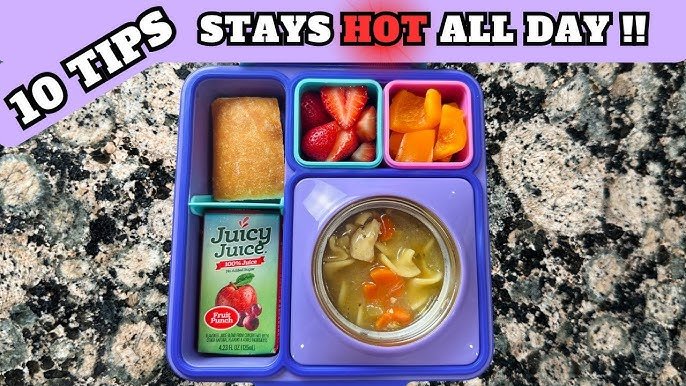
- Kids’ school lunch: Use a 10–16 oz insulated food jar for mac and cheese, rice, or soup. Preheat the jar, pack the food tight, and add a folded paper towel to absorb moisture.
- Office workers: For rice bowls or pasta, use a large thermos and pack in an insulated tote bag. If you have a microwave at work, you can reheat, but if not, these methods help keep food hot for 4–6 hours.
- Outdoor workers: For long shifts, use a double-insulated container and wrap it in a towel inside an insulated bag. Add a heat pack if you’ll be eating late.
Comparing Popular Insulated Containers
To help you choose, here’s a comparison of three top-rated insulated lunch containers:
| Brand/Model | Heat Retention (Hours) | Size | Special Features |
|---|---|---|---|
| Thermos Stainless King | 7–9 | 16 oz | Wide mouth, dishwasher safe |
| Zojirushi Classic | 5–7 | 17 oz | Vacuum insulation, compact |
| Hydro Flask Food Jar | 6 | 12 oz | BPA-free, powder coat finish |
Each of these containers holds heat well, but the Thermos Stainless King is a favorite for all-day heat. Choose the size that matches your meal needs.

Credit: www.altaunited.com
Practical Tips For Different Foods
Not all foods behave the same way. Here’s how to pack common hot lunches:
Soup And Stew
- Preheat the jar.
- Heat soup until boiling.
- Fill to the top, close tightly.
Rice And Pasta
- Add a teaspoon of hot water before packing to keep rice moist.
- For pasta, pack sauce separately if possible to prevent sogginess.
Chicken, Meat, And Beans
- Cut into bite-sized pieces for even heat.
- Pack with some sauce or broth for moisture.
Oatmeal Or Porridge
- Use rolled oats and boiling water/milk.
- Fill jar 2/3 full to allow for expansion.
How Long Can Food Stay Hot?
Most insulated food jars keep food above 140°F for 4–6 hours. After that, food may cool below the safe zone. If you need to keep food hot longer, double up with an insulated bag or add a heat pack. For best results, eat within 5 hours.
Some studies show that a quality thermos can keep soup above 150°F for up to 6 hours if preheated and filled with boiling liquid. Thicker foods (like chili) often stay hot longer than thin broths.
Cleaning And Maintenance
To keep your insulated container working well:
- Wash after every use with warm, soapy water.
- Use a bottle brush for corners.
- Leave the lid off to air dry completely.
- Deep clean with baking soda and vinegar monthly.
Do not put most insulated jars in the dishwasher unless the instructions say it’s safe. Food particles left inside can make containers smell or affect heat retention.
Advanced Tips And Non-obvious Insights
Here are two practical insights many people miss:
- Thermal layering: Place a folded napkin or small piece of cloth on top of the food before sealing the lid. This absorbs condensation and adds a tiny bit more insulation.
- Pre-cool surroundings: If you live in a cold climate, avoid placing your hot lunch box on cold surfaces. Carry it in an insulated bag and keep it close to your body if possible. Cold tables or car seats will make even the best container lose heat faster.
Credit: www.youtube.com
When You Need To Reheat
If you have access to a microwave or hot water at work or school, reheat food until steaming before eating. This step is important for safety and taste, especially if your food has cooled.
Safety Reminders
Never leave perishable food at room temperature for more than 2 hours. When in doubt, check for off smells or changes in texture. It’s better to eat food slightly cooler than risk food poisoning.
For more on food safety and lunch packing, see the USDA’s guidelines.

Credit: www.amazon.com
Frequently Asked Questions
How Do I Keep Chicken Nuggets Or Fries Hot For Lunch?
Pack them in a preheated insulated food jar. Wrap in foil first to keep them crisp. Avoid using plastic boxes, as they do not retain heat well. Fries lose crispness, but staying hot is possible with the right container.
Can I Use A Regular Thermos For Any Type Of Food?
Most thermoses are designed for liquids, but wide-mouth versions work for solids. Avoid packing foods that expand too much (like instant noodles) or thick sauces that can block the lid.
How Do I Know If My Food Stayed Hot Enough To Be Safe?
If the food is still steaming or above 140°F, it is safe. Use a food thermometer if possible. If it smells off or looks different, do not eat it.
What Should I Do If I Don’t Have An Insulated Lunch Box?
Wrap hot food in foil, then in a thick towel, and pack in a regular lunch bag. Eat within 2–3 hours. This is less effective but better than nothing.
Is It Safe To Pack Hot Rice In A Lunch Box?
Yes, but make sure the rice is freshly cooked and hot when packed. Rice can harbor bacteria if left at unsafe temperatures. Use an insulated container and eat within 5 hours.
Packing hot food for lunch is easier than you might think. With the right container, smart packing, and a few extra steps, you can enjoy a warm, tasty, and safe meal hours after you leave home.