Skip to content
Making your own beef jerky at home is easier than you might think. With a food dehydrator, you can turn a simple piece of beef into a tasty, protein-packed snack. Store-bought jerky often contains extra sugar, preservatives, and costs more. When you make jerky at home, you control the ingredients, flavors, and quality.
This guide will walk you through everything you need to know to make beef jerky in a food dehydrator, from choosing the right meat to storing your finished snack.
Choosing The Best Meat For Beef Jerky
The success of your jerky starts with picking the right cut. Not all beef is equal when it comes to drying.
| Beef Cut | Fat Content | Jerky Quality |
|---|---|---|
| Top Round | Low | Lean, chewy |
| Bottom Round | Low | Lean, slightly tougher |
| Eye of Round | Very low | Lean, easy to slice |
| Sirloin Tip | Moderate | More tender, richer flavor |
| Flank Steak | Low | Flavorful, slightly tougher |
The best cuts are top round, bottom round, or eye of round because they are lean and easy to slice. Avoid cuts with lots of fat, like brisket, because fat does not dry well and can spoil faster.
Preparing Your Beef
Proper preparation makes a big difference in the final taste and texture.
Trimming And Slicing
First, trim all visible fat from your beef. Fat can make jerky spoil quickly. If your meat is too soft to cut, freeze it for about 1 hour. This makes slicing easier.
Slice your beef into strips about ¼ inch thick. Thinner slices dry faster and get crispier, while thicker slices make chewy jerky. Slice against the grain for tender jerky, or with the grain for a chewier texture.
Marinating For Flavor
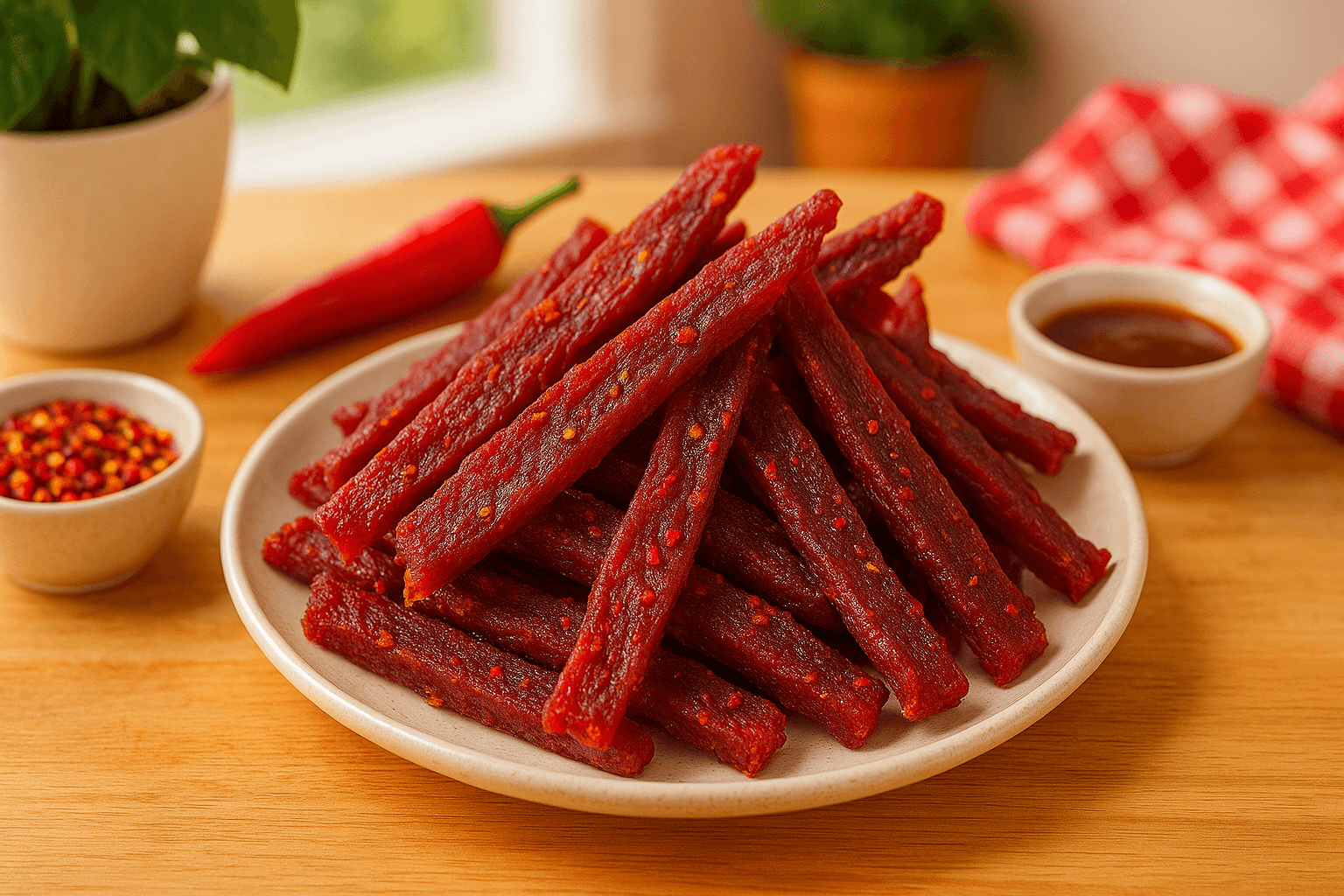
Marinating adds flavor and helps preserve your jerky. Here’s a basic marinade recipe:
- ½ cup soy sauce
- ¼ cup Worcestershire sauce
- 1 tablespoon brown sugar
- 1 teaspoon black pepper
- 1 teaspoon garlic powder
- 1 teaspoon onion powder
- ½ teaspoon smoked paprika (optional)
- 1 teaspoon chili flakes (optional)
Mix all ingredients in a bowl. Add beef strips, making sure they are covered. Marinate in the fridge for 8–24 hours. Longer marinating gives more flavor.
Pro tip: Use a zip-top bag for marinating. It’s easier to mix and reduces mess.
Credit: magicmillusa.com
Setting Up Your Food Dehydrator
A food dehydrator dries meat using warm, circulated air. Here’s how to get started:
Arranging The Beef Strips
Remove beef from marinade and pat dry with paper towels. Too much moisture slows drying.
Arrange strips in a single layer on dehydrator trays. Leave space between pieces for air flow. Overlapping will cause uneven drying.
Dehydrator Temperature And Time
Set your dehydrator to 160°F (71°C). This is the safest temperature for drying beef and killing bacteria.
Typical drying time is 4–8 hours. Thinner strips dry faster. Start checking after 4 hours. Jerky is done when it bends and cracks but does not break.
| Slice Thickness | Drying Time (hrs) | Texture |
|---|---|---|
| ¼ inch | 4–6 | Chewy, flexible |
| ½ inch | 6–8 | Thicker, softer |
Tip: Rotate trays halfway through drying for even results.
Checking For Doneness
Knowing when your jerky is ready is important for both taste and safety.
Take a strip and let it cool for 2–3 minutes. Bend it. If it cracks and bends but doesn’t snap in half, it’s done. If it breaks, it’s over-dried. If it’s soft or sticky, keep drying.
Jerky should be dry to the touch and have a deep brown color. If unsure, use a food thermometer to check that the internal temperature reached 160°F.
Storing Your Beef Jerky
Proper storage keeps jerky fresh and tasty.
- Cool jerky completely before storing.
- Place in airtight containers or zip-top bags.
- For short-term (up to 1 week), keep at room temperature.
- For longer storage, refrigerate or freeze.
Vacuum sealing extends shelf life up to 3 months. Avoid storing jerky with moisture or in humid places.
| Storage Method | Expected Shelf Life | Notes |
|---|---|---|
| Room temperature | 1 week | Best for quick snacking |
| Refrigerator | 1–2 months | Use airtight containers |
| Freezer | 3+ months | Vacuum seal for best results |
Common Mistakes And How To Avoid Them
Making jerky is simple, but beginners often make mistakes that affect taste or safety.
- Using fatty meat: Fat doesn’t dry well and can spoil. Always trim fat.
- Overlapping strips: Jerky dries unevenly if pieces overlap. Use single layers.
- Not enough marinade time: Rushing this step leads to bland jerky. Marinate for at least 8 hours.
- Low dehydrator temperature: Drying below 160°F can leave bacteria alive. Always use the right temperature.
- Storing before cooling: Jerky needs to cool before sealing. Otherwise, moisture causes mold.
Insight: Many people do not realize that homemade jerky can be safer and healthier if you pay attention to the drying temperature and storage. Commercial jerky sometimes uses additives to help shelf life, but your homemade version relies on proper technique.
Beef Jerky Variations And Flavor Ideas
You can create many types of jerky by changing the marinade. Here are some ideas:
- Spicy Sriracha: Add 2 tablespoons Sriracha to your marinade.
- Teriyaki: Use ¼ cup teriyaki sauce instead of soy sauce.
- Honey Garlic: Add 2 tablespoons honey and extra garlic powder.
- Peppercorn: Coat strips with crushed black pepper before drying.
- Barbecue: Mix 2 tablespoons BBQ sauce into your marinade.
Try using different spices like cumin, coriander, or smoked salt for unique flavors.
Non-obvious insight: Adding a small amount of liquid smoke (½ teaspoon) gives homemade jerky a “smoked” taste without a smoker.
Food Safety Tips
Safety is important when drying meat.
- Always use lean beef.
- Keep your dehydrator clean.
- Marinate beef in the fridge, never at room temperature.
- Dry at 160°F or higher.
- Wash hands and utensils before touching meat.
Some experts recommend pre-cooking beef to 160°F in an oven before dehydrating, especially for immunocompromised people. This is not always necessary, but it adds extra safety.
For more food safety details, check guidelines from the USDA Food Safety.
Why Use A Food Dehydrator For Jerky?
Food dehydrators make the process easier and more reliable. Unlike ovens, dehydrators use steady, low heat and airflow. This means jerky dries evenly and doesn’t burn.
Dehydrators also use less energy than ovens and can make jerky in large batches. Many models have adjustable temperature controls and multiple trays.
Tip: If you plan to make jerky often, invest in a dehydrator with a digital temperature control for best results.
Comparing Homemade And Store-bought Jerky
Homemade jerky and store-bought jerky are different in many ways. Here’s a quick comparison:
| Aspect | Homemade Jerky | Store-Bought Jerky |
|---|---|---|
| Ingredients | Natural, customizable | Preservatives, additives |
| Cost per ounce | $0.70–$1.20 | $2.00–$3.00 |
| Flavor | Homemade, personal | Standardized, mass-produced |
| Shelf life | Up to 3 months | 6–12 months |
| Texture | Varies, can be customized | Usually chewy, sometimes tough |
Homemade jerky gives you control. You can make it spicy, sweet, or plain. You decide the thickness and texture. Store-bought jerky is convenient, but often contains more sugar and preservatives.
Credit: www.youtube.com
Step-by-step Summary: Making Beef Jerky In A Food Dehydrator
To recap, here’s how to make beef jerky:
- Choose lean beef and trim all fat.
- Slice beef into ¼ inch strips.
- Marinate beef in the fridge for 8–24 hours.
- Arrange strips on dehydrator trays in single layers.
- Set dehydrator to 160°F and dry for 4–8 hours.
- Check doneness: Jerky should bend and crack, not break.
- Cool jerky before storing in airtight containers.
- Store at room temperature for short-term, or refrigerate/freeze for longer.
Frequently Asked Questions
How Long Does Homemade Beef Jerky Last?
Homemade beef jerky lasts about 1 week at room temperature if stored in an airtight container. In the refrigerator, it can last up to 2 months. For longer storage, freeze jerky for up to 3 months.
Can I Use Pork Or Chicken For Jerky?
Yes, you can use pork or chicken for jerky, but you must dry them at higher temperatures. For poultry, dry at 165°F and ensure the meat is fully cooked before dehydrating.
Do I Need To Pre-cook Beef Before Dehydrating?
Pre-cooking is not required, but some experts recommend it for extra safety. Heating beef strips in the oven at 160°F before dehydrating can kill bacteria.
What Is The Best Way To Slice Beef For Jerky?
Slice beef into ¼ inch strips. Freeze meat slightly to make slicing easier. For tender jerky, cut against the grain. For chewy jerky, cut with the grain.
Why Is My Jerky Sticky Or Soft?
Sticky jerky means it is not fully dried. Dry longer and check for doneness. Jerky should bend and crack but not break. If still sticky, return to the dehydrator.
Making beef jerky in a food dehydrator lets you create a healthy, tasty snack tailored to your preferences. The process is simple but rewards careful preparation and patience. Whether you prefer spicy, sweet, or classic flavors, homemade jerky is a protein-rich treat that beats store-bought every time.

Credit: www.onceuponachef.com