Crisp, green, and ready in about five minutes — celery juice is one of the easiest drinks to make at home, especially when you use a blender you already own. You do not need a dedicated juicer or a long list of ingredients. With fresh celery, water, and a simple strainer, you can turn a few stalks into a smooth, refreshing glass of juice.
This guide walks you through the entire process: choosing celery, prepping and blending it, straining out the pulp, and storing the finished juice. You’ll also find flavor variations, common mistakes to avoid, and honest notes on the health side of this popular green drink.

Blend until the celery is completely broken down before you strain it.
Why Blend Celery Instead of Juicing It?
A juicer does the same job, but it takes up counter space and costs more. In practice, a blender is the better everyday choice for most kitchens. It is easier to clean, you can use the same machine for smoothies and soups, and the only extra tool you need is a strainer.
| Blender + strainer | Dedicated juicer | |
|---|---|---|
| Cost | Uses equipment you likely already own | Extra appliance, often over $100 |
| Cleanup | Blend, strain, and rinse | Many small parts to wash |
| Texture | Smooth juice after straining | Pulp-free juice right away |
| Flexibility | Also makes smoothies, sauces, and soups | Mostly limited to juice |
With that said, the texture is slightly different. A juicer extracts clear juice, while a blender pulverizes everything and leaves a frothier liquid even after straining. Choose a blender with enough power and you can still get a surprisingly clean result.
What You Need
One of the best things about this recipe is how little it demands.
Fresh Celery
Use one bunch of celery, roughly 8–10 stalks, for a single glass. The fresher the celery, the sweeter and less bitter the juice will taste. Avoid stalks with brown spots, hollow centers, or wilted leaves.
Liquid
Plain filtered water is usually enough to get the blades moving. Start with ½ to 1 cup (120–240 ml) for one bunch. More water makes a thinner drink; less water makes a thicker, more concentrated green juice.
Blender and Straining Gear
You will need a blender, a fine mesh strainer or nut milk bag, a bowl, and a spoon. If your blender is older, take a minute to make sure the blades stay sharp. Dull blades leave more stringy pieces and make the motor work much harder.
How to Choose and Store Celery
What Fresh Celery Looks Like
Good celery is all about freshness. Look for:
- Firm, tight stalks that feel solid when squeezed
- A crisp snap when you bend a stalk, not a rubbery bend
- Bright green leaves with no yellow or brown spots
- No cracked ribs, bruises, or soft patches
- A bright, clean color from bottom to top
A common mistake is grabbing the biggest bunch without checking the cut end. Fresh celery has a pale white-green base. If the base is brown or dry, the celery has been sitting around too long.
How to Store Celery
Keep celery in the crisper drawer, wrapped loosely in aluminum foil. Foil lets the stalks breathe while holding in moisture, which keeps them crisp longer than a sealed plastic bag. In practice, celery will stay good for about a week when stored this way. Wash the stalks only when you are ready to juice them.
Step-by-Step: How to Make Celery Juice in a Blender
Fresh juice is best made in small batches. One bunch of celery usually yields about 8–12 ounces (240–350 ml) before straining, depending on the size and water content of the stalks.
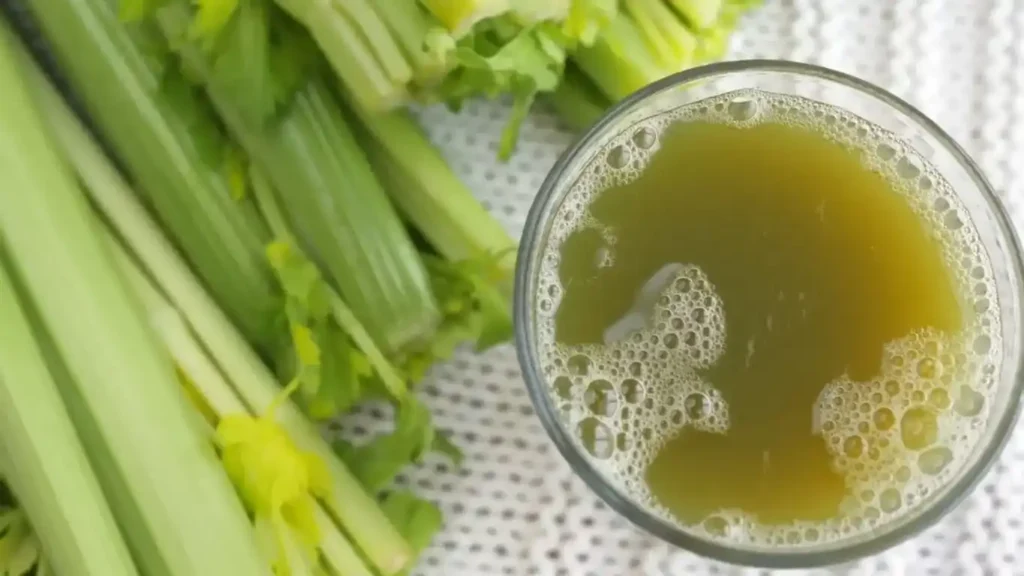
One bunch of celery makes roughly one glass of juice.
Step 1: Wash the Celery
Rinse every stalk under cold running water. Celery grows close to the ground, and dirt can hide in the ridges of the stalks. Use a vegetable brush to clean the ribs, especially near the base. Trim off the leafy tops and the very bottom if you prefer, then pat the celery dry.
Step 2: Chop Into Small Pieces
Cut the stalks into roughly 1-inch (2.5 cm) chunks. This matters more than it sounds: small pieces take pressure off the blender and stop the blades from getting tangled in long, stringy fibers. A regular chef’s knife works perfectly. If you like to prep extra-fine, you can use a julienne tool, but it is not required.
Step 3: Add Water
Put the celery pieces into the blender and pour in ½ cup of water. Start with the smaller amount and add more only if the blender struggles. The goal is a smooth puree, not a watery soup.
Step 4: Blend Until Smooth
Secure the lid and blend on high for 30–60 seconds. Stop once the mixture looks uniform and there are no visible chunks left. Over-blending creates heat, and heat can dull the fresh flavor and reduce heat-sensitive nutrients. If the blender stalls, add another ¼ cup of water and stir once before blending again.
Step 5: Strain the Juice
Pour the blended celery through a fine mesh strainer into a large bowl or measuring cup. Press the pulp firmly with the back of a spoon to capture as much liquid as possible. For a silkier drink, strain a second time.
Step 6: Serve or Store
Pour the juice into a glass and drink it soon, ideally right away. Celery juice tastes best when it is freshly made, before it has time to oxidize and turn brown. Serve over ice if you want an extra-cold glass.
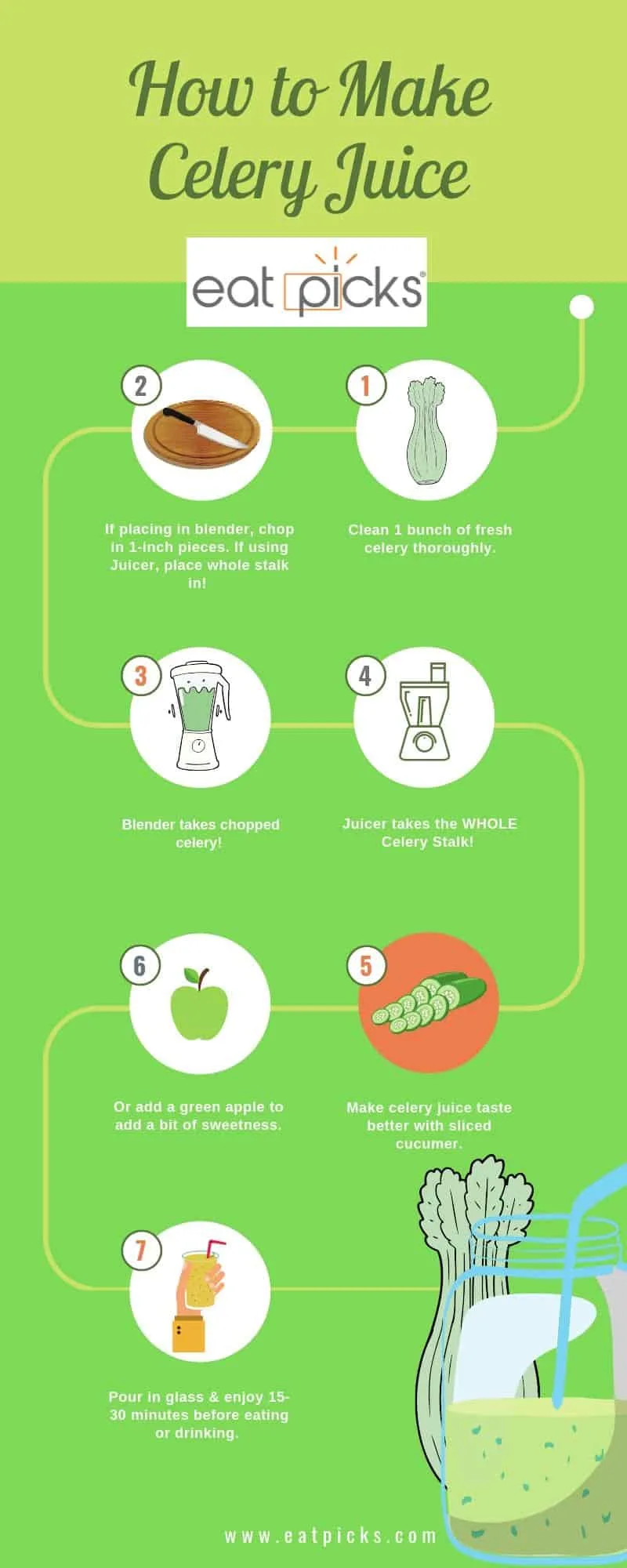
Credit: eatpicks.com
How to Strain Celery Juice and What to Do With the Pulp
Straining is what separates celery juice from a celery smoothie. A fine mesh strainer is the simplest option. Pour the mixture in small batches and press gently with a spoon. A nut milk bag works even better: pour, twist the top, and squeeze out the liquid. Cheesecloth also works if you make sure it is clean and food-safe.
To extract every drop, use the back of a spoon or a metal spatula to press the pulp. The harder you press, the smoother and less grainy the final drink will be.
Do not throw away the pulp. It still contains most of the celery’s fiber, which is valuable for digestion. Add it to soups, stews, muffin batter, or a green smoothie. If you are not in a cooking mood, the pulp is also excellent compost material.
Easy Celery Juice Variations
Plain celery juice has a clean, slightly salty flavor. If you find it too strong, these additions help balance the taste.
| Variation | What to add to the blender |
|---|---|
| Lemon Ginger | ½ peeled lemon + 1-inch piece of fresh ginger |
| Green Apple | ½ green apple, cored |
| Cucumber Mint | ⅓ cucumber + 6 fresh mint leaves |
| Pear | ½ ripe pear, cored |
| Simple Sweet | ½ small green apple + a few celery leaves |
Add these ingredients with the celery and water before blending. The ratio can stay the same: one bunch of celery, ½ cup of water, and your chosen extras. For a slightly less sweet but very refreshing twist, squeeze in lemon juice after straining.
Common Mistakes to Avoid
Even a simple recipe can go wrong in a few predictable ways.
- Using wilted celery. Old celery produces bitter, leathery juice. Always start with firm, crisp stalks.
- Not adding enough liquid. Celery is fibrous. A few tablespoons of water prevent the blender from straining or overheating.
- Overfilling the blender. Leave room at the top so the liquid can circulate. Work in batches if needed.
- Blending too long. Thirty to sixty seconds is usually enough. Longer blending creates heat and a foamy texture.
- Skipping the rinse. Dirt and residues can hide in the stalk ridges. A quick soak or scrub makes a real difference.
- Straining too quickly. If you let the pulp hold the liquid, you lose a good portion of the juice. Press firmly.
- Making too much ahead of time. Fresh juice is best within the first day. Do not rely on it lasting all week.
How to Store Celery Juice
Celery juice is best drunk right after it is made, but you can store it for up to 72 hours in the fridge. Pour it into a glass jar with a tight-fitting lid and fill it almost to the top to limit oxygen. Keep it in the coldest part of the refrigerator, not the door.
To freeze celery juice, pour it into ice cube trays and freeze. Once solid, transfer the cubes to a freezer bag. Thaw them in the fridge overnight and shake well before drinking. Frozen juice is better for smoothies than for sipping, because freezing changes the texture and dulls the fresh flavor.
Celery Juice Benefits: What the Science Says
Celery has a straightforward nutritional profile. It is mostly water, low in calories, and a useful source of vitamin K, vitamin C, potassium, and folate. The USDA nutrition data is a reliable reference if you want to check the exact numbers in a serving of raw celery.
Many people drink celery juice for hydration and digestive comfort. Because celery is about 95% water, a glass helps with daily fluid intake. It also contains plant compounds like apigenin and luteolin, which are often studied for their antioxidant and anti-inflammatory effects. That said, juice should not be treated as a medicine. Supporting good gut health comes from a consistent diet of whole plant foods, plenty of water, and enough fiber — not from any single green drink.
Celery also provides potassium, which plays a role in normal blood pressure. But celery juice is not a treatment for high blood pressure and not a weight-loss miracle. The most reliable benefit is practical: it helps you add another serving of vegetables to your day while staying hydrated.
Who Should Be Cautious With Celery Juice
Most people can enjoy celery juice without problems. A few groups should be more careful.
- People taking blood thinners. Celery is high in vitamin K, which affects blood clotting. If you take warfarin or another blood thinner, keep your intake consistent and tell your doctor.
- People on a very low-sodium diet. Celery contains natural sodium. Juicing concentrates multiple stalks into one glass, so it can add up for anyone watching sodium closely.
- People with a celery allergy. Celery is a recognized allergen. If you notice itching, swelling, or an upset stomach after drinking it, stop and speak with a healthcare professional.
If you have kidney disease or another chronic condition, ask your doctor before making celery juice a daily habit.
Celery Juice FAQs
How long can I store celery juice?
Fresh celery juice lasts up to three days in an airtight glass jar in the fridge. It tastes best within the first 24 hours.
Do I need to peel celery before juicing?
No. The stalks do not need peeling. Wash them well and chop them into small pieces before blending.
Can I use frozen celery for juice?
Yes, but the juice will be slightly more watery and the flavor less bright. Frozen celery blends quickly and is a good option if fresh stalks have started to soften.
Is celery juice the same as a celery smoothie?
No. Celery juice is strained to remove pulp. A celery smoothie keeps the fiber, which makes it thicker, creamier, and more filling.
How often should I drink celery juice?
Once a day is a reasonable routine if it fits your diet. You do not need to drink it on an empty stomach, despite what some juice trends claim.
Final Thoughts
Making celery juice in a blender is genuinely simple: wash, chop, blend, strain, and drink. You do not need a specialty appliance, and the whole process takes about five minutes. Start with one bunch of celery and half a cup of water, then adjust the flavor with ginger, apple, or lemon.
For more simple, practical recipe ideas and kitchen inspiration, browse our more practical kitchen guides. Try a glass tomorrow morning — it is one of the easiest ways to start the day with a fresh vegetable serving.