Making coffee with a moka pot feels like a small ritual. It’s simple, but every step matters. With the right technique, you can create a strong, rich cup that tastes close to espresso—without needing expensive machines. Whether you’re new to moka pots or want to improve your brew, this guide will show you how to get it right, every time.
What Is A Moka Pot?
A moka pot is a stovetop coffee maker, invented in Italy in 1933. The classic design uses three chambers: one for water, one for ground coffee, and one for brewed coffee. As the pot heats, pressure pushes water through the grounds, making a bold, aromatic coffee.
Moka pots are popular because they’re affordable, easy to use, and make coffee with a unique flavor. Some people call it “stovetop espresso,” though the pressure is lower than real espresso machines. You can find moka pots in sizes from 1 cup up to 12 cups, made mostly from aluminum or stainless steel.
Choosing The Right Moka Pot
Before you start, pick the right moka pot for your needs. The size determines how much coffee you’ll make in one go.
| Size | Cups | Recommended Use |
|---|---|---|
| 1 cup | 1 | Solo drinkers |
| 3 cup | 2-3 | Small households |
| 6 cup | 4-6 | Families |
| 9 cup | 7-9 | Large groups |
| 12 cup | 10-12 | Office or parties |
Most people use a 3-cup moka pot for daily coffee. Stainless steel pots last longer and are easier to clean, but aluminum models are lighter and heat up faster. If you have an induction stove, check for stainless steel pots. Always check the seal and handle—cheap parts can break or leak.
Ingredients And Tools You Need
Getting the basics right is important. Here’s what you need:
- Moka pot (1 cup, 3 cup, or larger)
- Fresh coffee beans (medium roast works best)
- Coffee grinder (burr grinder preferred for consistency)
- Filtered water
- Stove or heat source
- Scale (optional, for accuracy)
- Spoon for leveling coffee
A common beginner mistake is using pre-ground coffee. Freshly ground beans give much better flavor and aroma.
How Much Coffee And Water?
The amount of coffee and water depends on your pot’s size. Here’s a quick guide:
| Moka Pot Size | Coffee (g) | Water (ml) |
|---|---|---|
| 1 cup | 7-8 | 60 |
| 3 cup | 15-17 | 150 |
| 6 cup | 30-34 | 300 |
| 9 cup | 45-50 | 450 |
| 12 cup | 60-68 | 600 |
Tip: Fill the water chamber up to the safety valve, not above it. Overfilling leads to weak coffee and can cause leaks.

Credit: cafely.com
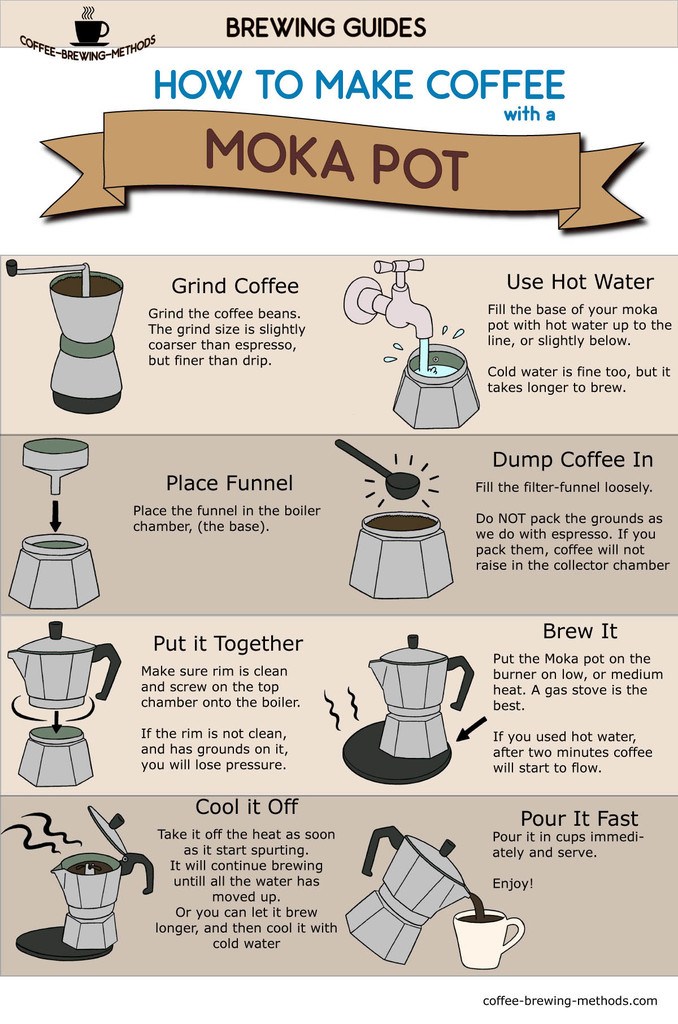
Step-by-step: How to Make Coffee in a Moka Pot
Follow these steps for a perfect brew.
1. Grind Your Coffee
Use fresh beans and grind them just before brewing. Aim for a medium-fine grind—not as fine as espresso, but finer than drip. If it’s too fine, you’ll get bitter, burnt flavors. Too coarse, and the coffee will be weak.
Example: A grind like fine sand works best. Burr grinders give even results, while blade grinders can make uneven pieces.
2. Fill The Water Chamber
Pour filtered water into the bottom chamber. Stop right at the safety valve. If you want a cleaner taste, preheat your water so the coffee doesn’t “cook” while the pot heats up.
Non-obvious insight: Using cold water makes the brewing slower, sometimes leading to over-extraction. Preheated water speeds up the process and keeps flavors fresh.
3. Add Coffee To The Filter
Fill the filter basket with ground coffee. Level it with a spoon or your finger, but don’t press or tamp down. Packing the coffee too tightly blocks water flow and can cause bitter coffee.
Practical tip: If you see coffee dust around the rim, wipe it off. That keeps the seal tight and prevents leaks.
4. Assemble The Moka Pot
Carefully screw the top and bottom together. Make sure the rubber gasket is in place. Don’t overtighten—just snug enough to prevent leaks.
5. Place On The Stove
Set the moka pot on low to medium heat. High heat can burn the coffee. If you hear gurgling quickly, the heat is too high.
Common mistake: Many people crank up the heat to speed things up. This ruins flavor. Patience gives better results.
6. Watch And Wait
Soon, coffee will bubble up into the top chamber. The process takes 4–5 minutes for a 3-cup pot. When you hear a hissing or bubbling sound, remove the pot from the heat.
Experience-based tip: Leave the lid open and watch the coffee flow. When the stream turns light and sputters, it’s done.
7. Serve And Enjoy
Pour coffee immediately to avoid over-extraction. Enjoy it straight, or add milk, sugar, or hot water to taste.
How Moka Pot Coffee Compares To Other Brewing Methods
Moka pot coffee is strong, but not true espresso. It sits between espresso and drip in strength and flavor.
| Brewing Method | Pressure (bars) | Flavor Strength | Crema |
|---|---|---|---|
| Moka Pot | 1-2 | Bold | Little/None |
| Espresso Machine | 9 | Very Strong | Thick |
| French Press | 0 | Medium | None |
| Drip Coffee Maker | 0 | Mild | None |
Non-obvious insight: You can “fake” crema by swirling the brewed coffee in the chamber. It won’t be as thick as espresso, but adds texture.

Credit: volcanicacoffee.com
Troubleshooting: Common Problems And Solutions
Even experienced users sometimes run into issues. Here’s how to fix them:
- Coffee tastes bitter
- Grind may be too fine
- Water too hot
- Over-extracted (left on heat too long)
- Coffee is weak
- Grind too coarse
- Not enough coffee in the basket
- Water overfilled
- Leaks or sputtering
- Old gasket or seal
- Loose assembly
- Coffee grounds on rim
- Metallic taste
- New aluminum pot (needs seasoning)
- Dirty parts (clean with warm water, no soap)
Practical tip: Always dry the pot fully after washing to prevent corrosion.
Cleaning And Maintenance
Keeping your moka pot clean helps the coffee taste fresh and prevents damage.
- After each use: Rinse all parts with warm water. Don’t use soap—it can leave a residue and affect flavor.
- Weekly: Check the rubber gasket and safety valve for wear.
- Monthly: Deep clean by soaking parts in vinegar and water (50/50) for 30 minutes, then rinse well.
Experience-based tip: If you use soap, rinse at least three times to remove all traces.
Credit: www.baustil-gmbh.at
Flavor Variations And Advanced Tips
You can personalize moka pot coffee easily. Here are some ideas:
- Add spices: Mix a pinch of cinnamon, nutmeg, or cardamom with the coffee grounds.
- Use different roasts: Try dark roast for stronger flavor, or light roast for more acidity.
- Experiment with water: Mineral-rich water can change the taste. Filtered water is usually best.
- Milk-based drinks: Add hot milk to make a simple latte or cappuccino.
Advanced insight: For a smoother cup, let the coffee cool for one minute before pouring. This lets the grounds settle, reducing bitterness.
Why Moka Pots Remain Popular
Statistics show that over 200 million moka pots have been sold worldwide. In Italy, over 60% of homes own one. The reason is clear: moka pots combine affordability, durability, and great coffee. You don’t need electricity or complex parts—just water, coffee, and heat.
They are also eco-friendly. Most models last for decades and use no disposable filters. Cleaning is quick and easy, so you spend less time maintaining and more time enjoying your brew.
If you want to learn more about the history and design of moka pots, check out the official Wikipedia page.
Frequently Asked Questions
How Do I Know When The Coffee Is Ready In A Moka Pot?
When you hear a hissing or bubbling sound and the coffee stream turns light and sputters, it’s finished. Remove from heat right away to avoid bitter flavors.
Can I Use Pre-ground Coffee In A Moka Pot?
Yes, but fresh ground coffee gives better taste and aroma. Pre-ground coffee loses flavor quickly and may not have the right grind size.
What Kind Of Coffee Beans Are Best For Moka Pots?
Medium roast beans work well. You can use dark roast for stronger flavor or light roast for more acidity. Avoid oily beans—they can clog the filter.
Is It Safe To Use A Moka Pot On An Induction Stove?
Only stainless steel moka pots work on induction stoves. Aluminum models won’t heat properly. Check the product label before buying.
How Do I Clean A Moka Pot Properly?
Rinse all parts with warm water after each use. Don’t use soap unless needed, and always dry thoroughly. Deep clean monthly with a vinegar and water soak.
A moka pot is more than just a coffee maker—it’s a classic tool that brings rich, bold coffee to your kitchen. With careful steps and a little patience, you can enjoy a cup that rivals café quality. Experiment with beans, grind size, and water to find your perfect brew.
Once you master the process, you’ll appreciate the unique ritual and flavor that moka pots offer.